Things to do in Belfast
Explore top experiences
Top 10 attractions in Belfast


Titanic Belfast
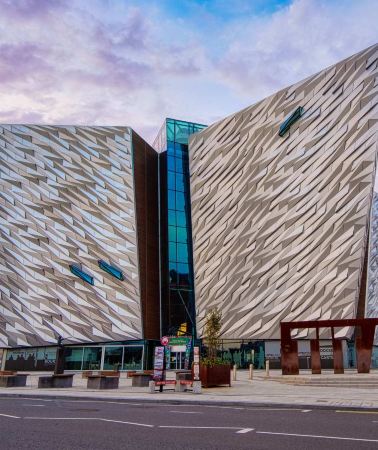
Titanic Belfast is built where the Titanic was truly born: at the top of the slipway next to Harland & Wolff shipyard, where the hull of the great ship was constructed and launched not far in front of the museum, and where the nearby drawing office was the place she first took shape. Telling this story on the original site is what sets this museum apart from other Titanic-themed exhibitions. Thousands of silver aluminum panels form the bow and ice-crystal-like exterior of the building, which has now become one of the landmarks of Belfast. Explore this world-famous story through the eyes of those who built it with hard work and great ambition. On the Titanic self-guided experience tour, you will explore the sights, sounds, smells and stories of the ship, as well as the people and city that created it. Along our carefully designed one-way route, you will visit the thriving city of Belfast and the shipyard where the Titanic was built, learn about the launch, fitting-out and inaugural flight of the Titanic, and then delve into the shipwreck, its aftermath, the search for the Titanic and her final resting place. You will have the opportunity to explore the hopes and dreams of those affected by this great ship and admire our unique collection of Titanic artifacts.Belfast · 1.8 km from downtown

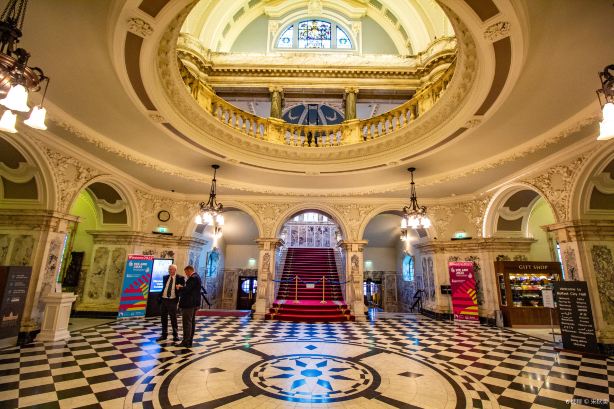
Belfast City Hall
Belfast City Hall serves as the office building for Belfast City Council and is also an important landmark in the city center. The building is designed in the Baroque Revival style, characterized by a light-colored stone facade, a symmetrical facade, decorative towers, and a striking central copper dome. Its interior features a council chamber, a grand hall, and several beautifully decorated spaces. Some areas are accessible via guided tours, where visitors can admire stained glass windows, artworks, and architectural decorations. The grounds surrounding the building feature lawns, monuments, a memorial garden, and the Titanic Memorial Garden.Belfast · 71m from downtown

Crumlin Road Gaol Visitor Attraction and Conference Centre
Crumlin Road Prison is a special attraction. This prison has been well refurbished. Here, visitors can visit the cursed cell, interrogation room, solitary cell, execution room, etc. The scenes inside are vividly restored, It makes people feel the atmosphere of the prison at that time. The furnishings in the prison are somewhat creepy, but it is also a rare experience. Worth a visit if you want to learn about the history of the prison and Belfast.Belfast · 1.5 km from downtown

Peace Wall Belfast
The Peace Wall Belfast located on the Peace Line in west Belfast was built to separate Catholic and Protestant residential areas and reduce conflict between paramilitary groups on both sides. It is also a unique attraction that is a must-visit when in this city. The first section of the Peace Wall Belfast was built in 1974. In the summer of 2003, on the eve of a traditional parade held by Protestants to celebrate the historical victory of King William III over the Irish army, this wall was specially reinforced. Now, it has become a city sightseeing attraction, allowing people to reflect on the past and appreciate the value of peace.Belfast · 1.7 km from downtown

St Anne’s Cathedral, Belfast
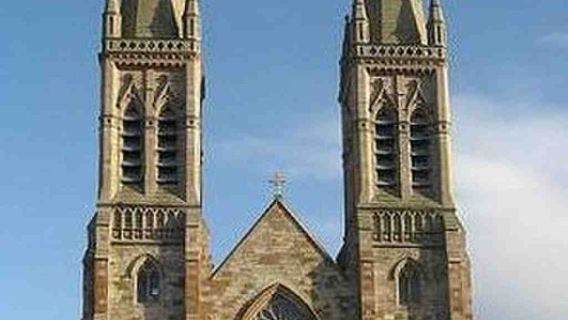
Belfast Church, whose real name is St. Anne's Church, was rebuilt on the basis of the old church. It has stood in the noisy city center of Belfast for more than a century. It is also the presence of Christianity in Northern Ireland with special geographical and historical significance. and proof of domination. The exquisite stone carving and painting skills inside the church are quite rare in the British Isles. It is said that many stained glass windows and other building materials from the damaged old church have been transplanted into the current church. On the periphery of the church building, there is a stele that has been stuck here since 1899, and the text on it tells the long history of the church. On the west side of the church, there is a quiet memorial garden to mourn the people who died in the First World War in Northern Ireland.Belfast · 627m from downtown

Belfast Castle
Belfast Castle is built in a grand Scottish baronial style and was constructed in the 1870s for the Marquess of Donegore. Outside the castle is a beautiful garden and a cultural center, where long-term exhibits about the castle are on display. The castle sits on Cave Hill and offers magnificent views of the city of Belfast andBelfast Lough. The castle is an excellent venue for conferences, weddings, and celebrations. Other facilities inside the castle include a cellar restaurant and a cellar antique shop.Belfast · 5.1 km from downtown

Parliament Buildings
The Parliament Buildings, also known as Stormont, is the seat of the Northern Ireland Assembly and is located on the Stormont Estate on the outskirts of Belfast. The building is a landmark with profound historical significance and cultural value. The design of the Parliament Building adopts the neoclassical style, which embodies solemnity and elegance. The building is located in the vast Stormont Estate, surrounded by exquisite green spaces and gardens, providing the public with an ideal place to enjoy nature and engage in outdoor activities. The straight avenue in front of the building is one mile long and is often used for various celebrations and ceremonies, adding to the grandeur of the estate. The Parliament Building also regularly hosts various cultural activities and exhibitions to promote public participation and community interaction. These activities not only enrich the local cultural life, but also enhance the public's understanding of Northern Ireland's politics and history.Belfast · 6.3 km from downtown

St George's Market
St George's Market is located on East Bridge Street in the city center. It is a Victorian-era building occupying a large site with more than 300 stalls offering fresh produce, crafts, and street food. The market sits close to the River Lagan and the Waterfront Hall, with convenient transportation. St George's Market occupies a rectangular hall with a high wrought-iron vaulted ceiling that provides ample natural light, and the Romanesque arched entrance is engraved with the Latin inscription "Pro Tanto Quid Retribuamus". Inside, the space is open: the ground floor is packed with stalls, the upper-level gallery offers good views, and a stage area regularly hosts live music performances. The market sits beside City Hall and the Albert Clock, and it's within walking distance of Titanic Belfast and the Grand Opera House. In spring and summer the outdoor plaza opens, while in winter the interior is cozy. Mornings bring fresh produce, and in the afternoon hot prepared foods are popular. St George's Market blends historic architecture with a lively market atmosphere—stroll through, sample street food, and experience the weekend community vibrancy of Northern Ireland.Belfast · 541m from downtown

Black Mountain
Black Mountain is Belfast's eye-catching natural landscape. It is 1,275 feet above sea level. The mountains are mainly basalt and limestone. There are also some trails and walks scattered among them. It is very popular with hikers. Standing on the top of the mountain, you can overlook the whole city of Belfast, and the view is very broad.Belfast · 4.9 km from downtown

Botanic Gardens
Botanic Gardens were built in the Victorian era and are an important part of the local Victorian heritage. Here, you can see one of the world's earliest cast-iron greenhouses, as well as palm plants from around the world. Botanic Gardens are not very large, and you can often see local residents, students, and tourists strolling and taking photos here. Especially in spring and summer, the scenery of blooming flowers is particularly eye-catching. Botanic Gardens are right next to the Queen's University Belfast library. After your visit, you might want to stop by Queen's University to experience the local academic atmosphere.Belfast · 1.7 km from downtown
Experiences you can't miss in Belfast
Featured Day tours in Belfast
View all Day tours
4.8/5
· 631 reviews· 187 bookedFree cancellation
Book now for tomorrow
95.6% of travelers recommend
From€29.24

4.5/5
· 18 reviews· 320 bookedFree cancellation
328 travelers saved
From€74.45

4.9/5
· 13 reviews· 304 bookedFree cancellation
264 travelers saved
From€69.31

4.9/5
· 1.4k reviewsFree cancellation
Book now for tomorrow
99.6% of travelers recommend
From€97.17

5.0/5
· 2 reviews· 25 bookedFree cancellation
From€66.27

4.3/5
· 3 reviewsFree cancellation
122 travelers saved
From€62.23


5.0/5
· 2 reviewsFree cancellation
From€78.39
Featured Cultural experiences in Belfast
View all Cultural experiences
Free cancellation
Book now for tomorrow
5% off
Limited-time sale
From€14.16€14.91

4.8/5
· 36 reviewsFree cancellation
Book now for tomorrow
91.7% of travelers recommend
From€28.75

1-day tour to Giant's Causeway & The Dark Hedges & Belfast, Northern Ireland, English-speaking group
5.0/5
· 1 reviewFree cancellation
From€93.71

4.5/5
· 59 reviews· 836 bookedFree cancellation
636 travelers saved
From€29.19
Free cancellation
Book now for today
20% off
Limited-time sale
From€5.19€6.49
Featured Food & drink in Belfast
View all Food & drink
4.9/5
· 283 reviewsFree cancellation
Book now for tomorrow
29 consecutive positive reviews
From€46.28
5.0/5
· 4 reviewsFree cancellation
Book now for tomorrow
5% off
Limited-time sale
From€14.19€14.94

Free cancellation
5% off
Limited-time sale
From€95.54€100.57

Free cancellation
Book now for tomorrow
From€109.60

Free cancellation
5% off
Limited-time sale
From€99.89€105.15
5.0/5
· 1 reviewFree cancellation
Book now for tomorrow
5% off
Limited-time sale
From€45.40€47.79
Free cancellation
Book now for tomorrow
5% off
Limited-time sale
From€102.04€107.42

5% off
Limited-time sale
From€107.61€113.28
Featured Outdoor experiences in Belfast
View all Outdoor experiences
5.0/5
· 250 reviewsFree cancellation
Book now for tomorrow
100 consecutive positive reviews
From€42.64

From€130.89

5.0/5
· 10 reviews· 136 bookedFree cancellation
From€29.32

More things to do
Private Tours in Belfast
View More Private Tours in Belfast

Group Tours in Belfast
View More Group Tours in Belfast
Free things to do in Belfast
Peace Wall Belfast
Belfast · 1.7 km from downtownSt Anne’s Cathedral, Belfast
Belfast · 627m from downtownBelfast Castle
Belfast · 5.1 km from downtownParliament Buildings
Belfast · 6.3 km from downtownBlack Mountain
Belfast · 4.9 km from downtownBotanic Gardens
Belfast · 1.7 km from downtown
Ulster Museum
Belfast · 1.7 km from downtown
What travelers say about Belfast

Anonymous userApril 4, 2026
5.0
It was truly awe-inspiring, giving us a glimpse into the world's largest and most authoritative Titanic-themed museum (Titanic Belfast), built on the original site of the Titanic's birthplace—the former Harland & Wolff shipyard. (Figure 1)
The museum opened on March 31, 2012, the 100th anniversary of the Titanic's sinking. The building stands 38.5 meters tall, the same height as the Titanic's hull; its angular design symbolizes the bow and iceberg. (Figure 5)
The Titanic's original route was: Belfast (built/launched) → Southampton (the port of departure for the maiden voyage and where most passengers boarded) → Cherbourg (France), where wealthy French and American passengers boarded → Cough (Ireland), the last stop in Europe → never docked again, sailing directly into the Atlantic Ocean and sinking.
(Figure 6)
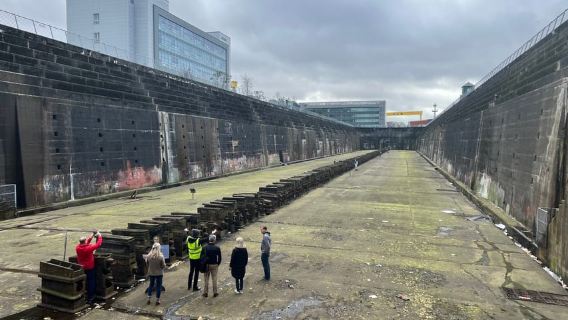
The square seen from the museum windows is the site of the original Thompson Dry Dock (Figure 4), now marked with the outlines of the Titanic and its sister ship, the Olympic. The Titanic on the left is drawn to its full length and width, with the original locations of first/second/third class cabins, decks, funnels, bridge, and lifeboats marked (Figures 3 and 7).
The museum authentically recreates many ordinary yet courageous life stories, such as: the violin played by the conductor who insisted on performing until the very last moment, the shipbuilding chief engineer's blueprints (Figure 8), and the pocket watch that sank to the bottom of the Atlantic Ocean with its owner, time forever frozen at that moment (Figure 9). Standing at the birthplace of the Titanic, one truly understands that encounter and farewell a century ago. Steel remembers, the waves echo, grandeur and regret coexist; history is far more moving than any film. May every story be gently remembered. 🌊
Titanic Belfast

66&colaFebruary 21, 2020
5.0
It can be said to be a landmark building in the center of Belfast, with a typical Victorian classical dome, bright green roof, magnificent colonnade, intricate carvings, wide green space, and is surrounded by the most prosperous commercial street in Belfast.
Belfast City Hall

茄子红了February 7, 2026
4.0
The price is cheaper if you order on-site, so I suggest you don't order online. Besides, they can't scan the QR code for online orders. On-site, it's only 14 pounds for adults, but they're charging 156 pounds here, which is outrageous.
Crumlin Road Gaol Visitor Attraction and Conference Centre

🎀彡🐾August 26, 2019
5.0
Belfast's Peace Wall is a witness to Northern Ireland's dark history. Now the whole Northern Ireland region is very peaceful and stable, and on this Peace Wall, people use cartoons to record the past history and the beautiful vision of peace. The whole wall is very long, and there are many subjects for painting, which is very beautiful. It is definitely a place you must visit when you come to Belfast.
Peace Wall Belfast

M34***23April 27, 2021
5.0
The sacred cathedral is a very eye-catching building, just like the CBD in China, but it gives people a completely different meaning.
St Anne’s Cathedral, Belfast

miftah_rahmanAugust 15, 2023
5.0
The castle is situated in between a mountain and sea. Gardens in the surrounding are also stunning. Moreover, if you like trekking, this is an ideal location.
Belfast Castle

陌染MMDecember 12, 2020
4.0
This so-called bar is actually a small restaurant in a market. Since there are no live animals for sale in the local market, it is not very dirty or wet. There are one or two places that are used as restaurants. This market is open only on weekends, so are the restaurants. In the morning, many locals come here to have breakfast first, and then buy things to cook at home. The small restaurants here are very simple, don't think of the word "luxury", the price of food is relatively cheaper, probably because of the environment.
St George's Market

孔垂信001February 11, 2020
4.0
The scenery here is beautiful, but there are very few tourists here, which further highlights the tranquility here. It is especially suitable for taking a walk here to relax and have a feeling of peace and tranquility.
Black Mountain


