Things to do in Fuzhou
Explore top experiences
Top 10 attractions in Fuzhou


Dajue Mountain
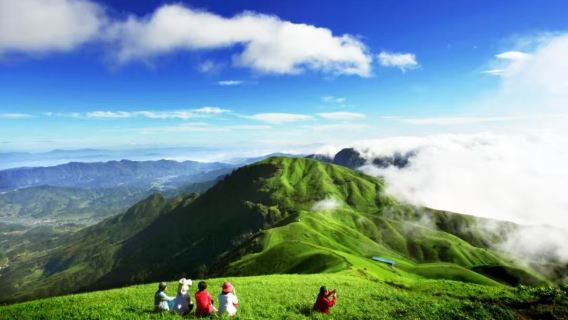
Dajue Mountain, originating from Buddhism's concept of the Buddha, refers to enlightened practitioners; it is a world Buddhist natural and cultural park. Located in Zixi County, Fuzhou City, the mountain is divided into eastern and western sections. The eastern section features a 300,000-acre virgin forest as its core attraction, while the western section is a comprehensive tourist area centered on religious culture and canyon rafting. The Dajuezhe Peak is the mountain's iconic view, resembling the enlightened Sakyamuni Buddha. Amidst the layered peaks and towering mountains, the natural landscape of Guanyin (Avalokitesvara) appears serene and effortless, a heavenly gift concealing nature's endless mysteries. Between elevations of 300m and 1,200m, a sightseeing shuttle, monorail, cableway, tunnels, and walking paths form a 30km circular route. Visitors can tour the attraction via this loop, connecting planned mountaintop temples and cliffside views along the way. Hidden within are peaks, lakes, pavilions, caves, terraces, celestial lakes, sky roads, and bridges.TianyanTianquan, TianmenTiantaishan, TianjieThe celestial realm forms a wondrous "Nine Heavens" view; beneath the "Nine Heavens" at Dajue MountainLotus PeakShenguifengBijiafengEight towering peaks—Cuiping Peak, Jiangjun Peak, Wenqu Peak, Dieluo Peak, Jingang Peak, and three others—rise abruptly from the ground, forming the "Eight Earthly Realms" view. Immersed in the "Nine Heavens and Eight Earthly Realms, Hundred Views," one can take in the breathtaking panorama and suddenly realize why this is truly the "Sacred Mountain and Holy Waters, the Paradise of the Enlightened." Ascending Dajue Mountain, you'll arrive at the Dajue Rock Temple nestled in a high-altitude cave, where the chanting of Buddhist scriptures lingers in the air and incense smoke swirls. The temple was first built in the first year of the Xianhe era of the Eastern Jin Dynasty (326 AD), boasting a history of 1,700 years. It was later frequented by eminent monks of the Tang Dynasty—Lingyin Temple, HangzhouThe Great Enlightenment Zen Master sought seclusion from worldly affairs and once traveled here, giving the Great Enlightenment Rock Temple its name. The Great Enlightenment Rock is a massive granite cave, with a lower front and higher rear, measuring 69m deep, 99m wide, and 19m high—a truly rare geological formation.The temple consists of seven parts, including the Great Buddha Hall, Ksitigarbha Hall, Guanyin Hall, and Sangharama Hall.It evolved into a comprehensive temple integrating the three major religions. The "Eight Immortals Cave" and "Reading Cliff" on the western side are particularly marvelous. Located deep in mountain valleys, Jiangxi's Dajue Mountain Town has witnessed the footsteps of countless devout pilgrims over the centuries and inspired generations of literati. Today, the town is built soaring above the ground, with architecture as its form and culture as its soul, blending one river, three streets, six alleys, and nine mansions to recreate the grandeur of the Song Dynasty. It has become a sanctuary for meditation, relaxation, and vacation, continuing its millennium-old legacy of prosperity. The TV drama "The Legend of the Heavenly Match: Sequel" was filmed here.Zixi · 10.4 km from downtown

Wenchangli
Wenchangli was once a prosperous commercial district in Linchuan Old Town, and also the "historical archives" and "old town museum" of Fuzhou. There is one provincial-level cultural relic protection unit and seven municipal-level cultural relic protection units. Among them, the most representative ones are Yulong Wanshou Palace (Fuzhou Guild Hall), Wenchang Bridge, Zhengjue Temple, Catholic Church, Xiaoyi Bridge, etc. And the traditional houses with Jiangnan characteristics are scattered in every corner of Wenchangli.Fuzhou · 5.7 km from downtown

Liukeng Ancient Village
Liukeng Ancient Village can be called the epitome of ancient Chinese culture, and is known as "the first village through the ages". There are 260 architectural sites of various types in the village, including 19 in the Ming Dynasty, and 321 important cultural relics, including the Zhuangyuan Building, the Hanlin Building, the "Master of Science" residence, the Wenguan and many other monumental cultural buildings, a large number of plaques and couplets and homes. Tibetan cultural relics make Liukeng Ancient Village a precious historical and cultural treasure house. Liukeng Village's rich history and culture, unique ancient dwellings, and rare documents and antiquities have been highly praised by experts such as Luo Zhewen, Zheng Xiaoxie, Bao Shixing and other famous ancient architecture experts in my country. In 1997, Liukeng Village was listed as a "Provincial Historical and Cultural Reserve" by the Jiangxi Provincial People's Government. There are 21 buildings and sites in the village announced as provincial cultural relics protection units. In October 2001, it was announced by the State Council as a national key cultural relic. protection unit.Le'an · 19.1 km from downtown

Dajueshan Cliff Train
The Dajueshan Cliff Train route spans 13.14 km, with over one-third of the track hugging the cliffside, connecting Dajueshan's peaks and sub-attractions into a seamless experience that offers visitors a brand-new way to explore. This has quickly become another premium tourism attraction following the success of Dajueshan Rafting.Zixi · 10.4 km from downtown

Lichuan Ancient City
Lichuan Ancient City Scenic Area was first established in the Southern Song Dynasty and flourished in the Ming and Qing Dynasties. It starts from Moshi Street in the county seat in the east and ends at Nanmen Street of the ancient city wall in the west, stretching for about five miles. Because there are more than a hundred ancient houses built in the Ming and Qing Dynasties scattered in the streets and alleys, the old street is also called the "Ming and Qing Old Street". Lichuan Ancient City Scenic Area has a long history and profound cultural heritage. It is one of the relatively well-preserved ancient streets in Jiangxi Province.Lichuan · 1.3 km from downtown

Zhuqiao Ancient Village
Zhuqiao Ancient Village is a famous historical and cultural village in China. It is the birthplace and main printing place of "Jinxi Book". There are 2 woodblock printing workshops preserved in the village, and there are many ancient woodblocks. The complete woodblocks of "Three Character Classic", "Hundred Family Names" and "Four Books Annotation" are preserved, which can still be directly printed and bound in thread-bound ancient books, which are very valuable. There are 109 ancient buildings in the village, including ancestral halls, academies, woodblock printing workshops, study rooms and houses of officials who returned to their hometowns. There are 5 ancestral halls, 4 gatehouses, 3 ancient wells, 2 ancient woodblock printing workshops, and 1 "Heaven and Man" road in the village, which is rare in China and implies the concept of "harmony between man and nature" and "people-oriented"; there are 7 ponds, and the middle pond is in the shape of a moon, forming the image of "seven stars accompanying the moon", reflecting the unique pond culture of Zhuqiao. In Zhuqiao, you can experience a journey across time and space. Villagers dressed in ancient costumes recreate scenes of pastoral songs, the return of the top scholar, big bowl tea, woodblock printing, etc. in the ancient alleys and buildings during the Ming and Qing Dynasties. Walking in the stone alleys of the ancient village, you can see villagers drinking tea and listening to opera, drinking and playing chess, or hawking goods along the street. There are also tea bars, book bars, blacksmith shops, shops, tofu shops, etc. full of ancient charm.Jinxi · 8 km from downtown

Wang Anshi Memorial Hall
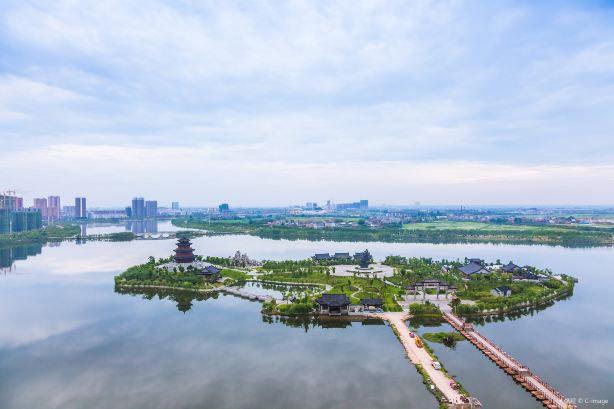
Fuzhou Wang Anshi Memorial Hall is a historical and celebrity memorial hall established to commemorate Wang Anshi, a famous statesman, thinker and writer in the Northern Song Dynasty. It was completed and opened to the public in November 1986. The memorial hall covers an area of 20 acres and a building area of 1560 square meters. It is a garden-style building imitating the Song Dynasty. The gatehouse, hidden walls, waterside pavilions, verandas, monument corridors, pavilions, lotus ponds, curved bridges and the main building complement each other and are integrated into one. The structure of Tashan cornices, cylindrical tiles, lattice doors and windows and the use of gray-black and all-white tones make the whole building look simple and elegant, solemn and rigorous. There are "Mingyue Xuan", "Thoe Garden", "Xinyi Garden", "Jinggong Pavilion" and "Banshantang" in the museum. The main building is a two-story exhibition hall, introducing Wang Anshi's life and deeds. On the first floor, four parts are displayed: "Love in the Hometown", "Government of the State", "Jinggong's New Learning", and "Xining Reform". The second floor displays four parts: "Literary Achievements", "Humanistic Character", "Jinling of the Old Age", and "Qianqiu Commentary". The entire exhibition hall shows Wang Anshi's life achievements, the courage of his reformers, and the style of writers through photos, charts, Chinese paintings, sculptures and real objects. In the exhibition hall, there are copies of "The Essentials of the Shurangama Sutra" written by Wang Anshi in the eighth year of Yuanfeng, Wang Anshi's works in different eras and versions, as well as comments and papers by domestic and foreign scholars on Wang Anshi. The memorial hall collects more than 30 books and paintings that were donated to the memorial hall by famous contemporary calligraphers and painters such as Liu Haili, Xiao Xian, Lai Shaoqi, Fang Zengxian, Shi Dawei and Lu Yanshao. Zhao Puchu, vice chairman of the National Committee of the Chinese People's Political Consultative Conference and a famous calligrapher, wrote the name of the memorial hall. The memorial hall receives many Chinese and foreign tourists every year, and has become a place for the masses to visit, receive education, conduct cultural exchanges and spread friendship. In 1994, it was named "Jiangxi Provincial Patriotism Education Base" by the Provincial Party Committee and Provincial Government.Fuzhou · 2.3 km from downtown
Dajue Mountain Rafting
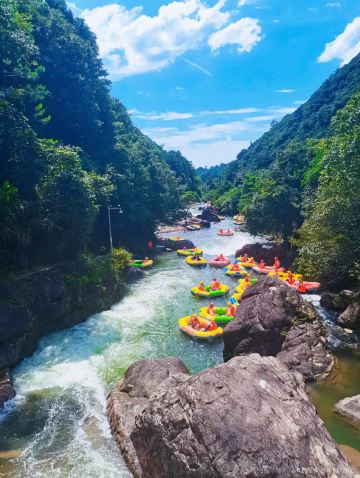
Dajue Mountain Rafting is located in Zixi County, Fuzhou City, within the scenic Dajue Mountain area. The rafting route passes through "one valley, three bends, six pools, and nine waterfalls." The Dajue Rock Canyon adventure rafting stretches for 3.6 kilometers with a thrilling drop of 188 meters. Navigating through the winding gorges and rushing rapids, you'll not only experience the exhilarating collision of speed and excitement but also immerse yourself in the boundless joy of nature. It's as if all your worries are washed away by the crystal-clear stream, leaving only pure delight and relaxation.Zixi · 8.3 km from downtown

Magu Mountain
Magu Mountain is located in the west of Nancheng County, Jiangxi Province, about ten miles away from the city. The mountains here are beautiful, with lush trees, birds singing and flowers blooming, and rich products. There are not only the unique and spectacular waterfalls "Jade Stream Flying in Two Flights", but also the "Lu Gong Monument" that has been passed down through the ages, the famous "Banshan Pavilion", "Xiandu Temple", "Shengong Spring", "Longmen Bridge", and "Danxia Cave". The fairyland is still there, so the "Famous Mountains Records" says "China has thirty-six caves and seventy-two blessed places, distributed in the nine states and four seas, but only Magu Mountain has both caves and blessed places, and it is outstanding in the southeast." The Magu Mountain Scenic Area is divided into five major Attraction : Xiantan Shengjing Scenic Attraction, Mayuan Sangu Attraction, Danxia Fudi Attraction, Zhuhai Songtao Attraction and Zuixian Lake Attraction . 1. Xiantan Shengjing Scenic Attraction includes: Xiandu Square, Reading Forest, Lu Gong Temple, Changshou Corridor, and Sanzhong Temple. 2. Danxia Fudi Scenic Attraction includes: Danxia Temple, villas, and hotels. 3. Zuixian Lake Attraction includes: Juehai Temple, Dongfangjun battlefield site, rock carvings of the ancient county seat of the Western Han Dynasty, Gaoyan diving, bungee jumping, yachts, water karaoke bars, wildlife parks, hotels, docks, etc. 4. Mayuan Sangu Attraction: "Zi is the best in the world" rock carving, Laojun Temple, and the gate of the Attraction. Mayuan Sangu is located at the foot of Magu Mountain [3] and has a variety of natural rock landscapes. There is a medium-sized reservoir in the landscape, the Mayuan Reservoir, which is 6.5 kilometers away from the county seat. There are three islands in the reservoir area, surrounded by green mountains and clear waters, which is a good place for tourists to relax. 5. Zhuhai Songtao Attraction includes: botanical gardens, corridor pavilions, hiking trails, mountain roads, etc. Magu Mountain Scenic Area was approved as a provincial key scenic spot by the provincial government in January 1991.Nancheng · 6.8 km from downtown

Chinese Traditional Opera Museum
The Chinese Traditional Opera Museum is located in Wenchangli Historical and Cultural District of Fuzhou, the hometown of Tang Xianzu, the Oriental Opera Master. The museum is divided into six sections: Opera History, Understanding Opera, Masterful Performances, Stage Art, Music and Lyrics, and Global Connections, making it a comprehensive museum dedicated to traditional Chinese opera. The Evolution of Chinese Opera: Chinese opera sprouted during the pre-Qin and Han-Tang periods, took shape in the Song dynasties, matured in the Yuan dynasty, flourished during the Ming and Qing dynasties, and experienced a revival in modern times. In the pre-Qin era, the *Nine Songs* from *The Songs of Chu* depicted ritualistic performances combining song and dance. This primitive art form—integrating music, dance, and theatrical elements—expressed human emotions and consciousness, marking the early seeds of dramatic art. The Han dynasty saw the rise of *baixi* (hundred entertainments), with acrobatics as a dominant feature. During the Tang dynasty, Emperor Xuanzong established the *Pear Garden* troupe and composed *The Song of Rainbow and Feather Garments*. Chinese opera formally emerged in the Song dynasty, marked by the appearance of *zaju* (variety plays) and *yuanben* (folk scripts). The development of fixed performance venues, *washe* and *goulan*, provided fertile ground for its growth. The Yuan dynasty brought nomadic cultures from the north, blending bold, unrestrained steppe traditions with the refined Han Chinese aesthetic. This fusion gave birth to *Yuan zaju*, characterized by rich narratives and vividly portrayed characters. The Ming and Qing dynasties produced legendary playwrights like Tang Xianzu and Kong Shangren, whose works remain immortal in opera history. Before you is a Qing-dynasty printed edition of *The Peony Pavilion*. Tang Xianzu's *Four Dreams of Linchuan* profoundly influenced late Ming and early Qing theater, inspiring the *Linchuan School* of drama. The transformation zone highlights Chinese opera's achievements from the late Qing era to 1949. After the founding of the People's Republic of China, revolutionary model operas emerged as *red classics* and national treasures, continuing to be performed today. Chinese opera—a millennia-spanning art form. Exploring Drama Through Literature: As the saying goes, "A script is the foundation of a play," where the quality of a literary script often determines the success of a performance. Here, we introduce classic theatrical literature through four main traditional genres: historical, romantic, courtroom, and ethical dramas. Beyond imagination: The characters in traditional Chinese opera span all ages and walks of life. They are categorized into different role types based on personality traits and performance techniques. Here we introduce the four major role types: Sheng (male roles), Dan (female roles), Jing (painted-face roles), and Chou (clown roles). Chinese opera performance follows the principle that "every sound is song and every movement is dance"—where "song" refers to singing and recitation, while "dance" encompasses acting and martial arts. "Singing, recitation, acting, and martial arts" form the four fundamental skills of Chinese opera performers. The Art of Stagecraft: In this area, you can admire the ever-changing stage makeup, elaborate embroidered costumes, diverse stage sets, and magnificent theater architecture. Stage makeup serves two purposes: enhancing beauty, as seen in the refined looks of male and female lead roles, and highlighting character traits and emotions, exemplified by facial masks. The dazzling headpieces of female roles are perhaps the most eye-catching elements on stage. These ornaments not only adorn the characters but also reflect their social status and circumstances. Here, you can also explore costumes of various roles for a more immersive experience. Traditional opera stages are often defined by the simplicity of "one table and two chairs," while modern stages allow seamless scene transitions. A symphony of voice and music: Traditional Chinese opera music can be broadly divided into vocal and instrumental. Vocal music refers to the sounds produced by performers, including singing and recitation—these two elements alone account for half of an opera performer's four fundamental skills, which is why audiences traditionally referred to enjoying opera as "listening to opera." Beyond the human voice, musical instruments also serve as vital sound sources on the opera stage. Traditional opera accompaniment instruments are categorized into civil (wénchǎng) and martial (wǔchǎng) ensembles. The civil ensemble primarily accompanies singing and plays scene-setting music, while the martial ensemble establishes rhythm, enhances atmosphere, and facilitates scene transitions. Here, we showcase the instruments commonly used on the opera stage. Bridging Cultures Through Opera: As a gem of Chinese culture, traditional Chinese opera has long been a distinguished ambassador showcasing the nation's image and cultural exports. Guided by the "bringing in and going global" strategy, Chinese opera has innovated through reflection, continually exploring ways to connect with world cultures and foster international friendships. By the 1930s, master performers like Han Shichang, Mei Lanfang, and Cheng Yanqiu began consciously introducing Chinese opera into cross-cultural contexts.Fuzhou · 5.3 km from downtown
Experiences you can't miss in Fuzhou
Featured Day tours in Fuzhou
View all Day tours
Free cancellation
Instant confirmation
Book now for tomorrow
9% off
Limited-time sale
FromMXN1,237.57MXN1,375.07

Free cancellation
Instant confirmation
Book now for tomorrow
FromMXN3,212.48

FromMXN2,093.35
Free cancellation
Instant confirmation
Book now for tomorrow
9% off
Limited-time sale
FromMXN548.36MXN609.28


Featured Cultural experiences in Fuzhou
View all Cultural experiences
Free cancellation
Instant confirmation
Book now for tomorrow
FromMXN500.28

Free cancellation
Book now for tomorrow
FromMXN111.52

FromMXN335.39
FromMXN3,633.32

FromMXN6,987.15

FromMXN3,912.81

More things to do
Private Tours in Fuzhou
View More Private Tours in Fuzhou


Group Tours in Fuzhou
View More Group Tours in Fuzhou


Free things to do in Fuzhou
Wenchangli
Fuzhou · 5.7 km from downtownWang Anshi Memorial Hall
Fuzhou · 2.3 km from downtown
Tang Xianzu Memorial Hall
Fuzhou · 2.9 km from downtown
Linggufeng Mountain
Fuzhou · 12.9 km from downtown
Zhengjue Ancient Temple
Fuzhou · 5.8 km from downtown
Menghu Scenic Area
Fuzhou · 3.9 km from downtown
Fuzhou Museum
Fuzhou · 866m from downtown
Caoshan Scenic Area
Yihuang · 11.9 km from downtown
Celebrity Sculpture Park
Fuzhou · 827m from downtown
Qiawan Ship-shaped Ancient Town
Nanfeng · 7.2 km from downtown
What travelers say about Fuzhou

大白弟弟October 4, 2026
5.0
It's great, but you need to allow enough time for the bullet train. The best arrangement is to plan all activities in the morning, take the cable car up the mountain, then the bullet train, followed by the high-speed rail, have lunch in Dajue Town, and go rafting in the afternoon. One day is just right. The local bread is really delicious; I thought I bought too much when I bought it, but then I realized I bought too little! 😀
Dajue Mountain

tomzhaoDecember 21, 2025
5.0
The performance was excellent. It was an immersive performance where the audience followed the plot of The Peony Pavilion and moved between different locations. The actors performed very well, and the stage design and lighting effects were also very good. The performance lasted about an hour.
Wenchangli

M29***80September 18, 2024
5.0
The historical culture is very rich. The whole village is full of historical and cultural relics. The historical buildings are very well preserved. The service attitude of the scenic area is also very good. The supporting facilities nearby are complete, and you can eat, stay, take a walk, and take a cruise.
Liukeng Ancient Village

135***35May 31, 2026
5.0
It's definitely worth visiting, but there were so many people today. We waited an hour for the cliffside bullet train, and the whole journey was by train. It's especially friendly to the elderly; the queue railings are long benches where you can sit and wait, which is very considerate. I hope they promote it more so more people know about this wonderful place, Dajue Mountain, where there are many fun activities. I definitely want to go again next time.
Dajueshan Cliff Train

岚行天涯August 18, 2023
5.0
Lichuan Ancient City was first built in the Southern Song Dynasty and flourished in the Ming and Qing Dynasties. It has a history of nearly a thousand years. It is a typical representative of the historical district where the halls of the Ming and Qing Dynasties and the arcade buildings of the Republic of China converge. The existing old streets in the Lichuan Ancient City scenic area have more than 600 arcade-style shops and more than 100 well-preserved ancient buildings of the Ming and Qing Dynasties with the characteristics of Jiangyou folk houses, among which the Xinfeng Bridge and Henggang Bridge are connected in series.
Lichuan Ancient City

蓝色水果May 10, 2023
5.0
The scenery is beautiful and it is a representative of Gan-style architecture. Entering the bamboo bridge is like traveling back to the Ming and Qing Dynasties. The ponds, houses, ancestral halls and stone roads here are like scrolls of paintings. Wherever you go, you walk into that scroll. People are in the paintings, and history flows in their minds. The artistic conception is perfect.
Zhuqiao Ancient Village

小小导游爱旅游December 24, 2024
4.0
The Wang Anshi Memorial Hall is located in the city center and is a garden-style building that combines modern and classical elements. The hall displays a large number of Wang Anshi's life stories, literary works and precious cultural relics, making people feel as if they have traveled through time and space to communicate face to face with this great reformer.
Wang Anshi Memorial Hall

宸小草July 28, 2020
5.0
Went there for rafting, the scenery was nice, the experience was great, it's worth recommending, interesting and fun, it's quite far from Fuzhou city, about 80 or 90 kilometers, walk a few steps after ticket check, take the sightseeing bus directly, it's quite fast, change a trip in the middle, walk through an ancient town, and then take the sightseeing bus again. We arrived at a little after one o'clock, and there were a lot of people at the rafting ticket gate, waiting for about an hour? The queue is divided into four waves, don't worry, there are fans blowing, it's okay, it's not very hot.
Then the shoes, you can wear cloth shoes, sandals, you can't wear slippers and go barefoot on the boat, it doesn't matter if you don't wear them, there are rentals and sales (the place to rent shoes is 5 yuan at the place where you are ready to get on the boat after queuing, and there are shoes for sale before and during the queue for 15 yuan and 20 yuan), bags can be stored for 15 yuan and transported to the end of the rafting. The rafting process is very exciting, more than an hour, the stream water is a little cold, you can bring your own water gun or buy it when you get there, which is used for water fights during the rafting process (I didn’t buy it, and I was splashed with water...) It is recommended to change clothes after rafting. There is a bathhouse and free ginger tea, which is very convenient and worth a visit!
Dajue Mountain Rafting

1101351348August 21, 2023
4.0
The place is good, with stories and content, but it is not promoted enough, there are few tourists, and the people are very simple. It is still to be developed, and the overall awareness of the industry needs to be strengthened. It is still worth a visit, after all, it is the 10th blessed place of the 28 Taoist caves. The atmosphere of outstanding people and beautiful scenery is rich, I hope it will get better and better, and it is worth coming again.
Magu Mountain

ghost0810October 5, 2024
4.0
There aren't many people, and it's located in the old city of Fuzhou. The maintenance is average, and many facilities are broken, but it's quiet. Many people don't come in when they find out they have to buy tickets at the door. In fact, the exhibition inside is quite good, but the maintenance is really average.
Chinese Traditional Opera Museum
Popular cities near Fuzhou


Frequently asked questions
What are the must-do things in Fuzhou?
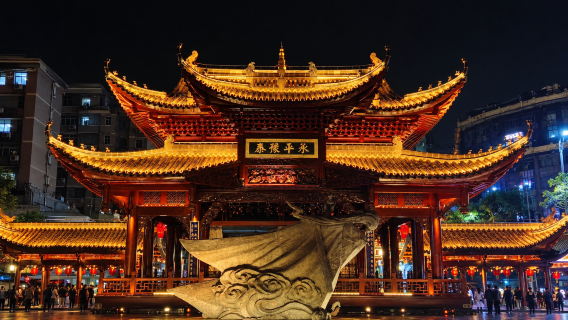
Don't miss these attractions in Fuzhou: Dajue Mountain, Wenchangli, and Liukeng Ancient Village. If you like Day tours, try Fuzhou 1-Day Private Charter Tour: Dajue Mountain + Zhengjue Ancient Temple + Wenchangli (Chinese and English Services Available). If you enjoy Cultural experiences, try Nanchang spring Chinese-style Hanfu experience [Exquisite Hanfu + Nanchang hairpin flower experience + superb makeup].
What are the recommended tours and excursions in Fuzhou?
When choosing a tour, start with how much time you have and the kind of experience you're looking for. Trending options right now include Fuzhou 1-Day Private Charter Tour: Dajue Mountain + Zhengjue Ancient Temple + Wenchangli (Chinese and English Services Available), Fuzhou, Jiangxi Liukeng Tourism Attractions + Zhengjue Ancient Temple + Wenchangli day tour with bilingual Chinese-English service, and Longhushan 1-day private tour (depart from Nanchang). Check the real-time availability and itinerary before you book.
What's the typical cost of day tours and activities in Fuzhou?
As of October 24, 2026, the reference price for day tours and activities in Fuzhou is around MXN 548.36 – MXN 3,854.98. Rates vary by duration, group size, transportation, tickets, meals, and any special admission requirements. Before you book, please confirm the billing currency and whether the price is quoted per person or per group.
How can I contact Trip.com customer support?
Get help anytime, anywhere within 30 secondsContact customer support
Can I change or cancel my booking?
Change and cancellation policies vary by attractions and tours. Please check the product details page for more information.
How can I get discounted prices?
Ticket prices may vary between weekdays and weekends, as well as during peak and off-peak seasons. When booking with Trip.com, you can also use Trip Coins to get extra savings. For more tips on booking discounted tickets, please visit Trip.com for the latest information.
Trip.com picks
Popular Airport Transfers
Fuzhou airport transfersFuzhou Changle International Airport transfersShanghai Pudong International Airport transfersGuangzhou Baiyun International Airport transfersTaiwan Taoyuan International Airport transfersBeijing Capital International Airport transfersBeijing Daxing International Airport transfersHong Kong International Airport transfersShanghai Hongqiao International Airport transfersChongqing Jiangbei International Airport transfersSanya Phoenix International Airport transfersChengdu Tianfu International Airport transfers