Things to do in Gannan
Explore top experiences
Top 10 attractions in Gannan


Zha Ga Na
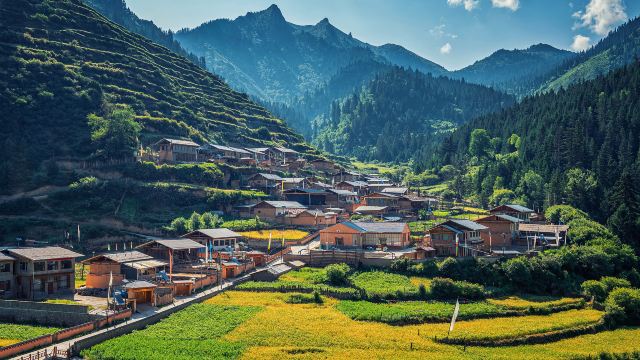
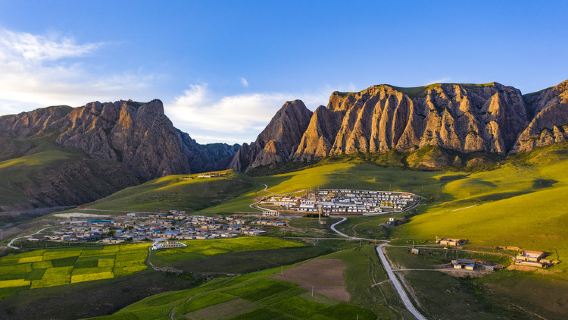
Zhagana, also known as Zhagala, is located in Diebu County, Gannan Tibetan Autonomous Prefecture. It is a small Tibetan village surrounded by a circle of pretty cliffs. It has beautiful and magical scenery and is one of the most beautiful places in the entire Gannan Tibetan area. The ancient wooden Tibetan houses in the village are built along the mountain, and the locals work quietly and simply between the hillsides and rivers, forming a beautiful pastoral scenery. Whether you want to sightsee, take photos, or visit the traditional life of the simple Tibetan people, this is a wonderful place that you cannot miss. Zhagana is located in the valley of Yiwa Township, Diebu County. It takes about 1 hour to drive from Diebu County and about 2 hours from Langmusi. Zhagana is suitable for visiting in July and August, when the grassland is green and the scenery is beautiful. Most tourists come from Langmusi when they take the Gannan-Sichuanbei route. The usual time to visit is to arrive in the afternoon of the same day and take a leisurely stroll in the village to enjoy the beautiful scenery. Stay in a Tibetan homestay for one night, and leave the next morning after taking pictures of the early morning clouds and sunrise. In addition, there is a two-day hiking route in the back mountain of Zhagana, where you can rent a horse in the village or walk there. Zhagana Village is divided into four small villages, from bottom to top, they are Dongwa Village, Yeri Village, Dari Village and Daiba Village. Dongwa Village and Daiba Village are about 5 kilometers apart, and there is a winding road connecting the four villages. You can walk or drive to visit and take photos one by one. It takes about 1 hour to walk from the bottom to the top. Driving in from the entrance of the village, the first place you arrive at is Dongwa Village at the foot of the mountain. There is a big stone here called Dashimen. The small hillside next to Dashimen is a good place for taking photos. Here you can look up and take pictures of the beautiful scenery of the village built along the mountain. The back of the village is wrapped by cliffs, and there is a Tibetan Buddhist temple on the top of the village. The scenery is fantastic and beautiful. Dongwa Village has a large population and is also a good place to stay. You can book a stay at a farmhouse here, and then walk or drive to several higher villages to play. It takes about 1 hour to walk to the higher place. Going up the mountain along the road, you will reach Yeri Village. Next to Yeri Village is a vast barley field where you can often see Tibetans busy in the fields. The scene is peaceful and simple. In addition, there is a house in Yeri Village where the famous traveler Joseph Locke once lived for more than a year, but now it can only be visited from the outside. Continue to go up, after passing Dari Village, there is a viewing platform with a wide view, suitable for taking bird's-eye views of the whole village. You can see the whole village and the fantastic rock wall behind. All the houses are old wooden roofs and earthen walls, which look simple and peaceful. Under the cliff, they form a beautiful picture scroll, which is also a wonderful place to take good photos. After taking the panoramic view, you can go back to Dongwa Village for accommodation. Daiba Village is relatively remote and there are fewer scenery to see, so you can skip it. In addition to taking photos in the afternoon, there are many other things to look forward to in Zhagana. Every morning, there are almost clouds and mists between the rock walls on the mountain, and the starry sky is beautiful and brilliant at night when the lights are off, which are good opportunities for taking photos. If you have enough time, you can also take 1-2 hours to climb the back mountain of Dongwa Village to see the temple on the top of the mountain. The houses you pass by along the way are all ancient buildings, and the wooden wedge-rivet structure is even more ancient and peculiar. If you are lucky, you can meet kind locals and be invited to their homes to taste traditional food such as tsampa butter tea and experience the simple enthusiasm of the locals. In addition, there is a two-day hiking route behind the village, which leads to the rarely visited lakes and stone forests with pristine and beautiful scenery. However, this route is only suitable for outdoor enthusiasts and requires camping for one night. When walking this route, you can rent a horse in the village and find a horseman to lead the way. Generally, a horse costs about 150 yuan a day.Diebu · 19.3 km from downtown

Ganga Secret Scenic Spot
The "Gangjia Secret Realm" is located in Gangjia Town, Xiahe County, Gannan Tibetan Autonomous Prefecture, with a total area of 131.23 square kilometers. The altitude difference between the north and south of the Attraction is 1,300 meters. The unique geological structure contains a variety of geological resources such as cliffs, grasslands, plateau lakes, stone forests, canyons, prehistoric caves, and rivers. The Bajiao Ancient City, Zuohai Temple, Baishiya Temple, and the Denisovan Site Cave have become the imprints of the Attraction profound historical and cultural heritage. Academic masters and eminent monks such as Guru Padmasambhava, Tsongkhapa, Gongtang Cang, and Gendun Gumpel have successively studied, practiced, and preached in the Gangjia area.Xiahe · 26.8 km from downtown

Ganjia Grassland
Ganjia Grassland is an open alpine meadow and a traditional pasture where herders have grazed their livestock for generations. In midsummer, the grassland is lush green, with wildflowers spreading along the gentle slopes and herds of cattle and sheep scattered throughout. Compared to Sangke Grassland near the county seat, it receives fewer tourists and retains the more primitive and tranquil appearance of an alpine pasture. The grassland's distinctiveness largely comes from the Baishiya stretching across the end of the pasture — a gray-white cliff stretching over 10 km that stands like a screen above the greenery, with Baishiya Temple located at its foot. The Yangqu River and Yangla River meander across the grassland. The Bajiao Ancient City, built on the terrace where the Yangqu and Yangla rivers meet, is named for its eight corners. Ascend the viewing platform to take in the panoramic view of the ancient city, surrounding highland barley fields, and pastures. The grassland covers a large area with scattered attractions. Baishiya, Bajiao Ancient City, and Zuohai Temple are located in different directions, making it suitable for a self-drive or car charter tour along the route.Xiahe · 22 km from downtown

Labrang Monastery
Located in Gannan District's Xiahe County, Labrang Monastery is one of the six great monasteries of the Gelug (Yellow) Sect of Tibetan Buddhism. The monastery is large in scale and high in status. A representative example of the monasteries and temples throughout Gannan, it is a must-see for visitors to the area. It is a majestic temple complex. It offers spectacular sights while walking through and also when taking in a panoramic bird's-eye view from its highest point. The monastery is full of giant Buddha statues and various exquisite sculptures, murals and countless musical instruments. Furthermore, the long corridor of the Labrang Monastery is a sight rarely seen anywhere else in the world. This is a place where pilgrims come to accumulate merit and to pray for friends and relatives.Xiahe · 1.5 km from downtown

Sangke Grassland
Sangke Grassland is a meadow grassland on the northeastern edge of the Qinghai-Tibet Plateau, with an average altitude of over 3,000m and a grassland area of approx. 70 sq km. The grassland is surrounded by mountains, and the Daxia River winds its way from south to north. It is part of the Dajiutan Grassland in Sangke Town. "Dajiutan" means "horse-racing beach" in Tibetan and has traditionally been a natural pasture for Tibetan herders to graze livestock and race horses. The grassland is lush with green grass, wildflowers cover the gentle slopes, and white tents are scattered throughout. Horseback riding is a common experience here, usually with a groom leading the horse at a slow pace. Walking up the hillside behind the grassland, the grass is denser, wildflowers grow in patches, and the view is even more expansive. The pasture guesthouses on the grassland offer Tibetan food and tent stays. The plateau sky is clear at night, making it perfect for stargazing. The local Tibetan people have a tradition of the Xianglang Festival around the sixth lunar month, when herders set up tents on the grassland with their families to have picnics, sing, and dance the Guozhuang.Xiahe · 13.3 km from downtown
Milariba Buddha Pavilion
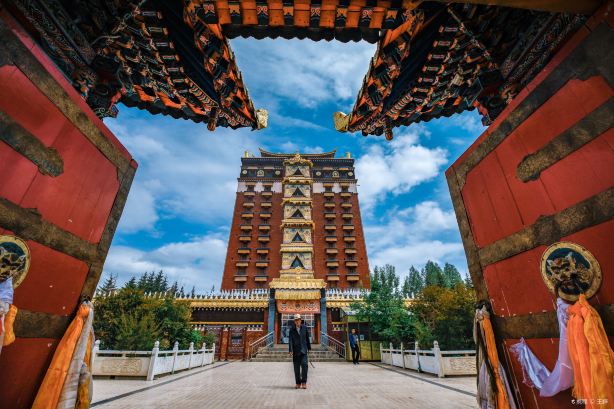
Milariba Buddha Pavilion is a nine-story Tibetan-style blockhouse pavilion built to commemorate the Tibetan Buddhist Kagyu school (commonly known as the White Sect) master Milarepa. It was first built in the 42nd year of the Qianlong reign of the Qing Dynasty (1777), and the existing structure was rebuilt in later generations. The pavilion is dark red throughout, which is relatively rare among monasteries in Tibetan areas. The hall enshrines over 1,000 statues, with the patriarchs of all major Tibetan Buddhist sects worshipped together in the same pavilion, along with numerous historical and cultural figures of Tibet. In the center of the first floor is a tall statue of Jampa Buddha (Maitreya Buddha), depicted in a solemn and dignified bodhisattva appearance. Flanking it are statues of Tibetan kings such as Songtsen Gampo and Princess Wencheng, as well as figures like Thonmi Sambhota, who created the Tibetan script, and Thang Tong Gyalpo, the founder of Tibetan opera. The second through fifth floors correspond to different sects. The fifth floor is dedicated to the White Sect, where the statues of Milarepa and his master Marpa are gaunt, and the murals on the walls depict the process of Milarepa's body changing from fat to thin during his ascetic practice. The sixth to eighth floors enshrine the Dharma kings, yidams, and protectors of Tibetan Buddhist Tantra, with statues of Hayagriva, Mahakala, and others often appearing in wrathful forms. The ninth floor is not an independent floor, but a mandala painting on the roof of the eighth floor. You can visit the interior by climbing the stairs floor by floor, or simply admire the exterior architecture. The Hezuo Monastery is located right next to the west side of the pavilion; if you have enough time, you can visit both.Hezuo · 756m from downtown

Dayugou Scenic Area
Dayu Valley is located in Zhuoni County, Gannan Tibetan Autonomous Prefecture. It used to be the location of the ancient road between the ancient Taozhou and Diezhou. Later, after the road was repaired in other places, it became a natural area inaccessible to people. Because it is rarely affected by human beings, the scenery here is very primitive and pure. Dayu Valley is the general name of Jiutiao Gorge. Jiutiao Gorge is Jiutiao Valley. Each ditch has natural scenery such as steep cliffs, dense trees, clear flowing water and pools. The environment is very beautiful and it is a clean and beautiful paradise. Among the nine ditches in Dayugou, most tourists only choose Ajiao Dagou and Qibugou, which are also two ditches with more beautiful scenery. There are battery cars connected between the ditches. Generally, it is advisable to play for about 4 hours. . Ajiao Dagou is the main ditch of the entire Dayu Valley. The canyon here is quite spectacular. After the battery car is sent to the mouth of the Mizoguchi, tourists can walk along the canyon to enjoy the wonderful scenery. Among them, there are streams, pools, and trees, which are clean and leisurely. Qibugou mainly focuses on grassland scenery and temple visits. You can see the beautiful bunting grassland outside the mouth of the valley, and you can ride horses on it. There is also a Tibetan Buddhist temple Qibu Temple next to Mizokou, which has a history of more than 800 years.Zhuoni · 26.6 km from downtown

Yeliguan Tourist Area
Yeliguan Tourist Area is located in the northeast of Lintan County, Gannan Tibetan Autonomous Prefecture, Gansu Province. It is located in the transition zone between the Qinghai-Tibet Plateau and the Loess Plateau. It is a complex ecological tourist area on the northeast edge of the Qinghai-Tibet Plateau and the Qinling Fold Belt, integrating alpine lakes, Danxia landforms, subalpine meadows, and terraced flower fields. It is 150 kilometers away from the provincial capital Lanzhou and 90 kilometers away from Hezuo City, the capital of Gannan Prefecture. It consists of two connected areas, Chibi Valley and Tianchi Yehai, with a total area of 20.2 square kilometers. Among them, Tianchi Yehai is a high mountain barrier lake, surrounded by green mountains and clear water all year round; Chibi Valley was formed from the Jurassic period of the Mesozoic Era to the Tertiary period of the Cenozoic Era. The ochre-red Danxia cliffs stretch across, and the abrupt and towering peaks and stalagmites are of various shapes, which is a typical Danxia landform landscape. The Yeliguan Tourist Area is a natural ecological area in the upper reaches of the Yellow River where the ecological environment has maintained its original appearance. The original ecological natural landscape represented by the virgin forest and subalpine meadow and the cultural landscape of the Yeliguan plateau terraces complement each other and are picturesque. Historically, it was an important post station and gateway to Tibet on the "Ancient Tang-Tibet Road" and "Ancient Tea-Horse Road". The tourist area has been awarded the titles of National Geopark, National Forest Park, National Water Conservancy Scenic Area, National Sports Tourism Demonstration Base, and has won the titles of China's Top Ten Cultural Ecological Tourism Destinations, China's Most Internationally Influential Tourism Destinations, China's Top Ten Leisure Tourism Destinations, and China's Forest Oxygen Bar. It is known as "Shanshui Yeliguan, Ecological Grand View Garden" and "Window of Qinghai-Tibet, Eye of Gannan". The Attraction was rated as a national AAAA-level tourist Attraction in 2006, and has successively won the honorary titles of "Top Ten Tourist Attraction in Gansu Province", "Top Ten Tourist Attraction in Western China", "China's Cultural Ecotourism Destination", "China's Outstanding Tourist Attraction", "China's Top Ten Cultural Ecotourism Attraction", and "China's Top Ten Leisure Tourism Destinations". It was rated as "one of the 50 places to visit in a lifetime" by the famous American magazines "Vision" and "Exploration". In 2010, at the Macau Tourism Summit, the Yeliguan Scenic Attraction was awarded the honorary title of "China's Most Internationally Influential Tourist Destination". The Attraction has successfully hosted major tourism festivals and events such as the 2007 National Tug of War Championship, the Yeliguan Cup China Tug of War Open, the Gansu Lintan Tug of War Festival, the 6th and 11th China Nine-Color Gannan Shambhala Tourism Art Festival, and the Gannan Tibetan Legend Cycling Race. The delicacies of Yeliguan include traditional earthen pot chicken, hand-pulled lamb, calf meat, braised lamb, stewed rainbow trout, etc. Earthen pot chicken is made from free-range chickens raised by farmers here, and is a green delicacy. Wild vegetables include wild mushrooms, ferns, fungus, antlers, willow flowers, oolong dragon heads, etc. In addition to delicious food, Yeliguan also has many entertainment projects for you to choose from, such as rafting, slides, zip lines, etc. Rafting was once a primitive way for humans to wade in water, and it was all to meet people's living and survival needs at that time. But now rafting has gradually evolved into an outdoor sport. You can enjoy rafting on the Yemu River.Lintan · 43.2 km from downtown

Langmusi Scenic Area
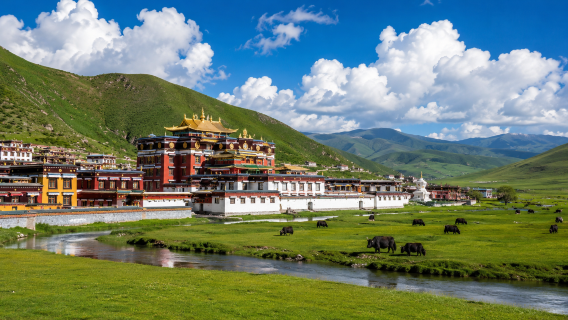
Langmusi Scenic Areais located in a canyon on the Gannan Plateau at the junction of Gansu, Qinghai, and Sichuan provinces. The Bailong River flows through the town; the north bank belongs to Luqu, Gansu, while the south bank belongs to Zoige, Sichuan, with a single street spanning both provinces. The main part of the scenic area, Sertri Monastery, was founded in 1748. It is a Gelug sect monastery of Tibetan Buddhism, established by a high monk from Ganden Monastery in Lhasa. Kirti Monastery on the Sichuan side across the river faces it. The layout of a single town belonging to two provinces and two monasteries facing each other across the river is quite rare. Sertri Monastery is built against the mountain, with its golden-roofed main hall, groups of stupas, and layers of monks' dwellings covering the hillside. On the circumambulation path, you can often meet locals spinning prayer wheels. To the east of the monastery, Hongshiya is a stretch of ochre-red gravel cliffs, which are dyed a warm red by the sunset in the evening. Deep in the grasslands behind the monastery lies a Sky Burial Platform, which is a funeral site still in use by the local community.Luqu · 57.2 km from downtown

Meiren Grassland
Meiren Grassland has an altitude of over 3,000 m and is an alpine meadow grassland. Unlike common flat grasslands, the meadows here rise in mounds and stretch continuously, dotted with various small wildflowers. Herds of yaks and Tibetan sheep roam the grassland, which is also one of the main production areas for the local fine yak breed, the Meiren yak. Tents are often scattered across the grassy slopes, where you can see the daily scenes of herders grazing their livestock. The entire grassland stretches along the Heyi Highway from Hezuo to Yeliguan. You can slow down during your self-drive tour to view these rolling meadows, or easily connect to nearby scenic spots such as Kangduo Gorge and Lianhua Mountain.Hezuo · 29 km from downtown
Experiences you can't miss in Gannan
Featured Day tours in Gannan
View all Day tours
5.0/5
· 2 reviewsFree cancellation
Instant confirmation
Book now for tomorrow
FromJPY 9,357
5.0/5
· 2 reviewsFree cancellation
Instant confirmation
FromJPY 13,901

4.8/5
· 223 reviews· 1.1k bookedFree cancellation
Instant confirmation
27 consecutive positive reviews
FromJPY 20,702

Instant confirmation
FromJPY 25,636
Free cancellation
Instant confirmation
FromJPY 11,709
Free cancellation
Book now for tomorrow
FromJPY 39,831

FromJPY 104,254
Free cancellation
Book now for tomorrow
FromJPY 84,205
More things to do
Free things to do in Gannan
Ganjia Grassland
Xiahe · 22 km from downtownSangke Grassland
Xiahe · 13.3 km from downtownMeiren Grassland
Hezuo · 29 km from downtown
Aba Prefecture Namo Grand Canyon
China · Zoige
Joseph Rock Road
Zhuoni · 43.5 km from downtown
Guomang Wetland
Luqu · 35.1 km from downtown
Lazikou Scenic Area
Diebu · 65.4 km from downtown
Jiangdie Road
Zhuoni · 43.5 km from downtown
Dari Viewing Platform
Diebu · 20.7 km from downtown
Maqu First Bend of the Yellow River
Maqu · 4 km from downtown
What travelers say about Gannan

素年锦时xhlgOctober 21, 2026
5.0
Zhagana is unbelievably beautiful! Surrounded by rocky mountains, the Tibetan village is shrouded in mist in the mornings, like a thin veil draped over it. Standing on the viewing platform, you can see terraced fields stretching out, with yellow rapeseed flowers and green barley, set against the backdrop of shimmering snow-capped peaks in the distance—every snapshot is wallpaper-worthy. The air is filled with the scent of grass and cooking smoke, and yaks graze leisurely. It's so relaxing, you won't want to leave!
Zha Ga Na

M41***91October 3, 2026
4.0
As the first stop in Gannan from Linxia, it's a pretty good tourist attraction, with all three viewing platforms worth taking photos at. However, even during the off-season holidays, the shuttle buses are hard to find, so I can only imagine how ridiculous the queues will be during the summer peak season.
Ganga Secret Scenic Spot

晚霞风车August 24, 2023
5.0
Gangjia Grassland is located in Gangjia Township, Xiahe, Gannan Tibetan Autonomous Prefecture, Gansu Province, 33 kilometers north of Xiahe County, and is directly accessible by road. Gangjia Grassland is a meadow grassland, vast and boundless, with an average altitude of more than 3,000 meters. It is one of the main animal husbandry bases in Gannan Tibetan Autonomous Prefecture. There is a reception desk at the Muyun Tent Camp, which prepares fresh milk tea, tsampa, Tibetan buns, hand-pulled mutton and other Tibetan specialties for tourists. It also prepares grassland tourism programs such as horses, yaks, shooting bonfire parties, etc. for tourists. Visitors can fully experience the mysterious and simple Tibetan customs here.
Ganjia Grassland

Bolton ChenOctober 7, 2026
5.0
Labrang Monastery is truly a dream destination when the weather is perfect! The golden roofs gleam under the blue sky and white clouds, and the entire monastery appears exceptionally solemn and magnificent in the high-altitude sunshine. As a world-renowned center of Tibetan studies, its prayer wheel corridor stretches for 3.5 kilometers with over 2,000 prayer wheels. Walking clockwise with the pilgrims, the sunlight filters through the eaves, casting warm glow on the prayer wheels and red walls, creating an incredibly atmospheric experience. Climbing the Gongtang Pagoda offers a panoramic view of the golden roofs, white stupas, and brown-red monks' quarters layered upon each other, with rolling mountains and grasslands in the distance – a truly expansive vista. If you're lucky, you might even witness monks debating, their gestures and clapping adding to the captivating atmosphere.
Labrang Monastery

会飞的鱼zztSeptember 25, 2025
5.0
Located in Xiahe County, Gannan, Sangke Grassland sits at an altitude of over 3,000 meters. Surrounded by mountains, it lies a vast, flat alpine grassland. This grassland retains its pristine beauty and boasts breathtaking scenery. Every snap is a stunning sight!
Sangke Grassland

闻嘉流浪NoelAugust 13, 2026
4.0
This is a well-known Tibetan temple in Hezuo City, Gannan Prefecture. It's quite unique, with white stupas somewhat similar to those in Thai temples, and the red monastery exudes a solemn and dignified atmosphere. Taking photos against the backdrop of blue skies and white clouds would definitely be a great experience. Since I have no religious affiliation, I didn't buy a ticket to go inside; I just wandered around the outside. However, I absolutely respect the beliefs of the Tibetan people.
Milariba Buddha Pavilion

天空中的雨August 14, 2026
5.0
Dayugou is divided into two valleys, Qibu Valley and Ajiao Valley, which can be visited in two days. In Ajiao Valley, take a bus to the last stop, visit the Moon Gate, then take a bus to Butterfly Pavilion, and walk along the wooden boardwalk to Guanyin Pavilion. In Qibu Valley, take a bus to One Line Sky, then take a bus to Sister Peaks, visit Triangle Stone, then take a bus to Zhaxi Lake, and walk along the wooden boardwalk to Qibu Temple.
Dayugou Scenic Area

M43***25October 4, 2026
5.0
A two-day trip to Yeliguan in October: Day 1: 11:00 AM - 4:00 PM - Visit Yeliguan Tianchi Lake, 5:00 PM - 6:30 PM - View the Red Cliff Valley; Day 2: 11:30 AM - 3:30 PM - Spend most of the day exploring the forest park. Our group of nine, adults and children, leisurely strolled around, enjoying the beautiful scenery and feeling carefree. We truly experienced the breathtaking beauty of the forests ablaze with color, the golden hues carpeting the earth, and the exquisitely beautiful valley walls. It was a truly worthwhile trip! We look forward to experiencing the unique beauty of Yeliguan again in spring, summer, and winter.
Yeliguan Tourist Area

行走在民间的艺术家June 29, 2026
5.0
I took a road trip to Gannan in June and specifically set aside two days to explore Langmusi in depth. It's not just a single temple, but a Tibetan town straddling Gansu and Sichuan provinces. The Bailong River flows through the town, separating Gansu's Saichi Monastery and Sichuan's Geldeng Monastery. It's often called "Little Switzerland of the East," and the overall atmosphere is quiet and soothing. This is my objective and honest travel experience, which may be helpful for those planning a trip.
June is the golden time to visit Langmusi, avoiding peak season. The grasslands are completely green, and the hillsides are covered with vast fields of yellow and purple wildflowers. There are fewer tourists, so you don't have to crowd together for photos. The local altitude is over 3,400 meters, and the temperature difference between day and night is extremely dramatic. On sunny days, it can reach 20 degrees Celsius, which is just right for long sleeves without feeling stuffy. However, the temperature drops sharply after dusk, with nighttime lows of only 5 or 6 degrees Celsius. It's windy and the ultraviolet radiation is extremely strong; even on cloudy days, sunburn is easy to occur. A windproof jacket, shawl, high SPF sunscreen, and non-slip hiking shoes are essential, as the valleys have many loose stones and streams, making sandals very slippery.
The two monasteries require separate tickets; the individual monastery costs 30 yuan, with half-price for students. The Saichi Temple in Gansu boasts an imposing golden roof and red walls. The hillside behind it offers a superb panoramic view, perfect for capturing sunrises and sunsets over the red rock cliffs, with soft light and a captivating atmosphere. A 20-minute hike from the back leads to the sky burial site; please maintain solemnity and refrain from photography or making noise throughout. Ceremonies are not held daily, so there's no need to wait specifically for them. The Galdan Temple in Sichuan houses a precious stupa containing mummified remains. Between 1 and 3 pm, you might witness monks debating Buddhist scriptures; simply observe quietly, and obtain permission from the monks before taking photos.
The Namo Canyon hike behind the temple is highly recommended. It takes about an hour one way, with gentle terrain suitable for all ages. The trail follows the Bailong River, its crystal-clear waters and prayer flags fluttering in the wind. The trail ends at the source of the Bailong River, where the mountain springs are sweet and the valley is serene and uncrowded. Completing the hike brings a profound sense of peace. The town's streets and alleys are bustling with life, and elderly people can be seen circumambulating prayer wheels everywhere. The air is filled with the subtle aroma of yak butter. Strolling leisurely without rushing allows you to truly experience the town's unique relaxed atmosphere.
The dining options are plentiful. Popular Western restaurants offer delicious yak pizza and apple pie, while local Tibetan cuisine is recommended, including hand-pulled lamb, yak yogurt, and yak butter tea – all authentically flavorful. For accommodation, it's not advisable to choose rooms facing the main street, as barking dogs and chanting at night can disturb your rest. Tibetan-style guesthouses on the outskirts of town are quieter, and rooms generally have electric blankets, sufficient for the low nighttime temperatures.
There are some minor drawbacks: cell phone signal is intermittent at high altitudes, so it's recommended to download offline maps beforehand; photography is prohibited inside some temples, and some monks on duty may be somewhat aloof towards tourists; when riding horses with herders on the street, always negotiate the duration, route, and price in advance to avoid being overcharged.
Aside from these minor flaws, Langmusi is a rare gem in Gannan that perfectly blends culture and nature. It's not overly commercialized, allowing you to experience pure Tibetan faith while enjoying the beauty of grasslands, canyons, and mountains. June offers a comfortable climate, perfect for relaxation and tranquility, avoiding the summer crowds. It's recommended for travelers who enjoy slow travel and appreciate the pristine beauty of Tibetan landscapes.
Langmusi Scenic Area

M10***51July 2, 2026
5.0
This high-altitude grassland, characterized by frost-covered hills and small grassy mounds, sits at an altitude of 3600m. In June, wildflowers such as the alpine meconopsis bloom across the grassland, creating a stunningly beautiful scene. Highly recommended!
Meiren Grassland