Things to do in Gongyi
Explore top experiences
Top 10 attractions in Gongyi


Kang Baiwan Manor
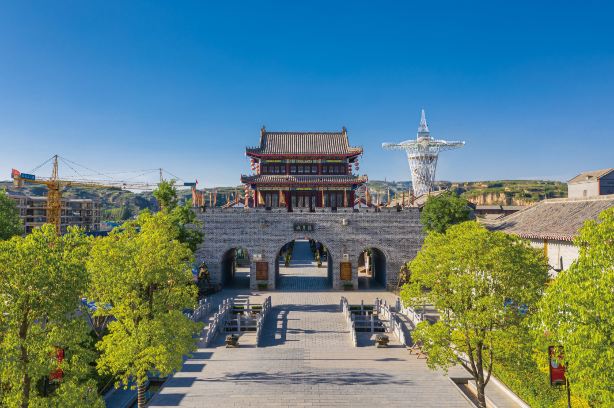
The Kang Million Manor, one of China's three major manors, is a large estate whose history bridges the Chinese Ming, Qing and Republic eras. It has been called the spiritual home of Henan and a model of Central Plains architecture. The entire estate consists of 19 distinct sections, covering a massive area, however some sections are currently not open to the public. The architecture of the Kang Million Estate displays a unique style, showcasing multiple facets of Chinese traditional culture. The sculptures on the property are also quite beautiful, and visitors have admired them for many years running.Gongyi · 6.8 km from downtown

Gongxian Grottoes
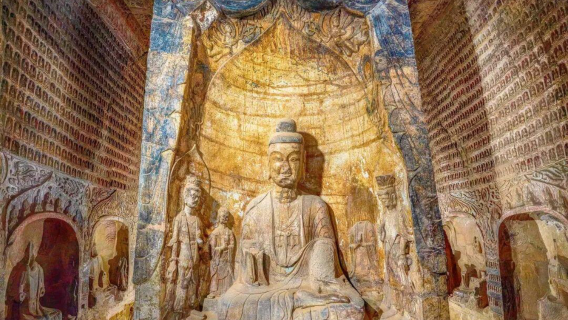
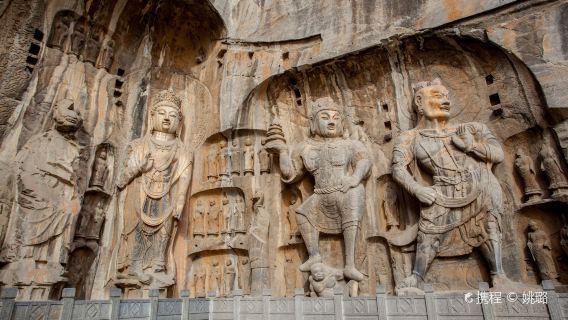
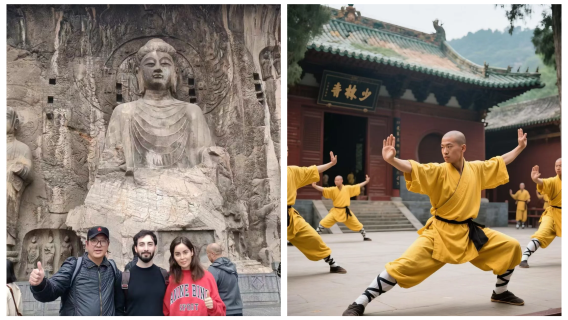
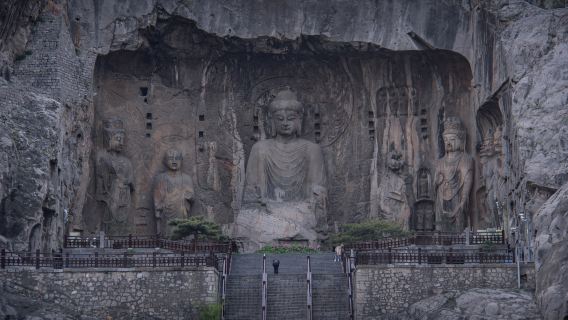
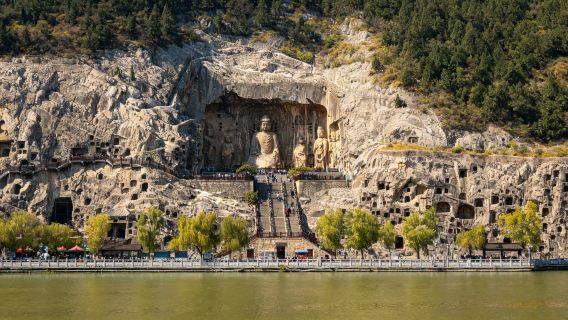
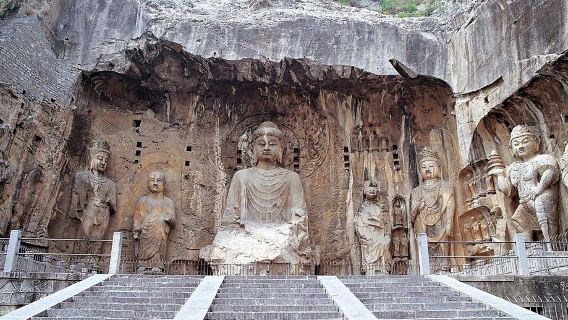
Gongyi Grottoes Temple is located at the foot of Dali Mountain, 9 km northeast of Gongyi city, nestled against the mountain and facing the water with picturesque scenery. Once praised as "a secluded retreat of misty streams and cloud-kissed cliffs," it is now a national AAA-level tourist attraction. The temple preserves five grottoes, one Thousand-Buddha niche, 255 small niches, three cliffside statues, and a total of 7,743 carved Buddha images, along with over 200 inscribed stone tablets. Among its treasures are 15 exquisite imperial Buddhist reliefs, renowned for their meticulous composition, masterful craftsmanship, and vivid character portrayals, making them rare gems in Buddhist art. Gongyi GrottoesCommissioned by the Northern Wei imperial family, the Gongyi Grottoes Temple was established by Emperor Xiaowen, with cave excavation beginning during Emperor Xuanwu's reign. Thousands of Buddhist statues were carved, followed by additional smaller niches created during the Eastern Wei, Western Wei, Tang, and Song dynasties. The Gongyi Grottoes Temple represents a continuation of...Longmen GrottoesIt was carved later, combining the foreign influences of Buddhist art with the traditional Han Chinese artistic style of the Central Plains.Gongyi · 7.2 km from downtown

Du Fu's Hometown
The famous Tang poet Du Fu (712-770) was born in a one-hole brick cave at the foot of Bijia Mountain. Du Fu spent his youth here. In 1962, Du Fu's hometown was renovated and restored to its original appearance. It is a rectangular courtyard facing east to west and the gate facing south. The original house is 20 meters long and 10 meters wide. It has a small green tile gate tower. , hard mountain-style gray tile roof, indoor display of rare books of Du Fu's poems, comic strips of Du Fu's life, poetic paintings of Zhang Daqian, Jiang Guanghe, Qi Baishi, Zeng Zhushao, and a bronze statue of Du Fu.Gongyi · 6.4 km from downtown

Songshan Shaolin Scenic Area
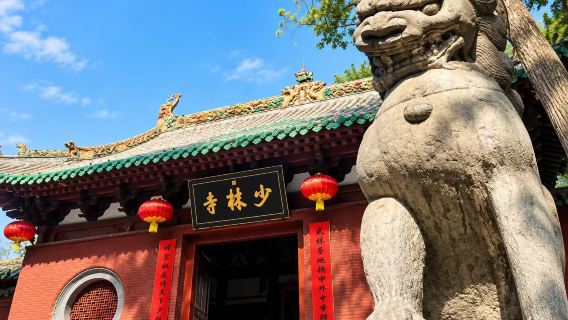
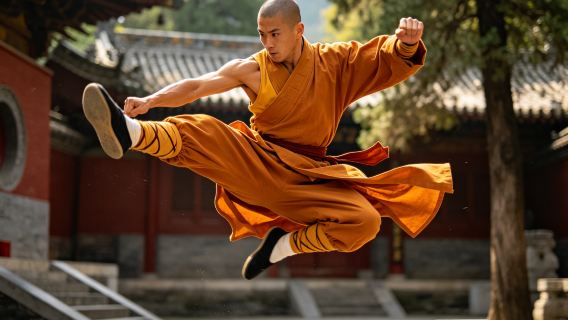
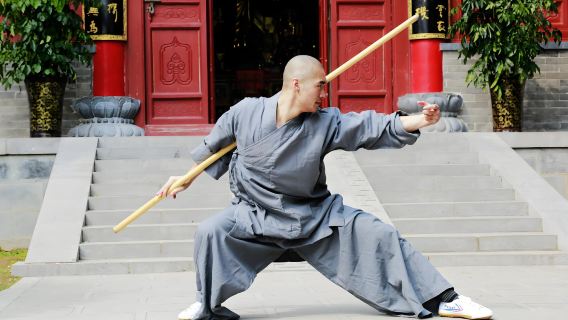
It is said that "all martial arts originate fromShaolinNot only Chinese people who grew up deeply influenced by Shaolin kung fu, but also many international friends visiting Henan will go to see Shaolin temple. It is not only a sacred place for martial arts worldwide, but also the ancestral temple of Zen Buddhism. Striking some classic martial arts poses for photos at Shaolin temple makes the swords and shadows of the martial world seem to flash before your eyes. AboutShaolin TempleTwo keywords 1. The founder of Zen Buddhism The Shaolin Temple is a sacred Buddhist site in China and the ancestral temple of Chan Buddhism. In 527 AD, the renowned Indian monk Bodhidharma (known as the founder of Zen) traveled by sea to southern China, crossed the Yangtze River northward into the Central Plains, and arrived at Shaolin. He meditated and taught dharma in the mountains behind the Shaolin Temple, first advocating the Chan teaching of "mind-to-mind transmission," thereby establishing the temple's revered status as the ancestral home of Chan Buddhism. Nowadays, many visitors come to Shaolin Temple to pray for blessings and peace. The origin of martial arts After the "Thirteen monks with staffs rescued Li Shimin" incident in the early Tang Dynasty, Shaolin Temple became renowned worldwide for its exquisite "Shaolin Kung Fu," and since thenShaolinMonks practicing martial arts has become a common tradition passed down through generations. The Shaolin Temple is the birthplace of Shaolin kung fu, andShaolinThe pai school is a martial arts sect with a wide influence, long history, and numerous boxing styles in the wulin (martial arts world). Since ancient times, it has been regarded as "the foremost martial arts sect in the world" and the supreme authority of martial arts by Chinese people. The Shaolin Temple scenic area - pagoda forest is the burial ground of Shaolin Temple's successive abbots, serene and solemn. You might even catch glimpses of the movie "Shaolin Temple" here. Travel tips What to do? How long to stay? Recommended self-guided tour activities: Half-day tour:Shaolin Temple- Pagoda forest - Chuzu nunnery - Damo cave - Songshan Shaolin scenic area -Songshan Shaolin scenic area - Shaolin temple martial arts hallPerformance The Shaolin Temple complex mainly consists of three parts: the Changzhu Yuan Pagoda Forest, the Chuzu Nunnery, and the Songshan Shaolin attraction - Damo Cave. Most visitors traveling to Shaolin Temple from Luoyang or Zhengzhou choose this route. The layout of Shaolin Temple is typical of Han Chinese Buddhist temples, featuring central axis symmetry. After entering the mountain gate, you can walk straight ahead. The temple is not large, and the visit can be completed within an hour. The Shaolin Temple scenic area - pagoda forest is located approx. 400 m west of Shaolin Temple, serving as the burial ground for the temple's eminent monks throughout history. As the Buddhist saying goes: "Saving one life is better than building a seven-story pagoda." Here, you can learn about the life stories of Shaolin Temple's eminent monks across different dynasties. The Chuzu Temple and Songshan Shaolin attraction - Damo Cave are also near the Shaolin Temple, accessible by walking. The Chuzu Temple was built by people of the Song Dynasty to commemorate Bodhidharma's wall-gazing meditation, while the Songshan Shaolin attraction - Damo Cave is the very place where Patriarch Bodhidharma meditated facing a wall for nine years. 1-day tour:Shaolin Temple-Tallinn-Sanhuangzhai In the morning, follow the half-day tour itinerary to visit Shaolin Temple first, then proceed to the Shaolin Temple attraction - Pagoda Forest. The location is approx. 5 min walking distance from the Shaolin Temple attraction - Pagoda Forest.Shaolin cablewayAfter taking the cable car to Sanhuangzhai station, it takes about 30 minutes to reach the destination on foot.Sanhuangzhai scenic areaPortal. ActivitiesSanhuangzhai scenic areaIt takes at least 3-4 hours to explore the attraction, which features many unique geological views. The Sanhuangzhai cliffside plank walk is a must-see. Walking along the cliffside path with towering cliffs on one side and a sheer drop on the other is both a physical and mental challenge. 2-day tour:Shaolin Temple- Songyang scenic area - Zhongyue scenic area Shaolin Temple andSongyang academy, Mount SongLocated in Dengfeng, visitors with ample time can purchase a combo ticket for all three sites and explore them over two days. On the first day, visitShaolin scenic areaIn the evening, watch the live performance of "Zen Shaolin Music Ceremony", and the next day, head to Songyang, which is far from downtown Dengfeng.Zhongyue scenic area. Where can I see authentic Shaolin kung fu? Nowadays, it is difficult for ordinary visitors to witness the martial arts training of Shaolin monks at Shaolin temple. However, visitors can use the Shaolin temple combo ticket to watch the Shaolin kung fu performance at the Shaolin martial arts hall in Songshan Shaolin scenic area, approx. 700 m east of Shaolin temple. Performance time: The performance time at Songshan Shaolin scenic area - Shaolin temple martial arts hall is subject to the on-site announcement. Each performance lasts 30 minutes. The cost is included in the admission ticket. Where is a good place to stay?There are some farmhouse inns and guesthouses around Shaolin Temple, but the conditions are average. If you're not in a hurry, it's not recommended to stay here. If you need to stay overnight, Dengfeng city center is a good choice, as it offers convenient access to the three major attractions of Songshan Mountain. Shaolin TempleIs vegetarian food available?Since you're visiting Shaolin Temple, don't miss the vegetarian cuisine. The vegetarian restaurant inside Shaolin Temple is called "Huanxidi" and is worth trying. Shaolin story The most stubborn holdout in history: When it comes to stubborn holdouts, they didn't just appear in modern times. As early as the Tang dynasty, the Shaolin Temple emerged as such a case. Emperor Li Yuan of Tang issued an order for its demolition but failed. When Li Shimin came to power, not only was the Shaolin Temple spared from punishment, but it also received generous rewards. Compared to today's holdouts, the Shaolin Temple can be called the most legendary stubborn holdout in history. The origin of the matter was an imperial edict issued by Li Yuan, ordering the demolition of all temples within Henan province, including the Shaolin Temple. After receiving the imperial decree, hundreds of monks at Shaolin Temple refused to comply, standing united and resolute in collective defiance. Li Yuan had no choice, as the Tang dynasty was newly established and could not afford to gain a reputation for cruelty. He tacitly allowed the temple's "retention" but revoked the 4,000 acres of temple land previously granted by the Prince of Qin. Later, when Li Shimin became emperor, he granted Shaolin Temple an additional 4,000 mu of land, permitted the temple to train monk soldiers, lift the prohibition against killing, and consume alcohol and meat. Inside the temple, there is a stele titled "Emperor Taizong of Tang's decree to the Shaolin Temple abbot," which records this historical event. You may want to see it when visiting the Shaolin Temple.Dengfeng · 27.8 km from Gongyi

Songshan Scenic Area
Songshan Scenic Area is one of the five famous mountains in China. It is composed of Taishi Mountain and Shaoshi Mountain. This area not only boasts magnificent natural landscapes such as Sanhuangzhai and Junji Peak, but also has a number of historical and cultural landmarks such as the world famous Shaolin Temple; the Songyang Academy, one of China's four major Confucian academies; and the Taoist Zhongyue Temple of the Quanzhen School. All of these locations attract many visitors.Dengfeng · 28.2 km from Gongyi

Yongzhao Mausoleum
The Yongzhao Mausoleum comprises the Upper Palace, Lower Palace, and accompanying burial tombs. Along both sides of the Sacred Way, 58 exquisite stone carvings, including civil officials, military officers, foreign envoys, stone horses, and stone sheep, are arranged. These carvings are grand in scale and majestic in spirit, representing the pinnacle of Northern Song Dynasty stone carving art. From 1995 to 1997, Gongyi invested CNY 180 million in restoration and reconstruction efforts, rebuilding the Que Platform, Ru Platform, Sacred Gate, Sacred Wall, and the palace city complex to their original appearance. The mausoleum officially opened to the public in October 1997. Covering an area of approximately 380,000 square meters, the mausoleum features a square layout, facing south from the north, embodying the Northern Song imperial tomb system of "mounding earth to form a mausoleum." The area also contains the tombs of famous Song Dynasty officials such as Bao Zheng (Lord Bao's Tomb) and Kou Zhun, holding immense historical and cultural value. During the spring, when peonies are in full bloom, the vermilion walls and green tiles complement the vibrant flowers, making it a significant cultural tourism landmark in Gongyi.Gongyi · 3.4 km from downtown

Imperial Mausoleum of the Northern Song Dynasty
The Imperial Mausoleum of the Northern Song Dynasty, located in Gongyi City, Zhengzhou City, was built in the sixth year of Gande, Emperor Taizu of Song Dynasty (AD 968), and has a history of more than a thousand years. There were a total of nine emperors in the Northern Song Dynasty. Except for the two emperors Huizong and Qinzong who were captured by Jin soldiers and died in Wuguocheng, the other seven emperors and Zhao Hongyin (the father of Zhao Kuangyin, the founding emperor of the Northern Song Dynasty) were all buried in Gongyi territory. The mausoleum is commonly known as the "Seven Emperors and Eight Mausoleums". In addition to the emperor's mausoleum, there are nearly 1,000 mausoleums here, including concubines, Gao Huaide, Kou Zhun, Bao Zheng, Yang Liulang, Zhao Pu and other heroic generals. Due to the war, most of the ground buildings in the cemeteries of the imperial mausoleums of the Northern Song Dynasty have been destroyed. The imperial mausoleums of the Northern Song Dynasty are mainly divided into four areas: Xicun Mausoleum, Caizhuang Mausoleum, County Mausoleum, and Baling Mausoleum. The Xicun Mausoleum includes Yong'an Mausoleum, Yongchang Mausoleum, Yongxi Mausoleum, etc.; Qi Tomb, Bao Zheng Tomb, Kou Zhun Tomb, etc.; Yongzhao Mausoleum and Yonghou Mausoleum in the county seat area; Yongyu Mausoleum and Yongtai Mausoleum in the Baling Mausoleum area. Among the tombs of the Northern Song Dynasty, the only tomb that charges is paid is the Yongding Mausoleum (the tomb of Zhao Heng, Emperor Zhenzong of the Song Dynasty) on the outskirts of the city. In the mausoleum area, you can see many very tall "stone statues" (one of the main ritual objects in front of the tombs of the emperors, which are stone figures and animals on both sides of the Shinto), among which there are generals, lions, and warriors. Like Gongren and others, many portraits have the appearance of "Hu Ren". Yongzhao Mausoleum, located in the urban area, is the mausoleum of Zhao Zhen, the fourth emperor of the Northern Song Dynasty, Song Renzong, and has now been transformed into Song Mausoleum Park. The entire Yongzhao Mausoleum is huge in scale and consists of "Emperor's Mausoleum", "Queen's Mausoleum" and "Lower Palace". Originally, there were various buildings such as the upper palace, the lower palace and the monastery palaces on the mausoleum, but now they have been seriously damaged. There are existing building foundations such as magpie platforms, gate valves and angle valves on the ground, especially the Shinto stone statues are relatively preserved. whole. It is suggested that except for Yongding Mausoleum and Yongzhao Mausoleum, other mausoleum areas are outside the wilderness, and the traffic is somewhat inconvenient. If you are pressed for time, you can visit the Yongzhao Mausoleum (Songling Park) in the urban area; if you have enough time, it is recommended to spend a day to see all the "Seven Emperors and Eight Tombs". Reference route: Yongtai Mausoleum - Yongyu Mausoleum - Yongchang Mausoleum - Yongxi Mausoleum - Yongding Mausoleum - Yongzhao Mausoleum - Yonghou Mausoleum. You can only choose self-driving or chartered transportation.Gongyi · 3.4 km from downtown

The Bamboo Forest Longevity Mountain
The Bamboo Forest Longevity Mountain is named for its natural landscape which resembles a fairy mountain. It is very pleasant to look out at the sights of Wangyuan Mountain, visiting hiking trails, picking some wild fruits, or taking a break in the woods. Especially in the autumn season, the red leaves of the mountains and fields have attracted countless visitors to take pictures here.Gongyi · 11.8 km from downtown

Mount Qinglong Ciyun Temple
Mount Qinglong Ciyun Temple is located in Zhenming Village, Dayugou Town, Fanyi City. There are mountains and bodies of water nearby, and the scenery is very beautiful; it is an ideal place for vacation. The temple was constructed during the Han Dynasty and has two thousand years of history. The current stone inscription that remains has tremendous value, whether as an artistic work or a historical relic. It is definitely a place to be visited.Gongyi · 8.9 km from downtown

Fuxi Grand Canyon
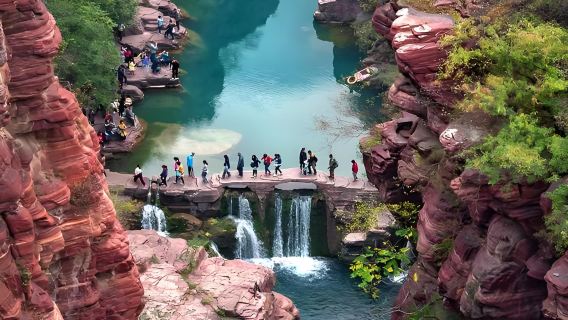
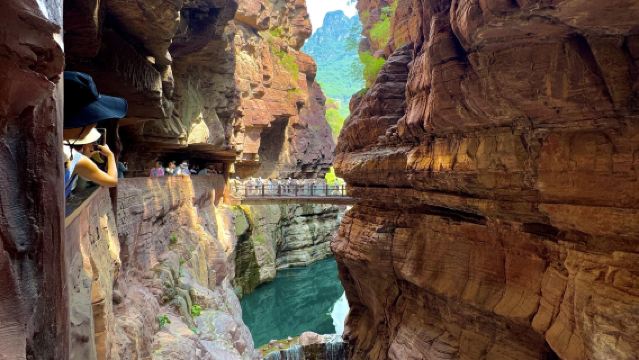
The Mt. Fuyi Canyon Scenic Park is home to a group of red-rock gorges. It is located in the deep of the mountains with constant streams of water flowing through it all year round. The area is very cool, a great place to go during the summer. Mt. Fuyi Canyon is also home to a host of smaller attractions, such as the Sleeping Dragon Patio, Cultural Tunnel, Five-Color Stones, Huanglong Pool, Huanglong Temple, etc. Tourists can enjoy the "rock bath" here. There are many rocks on both sides of the Canyon, many of which are shaped like animals.Xinmi · 22.2 km from Gongyi
Experiences you can't miss in Gongyi
Featured Day tours in Gongyi
View all Day tours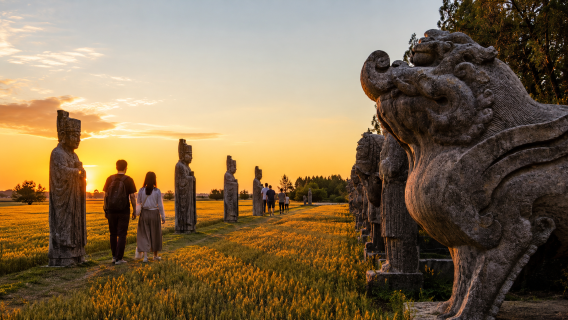
Free cancellation
Instant confirmation
Book now for tomorrow
FromQAR 163.22
Free cancellation
Instant confirmation
9% off
Limited-time sale
FromQAR 321.50QAR 357.22

4.4/5
· 25 reviews· 297 bookedInstant confirmation
Book now for tomorrow
FromQAR 250.98
5.0/5
· 11 reviews· 179 bookedFree cancellation
Instant confirmation
Book now for tomorrow
FromQAR 300.24

4.9/5
· 13 reviews· 92 bookedFree cancellation
Instant confirmation
Book now for tomorrow
FromQAR 271.69
4.6/5
· 5 reviews· 93 bookedFree cancellation
Instant confirmation
Book now for tomorrow
FromQAR 200.89
4.8/5
· 13 reviews· 79 bookedFree cancellation
FromQAR 508.24
Featured Cultural experiences in Gongyi
View all Cultural experiences
5.0/5
· 2 reviewsInstant confirmation
FromQAR 97.05

Free cancellation
Instant confirmation
FromQAR 134.05


5.0/5
· 1 reviewFree cancellation
Book now for tomorrow
FromQAR 21.84
5.0/5
· 1 reviewFree cancellation
Instant confirmation
Book now for tomorrow
FromQAR 238.44
Free cancellation
Instant confirmation
Book now for tomorrow
FromQAR 206.35
Featured Food & drink in Gongyi
View all Food & drink
4.8/5
· 25 reviews· 567 bookedFree cancellation
Book now for tomorrow
219 travelers saved
FromQAR 108.09

4.8/5
· 4 reviews· 28 bookedFree cancellation
Instant confirmation
Book now for today
FromQAR 102.63
Free cancellation
Instant confirmation
Book now for tomorrow
FromQAR 206.35

Free cancellation
Book now for tomorrow
FromQAR 124.47

5.0/5
· 1 reviewFree cancellation
Book now for today
FromQAR 108.09

Free cancellation
Instant confirmation
Book now for today
FromQAR 140.84
Free cancellation
Instant confirmation
Book now for today
FromQAR 242.92
Featured Outdoor experiences in Gongyi
View all Outdoor experiences
5.0/5
· 1 reviewInstant confirmation
Book now for tomorrow
FromQAR 244.71
5.0/5
· 1 reviewInstant confirmation
Book now for tomorrow
FromQAR 232.16
5.0/5
· 1 reviewFree cancellation
Instant confirmation
Book now for tomorrow
FromQAR 428.55
Free cancellation
Book now for tomorrow
FromQAR 1,493.34

FromQAR 239.10
Free cancellation
Instant confirmation
Book now for tomorrow
FromQAR 263.53
Free things to do in Gongyi
Yongzhao Mausoleum
Gongyi · 3.4 km from downtownImperial Mausoleum of the Northern Song Dynasty
Gongyi · 3.4 km from downtown
Yongtai Mausoleum
Gongyi · 14.5 km from downtown
Gongyi Museum
Gongyi · 3.2 km from downtown
Haishangqiao Village
Gongyi · 4.8 km from downtown
Erlitou Site Museum of the Xia Capital
Luoyang · 30.9 km from Gongyi
Fuxi Mountain Tourist Area
Xinmi · 24.9 km from Gongyi
Yongchang Mausoleum
Gongyi · 11.1 km from downtown
Luoyang Museum
Luoyang · 53.4 km from Gongyi
Henan Museum
Zhengzhou · 59.5 km from Gongyi
What travelers say about Gongyi

Anonymous userOctober 8, 2026
4.0
Very good. Worth seeing. The ticket price of 50 yuan is reasonable. The brick and wood carvings are exquisite, and the houses tell many stories, spanning the Ming, Qing, and Republican periods. There are many makeshift parking spots along the roadside, used for soliciting passengers; hopefully, this will be addressed.
Kang Baiwan Manor
Anonymous userOctober 10, 2026
5.0
Speechless with beauty, these statues allow you to truly touch the stone marks from over a thousand years ago. The inscriptions bear the reign titles of the Eastern and Western Wei dynasties and Emperor Gaozong (Li Zhi), making you realize you are witnessing the traces of lives from a distant past.
Just looking isn't enough; listening to the explanation is best. I found a video online and listened while walking, noticing many details – kudos!
It's a bit far from the city center, but there are buses; it takes about half an hour to get back to the train station. You can also take a ride-hailing service.
Gongxian Grottoes

M47***15February 19, 2026
5.0
With boundless respect and anticipation, we brought our children to trace the footsteps of Du Fu, one of the greatest poets of the Tang Dynasty, a man deeply concerned about his country and its people. The entire former residence reflects Du Fu's life: simple, almost to the extreme, devoid of any extravagance or superfluity. Perhaps due to the relatively low number of visitors, there weren't enough funds for renovations. This aligns with Du Fu's character and destiny throughout his life.
Du Fu's Hometown
Anonymous userOctober 19, 2026
4.0
We took the Shaolin cable car up to Shuce Cliff, walked a little further, and then turned back after hearing that the Liantian Plank Road was still a long way off. We visited Shaolin Temple and the Pagoda Forest before leaving, saving our energy for Laojun Mountain the next day.
Songshan Shaolin Scenic Area

M35***29October 7, 2026
5.0
The scenery at Mount Song is fantastic, and the staff are incredibly kind and helpful. During the National Day holiday, I lost my earphones on the shuttle bus. Although I realized it immediately, the bus had already left by the time I got there, and only the next one was running. The driver was very kind and helped me contact the previous driver, who also helped search for the earphones and offered words of comfort, ultimately recovering my lost earphones. I was extremely grateful. This was my first time being at a scenic spot, especially during the massive crowds of National Day, and the staff were still so helpful, demonstrating the genuine kindness and simplicity of the people of Dengfeng. Prices for goods and souvenirs were very reasonable. It was a wonderful experience, and I will definitely come back to Mount Song. I hope more people will see this excellent scenic spot, offering five-star service at one-star prices.
Songshan Scenic Area
Anonymous userSeptember 5, 2026
5.0
The young tour guide was very responsible and knowledgeable about history. Later, I took her directly to the grotto temple, where she talked to me for almost two hours about it. It was truly heartwarming to have people who love local culture sharing their local culture and history.
Yongzhao Mausoleum

殷都老虎July 16, 2023
4.0
Songling
The Imperial Mausoleum of the Northern Song Dynasty, located in Gongyi City, Henan Province, was built in the first year of the Qiande reign (963 AD) and is the mausoleum of the Northern Song emperor and his accompanying clan members.
There are more than 300 tombs in the Song Tombs, covering an area of about 156 square kilometers. There are more than 700 stone carvings, which have important cultural and artistic value. The mausoleum complex covers the remaining seven emperors of the Northern Song Dynasty except Huizong and Qinzong, plus the mausoleum of Zhao Kuangyin's father Zhao Hongyin, collectively known as the "Seven Emperors and Eight Mausoleums". Surrounding the eight imperial tombs are more than 300 tombs of empresses, royal family members, and famous generals and meritorious officials. The tombs of ministers such as Kou Zhun and Bao Zheng are also among them.
The Song Tombs pioneered several types of mausoleum area settings, embodying the royal order of hierarchy and strict hierarchy, and forming a theoretically rigorous and unique royal funeral culture.
Main mausoleums:
Imperial mausoleums: Yong'an Mausoleum, Yongchang Mausoleum (Zhao Kuangyin), Yongxi Mausoleum, Yongding Mausoleum, Yongzhao Mausoleum (restored), Yonghou Mausoleum (semi-developed), Yongyu Mausoleum, Yongtai Mausoleum, Yongxian Mausoleum.
Tombs for accompanying burials: Tomb of King Wei, Tomb of Empress Li of Yuande, Tomb of Kou Zhun, Tomb of Bao Zheng, Tomb of Empress Cao of Guangxian, Tomb of Empress Gao of Xuanren, and Tomb of Empress Xiang of Qinsheng.
Tips: Yongzhao Mausoleum (restored), closed most of the time, it is recommended to call for consultation. Yonghou Mausoleum (semi-developed) is a ruins square with great visiting value. The above two gardens are both located in the urban area with convenient transportation.
Yongchang Mausoleum (Zhao Kuangyin) is 7 kilometers away from the city center and requires driving. The cemetery is protected and undeveloped, and you can enter and exit freely to enjoy the authentic original mausoleum style.
The stone statues in the mausoleum are slender and elegant, reflecting the Song Dynasty's emphasis on culture over military affairs. The image of the warrior guarding Zhao Kuangyin's tomb is lively and vivid, natural and casual, reflecting the Song Dynasty's people-loving style.
Accommodation: Convenient accommodation and food close to the city.
Ticket price: Free.
Time: Each mausoleum takes about 20-60 minutes to visit.
Imperial Mausoleum of the Northern Song Dynasty
M32***40March 17, 2025
4.0
When I came to Changshou Mountain Scenic Area, I was refreshed by the red leaves all over the mountain. Being in the red leaves, it was really a different scene with every step. In particular, you can take a helicopter tour of the scenic area, which was very shocking. The children had a lot of fun.
The Bamboo Forest Longevity Mountain

精光葫芦娃November 26, 2020
5.0
Ciyun Temple is located in the west of Tianzhen County, Datong City, Shanxi Province. It is known as the "Great Temple in the North of the Pass". It was first built in the Tang Dynasty and was originally named Fahua Temple. It was renamed Ciyun Temple during the Xuande period of the Ming Dynasty. The full view of Ciyun Temple seen now is a complete group of ancient buildings preserved during the Xuande period of the early Ming Dynasty. The whole temple is more than 140 meters long and more than 40 meters wide. There are four halls, namely the Vajra Hall, the Great Hall, the Sakyamuni Hall, and the Pilu Hall, as well as the Guanyin Hall and the Ksitigarbha Hall on the east and west wings. On May 25, 2006, Ciyun Temple, as an ancient building of the Ming Dynasty, was approved by the State Council to be included in the sixth batch of national key cultural relics protection units.
Mount Qinglong Ciyun Temple
Anonymous userJune 28, 2026
5.0
I'm someone who never leaves reviews, but this time I have to give it a strong one. This experience was truly amazing! The facilities were beautifully designed, and the house was very comfortable, with large floor-to-ceiling windows, plenty of hot water, and no clogged drains. Even during a windy night, the cabin remained stable and quiet. The service was excellent; the staff was incredibly attentive from start to finish. They turned on the air conditioning before we arrived, and had our meals prepared in advance. Even after a long day, she still stood and chatted with us. The rooms were clean, hygienic, and bright. As for the food, it was absolutely delicious!! I highly recommend the chicken soup; ordering a day in advance allows them to have it freshly killed! I was blown away!! It wasn't fishy at all, and the chicken was plump and juicy. There was one minor incident: we encountered two unreasonable customers who kept causing trouble for the shop, demanding only a refund. I overheard them threatening to report us to the police and leave a bad review. I want to strongly condemn these kinds of unscrupulous customers and tell everyone not to believe their negative reviews!! 🙅 I will definitely bring my family and friends back~
Fuxi Grand Canyon


