Things to do in Nujiang
Explore top experiences
Top 10 attractions in Nujiang


Nujiang Grand Canyon
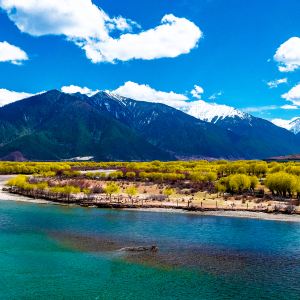
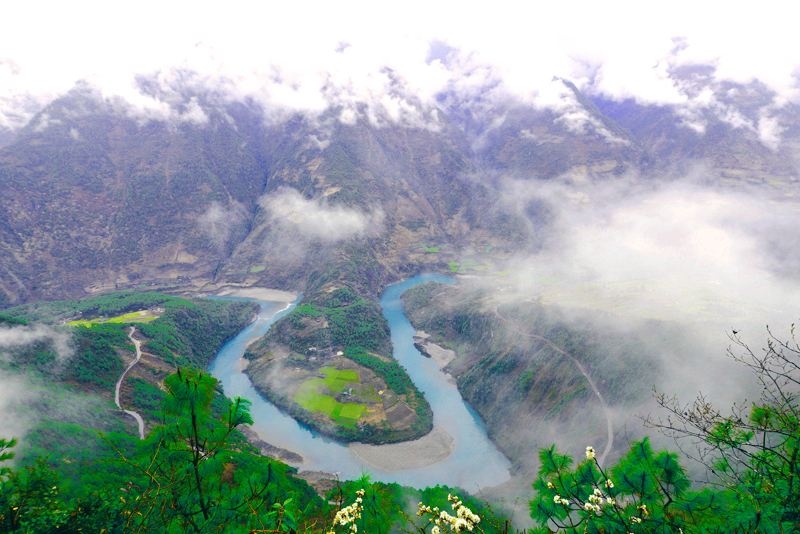
Nujiang Grand Canyon is located in the "Three Parallel Rivers" region of the Hengduan Mountains in northwestern Yunnan. It is a long, narrow canyon carved by the Nujiang River between theGaoligong Mountainsand Biluo Snow Mountain, both of which exceed 4,000 m in altitude. The Yunnan section stretches over 300 km, with a canyon depth mostly around 2,000 m and narrow sections only a few dozen meters wide, earning it the name "Oriental Grand Canyon"; the area aroundBingzhongluo in Gongshanis deeply incised, with a height difference between the mountains and the river surface reaching 3,000–4,000 m, making it one of the most precipitous parts of the entire route. The sights of this canyon are not limited to its high mountains and deep valleys. Traveling north from Liuku, the gateway at the southern end, you will encounter attractions all along the way: the "Stone Moon" atop theGaoligong Mountainsin Fugong is a massive hole eroded into the marble, visible from dozens of kilometers away with daylight shining through it; the The First Bend of the Nujiang River nearBingzhongluo in Gongshanfeatures the river making a sharp turn into a semicircular bay after being blocked by sheer cliffs, with a pastoral peninsula surrounded by water on three sides at its center; not far away, the sheer cliffs of Shimen Pass stand on both sides of the river, creating a perilous landscape. Traces of the Ancient Tea Horse Road still remain on the cliff walls along the river; this ancient road once connected Yunnan with Tibet along the canyon. More than 20 ethnic groups, including the Lisu, Nu, Drung, and Pumi, live on both sides of the canyon. Among them, the Nu and Drung people have lived in this canyon for generations, maintaining simple and traditional folk customs. In winter, the snow-capped mountains on both sides of the canyon are covered in silver, and as the Nujiang River enters the dry season, its water becomes blue-green and calm, while the climate at the bottom of the valley remains mild. The sight of snow-capped mountains framed with lush green fields is a rare scene elsewhere.Fugong · 23.3 km from downtown

Bingzhongluo Scenic Area
Bingzhongluo Scenic Area is located near the Yunnan-Tibet border, deep within theNujiang River Canyonin the "Three Parallel Rivers" region. The Gaoligong Mountains and Biluo Snow Mountain face each other across the river here, and the Nujiang River flows through the entire area from north to south. The river current suddenly slows down when it reachesBingzhongluo, where the mountains on both banks recede to reveal a rare, flat terrace in the canyon. Known for its beautiful pastoral scenery, the fields and village houses here are framed by the snow-capped Gawa Gapu Snow Mountain to the west. The area is home to the Nu, Tibetan, Lisu, and other ethnic groups. It features both indigenous traditional beliefs and Catholic churches introduced over a century ago, with several faiths coexisting peacefully on the same terrace. Due to the obstruction of the mountains, the southern part of the area can even experience two sunrises and sunsets in a single day. The iconic The First Bend of the Nujiang River is located near Ridan Village: the river is blocked by the Wangqing Cliff, forcing its flow to change from north-south to east-west. After flowing for over 300 m, it is blocked again by the Danla Mountains, forcing it to make a sharp turn from west to east, carving out a massive semicircular river bend. The terrace at the center of the bend is surrounded by water on three sides, and the fields and farmhouses ofKantong Villagelie on this "peninsula," which is known as a hidden paradise within the canyon. Traveling north along the river, you will find Shimen Pass, Wuli Village, and Qiunatong Village in sequence: at Shimen Pass, sheer cliffs stand on both sides of the river, causing the river surface to narrow suddenly; it has been a perilous gateway to the canyon since ancient times. Wuli Village is hidden beneath the cliffs on the east bank of the river. An old section of the Ancient Tea Horse Road carved along the cliff serves as the former path into the village, and the terraced fields and rising smoke are often compared to an oil painting by visitors. A wooden Catholic church stands at the entrance of Qiunatong Village. The canyon becomes increasingly deep here, and further north, you will leave Yunnan and enter other territories.Gongshan · 30.6 km from downtown

Kongque Mountain
At the border of Deqin County in Diqing Tibetan Autonomous Prefecture and Gongshan County in Nujiang Prefecture stands the proud Kongque Mountain. It is part of the Hengduan Mountains, with a north-south orientation that acts like a natural boundary marker, separating the Lancang River and the Nujiang River, while also connecting the distinct landscapes of the two regions. It gets its name because, from a distance, the peak resembles a peacock about to spread its wings and fly. The main peak of Kongque Mountain has an elevation of approx. 4400m, and the mountain is shaped like a beautiful pyramid. Located on the windward slope of the warm, humid air currents from the Indian Ocean, it receives abundant precipitation, and winter snow often reaches a depth of over 3m. Hidden among the mountains is a series of alpine lakes known as the "Twelve Lakes of Tianxin," with water as clear as gemstones, reflecting the snow-capped mountains and prayer flags. With the completion of the Deqin-Gongshan Highway and the opening of the Kongque Mountain Tunnel, this hidden gem within a hidden gem is no longer out of reach. Whether it is the blooming flowers of summer or the snow-covered landscapes of winter, this place showcases a pure, tranquil, and magnificent painting of nature.Gongshan · 38.4 km from downtown

Dulong River
Dulong River is located in Gongshan Dulong and Nu Autonomous County, Yunnan Province, China. Situated between the Gaoligong Mountains and the Dangdanglika Mountains, it features steep canyons, continuous snow-capped mountains, and a forest coverage rate as high as 93.10%, making it one of the regions with the most intact primitive ecological environments. It is a core area of the Gaoligongshan Nature Reserveand the "Three Parallel Rivers" World Natural Heritage site. Its waters are rapid and clear, with magnificent peaks on both sides, and ethnic-style beige villages at the foot of the mountains. The scenery resembles a natural watercolor painting. Beyond its natural beauty, it is also renowned for its unique ethnic culture. The Dulong people living here are one of China's smaller ethnic minorities, preserving many traditional lifestyles and customs, such as unique weaving techniques and traditional festival activities. The "Ka Que Wa" festival, held every winter, is an important festival for the Dulong people, where visitors can experience rich ethnic customs during this period. For travelers seeking an in-depth experience of nature and culture, this is undoubtedly a destination worth exploring.Gongshan · 35.1 km from downtown

Wuli Village
Wuli Village is a quiet small mountain village located on the Ancient Tea Horse Road, north of Bingzhongluo Town, Gongshan County, Nujiang Prefecture. There are simple residents, primitive natural environment, and a relaxed atmosphere, just like a paradise. This is a paradise for photography enthusiasts. Pick up the camera and face the blue sky and white clouds, ancient village buildings and other scenery, and take a photo will show a beautiful scenery blockbuster.Gongshan · 35.5 km from downtown

The First Bend of the Nujiang River
As the Nujiang River flows near Ridan Village in Bingzhongluo Township, Gongshan County, it is blocked by the Wangqi Cliff and Danla Mountain, forcing it to make a sharp turn and form a large semi-circular bend known as The First Bend of the Nujiang River, which has become an iconic view of the Nujiang Grand Canyon. The First Bend of the Nujiang River encloses a small, peninsula-like plain surrounded by water on three sides, offering spectacular scenery. There is a small village on the plain calledKantong Village. During holidays and leisure time, people gather here to go boating on the river or sing and dance, creating a harmonious atmosphere that feels like a true paradise. Overlooking from the top of the valley, you can see the terrace in the bend and the connected Wangqi ridge, which resemble the bust of a thousand-year-old giant swimming in the sea.Gongshan · 29.3 km from downtown

Laomudeng Village
Laomudeng is a Nu language, meaning "Purple Bamboo Land". It is located on the gentle slope of the east bank of the Nujiang River, with Biluo Snow Mountain to the east and Gaoligong Mountain to the west. The green tea produced in the village is fresh and natural, rarely polluted, and tastes great, which is well received by tea drinkers. Many tourists will take a few boxes as souvenirs after visiting here. There is also a Laomudeng Church in the village that can be visited, and the villagers come here to worship every Sunday.Fugong · 39.4 km from downtown

Laomudeng-Zhiziluo Scenic Area
Zhiziluomeans "a good place" in the Lisu language. It has been the administrative center of the Nujiang region since the end of the Qing Dynasty and currently serves as the seat of the Zhiziluo Village Committee, retaining buildings from the 1960s and 1970s. Laomudeng-Zhiziluo Scenic Area is backed by the Biluo Snow Mountain, with theGaoligong Mountainsin front, and the famous Nujiang surging past nearby. It enjoys a spring-like climate all year round.Fugong · 39.6 km from downtown

Denggeng Hot Spring
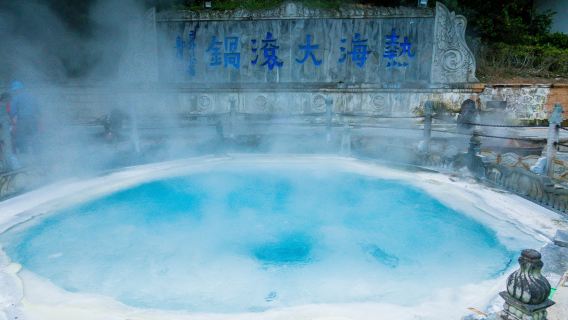
Denggeng Hot Springare located on the west bank of the Nujiang River, beside the Yuejin Bridge. Hot springs emerge along the riverbank, and within a stretch of about 200 meters, there are 18 springs of varying sizes, giving rise to the saying, "Denggeng has 18 hot spring pools." For over a hundred years, the Lisu people, following their traditional customs, have held the "Bathing Pool Festival" in Denggeng, Luzhang Town, Lushui County, from the 2nd to the 6th day of the Chinese New Year. During the festival, they engage in activities such as antiphonal singing, crossbow shooting, climbing a mountain of knives, walking through fire, and bathing in the hot springs.Lushui · 13.8 km from downtown
Nujiang Bridge
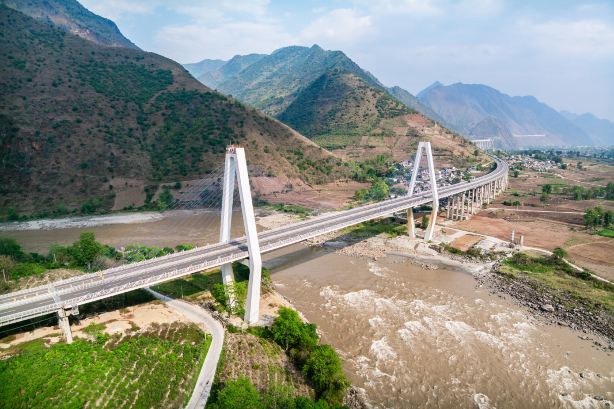
Nujiang Bridge is located in Liuku Town, Lushui County, Nujiang Prefecture, Yunnan Province. Construction began in January 1988, and it was opened for use in June 1991. The bridge has a total length of 678m and a width of 15.8m. It is a single-box, variable-section, three-way prestressed reinforced concrete continuous bridge spanning the Nujiang. With its exceptionally long single span, it ranks second in Asia and serves as the only transportation lifeline in the Liuku urban area connecting the east and west banks.Lushui · 2.7 km from downtown
Experiences you can't miss in Nujiang
Featured Day tours in Nujiang
View all Day tours

Free cancellation
Instant confirmation
Book now for tomorrow
9% off
Limited-time sale
From€35.79€39.76

Free cancellation
Instant confirmation
Book now for tomorrow
9% off
Limited-time sale
From€25.67€28.52

Book now for tomorrow
From€243.39

Featured Cultural experiences in Nujiang
View all Cultural experiences
From€98.88
Free cancellation
Book now for tomorrow
From€26.51
Free cancellation
Book now for tomorrow
From€26.51
Free cancellation
Instant confirmation
Book now for tomorrow
From€3.35
Free things to do in Nujiang
Nujiang Grand Canyon
Fugong · 23.3 km from downtownBingzhongluo Scenic Area
Gongshan · 30.6 km from downtownDulong River
Gongshan · 35.1 km from downtownWuli Village
Gongshan · 35.5 km from downtownThe First Bend of the Nujiang River
Gongshan · 29.3 km from downtownLaomudeng Village
Fugong · 39.4 km from downtownLaomudeng-Zhiziluo Scenic Area
Fugong · 39.6 km from downtownNujiang Bridge
Lushui · 2.7 km from downtown
Qiunatong Village
Gongshan · 37.7 km from downtown
Biluo Snow Mountain
Lanping · 67.7 km from downtown
What travelers say about Nujiang

走遍天下XZJanuary 21, 2024
5.0
Stone terraces
When land is extremely scarce, crops can be grown by covering stones with soil.
If you don’t see it with your own eyes, you really can’t believe that there are many families living in the mountains on both sides of the Nujiang Grand Canyon. It is said that there are more than 20 ethnic groups.
There are only rivers and mountains here. The means of production are extremely scarce. A little bit of land can gather dozens of families.
Now, all the people here have escaped poverty, and the transportation is convenient. Hundreds of bridges have appeared on the Nujiang River. It is really a magnificent scene!
Nujiang Grand Canyon

九九八十一难的我October 28, 2025
5.0
The days spent in Bingzhongluo felt like a stolen moment in time. Here, you'll find majestic mountains and rivers, a gentle countryside, and a heartwarming warmth. Perhaps it will inspire you to rethink the essence of life and find inner peace.
Bingzhongluo Scenic Area

🌞 阳光小旅橙 🧡✈️January 11, 2026
5.0
This is a paradise for hiking enthusiasts, with well-established hiking routes that are relatively easy and beginner-friendly.
Kongque Mountain

欲飞的鸟May 11, 2023
5.0
【Dulong River】 is one of the six major water systems in Yunnan and an important part of the "Four Parallel Rivers" in the Hengduan Mountains in northwestern Yunnan. It originates from the southern peak of Boshula Mountain in Zayu County, Tibet, on the Tibetan side of the border between China's Tibet Autonomous Region and Yunnan. The source part is called Gadaqu, which flows southward through the canyon between Dandanlika Mountain and Gaoligong Mountain, namely Dulongjiang Township, Gongshan County, Yunnan, China, and then turns westward into Myanmar and is renamed N'Mai Kai River. It is 250 kilometers long and has a basin area of 1,947 square kilometers. It is named after the Dulong people, one of China's 56 ethnic groups, who have lived here for generations. The Dulong River basin has abundant rainfall, a large river drop, and turbulent water, forming a unique landscape.
Dulong River

🍎海儿🍎February 19, 2025
5.0
It's worth going
[Scenery] The scenery along the Nujiang River is very good!
[Fun] Natural scenery, you can see the chickens raised by the villagers. There is a farmhouse in the village that has been on CCTV news. The stream flowing slowly from the mountain passes through the Wuli Bridge and rushes to the Nujiang River.
[Value for money] No matter which bridge you enter the village from, you can either return the original way or walk more than seven kilometers in a circle. If you want to enter the village, you must bring the necessary items.
Wuli Village

浅笑安然wljDecember 1, 2025
5.0
The First Bend of the Nu River attracts travelers seeking pristine natural beauty with its untamed charm and unique cultural background. Although the journey is challenging, standing atop the mountain and watching the Nu River wind like a dragon beneath your feet makes the trip worthwhile. This area is suitable for adventurers, photographers, or those who enjoy cultural exploration; those prioritizing comfort should choose carefully.
The First Bend of the Nujiang River

安迪珠宝February 16, 2025
5.0
The air in Laomudeng is particularly good. There are Nu, Lisu, Bai and other ethnic groups here. The mountains are shrouded in clouds and mist, which is particularly beautiful like a fairyland. There is a Christian church, and you can also taste the local specialties, stone slab baba and roasted suckling pig, and drink Lisu Tongxin wine. It is now also known as the most beautiful village in China.
Laomudeng Village

chenweiwenMay 9, 2021
5.0
Zhiziluo is a very peculiar village. Locals still call it "Bijiang". It is also the "abandoned city" in the legends of many travelers. "Zhiziluo" means "good place" in Lisu language. It is an ancient Nu ethnic group settlement. Before 1974, Zhiziluo was the seat of the Nujiang Prefecture and before 1986, it was the seat of the original Bijiang County Government. It has the advantage of a well-connected geographical location and occupies the throat of the Nujiang Gorge. However, the slope here is too large. In the mid-1980s, the geological department conducted a survey based on the increasingly severe landslides and finally concluded that there was a possibility of large-scale landslides in Zhiziluo, and the city was destroyed and people died. In December 1986, Bijiang County was abolished, and Zhiziluo was deserted. Many years have passed, and the predicted disaster has not yet occurred. The new buildings of that year have become dilapidated and some villagers have moved into houses that have been empty for a long time. The houses here are fixed in the appearance of the county town in the 1970s and 1980s, so it is called the "City of Memory".
Laomudeng-Zhiziluo Scenic Area

骑着小马去旅行!December 11, 2024
5.0
The Denggeng Bathhouse in Lushui City, Nujiang Prefecture, Yunnan Province is really good╮( ̄▽ ̄)╭
[Scenery] Pleasant scenery
[Fun] Full of fun
[Cost-effectiveness] The cost-effectiveness is even better. Is it free? Do you think it’s high?
Denggeng Hot Spring

布晓呆December 22, 2022
5.0
The Nujiang Bridge is located in Liuku Town, Lushui County, Nujiang Prefecture, Yunnan Province. It is a single-box variable-section three-way prestressed reinforced concrete continuous bridge across the Nujiang River. It ranks first in the country and second in Asia for its ultra-long single span, becoming the only traffic lifeline connecting the east and west banks of the Liuku urban area.
Nujiang Bridge