Things to do in Qishan
Explore top experiences
Top 10 attractions in Qishan


Wuzhangyuan Zhuge Liang Temple
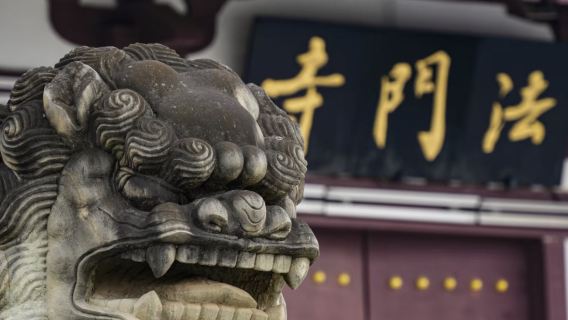
The Wuzhangyuan Zhuge Liang Temple is located on the Wuzhangyuan Terrace in the south of Qishan County, Baoji City. The temple gate is gorgeous and spectacular with a vertical wooden inscription above the gate denoting the name of the temple. According to records, Zhuge Liang Temple was built in the early Yuan Dynasty, and repeatedly renovated and improved during the Ming and Qing dynasties. Most of the existing buildings were built in the Qing Dynasty. These include the temple door, Peifang Building and both of the Xiangfang Buildings. On the east and west sides of the entrance hall, replicas of Shu generals Wei Yan and Ma Wei stand guard. Inside the temple, Zhuge Liang's "Chu Shi Biao" stone carving stands on exhibition, and there is also a stone carving of the founding emperor Zhu Yuanzhang's commentary on Zhuge Liang.Qishan · 20.1 km from downtown

China · Zhouyuan
China Zhouyuan Attraction is a core destination for all-round, multi-level and interactive Zhou culture display and experience tourism in China. The Attraction is located in Qishan County, Baoji City, Shaanxi Province, adjacent to the southern foot of Phoenix Mountain, which is referred to as "Phoenix Ming Qishan" in the Book of Songs. It focuses on the display and inheritance of Chinese Zhou culture, including Zhoucheng (Zhou culture exhibition, entertainment and leisure), Zhougong Temple, and Phoenix Mountain (exploration of cultural relics and historical sites). The overall architectural layout and construction method follow the ancient form, cleverly combining traditional crafts with modern technology, and strive to restore the architectural style and people's livelihood of the ancient capital of the Zhou Dynasty 3,000 years ago, and fully and three-dimensionally display the essence of Zhou culture such as Zhou Dynasty history, characters, characters, rituals and music, Zhouyi, bronze ware, and urban pattern, forming a diversified large-scale comprehensive scenic Attraction integrating historical site visits, cultural innovation displays, parent-child leisure and entertainment, performing arts interactive entertainment, and special Dining experiences.Qishan · 4.3 km from downtown

Zhou Gong Temple
Zhou Gong Temple lies in the south foot of Phoenix Mountain, in the northwest of Qishan County, Baoji City, and is one of the key historical relics protection organizations at the provincial level as well as a scenic spot at the provincial level. The scenic spot boasts hills surrounded on three sides, leaving only the south connecting with the plain. Qishan is the origin of Zhou royalty, and many poets and literary men once traveled here and left their famous literature works that made this place well-known.Qishan · 6 km from downtown

Famen Cultural Scenic Spot
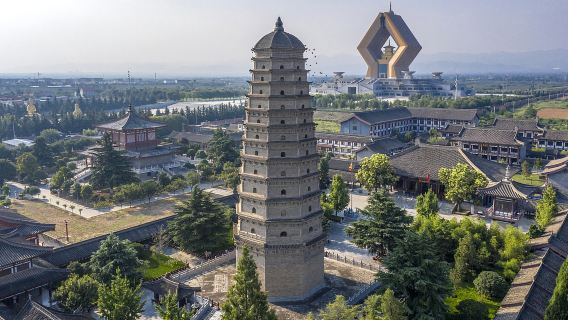
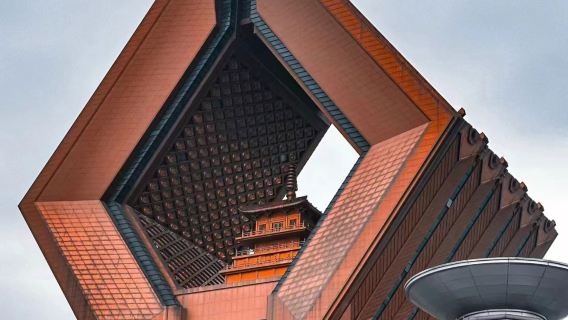
Famen Cultural Scenic Spot is located in Famen Town, Fufeng County, Baoji City, Shaanxi Province, covering an area of 1395 mu. It consists of core areas such as the Heshita Pagoda and Famen Temple Museum. The Heshita Pagoda is the iconic structure of the attraction, standing 148 m tall. Designed in the shape of hands clasped in prayer, it embodies the beautiful vision of peace, harmony, unity and reconciliation. The Famen Cultural Scenic Spot museum is a specialized museum dedicated to the collection, preservation, research, and exhibition of cultural relics unearthed from the underground palace of the Famen Cultural Scenic Spot. Its collection includes rare treasures such as gold and silver artifacts, secret-color porcelain, and glassware. The high grade, diverse types, large quantity, superior quality, and exquisite craftsmanship of these relics are exceptionally rare in the archaeological community both domestically and internationally, making them treasures of history and art.Fufeng County · 25.8 km from Qishan

Wuzhangyuan Scenic Area
Wuzhangyuan Scenic Area is a tourist destination rich in history, famous for being the site where Zhuge Liang stationed his troops during the Three Kingdoms period. The Wuzhangyuan Zhuge Liang Temple within the scenic area is a must-visit for tourists. The temple houses a statue of Zhuge Liang and is surrounded by towering ancient cypress trees. The quiet environment makes one feel as if they are immersed in history. The observation deck next to the temple offers a panoramic view of the entire Wuzhangyuan, making it an ideal spot for taking landscape photos. Wuzhangyuan Scenic Area is open year-round with reasonably priced admission tickets, making it suitable for families and individual travelers. We recommend visiting during the spring or autumn when the climate is pleasant and the scenery is beautiful. The trails within the scenic area are well-paved and suitable for hiking, but we recommend wearing comfortable shoes for a better experience. Visitors can reach the area from the city center by public transportation or by car, with a travel time of approx. 1 hour. There is a parking lot near the scenic area, which is convenient for those driving. Please help protect the environment and keep the scenic area clean and quiet during your visit.Qishan · 22.9 km from downtown

Water City: Three Kingdoms Town
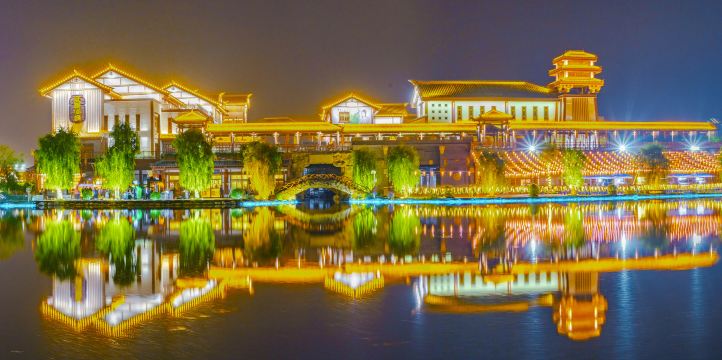
Shuicheng Three Kingdoms Town is a national AAAA-level Attraction. The area where the Attraction is located is the remains of the ancient battlefield where Zhuge Liang and Sima Yi confronted each other along the banks of the Wei River in 234 AD (234 AD). Zhuge Liang later passed away in Wuzhangyuan. The mottled war relics on this land have disappeared with the passage of time, but the stories here have never stopped. Those bravery, determination and wisdom have become a kind of culture here, and the origins have been passed down. Today, we recall history and inherit culture. Shuicheng Three Kingdoms Town combines domestic and foreign scientific and technological means to reproduce the historical features of the year and create a western tourist and cultural resort! The Water City Three Kingdoms Town Attraction relies on the authentic historical culture of the Three Kingdoms, embraces the unique charm of the Weihe Wetland, and integrates the classic historical allusions of the Three Kingdoms. With a new perspective and a combination of reality and fiction, it creates a comprehensive Three Kingdoms cultural experience site with the Three Kingdoms cultural experience as the core, deeply integrating performances, food, entertainment, leisure, and vacation. The Water City Three Kingdoms Town is committed to integrating regional historical culture and fusing modern fashion elements. It will fully and vividly display the "long-standing local cultural stories" through the functional combination of Dreaming of the Three Kingdoms, Stories of the Three Kingdoms, and Customs of the Three Kingdoms. Adhering to the southern design concept of "the city is built in the water, and people travel on the water", the Attraction will be built into a characteristic ancient town surrounded by water systems, ancient buildings and pleasant scenery, thus forming a Three Kingdoms cultural experience site with a clear theme, rich business types, and the integration of architectural landscapes and cultural arts. Visitors can "travel through time" and feel the different folk customs of the north and south during the Three Kingdoms period.Qishan · 15.6 km from downtown

Emperor Qinshihuang's Mausoleum Site Museum
Emperor Qinshihuang's Mausoleum Site Museum, also known as the Terracotta Army, is located about 1.5 kilometers east of the Mausoleum of the First Qin Emperor and forms part of the extensive necropolis. There were more than a thousand terracotta soldiers unearthed here, each with a different facial expression. Standing before the massive underground army, you will feel the extraordinary might of the Qin Emperor that enabled him to unify six warring states two thousand years ago. The Qin Emperor Ying Zheng began building the mausoleum for himself at the age of 13. Nearly 720000 men and 38 years were required to complete this vast project.China · Xi'an

Shaanxi History Museum
History background: Shaanxi History Museum is located in the northwest of the Dayan Pagoda in Xi'an. It is one of the landmark attractions of Xi'an. The museum was planned in 1983, started in the summer of 1986, and officially opened on June 20, 1991. It was named Shaanxi History Museum. In 2016, Shaanxi History Museum was selected as "China's 20th Century Architectural Heritage" by the Chinese Cultural Relics Society and the Chinese Architectural Society. Museum Features: Shaanxi History Museum is a large modern museum, and its completion marks a new milestone in the development of China's museum industry. This museum is a Tang-style building complex with a "central hall and four corner towers". The main and secondary buildings are well-organized, the heights are staggered, and the momentum is solemn. It integrates national traditions, local characteristics and the spirit of the times. The museum covers an area of 65,000 square meters, and houses more than 380,000 cultural relics ranging from simple stone tools used in the initial stage of ancient humans to various artifacts in social life before 1840, covering a time span of more than one million years. The cultural relics are not only numerous and diverse, but also of high quality and wide value. The collections in the museum are dazzling and exquisite. It is an art hall that showcases the history and culture of Shaanxi and ancient Chinese civilization, and is known as the "Pearl of the Ancient Capital, the Treasure House of China." There are many treasures in the museum, including bronzes from the Shang and Zhou dynasties, pottery figurines from various dynasties, gold and silver utensils from the Han and Tang dynasties, and murals from Tang tombs. Most of them are treasures from the prosperous periods of the Han and Tang dynasties, and some of them are fine items that are prohibited from leaving the country. Collection treasures: There are three exhibition halls in the center of the museum. The first exhibition hall displays cultural relics from the prehistoric civilization of Lantian ape-man 1.15 million years ago to the Qin Dynasty; the second exhibition hall displays cultural relics from the Han Dynasty and the Wei, Jin, Southern and Northern Dynasties; and the third exhibition hall is mainly cultural relics from the prosperous Tang Dynasty. Each exhibition hall has its own treasure. There are special exhibition halls on the east and west sides of the central hall. On the west side, there is a "Special Exhibition of Tang Dynasty Treasures (Treasure Hall, Cultural Relics Unearthed in Hejiacun)", where many fine gold and silver wares from the heyday of the Tang Dynasty were transferred to be exhibited. On the east side, there is a "Treasures of Tang Dynasty Murals Exhibition", which exhibits a number of authentic Tang Dynasty tomb murals. The tripod The tripod is placed in the first exhibition hall at the entrance of the museum, and it can be said to be the treasure of the first exhibition hall. The replica is placed here, and the original is kept in the warehouse. Inscription on the outer wall: The inscription "All under heaven is the king's land; all the people are the king's subjects" reflects the land ownership system in the Western Zhou Dynasty. There are four lines of inscriptions with 28 characters on the inner wall of the Yi Ding. The general meaning is: In early August of a certain year, Wang Jiang took back the land originally given to Shi Lu and gave it to Yi, who then made this tripod to commemorate it. Queen's Seal: One of the treasures worth seeing in the second exhibition hall is the jade seal of the empress of the Han Dynasty, which is displayed separately. The seal is made of Xinjiang Hetian mutton-fat jade and is engraved with a Chihu, symbolizing royal power. Three-color camel figurines carrying music: This world-famous tri-color camel figurine carrying music is located in the third exhibition hall of Shaanxi History Museum. Its overall appearance and color are well preserved. There are seven men sitting on the camel's back, holding different musical instruments in their hands. Among them, the figurine holding the clapboard is listening attentively, as if intoxicated by the wonderful music. The woman in the middle is performing, and the camel opens its mouth wide and looks up to the sky, as if it is also singing with its master. Gold-inlaid animal head agate cup: This cultural relic, located in the special exhibition "Tang Dynasty Relics Special Exhibition", is one of the first 64 national treasures listed by the State Administration of Cultural Heritage that are never allowed to be exhibited abroad. There are also many other treasures such as black-glazed oil-drip bowls, green-glazed porcelain pots with handles, gilded silver bamboo-joint copper incense burners, gold bowls with mandarin duck and lotus petal patterns, and so on.China · Xi'an

Baoji Bronze Ware Museum
The Baoji Bronzeware Museum is in the Chinese Shi-ku Garden of Baoji City, "the hometown of bronzeware." The museum has four exhibition halls, and Halls 1 and 2 are the focuses of the tour. The museum displays high quality bronzeware, such as the Hu gui from the period of King Li of Zhou and the treasures of Qin Duke Bo. The He zun, which is inscribed with the words "Here in China I dwell," is kept here.Baoji · 40.5 km from Qishan

Famen Temple Museum
Famensi MuseumLocated in Famen Town, Fufeng County, Baoji City, Shaanxi Province, China, this specialized museum focuses on the collection, preservation, research, and exhibition of cultural relics unearthed from the underground palace. Core Features: 1. Underground Palace Treasures: The museum showcases over 1,000 precious artifacts from the 1987 archaeological discovery of the Tang Dynasty underground palace at Famen Temple, including Buddhist finger relics, gold and silverware, glassware, silk textiles, and porcelain. Among these, 121 items are classified as Grade One National Cultural Relics. Signature exhibits:Gilded silver statue of a Bodhisattva,Octagonal Precious Casket,Mystic celadon,Tang Dynasty silkand other artifacts, showcasing the grand royal Buddhist relic offerings and exquisite craftsmanship of the Tang Dynasty. 2. Buddhist culture: Famen Temple is revered as a Buddhist sacred site for enshrining the finger bone relic of Sakyamuni Buddha. The museum systematically presents the culture of Buddhist relics, Buddhist art from the Tang Dynasty, and religious exchanges along the Silk Road through artifacts, illustrations, and multimedia displays. The permanent exhibition "Treasures from the Famen Temple Underground Palace" is divided into thematic sections including "Recreating the Underground Palace," "Relic Worship," and "Artifacts of the Tang Dynasty." 3. Architecture and layout: The museum is connected to the Famen Temple attraction, blending Tang Dynasty architectural style with modern design. Its main exhibition hall resembles clasped hands, symbolizing reverence for Buddhist teachings. The museum features cultural relic exhibition halls, academic lecture halls, and creative cultural zones, surrounded by cultural plazas and the Buddha's Light Avenue scenic view.Fufeng County · 25.9 km from Qishan
Experiences you can't miss in Qishan
Featured Day tours in Qishan
View all Day tours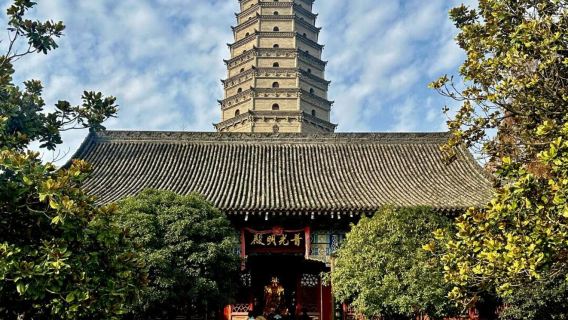


4.5/5
· 21 reviews· 240 bookedFree cancellation
Instant confirmation
FromJPY 5,039
4.9/5
· 408 reviews· 433 bookedFree cancellation
Instant confirmation
99.3% of travelers recommend
FromJPY 48,649

5.0/5
· 4 reviews· 44 bookedFree cancellation
Instant confirmation
Book now for today
FromJPY 13,093

5.0/5
· 2 reviews· 25 bookedFree cancellation
Instant confirmation
FromJPY 10,521

4.5/5
· 2 reviews· 24 bookedFree cancellation
Instant confirmation
FromJPY 5,024
4.9/5
· 20 reviews· 63 bookedInstant confirmation
Book now for tomorrow
81 travelers saved
FromJPY 31,796
5.0/5
· 1 reviewFree cancellation
Instant confirmation
FromJPY 9,382
Featured Cultural experiences in Qishan
View all Cultural experiences
5.0/5
· 1 reviewFree cancellation
Instant confirmation
FromJPY 14,108
FromJPY 23,513

FromJPY 23,513
Free cancellation
Instant confirmation
FromJPY 9,359
Free things to do in Qishan
Water City: Three Kingdoms Town
Qishan · 15.6 km from downtownShaanxi History Museum
China · Xi'anBaoji Bronze Ware Museum
Baoji · 40.5 km from Qishan
Shi-ku Garden in China
Baoji · 40.7 km from Qishan
Grand Tang Mall
China · Xi'an
Qinling Mountains
Taibai County · 37.7 km from Qishan
Zhouyuan Museum
Qishan · 21.3 km from downtown
Zhouyuan Museum
Fufeng County · 23.3 km from Qishan
Shaanxi Archaeology Museum
China · Xi'an
Xi'an Muslim Quarter
China · Xi'an
What travelers say about Qishan

Anonymous userApril 6, 2026
5.0
Wuzhangyuan in Qishan was the final resting place of Zhuge Liang's life. In the autumn of 234 AD, Zhuge Liang, the Prime Minister of Shu Han, led his army on a northern expedition, stationing his troops here to confront Sima Yi across the Wei River. Ultimately, he "died before achieving his goal," forever freezing the last moments of his life on this loess plateau. The Zhuge Liang Temple at Wuzhangyuan was first built in the Yuan Dynasty, and most of the existing buildings are from the Qing Dynasty. Its most unique layout is that the entire structure faces north, backed by the majestic Qinling Mountains and facing the surging Wei River, symbolizing Zhuge Liang's unfulfilled ambition to "pacify the Central Plains."
Wuzhangyuan Zhuge Liang Temple

打锅十八牛February 16, 2025
5.0
China Zhouyuan Scenic Area is really a historical and cultural destination worth visiting! The scenic area perfectly integrates Zhou Dynasty civilization with modern tourism. The Bronze Museum, Zhouyi Square and other attractions are designed with great ingenuity, and the immersive performances make people feel like traveling through thousands of years. The Xuanyuan Hall is magnificent, the Bagua maze is interesting, and the sightseeing cable car can overlook the panoramic view. The staff is considerate and the scenic area is clean and tidy, which is both informative and entertaining. Whether it is parent-child study or cultural experience, this place can meet the needs and is highly recommended to friends who like history!
China · Zhouyuan

_We***57August 7, 2026
4.0
A must-see for history and culture enthusiasts, this building dates back to the Tang Dynasty and is predominantly composed of Ming and Qing Dynasty structures. Located on the fiefdom of the Duke of Zhou, it boasts a rich cultural heritage. However, the architecture itself is not particularly stunning, and those uninterested in the cultural aspects may find it less appealing.
Zhou Gong Temple

賢賢君October 21, 2026
5.0
Our tour guide, Mr. Li, provided very detailed introductions to the attractions and artifacts. He was also very friendly and patient, and when explaining the artifacts, he would use supplementary pictures to help us gain a deeper understanding.
Famen Cultural Scenic Spot

无为的无心草November 3, 2025
5.0
Wuzhangyuan in Baoji is a place with a profound historical background. Below is a detailed introduction to its history:
Pre-Qin Period
Human activity existed in the area of Wuzhangyuan during the Pre-Qin period. The Qishan area was the birthplace of Zhou culture, where the Zhou people developed agriculture, established cities, and created a brilliant Bronze Age culture and ritual and music civilization. The numerous pre-Qin sites and artifacts remaining around Wuzhangyuan bear witness to the prosperity of this period.
Three Kingdoms Period
This was the most glorious and famous period in Wuzhangyuan's history, closely linked to the last Northern Expedition of Zhuge Liang, the Prime Minister of Shu Han.
● Background: In the twelfth year of Jianxing (234 AD), Zhuge Liang launched his sixth Northern Expedition against Cao Wei in an effort to restore the Han Dynasty. This time, he led a large army from Hanzhong, taking the Xiegu Valley, crossing the Qinling Mountains, and stationing himself at Wuzhangyuan. This location was chosen because of its strategic importance; it offered the option to attack Cao Wei's Guanzhong region or defend the natural barrier of the Qinling Mountains.
● The Standoff: Cao Wei dispatched Sima Yi with a large army to resist. Sima Yi, well aware of Zhuge Liang's military prowess and the difficulties faced by the Shu army in transporting supplies from afar, adopted a strategy of holding firm and refusing to engage, resulting in a standoff with the Shu army at Wuzhangyuan for over a hundred days. During this time, Zhuge Liang repeatedly challenged Sima Yi, even sending women's clothing to provoke him into battle, but Sima Yi remained unmoved.
● Zhuge Liang's Death: Long-term fatigue and anxiety caused Zhuge Liang's health to deteriorate, ultimately leading to his death from overwork in his military camp at Wuzhangyuan at the age of 54. Zhuge Liang's death had a significant impact on the Shu Han regime, and the Northern Expeditions were subsequently halted.
Posterity
● The Rise of Memorial Buildings: To commemorate Zhuge Liang, later generations built numerous memorial buildings on Wuzhangyuan. The Wuzhangyuan Zhuge Liang Temple was first built in the early Yuan Dynasty and underwent several renovations during the Ming and Qing Dynasties. The temple, facing north, stands majestically on the plateau. Its architectural layout is rigorous, with numerous steles and plaques adorning the entrance, all crafted by renowned artists throughout history, possessing high artistic value.
● Cultural Heritage: Wuzhangyuan has also become an important site for people to commemorate Zhuge Liang and experience the culture of the Three Kingdoms period. Literati and scholars throughout history have flocked to Wuzhangyuan, leaving behind many poems and essays to remember Zhuge Liang, such as Wen Tingyun's "Passing Through Wuzhangyuan" and Su Shi's "On Zhuge Liang." These literary works have enriched the cultural connotation of Wuzhangyuan, making it one of the important symbols of the Three Kingdoms culture.
● Continued Military Value: Due to its unique geographical location and strategic terrain, Wuzhangyuan also held certain military significance in later generations. In some historical periods, it remained a hotly contested area.
Wuzhangyuan Scenic Area

清风若溪April 30, 2020
4.0
Shuicheng Three Kingdoms Town is a charming town built based on the real Three Kingdoms history and culture. It is located in the eastern section of Caijiapo Chuangye Road, Qishan County, Baoji City, Shaanxi Province, and is adjacent to the "Waterside" Weihe Wetland Park. The scenic spot integrates classic historical stories of the Three Kingdoms, leisure and entertainment, snacks and food, cultural performances, etc., allowing tourists to deeply experience the Three Kingdoms culture while tasting local food.
Water City: Three Kingdoms Town

139***58October 23, 2026
5.0
During the National Day holiday, it was very crowded, but the tour guides were very professional and took us to see everything! It's very convenient to get to the Terracotta Warriors from Xi'an now. I recommend taking the Xi'an Metro Line 9 to the end and then taking a taxi for about 10 yuan. I also recommend staying at a nearby guesthouse so you can go to the museum early in the morning.
Emperor Qinshihuang's Mausoleum Site Museum
_M1***71October 23, 2026
5.0
My trip to the Shaanxi History Museum was made possible by the wonderful explanations given by our guide, Ms. June. Her profound knowledge and engaging approach, rather than simply reciting from a textbook, transformed each artifact into a captivating and accessible narrative, clearly outlining the historical timeline of the Zhou, Qin, Han, and Tang dynasties. Her lively and engaging explanations, coupled with her patient answers to questions, brought the millennia-old relics to life. What was initially a rushed visit became an immersive historical journey. Highly recommended!
Shaanxi History Museum

blu***hhAugust 15, 2026
5.0
The teacher's explanations made our visit truly meaningful. The explanations were very comprehensive and detailed; I'll need to review some of the points later. I really liked the architectural style of the Baoji Bronze Museum; it was definitely worth the long journey.
Baoji Bronze Ware Museum

中西南北东November 20, 2025
4.0
Famen Temple Museum, a national first-class museum, is located in the Famen Temple Cultural Park, 10 kilometers north of Fufeng County, Baoji City, Shaanxi Province. It is 110 kilometers east of Xi'an and 90 kilometers west of Baoji City, covering an area of 48,779 square meters, with a building area of 13,768 square meters and an exhibition area of 4,000 square meters. It is a social science-oriented religious site museum.
Completed in 1987, the museum's collection originates from artifacts unearthed from the underground palace of Famen Temple. The collection includes gold and silver artifacts, glassware, and porcelain. As of the end of 2019, the museum held 9,439 pieces/sets of artifacts, including 225 pieces/sets of precious cultural relics. Unfortunately, the Buddha's finger relic is not on display here; the reason will not be discussed here.
Famen Temple Museum


