
Things to do in Rome
Explore top experiences
Top 10 attractions in Rome


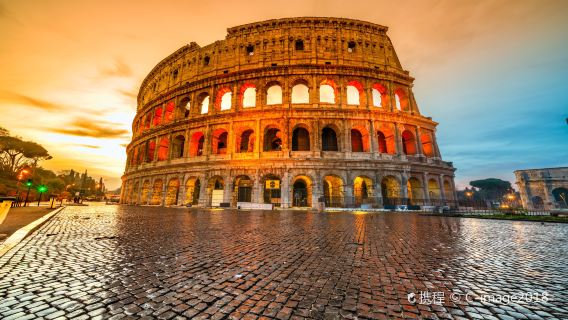
Colosseum
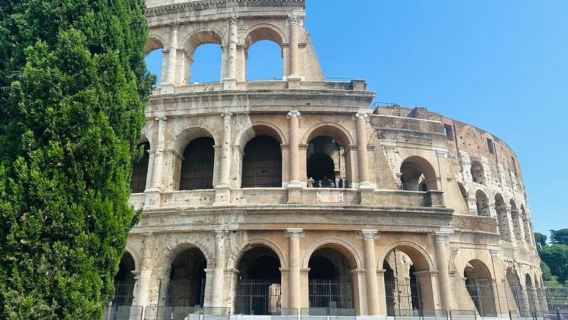
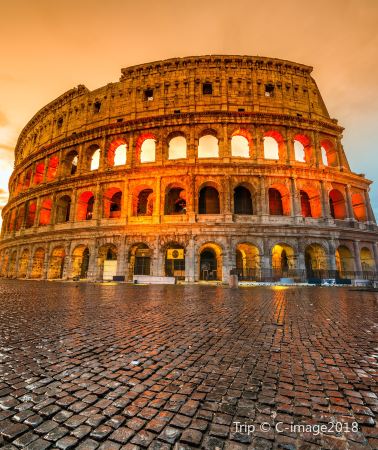
•This was the place where gladiators fought for their lives, prisoners on death row struggled with hungry lions, and it was also the great symbol of eternal Rome •Take in the magnificent architecture and imagine epic battles that once took place here •Imagine the bustle of the marketplace, the intrigue of political debates, and the opulence of imperial residences △ The Colosseum was built on the site of the magnificent Dumus Aurea and was completed in 80 AD. But with the decline of the Roman Empire in the 6th century AD, the Colosseum was gradually abandoned and became overgrown. Since then, the Colosseum has been damaged by earthquakes many times, and it has even become a source of stone and marble for builders. Nowadays, only the incomplete skeleton of the Colosseum is left in front of people, but you can still get a glimpse of the style of that day. △ From the outside, the Colosseum has four floors (including the underground). On the first floor, you can clearly see the maze-like building in the center of the Colosseum. The basements that were once the Colosseum housed the beasts and gladiators who were about to duel. If you want to see the underground part up close, you need to be led by a tour guide. △ The entire exterior wall of the Colosseum is made of limestone, with 80 arches (vormitori) on each floor, allowing spectators to quickly enter and take their seats. The recesses on the second and third floors were once filled with marble statues. The top of the wall is dotted with windows and slender Corinthian pilasters, and there are 240 wall columns to support the canvas canopy covering the Colosseum.Rome · 1.4 km from downtown

Pantheon
The Pantheon is located in the center of Rome and is one of the best-preserved ancient Roman buildings still in use today as a church. It was first built over two thousand years ago by Agrippa, the son-in-law of Augustus, the first emperor of Rome, to worship the gods. The current main structure is the result of a reconstruction on the original site during the reign of Emperor Hadrian in the 2nd century AD, with Agrippa's inscription still preserved on the lintel. The entire building has exquisite proportions and was praised by Michelangelo as "the design of angels." In front of the hall is the Rotunda Square, where an Egyptian obelisk stands in the fountain, making it the perfect spot to capture a panoramic view of the building's facade. The main structure is simple and clear: a massive cylinder with both width and height exceeding 40 m, topped by a hemispherical concrete dome. The hall has no windows, with all light coming from a circular opening over 8 m in diameter at the dome's apex—on sunny days, sunlight pours through the opening, forming a beam that slowly sweeps across the niches and stone walls as the sun moves; during rain, water falls directly into the hall and is drained through hidden floor outlets. The construction of such a wide-span dome without steel reinforcement has inspired architects for over a millennium, serving as a subject of study and emulation. The niches around the interior were originally dedicated to the gods and now house statues and altars: the Renaissance master Raphael is buried here, and the tombs of Italian kings Vittorio Emanuele II and Umberto I are also located within. Take a moment to look up at the light streaming down from the dome, then follow the niches to admire the statues and tombs, feeling the awe inspired by this nearly two-thousand-year-old building that remains perfectly preserved.Rome · 1.7 km from downtown

Borghese Gallery and Museum
The Borghese Gallery and Museum was originally a 17th-century countryside villa built by Cardinal Scipione Borghese in northern Rome. The villa and its collection were nationalized in the early 20th century and converted into a museum, still surrounded by extensive gardens today. The gallery is renowned for its Baroque marble sculptures and Renaissance to Baroque paintings, featuring masterpieces by Bernini, Canova, Caravaggio, Raphael, Titian, and others, all displayed within this compact two-story building. The highlights on the first floor are almost all by the young Bernini: in room 2, "David" twists his entire body, frozen in the moment before releasing the stone; in room 3, "Apollo and Daphne" captures the fleeing maiden as her fingertips sprout laurel leaves; in room 4, "The******of Proserpina" shows Pluto's fingers sinking deep into the marble-carved flesh; while room 6's "Aeneas, Anchises, and Ascanius" was sculpted when he was just over twenty—the hard stone takes on the soft textures of skin, foliage, and drapery in these statues. Room 5 houses the "Sleeping Hermaphroditus," an ancient Roman copy of a Greek original, with the buttoned mattress beneath added by Bernini in 1620, so lifelike it could deceive; at the center of room 1 stands Canova's reclining statue of Napoleon's sister Pauline, the goddess holding a golden apple, with a hidden mechanism in the base allowing the entire sculpture to rotate. Don't rush through the entrance hall either—underfoot lies a 4th-century gladiator mosaic floor, while overhead is Mariano Rossi's ceiling fresco depicting Romulus being welcomed to Olympus to meet Jupiter. Gallery 7 features ancient Egyptian-style displays, while gallery 8 showcases original works by Caravaggio, including "David with the head of Goliath," "Sick Bacchus," and "Boy with a basket of fruit." The second floor is a gallery displaying a condensed history of Italian painting, with Titian's "Sacred and profane love" and "Venus blinding Cupid," Raphael's "The entombment," Correggio's "Danaë," Rubens' "Susanna and the elders," Cranach's "Venus and Cupid as honey thief," Botticelli's Madonna, and Pinturicchio's 1473 "Crucifixion" all lined up in sequence. The art museum has long implemented a reservation system with entry by time slot. Each slot is limited to 2 hrs with a capped number of visitors, and peak season quotas often get booked up well in advance—plan ahead to secure your spot. Once inside, consider focusing first on the Bernini sculptures on the first floor and Caravaggio's works in Hall 8, then leisurely head to the second floor for the paintings. Two hours is just enough to thoroughly cover the highlights.Rome · 1.3 km from downtown

Castel Sant'Angelo
The Fort Sant'Angelo was originally a family cemetery built by Emperor Hadrian. It was later converted into a papal fortress in the 6th century AD. It is said that in 590 AD, Pope Gregory saw an angel in the sky above the fort and named it the Holy Angel. Fort. Castel Sant'Angelo, located on the Tiber River, at the western end of the ancient Roman region, there are several bridges leading to the west bank of the Tiber River, the more important one is the bridge to the Castel Sant'Angelo (PonteSantaAngelo). When walking through the Pont Sant'Angelo, you may wish to take a closer look at the shape of the bridge and the various exquisite carvings on it. The bridge designed by Bernini can be said to be a masterpiece of Baroque decorative art, but only two of the angel statues on the bridge are made of The statue, sculpted by Bernini himself, has been moved to the church of Santa Adreadelle Fratte for proper preservation, and two replicas have been placed on the bridge. The history of Castel Sant'Angelo in the 2nd century AD, the Roman emperor Hadrian designed the Castel Sant'Angelo and personally directed its construction as the resting place for himself and his successors. Over the centuries, Castel Sant'Angelo has undergone a number of changes: first as a fortress to stop the Visigoths and Ostrogoths from invading, then as a prison, and later converted into a splendid papal palace. Now as a museum, in addition to the collection of stuccoes, frescoes and the residence furniture of the Pope, ancient weapons are also an important and precious collection here.Rome · 2.5 km from downtown

Roman Forum
The Roman Forum is located in the valley between the Palatine Hill and the Capitoline Hill, with the Sacred Way leading to the Colosseum on its eastern side. This valley was initially used as a burial ground before being drained and taking shape around the 7th century BCE. Over the following centuries, it developed into the political, legal, commercial, and religious center of ancient Rome, hosting senate meetings, public assemblies, court debates, and religious ceremonies. After the 4th century CE, the forum gradually declined, even serving as pastureland during the Middle Ages, with its ruins buried under silt until systematic excavations began in the 19th century—a process that continues today. The visit typically follows the Sacred Way from east to west. At the eastern end, the three remaining massive vaults of the Basilica of Maxentius (also known as the Basilica of Constantine) are visually striking. Nearby, the Temple of Antoninus and Faustina features an ancient colonnade enclosing a medieval church, creating a rare fusion of temple and church. The Temple of Caesar now lies in ruins—historical records indicate it was where Caesar's body was cremated, and visitors still bring flowers here today. To the south, the House of the Vestal Virgins preserves its courtyard and statues of the vestals, while the foundations of the Basilica Aemilia can be identified to the north. Near the Capitoline Hill, relatively well-preserved structures include the Curia (senate house), the black marble marking an ancient sacred site, the Rostra (speaker's platform where orators addressed the public), and the Golden Milestone, considered the starting point of Rome's road network. To the south lie the foundations of the Basilica Julia and three columns of the Temple of Castor and Pollux, the latter being one of the forum's most recognizable landmarks. The ancient church of Santa Maria Antiqua at the foot of the Palatine Hill also houses early Christian frescoes dating back to the 6th–8th centuries. At first glance, many see only a jumble of stones and broken columns, but with prior knowledge of the ruins' history or a guide to contextualize them, the layered millennia of history buried in these ruins come vividly to life. It's recommended to combine a visit here with the Colosseum and Palatine Hill on the same itinerary, allowing ample time to explore thoroughly.Rome · 1.4 km from downtown

Villa Borghese
Villa Borghese is located in northern Rome. Built in the early 17th century by Cardinal Scipione Borghese, who came from a prominent Sienese family, it was constructed on the site of a hillside vineyard for his family. Acquired by the Rome city government in the early 20th century and opened to the public, the park covers approx. 80 hectares, making it one of Rome's most prominent large urban parks. With its shady stone pines and cedars, scattered sculptures and fountains, it's easily accessible either by climbing the steps from Piazza di Spagna or entering from the Piazza del Popolo side, serving as a popular leisure spot for locals to stroll, jog, or picnic. The park offers abundant attractions: The artificial lake in the lakeside garden allows visitors to rent boats to reach the center, where the Temple of Aesculapius reflects on the water surface, creating a classic photo spot. The 19th-century water clock, driven by water flow, remains operational to this day. The Pincio Terrace at the northern end of the park overlooks Piazza del Popolo. The park resembles an open-air art district: The Borghese Gallery is renowned for Bernini's sculptures and Caravaggio's paintings, while the National Gallery of Modern Art houses works by Monet, Klimt, and numerous modern Italian artists. The park also features the Etruscan Museum and an open-air theater modeled after Shakespeare's Globe. The Siena square in the garden was built in the late 18th century, named after Siena, the hometown of the Borghese family. Every late spring, it hosts the international show jumping competition that has continued since 1922, with performances by mounted carabinieri in traditional uniforms often serving as the grand finale; the equestrian events of the 1960 Rome Olympics were held here. The Rome zoo Bioparco is adjacent to the park area and can be included in the same tour route.Rome · 1.5 km from downtown

Trevi Fountain
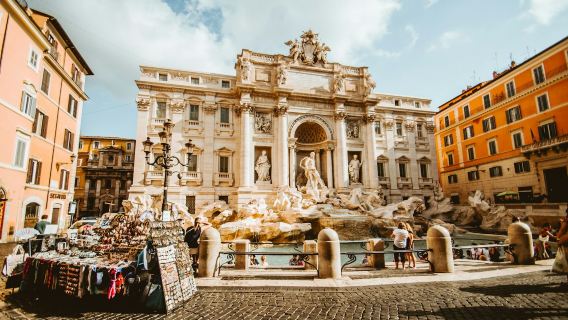
The Trevi Fountain, also known as the Maiden's Fountain, is better known as the Trevi Fountain. This fountain is one of the most beautiful sculptures in Rome. It took 30 years to complete. It has beautiful appearance, rich decoration and strong three-dimensional effect. The whole fountain is magnificent, magnificent and clear. The legend about the girl actually means "Trevi" which means a fork in the road, which happened to be a fork in the earlier period. According to legend, in 19 BC, a Roman technician deliberately introduced water into this area from 13 kilometers away in order to help a young girl. The Fountain Thematic Fountain was built in the palace of the Marquis of Polly and was completed in 1762 after 30 years. The theme is the triumphant return of Neptune, the god of the sea. Standing on the seashell-shaped chariot in the middle is Neptune. The two horses pulling the chariot are pulled by two Tritons (the messengers of the sea in Greek mythology). and calm. There is a goddess on the left and right of the sea god, representing abundance and health. At the top of the pillars on the background wall, there are four goddesses holding different artifacts, symbolizing the four seasons.Rome · 1.1 km from downtown

Mouth of Truth
Mouth of Truth is a marble disc carved with a human face, embedded in the wall of the portico of the Basilica of Saint Mary in Cosmedin in Rome. It is widely known for its classic scene in the movie "Roman Holiday". This stone disc weighs over a thousand kg, and its eyes, nostrils, and mouth are all hollowed out. Its original purpose remains a subject of debate. Some scholars speculate that it may have been a drain cover or manhole cover from the ancient Roman period, while others suggest it was a component of a fountain or wellhead. The disc was placed in its current location in the church portico in 1632. Since the Middle Ages, there has been a popular legend about the Mouth of Truth: if a liar puts their hand into the disc's open mouth, it will be bitten off. The church also houses the skull of Saint Valentine, adding a layer of romantic meaning to this legend. Today, tourists come from far and wide, lining up to put their hands into the disc's mouth for photos. Not far in front of the church stands the ruins of the Temple of Portunus, which, together with the church, forms the ancient view of this area.Rome · 2 km from downtown

Museums in Rome
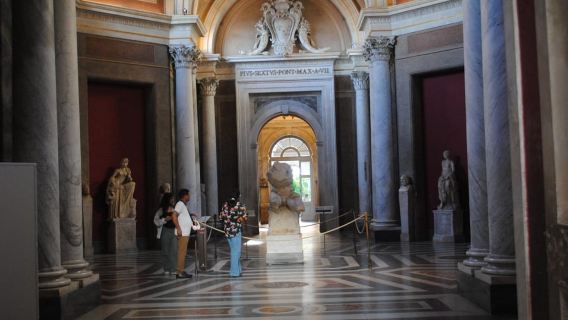
This is not merely viewing exhibits, but an archaeological journey through layers of civilization. From the grandeur of the Vatican to classical sculptures in palace halls, art and faith intertwine across three millennia. Like an endless corridor, each step follows the source of Western civilization, transforming awe into silent understanding. Vatican Museums: Home to world-class art collections spanning from ancient Egypt to the Renaissance. Highlights include the Sistine Chapel ceiling and Raphael Rooms, showcasing the pinnacle of religious art and humanistic spirit. Galleria Borghese: Houses numerous sculptures by Bernini and paintings by Caravaggio, located in the beautiful Villa Borghese. Its reservation-only policy offers an intimate and immersive experience for dedicated art lovers. Capitoline Museums: Situated on one of Rome's seven hills, with a piazza designed by Michelangelo, it is the world's oldest public museum. It primarily displays ancient Roman sculptures, inscriptions, and classical art treasures. Galleria Doria Pamphilj: Nestled within an aristocratic palace, it showcases paintings, sculptures, and decorative arts accumulated by the Doria family over centuries. The opulent and private setting reflects the refined taste of noble collections.Italy · Rome

Arch of Constantine
Arch of Constantine was built in 315 AD by the Roman Senate to commemorate Emperor Constantine the Great's victory over Emperor Maxentius at the Battle of the Milvian Bridge in 312. It is located right next to theColosseum, was once the route that triumphal processions had to take to enter the city, and is one of three surviving triumphal arches from the ancient Roman period. The other two—the Arch of Titus and the Septimius Severus Arch—are located in the Roman Forum. This arch features three archways and is clad in marble. A major feature of its decoration is the extensive use of components taken from earlier imperial monuments: the eight relief panels at the top come from the monument to Emperor Marcus Aurelius and depict scenes such as the emperor departing for war, presenting captives, and distributing largesse to the people; the statues of Dacians on the columns were taken from Trajan's Forum; and the circular reliefs above the two smaller side arches date back to the Hadrianic era, depicting hunting and sacrificial scenes. Only the horizontal frieze above the arches was newly created during the Constantinian period, depicting his complete military campaign from departure to his entry into the city and distribution of largesse to the people. Sculptures from different periods and styles are brought together on the same structure, creating a striking stylistic contrast.Rome · 1.5 km from downtown
Experiences you can't miss in Rome
Featured Day tours in Rome
View all Day tours
4.7/5
· 73 reviews· 262 bookedFree cancellation
Book now for today
94.5% of travelers recommend
FromUS$44.68
4.9/5
· 3k reviews· 152 bookedFree cancellation
Book now for today
97% of travelers recommend
FromUS$113.42
5% off
Limited-time sale
FromUS$30.89US$32.52

5% off
Limited-time sale
FromUS$110.32US$116.13
4.8/5
· 6 reviews· 120 bookedFree cancellation
61 travelers saved
FromUS$98.46


4.9/5
· 3k reviewsFree cancellation
32 consecutive positive reviews
FromUS$216.52
Featured Cultural experiences in Rome
View all Cultural experiences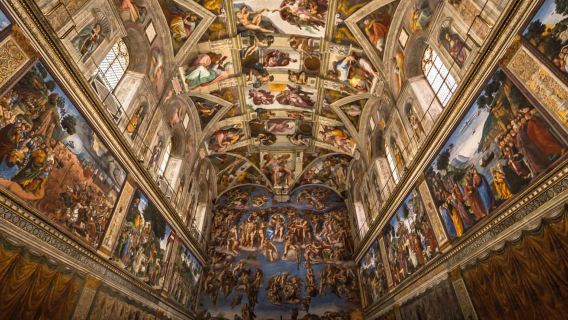
4.4/5
· 20 reviews5% off
Limited-time sale
FromUS$55.62US$58.55
5% off
Limited-time sale
FromUS$60.99US$64.2

3.9/5
· 9 reviews· 377 booked189 travelers saved
FromUS$155.91

FromUS$15.71
3.0/5
· 2 reviewsFree cancellation
Book now for today
5% off
Limited-time sale
FromUS$14.92US$15.71

FromUS$2.81
5% off
Limited-time sale
FromUS$37.29US$39.26

FromUS$112.16
Featured Food & drink in Rome
View all Food & drink
5.0/5
· 1 reviewFree cancellation
Book now for today
FromUS$77.39


4.9/5
· 320 reviewsFree cancellation
Book now for today
100 consecutive positive reviews
FromUS$37.81

4.8/5
· 493 reviewsFree cancellation
Book now for today
94.1% of travelers recommend
FromUS$57.28

4.9/5
· 3.7k reviews· 43 bookedFree cancellation
Book now for today
98.6% of travelers recommend
5% off
Limited-time sale
FromUS$26.10US$27.48


4.9/5
· 1.1k reviewsFree cancellation
Book now for today
100 consecutive positive reviews
FromUS$67.51
Featured Outdoor experiences in Rome
View all Outdoor experiences
Free cancellation
Book now for today
FromUS$145.81

Free cancellation
7% off
7% off
FromUS$259.73US$279.28
Free cancellation
Book now for today
20% off
Limited-time sale
FromUS$5.82US$7.28
Book now for today
FromUS$168.28

4.7/5
· 966 reviews· 22 bookedFree cancellation
Book now for today
93% of travelers recommend
5% off
Limited-time sale
FromUS$62.87US$66.18
More things to do
Private Tours in Rome
View More Private Tours in Rome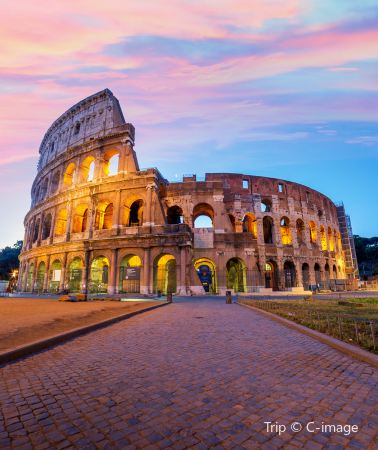


Group Tours in Rome
View More Group Tours in Rome

Free things to do in Rome
Villa Borghese
Rome · 1.5 km from downtownMouth of Truth
Rome · 2 km from downtownArch of Constantine
Rome · 1.5 km from downtown
Spanish Steps
Rome · 1.2 km from downtown
Chiesa di Sant'Ignazio di Loyola
Rome · 1.4 km from downtown
Piazza Navona
Rome · 2 km from downtown
Monument to Victor Emmanuel II
Rome · 1.4 km from downtown
Ponte Sant'Angelo
Rome · 2.5 km from downtown
Papal Basilica of Saint Mary Major
Rome · 600m from downtown
Campo de' Fiori
Rome · 2.2 km from downtown
What travelers say about Rome

_TI***h4October 19, 2026
5.0
Your ticket includes the Roman forum and palatine hill so is excellent value
Colosseum

M77***16October 14, 2026
4.0
It's alright. If you've already visited all the other major Italian attractions, you can check it out. I don't really understand their religious beliefs or stories, but the scenery is quite nice, and you can see the city views.
Pantheon

Brent JosephJuly 3, 2026
5.0
Amazing gallery! Book early ahead of time. But it is one of the best things to do in Rome.
Borghese Gallery and Museum

Tanja08August 19, 2026
5.0
There were no crowds, so there was no waiting either. It was a lovely experience, with a beautiful view from the castle and a café at the top.
Castel Sant'Angelo

Danijela M.July 18, 2025
5.0
Roman Forum and the Colosseum are amazing historical places everyone should see. The tickets, adult + child x2 full experience are the best for the value we have paid.
Roman Forum

Hossain Hoq ProhorSeptember 15, 2026
5.0
Villa Borghese Gardens is one of the most beautiful and peaceful green spaces in Rome, offering a refreshing escape from the city’s busy streets. The expansive park is filled with lush trees, colorful flowers, elegant fountains, quiet pathways, and beautiful viewpoints. Walking through the gardens feels relaxing, with plenty of scenic spots to stop, take photographs, or simply enjoy nature. The park also offers wonderful views toward Rome, making it especially enjoyable around sunset. Visitors can explore its charming corners, admire historic architecture, and spend a peaceful afternoon surrounded by greenery. Villa Borghese is a perfect destination for nature lovers, photographers, couples, and travelers looking for a relaxing experience in Rome.
Villa Borghese

MARK MORDOVTSEVMay 23, 2026
5.0
One extra suggestion for visiting the Trevi Fountain is to spend a bit of time in the surrounding streets, not just the fountain itself. The small alleys around Piazza di Trevi are full of cafés, gelato shops, and quieter viewpoints where you can see the fountain from above without the main crowd.Also, try to visit twice if possible: once early morning for photos and once at night for atmosphere. The lighting completely changes the feeling of the place. Another useful tip is to stand slightly off to the side rather than directly in front of the central barrier, as it gives a better angle for photos and avoids the heaviest crowd flow. Finally, keep in mind it is a historic monument, so respecting the space helps keep the experience pleasant for everyone.The photo was taken at the Trevi Fountain, located in the historic center of Rome.It sits in a small square (Piazza di Trevi), surrounded by narrow streets and classic Roman buildings. The closest major landmark is the Pantheon area, about 10–15 minutes walking distance away. From Piazza Venezia, you can reach it on foot in about 10 minutes by walking through Via del Corso and then turning into the smaller side streets toward the fountain.The exact address is Piazza di Trevi, 00187 Roma RM, Italy. The photo was likely taken right in front of the main fountain basin, where the Neptune sculpture and cascading water are visible, which is the most common viewpoint for visitors.
Trevi Fountain

学校🏫June 3, 2025
5.0
## Mirror of Lies: Soul-Eating Ceremony of the Mouth of Truth
When you squeeze through the noisy crowd of the Cosmedin Church, you suddenly bump into the iron-blue stone face in the niche - the mask of the river god with slightly open fangs is covered with moss, and the eye sockets are covered with centuries of dust. This ancient Roman sewer manhole cover was transformed into a lie-eating beast because of "Roman Holiday". Don't be deceived by the laughter of tourists: the moment you put your hand into its mouth, you will fall into a soul trial spanning a thousand years.
**Roman humor under the myth of lie detection**. Please look closely at the stone surface when queuing: the craftsmen in the first century AD deliberately carved the sea god into a horrified expression, originally to deter floods. One night in the Middle Ages, a drunkard stuck his hand between the fangs and cried and confessed his guilt, and an absurd legend was born. Today, husbands pretend to be bitten and scream, and wives hold their mobile phones and laugh and bend over - when the jungle of selfie sticks submerges the stone statue, the Mouth of Truth has long become a stage prop for contemporary people to create sweet lies.
**The hidden line of truth between the stone pillars of the church**. Don't ignore the church behind because of the crowd! On the sixth-century mosaic altar, Christ is crushing the head of a snake (the incarnation of truth). Look up at the dome: St. Peter is the only one missing among the twelve apostles - it is said that the devil stole his statue during construction, but it fell into the Tiber River due to the burns of the church's holy light. When your fingertips brush over the cracks in the north wall (the signature of the 1348 earthquake), you suddenly see the afterimage of the saint in the red light of the stained glass window: it turns out that truth never lives in the fangs of stone statues, but flows in the scars of time that have crushed the building.
**The Liar's Monologue in the Moonlight**. After closing, go around to the small garden on the east side of the church, and the Mouth of Truth turns back into a gloomy monster behind the fence. Put your palms against the iron bars and look at the stone statue, and the roar of the ancient Roman aqueduct floats in the wind. One night in the third century AD, pagans carved anti-Christian slogans on this stone, and the priests used holy water to wash the fangs that appeared. At this moment, the cool air seeps out of the cracks in the stone and wraps around my wrist, as if two thousand years of lies and confessions have condensed into salt here - what we fear is never the bite of the stone, but the piercing of the shadow in our hearts.
Please take out the coins and put them in the donation box before leaving. When the crisp sound of metal hitting the bottom of the box echoes through the empty courtyard, it is like the trembling sound of the soul's balance returning to zero. As the candlelight flickers in the altar, you suddenly realize: the most terrifying thing about this stone statue is not the fangs but the hollow throat - there are countless untold truths deposited there, like the silent ancient pottery fragments at the bottom of the Tiber River. And the 14th-century crucifix forgotten by tourists in the corner of the church, wild violets are blooming between the ribs of the wooden sculpture of Christ, mocking the human obsessive pursuit of "absolute truth" with gentle vitality.
Mouth of Truth

衙前路十八号February 4, 2025
5.0
The Arch of Constantine, an ancient building standing in the city of Rome, is like a historical giant that has experienced vicissitudes of life, quietly telling the glory of the past. When I approached it slowly as a tourist, it seemed as if I had traveled through time and space and stepped into a legendary era of war.
From a distance, the Arch of Constantine is tall and solemn. Its magnificent outline casts a huge and deep shadow under the reflection of the sun, adding a solemn atmosphere to this land. Many tourists, like me, stood not far away and were deeply attracted by its majestic momentum. They stopped and looked up at this building that carries a thousand years of history, with their eyes full of awe and curiosity about history.
Approaching the Arch of Triumph, you can clearly see its exquisite stone carvings. Every stone seems to be given life, vividly showing the exquisite craftsmanship of ancient Rome. The reliefs on the arch are delicate and vivid, depicting the heroic scenes of war and the heroic postures of heroes. They waved their swords and charged forward, their majestic momentum made people's blood boil. A tourist from France couldn't help but sigh: "These carvings are amazing! It seems that every knife can feel the passion and fighting spirit of the soldiers back then. The fearless spirit they showed in the battle is shocking."
And those scenes depicting victory and peace are filled with peace and joy, as if showing the glory and honor of the ancient Roman Empire to the world. A British couple with a child smiled and said to the child: "Baby, look at these paintings. There was once a powerful empire that created such a great achievement. We should learn from their bravery and wisdom." The child also looked at it curiously, with a yearning for history in his eyes.
Walking slowly along the Arc de Triomphe, the stone slabs under my feet carry countless footprints. Perhaps there were triumphant generals and mighty soldiers who walked here. They cheered and saluted people with a victorious smile. And now, I also follow their footsteps and feel the historical weight of this building. The surrounding walls are also covered with exquisite carvings. An Italian local resident said with emotion: "I grew up near here since I was a child. The Arch of Constantine is like an old friend to me. Every time I see it, I feel extremely proud that our country has such a great cause." Tourists were also infected by his emotions and immersed in this ancient and great atmosphere.
Standing in the center of the Arch of Constantine, looking up, the sky and the arch form a beautiful picture. The sun shines through the arch, casting mottled light and shadow, as if telling the story of the years. An American tourist immersed in this wonderful atmosphere said: "Here, time seems to be still, I feel the pulse of history, and the awe of civilization arises in my heart." At this moment, many tourists, like me, with awe of history, quietly feel the unique charm of this building.
As the sun gradually sets, the afterglow dyes the Arch of Constantine into a golden color. It looks more mysterious and charming in this warm evening breeze.
Arch of Constantine
Popular cities near Rome


Frequently asked questions
What are the must-do things in Rome?
Don't miss these attractions in Rome: Colosseum, Pantheon, and Borghese Gallery and Museum. If you like Day tours, try Skip the Line: Vatican Museums, Sistine Chapel Tour & St. Peter's. If you enjoy Cultural experiences, try St. Peter's Basilica, Vatican Museums & Sistine Chapel Entry.
What are the must-try foods and restaurants in Rome?
You can give Trastevere food walking tour with local wine and pasta and Restaurant reservation service for the popular Italian restaurant Aroma near the Colosseum in Rome a try. Before you go, please check their opening hours and menus online. Reservations are recommended, especially during peak hours.
What are the recommended tours and excursions in Rome?
When choosing a tour, start with how much time you have and the kind of experience you're looking for. Trending options right now include Skip the Line: Vatican Museums, Sistine Chapel Tour & St. Peter's, Skip-the-Line Vatican, Sistine Chapel & St. Peter's | Small Group, and Rome: Colosseum, Roman Forum & Trajan's Market Exterior Tour. Check the real-time availability and itinerary before you book.
What's the typical cost of day tours and activities in Rome?
As of October 23, 2026, the reference price for day tours and activities in Rome is around USD 30.89 – USD 216.52. Rates vary by duration, group size, transportation, tickets, meals, and any special admission requirements. Before you book, please confirm the billing currency and whether the price is quoted per person or per group.
How can I contact Trip.com customer support?
Get help anytime, anywhere within 30 secondsContact customer support
Can I change or cancel my booking?
Change and cancellation policies vary by attractions and tours. Please check the product details page for more information.
How can I get discounted prices?
Ticket prices may vary between weekdays and weekends, as well as during peak and off-peak seasons. When booking with Trip.com, you can also use Trip Coins to get extra savings. For more tips on booking discounted tickets, please visit Trip.com for the latest information.
Trip.com picks
Popular Rome Tours
Best Rome Experiences
Recommended Car Rentals in Italy
Recommended departures from the same location
Popular Airport Transfers
Civita di Bagnoregio, Montepulciano & Orvieto: Tour from Rome + Lunch & WineRome Food Experience Max 6 People Group Tour | w/Private OptionRome: Vegan Street Food Tour with Local GuideCastel Sant'Angelo Panoramic Terrace Experience & AudioguideRome: Luxury Food Tour in Trastevere with Free Flowing WineRome:Vintage Fiat 500 Tour La Dolce Vita, Landmarks & PhotosVespa scooter tour in Rome with Pro-PhotographerColosseum & Forum with optional Arena or Underground AccessFrom Rome: Pompeii and Herculaneum by High-Speed TrainRome: Live Italian Opera & Dinner Cooking ExperienceRome : Trastevere Food & Wine WalkVatican Museums & Sistine Chapel Skip-the-Line Guided TourVatican:St. Peter's Basilica,Underground and Dome Climb tourRome: Borghese Gallery Skip-the-Line Ticket & AudioguideRome: 3 Spritz Cocktails & Fresh Pasta Cooking Class
Rome Travel EssentialsRome City PassRome Cultural ExperienceRome ActivitiesRome SIM CardRome Bus TicketsRome Airport ServicesRome Restaurant DiscountsRome TransportationRome Travel ServicesRome Connectivity SolutionsRome Day ToursCar rentals in BariCar rentals in VeniceCar rentals in AlgheroCar rentals in CataniaCar rentals in MilanCar rentals in PisaCar rentals in PalermoCar rentals in SienaCar rentals in FlorenceCar rentals in OlbiaCar rentals in BolognaCar rentals in NaplesCar rentals in RomePopular cruises from Rome to 马来西亚Popular cruises from Rome to 印度尼西亚Popular cruises from Rome to 摩洛哥Popular cruises from Rome to 黑山Popular cruises from Rome to 阿曼Popular cruises from Rome to 突尼斯Popular cruises from Rome to 格林纳达Popular cruises from Rome to 土耳其Popular cruises from Rome to 美国Popular cruises from Rome to 马提尼克Popular cruises from Rome to 新西兰Popular cruises from Rome to 阿联酋Popular cruises from Rome to 留尼汪(法属)Popular cruises from Rome to 克罗地亚Popular cruises from Rome to 毛里求斯Popular cruises from Rome to 安提瓜和巴布达Popular cruises from Rome to 阿根廷Popular cruises from Rome to 秘鲁Popular cruises from Rome to 泰国Popular cruises from Rome to 瓜德罗普岛Rome airport transfersGiovan Battista Pastine International Airport transfersLeonardo da Vinci International Airport transfersMilan Malpensa Airport transfersMilan Linate Airport transfersFalcone-Borsellino International Airport transfersIl Caravaggio International Airport transfersBologna Guglielmo Marconi Airport transfers