Things to do in Shiyan
Explore top experiences
Top 10 attractions in Shiyan

Wudang Mountains
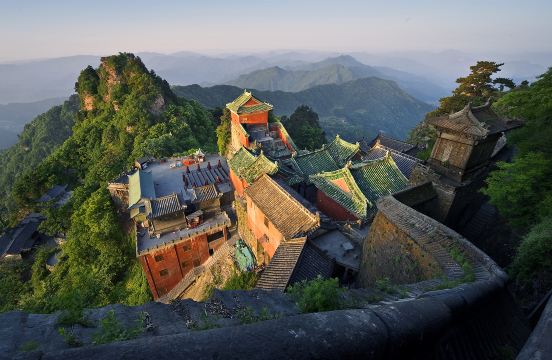
The Wudang Mountains are located in Shiyan, northwestern Hubei province. Its main peak, Tianzhu Peak, stands at an elevation of over 1,600 m. Legend has it that Emperor Zhenwu cultivated and ascended to immortality here, while Taoist Zhang Sanfeng further synthesized the essence of martial arts during the late Yuan and early Ming dynasties, making this the birthplace of Wudang martial arts. During the Yongle era of the Ming dynasty, the imperial court launched the monumental project of "constructing the Forbidden City in the north and building the Wudang Mountains in the south." The mountain temples were built according to royal standards, with their layout unfolding layer by layer following the mythological narrative of Zhenwu's spiritual cultivation. The palaces blend harmoniously with the peaks, cliffs, and streams, creating an ethereal and mystical atmosphere befitting a sacred mountain. The attractions unfold along the mountain terrain from the base to the summit, connecting key areas like Taizi Slope, Zixiao Palace, Nanyan Palace, and Taihe Palace. At Taizi Slope, the undulating Nine-bend Yellow River Wall follows the mountain contours, while Wuyun Tower's "one pillar supporting twelve beams" remains an architectural marvel. Zixiao Palace, a well-preserved imperial Taoist temple, features the stately Zixiao Hall with its double-eaved, nine-ridged roof. Nanyan Palace clings dramatically to a cliff face, offering vertiginous views of the valley below. Ascending the stone-paved ancient path to Tianzhu Peak's summit reveals the gilded bronze Golden Hall—the architectural masterpiece of the entire complex. As the birthplace of Wudang martial arts, this place attracts enthusiasts from home and abroad who come to seek masters and practice martial arts. The Taizi Slope on the mountain and the Xuantian Yuxu Palace at the foot serve as daily training grounds for practitioners. If you happen to encounter Taoist priests or students demonstrating Wudang boxing techniques, take a moment to quietly observe and appreciate the centuries-old martial arts heritage. A two-day visit is recommended: On the first day, enter from the mountain gate to visit Taizi slope and Zixiao palace, then stay overnight near Wuyaling. On the second morning, first visit Nanyan palace, then ascend to the golden summit before hiking down or taking the cableway at Qiongtai. After exiting the mountain gate, you may also visit Xuantian Yuxu palace. The attraction's shuttle buses connect all major core attractions, allowing flexible combinations of hiking and riding. Most dining and lodging options are concentrated around Nanyan, convenient for rest during the climb. From late October to November each year, when the forests are ablaze with color and red leaves cover the mountains, it's the perfect time to enjoy the fall scenery in the mountains.Danjiangkou · 43 km from downtown

Wudang Mountain Cableway
The Wudang Mountain Taihe Cableway is the only transportation to the Golden Summit attraction in the Wudang Mountain scenic area, providing visitors with a convenient and efficient mountain-climbing experience. The cableway goes directly near the Golden Summit at Tianzhu Peak, and it takes about 20 min to reach the top after getting off the cableway. The cable car is designed with a focus on ecological preservation and seamless integration with the views. Featuring panoramic windows, visitors can enjoy breathtaking vistas of Wudang Mountain's towering peaks and misty landscapes. Along the route, ancient architectural complexes harmoniously blend with natural terrain. As the transportation cable car to the Golden Summit, its terminal at Qiongtai Zhongguan serves as both a starting point for hiking and a significant part of Ming Dynasty royal architecture, surrounded by classic scenic spots. Wudang Mountain, a sacred site of Taoism in China, is also known as Taihe Mountain, Xieluo Mountain, Canshang Mountain, and Xianshi Mountain. Historically referred to as "Taiyue," "Xuanyue," and "Dayue," it is located in Danjiangkou City, Shiyan, northwestern Hubei Province. Bordering Xiangyang to the east, Shiyan to the west, Shennongjia to the south, and the Danjiangkou Reservoir—the source of the central route of the South-to-North Water Diversion Project—to the north, Wudang Mountain's Golden Summit, also called the Dayue Taihe Palace, stands atop Tianzhu Peak, the highest pinnacle of Wudang, towering above the surrounding peaks and piercing the clouds.Danjiangkou · 49.7 km from downtown
Danjiangkou Dam Scenic Area
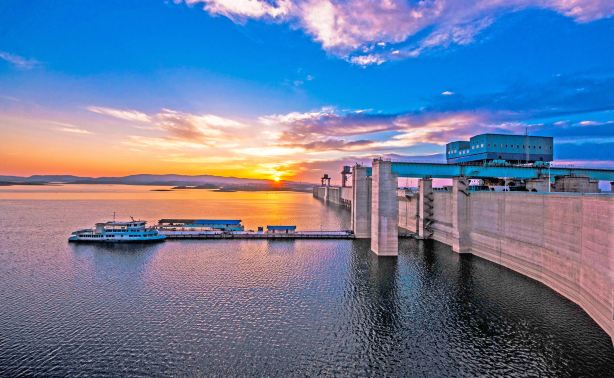
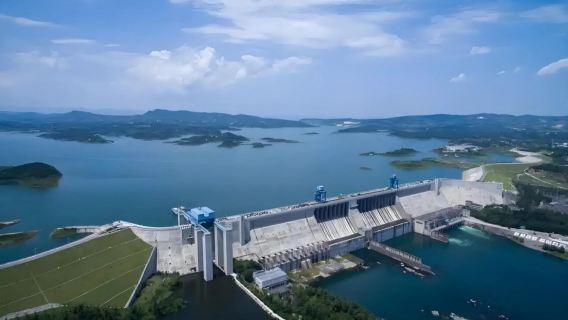
Danjiangkou Dam Scenic Area is in the downtown area of Danjiangkou City, Hubei Province. This water conservancy scenic area is not far from the convergence between the Han and Dan Rivers, its branch. The scenic area mainly consists of the water conservation sightseeing area, leisure and fitness area, water conservation education area, water ecology experience area and service area.Danjiangkou · 2.1 km from downtown

Wudang Yimeng Scenic Area
The WU DANG YI MENG immersive cultural tourism complex features two core performances: the large-scale original Chinese animation theatrical show "WU DANG YI MENG" and the panoramic circular-screen multimedia spectacle "Cycle of Life." It comprises six themed zones: the dome theater "Soaring Over Wudang," immersive dining performance "Wudang Tales: Jianghu Banquet," flagship theater "Wudang Martial Arts Arena," passageway plaza "Celestial Parade," cliffside waterfall "Light of Zhenwu," and commercial street stage "Wudang Theater." Supplementary facilities include a 360-degree cliff-view reception hall, themed cliffside guesthouses, and distinctive dining options like "Wudang Street Food" and "Wudang Tea House." This comprehensive experience vividly interprets Taoist philosophy, Wudang culture, and the legend of Zhenwu, deepening traditional visitors' understanding and passion for Mount Wudang while allowing younger visitors to discover its unique charm.Danjiangkou · 38.4 km from downtown

Savage Valley
Savage Valley is located in Shiyanfang County near Wudang Mountain, Shennongjia and is an important link to the Yangtze River Three Gorges Gold Tourist Line. It is the transition area from the northern subtropical zone to the warm temperate zone in China, with the Qinling mountains forming a barrier to the north and the Ba mountains in the south, so it is not greatly affected by the cold winds from the mountain glacier, therefore preserving the rich, ancient and rare forest vegetation. The main attractions are Savage Cave and Savage Valley, creating a beautiful mountain landscape enjoyed by tourists.Fang County · 19.7 km from downtown

Wudang Mountain Scenic Area - Golden Summit
Wudang Mountain Scenic Area - Golden Summit is located at the summit of the master of Tianzhu Peak, the main peak of the Wudang Mountains, at an altitude of over 1,600 m, and is the final destination for pilgrims throughout history. During the Yongle reign of the Ming Dynasty, the imperial court "built the Forbidden City in the north and renovated Wudang in the south," casting the Golden Hall at the summit. The hall is made entirely of gilded bronze. After the components were cast in Beijing, they were transported by water via the Grand Canal, the Yangtze River, and the Han River to the foot of the mountain, then carried up the mountain and assembled. It has remained gleaming for hundreds of years despite the elements. Inside the hall is a gilded bronze statue of Emperor Zhenwu, depicted with disheveled hair and bare feet, dressed in imperial robes. Flanked by the Golden Boy and Jade Maiden, as well as the Water and Fire Generals, this place is therefore regarded as the core of the Zhenwu faith. The climb to the summit is a pilgrimage in itself. Ascending the ancient sacred path, you pass through Yitian Gate, the Second Heavenly Gate, the Three Heavenly Gates, and Chaotian Palace in turn, before arriving at Taihe Palace and passing through the stone walls of Zijin City that surround the summit. Standing at the summit and looking around, the surrounding peaks guard the main peak, embodying what the ancients called the "seventy-two peaks bowing to the Great Summit." Clouds and mist in the mountains gather and disperse unpredictably. On clear days, you can overlook the layered ridges, and when the clouds rise, the peaks are half-hidden, as if floating above a sea of clouds. In the Zhuan Yun Hall on Xiaolian Peak, there is a small Yuan Dynasty bronze hall that predates the Golden Hall. It is easily overlooked but worth a special visit.Danjiangkou · 49.8 km from downtown

Daming Peak, Wudang Mountain
Wudang Daming Peak is located in Guanshan Town, Shiyan City, Hubei Province. It was originally named Zhutouyan, also known as Wuzhu Peak and Zhenwu Sitting Statue. It is 1,316 meters above sea level and is the 45th peak among the 72 peaks of Wudang Mountain. It has a pleasant climate and beautiful scenery. The "Wudang Fudi Zongzhen Ji" written by Liu Daoming, a Taoist priest in the Yuan Dynasty, records: "Daming Peak is to the west of the big top. Several peaks stand tall, right in Yangming, with bamboo, trees, springs and rocks, lush sky and shade, deep mountains and secluded roads, and fertile soil..."Danjiangkou · 60.2 km from downtown

Wulong River Scenic Area
Five dragons River Scenic Area is found in Shiyan West, a mysterious and quiet canyon world. It consists of five valleys: Tianle Valley, Feilong Valley, Weaving Women Valley, Fengshen Valley, and Wuxi Valley. Among them, the Five dragons River is an important tributary of the famous "Tanabata" Tianhe River upstream. Five dragons River Scenic Area is famous for its five dragons and how promising it is. It is also famous for its immortality and sacredness. It is a well-deserved leisure resort.Yunxi · 15.6 km from downtown

Yuxu Palace
Yuxu Palace,located in Wudangshan Town at the foot of Wudang Mountain, is approx. 4 km from Xuanyue Gate. It was first built in the 11th year of the Yongle reign of the Ming Dynasty (1413). At that time, it served as the headquarters for managingWudang Mountain. It was inhabited by the "Wudang Tidiandu" (Wudang Superintendent), an official of the sixth rank personally selected by the Emperor. It was the largest temple in theWudang Mountainbuilding complex at the time, and the Yongle Emperor designated it as "Yuxu Palace". In the 7th year of the Tianqi reign of the Ming Dynasty (1627), a devastating fire occurred here, followed by disasters such as flash floods, which destroyed a large portion of the buildings. The existing buildings and ruins mainly include two palace walls approx. 1 km long, two stele pavilions, five hall foundations, theParents Hallrebuilt during the Qing Dynasty, the Yuntang, and the ruins of theEast Heavenly Gate, West Heavenly Gate, and North Heavenly Gate. In recent years, using the "restore old as old" method, projects such as theDragon and Tiger Hall, Yuxu Hall, Yudai River, and the stone slab flooring within the palace have been gradually restored and rebuilt. Today, when you arrive here from Xuanyue Gate at the foot of the mountain and walk on the stone-paved paths left over from the Ming Dynasty, although you see broken ruins, foundations, and remaining structures, you can still feel its grandeur and profound atmosphere. When visiting, you can often see martial arts enthusiasts practicing here, including many foreigners. Watching these foreign martial arts enthusiasts carrying Chinese broadswords and spears, walking under the mottled palace walls with hundreds of years of history, is quite an interesting sight.Danjiangkou · 40.4 km from downtown

Canglanghai Tourist Port
Canglanghai Tourism Port is located at No. 1 Wudang Avenue (Caiwan Village, Sanguandian Sub-district Office), You'an New City District, Danjiangkou City, Hubei Province, China's Water Capital. It is one of the key projects in the western Hubei ecological and cultural tourism circle. The overall planning of Danjiangkou Tourism Center Port: It is connected to Wudang Avenue by circular traffic, and bus transfer points, ecological parking lots, tourist distribution centers, etc. are arranged Souvenir it. Vehicles entering the port area travel in a counterclockwise direction to form a channelized and efficient vehicle order. The planned terminal adopts a closed management method. After leaving the port, tourists get off the bus and buy tickets at the tourist distribution center. With the boat ticket, they will enter the Cruise docking terminal through the ticket gate in front of the tourist center and queue up to board the ship. After getting off the ship, returning tourists will leave the port through the gate. The returning passengers do not need to check their tickets and get off the ship directly. They can enter the commercial street along the steps of the pier through the pier exit gate and then get on the bus to leave. The pier exit gate adopts one-way control, which only allows exit but not entry, to ensure the channelized flow of people in and out of the port and facilitate management.Danjiangkou · 3.7 km from downtown
Experiences you can't miss in Shiyan
Featured Day tours in Shiyan
View all Day tours
Free cancellation
Instant confirmation
Book now for tomorrow
FromUS$267.81

FromUS$206.60

More things to do
Group Tours in Shiyan
View More Group Tours in Shiyan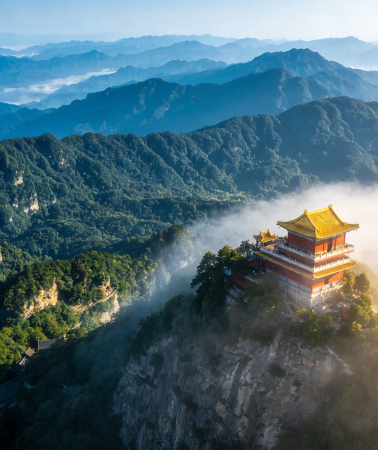


Free things to do in Shiyan


What travelers say about Shiyan

肥肥小胖猫October 23, 2026
4.0
The scenic area is quite large. Taking the shuttle bus from the visitor center to Nanyan takes about an hour, including transfers. From Nanyan, you can hike to the Golden Summit via the Mingshen Path, a rustic path with many historical sites. Xiaoyao Valley is like a hermit's retreat from a fantasy drama, possessing a unique charm.
Wudang Mountains

难 得糊 涂July 9, 2026
5.0
The Wudang Mountain Taihe Cableway (Qiongtan Cableway) is the only cableway in Wudang Mountain that directly reaches the Golden Summit. The lower station is located at Qiongtan Zhongguan, and the upper terminus is near Taihe Palace at the Golden Summit. It is the core transportation route for effortlessly ascending Tianzhu Peak.
The cableway is 1512 meters long with a vertical drop of 645 meters, and the entire journey takes approximately 8 minutes. The panoramic glass-windowed cabins offer breathtaking views of the surrounding peaks and sea of clouds. Equipped with Austrian-imported equipment, the ride is smooth.
Locations of the upper and lower stations:
1. Lower Station (Qiongtan): The scenic area shuttle bus goes directly to the Qiongtan station. The cableway entrance is a 300-meter walk from the bus stop. Qiongtan Zhongguan is a Ming Dynasty Taoist temple and can be visited along the way.
2. Upper Station: After arriving at the cableway station, you must hike 20-30 minutes up steep stone steps, passing Taihe Palace, to reach the highest peak, the Golden Summit.
Recommended Route:
1. Effortless Option: Sightseeing bus → Qiongtan → Taihe Cableway (uphill) → Hikway to the Golden Summit → Cableway (downhill). Suitable for the elderly and those with average physical fitness.
2. Classic route without backtracking: Take the cable car to the Golden Summit → Hike down to Nanyan Palace, then transfer to a sightseeing bus, avoiding repeating the cable car route.
Wudang Mountain Cableway

M37***45June 6, 2026
4.0
Standing atop the Danjiangkou Dam, overlooking the vast expanse of water, is truly awe-inspiring! This is the world's longest water diversion project, benefiting the largest population and covering the widest area. Strolling along the dam's viewing platform, the distant blue sky and white clouds reflect beautifully on the water, which shimmers in the sunlight. The dam's magnificent structure blends seamlessly with the surrounding stunning scenery, making every snapshot a cinematic masterpiece, as if each frame tells its own story.
Danjiangkou Dam Scenic Area

M31***95October 10, 2026
5.0
Visit the immersive performance "A Dream of Wudang" during the National Day holiday! The stage design and special effects are stunning, with high-altitude wire work and Tai Chi performances creating a truly immersive atmosphere. The story recounts the history of Wudang's construction. The only downside is the crowds during the holiday; early arrival is recommended.
Wudang Yimeng Scenic Area

桃子妖妖妖October 7, 2026
4.0
There are no wild men in Yeren Valley.
Yeren Valley is located in Yeren Valley Town, Fang County, Shiyan City, not in the Shennongjia Forest District. The forest district is an administrative concept; Fang County borders the Shennongjia Forest District. In fact, the Shennongjia Forest District was formed by carving out areas from Fang County, Xingshan County, and Badong County. Yeren Valley is located on the northern edge of the Shennongjia Forest District, and it is named after the numerous sightings of wild men (Yeren) throughout history.
Leaving aside the legends of wild men, Yeren Valley is actually a typical mountain valley, with similar landscapes found in many parts of my country, both north and south. In Northeast China, the Maolangou Valley in Yichun, Heilongjiang Province, is highly similar, both being valleys in the mountains with a stream flowing down from above, featuring waterfalls, deep pools, and streams along the way. The main differences lie in the flora and fauna of the north and south, and also in the formation of the valleys—northern valleys are mostly formed by water erosion, while southern valleys are mostly formed by karst topography. The middle section of Yeren Valley is a sinkhole formed by the collapse of a huge karst cave.
The Yeren Valley tour route is well-designed. After taking a bus to the scenic area exit, you transfer to a sightseeing bus to reach the entrance, which is also the highest point of the scenic area. Following the stream downhill, you return to the parking lot where you arrived. The trail winds for 5 kilometers, almost entirely downhill and level, with only a few steps, so it's not strenuous. The valley is densely vegetated, and the mountains on both sides are high, so it's not sunny on a clear day. Two hours is usually enough for a visit. On the day we visited, it was drizzling, and although the path was slippery and we walked slowly, our group of 30 people all exited the valley in an hour and a half.
The main attractions in the scenic area are water features: Dragon Saliva Waterfall, Dragon Beard Waterfall, Chuanzi Waterfall, Wild Valley Cascade, Pot Bottom Pool, and Yeren Lake. Not far past the sinkhole, an underground river flows out from a karst cave, forming a waterfall—a common sight in my country's karst regions, but quite rare to us northerners. There is also a wild spring in the middle of the valley, a naturally flowing mountain spring with sweet, refreshing water, perfect for hydration.
The remaining scenic spots rely more on imagination and explanation. Swallow Rock is named after the swallows that nest there. Dragon Gill, the Cliffside Forest, the Sinkhole, the Valley-Suppressing Jade Seal, and various medicinal herbs within the valley all require a guided tour to fully appreciate. Near the exit of the scenic area is a suspension bridge, a good vantage point for viewing Huancai Ridge, but its beauty depends on the season. It's most beautiful in spring when wild cherry blossoms and dove trees are in bloom, and in autumn when the colorful forests appear; the seasons are quite seasonal.
To prevent visitors from getting bored, the scenic area has placed signs and sculptures about the legend of the Wild Man in various locations within the canyon. They also set up camping and photo-taking areas in the middle of the canyon and arranged a Wild Man tribe performance, but it was canceled due to rain. If you're planning a trip there, you'll need to add time for the performance to your two-hour itinerary.
These are roughly the highlights. The guides and staff at the scenic area were very enthusiastic and friendly. There weren't many tourists; on a light rainy day, we were the only group in the scenic area, making for a very good experience. Visiting the Yeren Cave, which is not far away, together makes a complete one-day tour. However, the scenic area is still a bit far from Shiyan city. Whether or not to visit depends on personal preference.
Savage Valley

山风小甜饼August 13, 2025
5.0
Wudang Golden Summit is the most worthwhile place to visit in Wudang Mountain. Especially after climbing the steep stairs with trembling legs, listening to the crows' calls, and seeing the small house on the top of the mountain, you will feel emotional. What's more, the Golden Summit is built with oriental aesthetics, very beautiful and noble.
Wudang Mountain Scenic Area - Golden Summit

刘建老师(专注企业培训)April 28, 2025
5.0
On March 22, we went sightseeing at Daming Peak.
Standing at the foot of the mountain, before setting off, we could already see the winding plank road, which was ingenious.
The suspended plank road has nine links from north to south, with a total length of 999 meters, like a silver snake winding around, but walking on it is safe.
Confucius said: "The benevolent enjoy the mountains." Climbing up the steps, we can quite understand the fun of climbing the heights of the ancients.
Standing on the mountain, looking into the distance, surrounded by thousands of mountains, layers of mist, pavilions and towers, and the layers of mountains are magnificent.
Daming Peak, Wudang Mountain

_We***39July 27, 2025
5.0
The Wulong River Scenic Area is divided into upstream and downstream. The total distance between the upstream and downstream is 10 kilometers. Most tourists enter and exit from the downstream, because the Wulong River Waterfall and the high-altitude glass plank road are concentrated in the downstream. My husband is quite stubborn. He insisted on walking the 10km, so he chose to enter the scenic area from the upstream. It was very cool along the way, walking in the mountain stream. Finally, the tour ended from the downstream. I saw the waterfall and the high-altitude glass plank road, which needs to be charged separately. The waterfall is very spectacular.
Wulong River Scenic Area

浪漫的追August 8, 2025
5.0
玉虚宫,隐匿在武当山脚下的宫殿,真的太震撼了!玉虚宫保存着永乐年间的“三朝五门”建制。玉宫门的门钉多为横九路、竖九路,九路门钉是皇家宫殿独有的标识,象征着皇权的至高无上。据说武当山总共就12座御碑亭,玉虚宫就有4座。
Yuxu Palace

绿茶果子赛赛February 22, 2026
5.0
This long journey is truly worth experiencing. The boat makes a brief stop at the farthest point, offering breathtaking views of the endless expanse of water, making one marvel at the sheer scale of this understated yet impressive water conservancy project.
Canglanghai Tourist Port


