Things to do in Vaxholm
Explore top experiences
Top 10 attractions in Vaxholm


Vasa Museum
When you come to Sweden, you will be attracted by the variety of museums here, and the Vasa Museum is one of the more special museums. It was built for the exhibition of a wreck of the Vasa that was salvaged from the bottom of the sea. "Vasa" is an ancient warship of the seventeenth century. It was built in 3 years according to the will of King Gustav II of Sweden. Unfortunately, when the warship was on its maiden voyage, it was overturned by strong winds and waves, and the ship sank at an accelerated rate due to the excessive weight of the ship. It was not until 1961 that it was finally salvaged by the government and repaired in all aspects. Now walking into this museum, people can not only see the original appearance of the warship more than 300 years ago, but also appreciate more than 700 exquisite original sculptures on the ship. The decoration on this ship is very luxurious. If it weren't for those cannons, it is indeed difficult to associate it with warships. We have to marvel at the superb craftsmanship and carving craftsmanship of Swedish shipbuilding in the seventeenth century.Stockholm · 15.7 km from Vaxholm

The Royal Palace
The Royal Palace is located on Stadsholmen Island in Stockholm's old town, built by the water as the official residence of the Swedish king. It remains the venue for the king's official duties, state receptions, and grand ceremonies, though the royal family's daily life mostly takes place at Drottningholm Palace in the suburbs. Its royal history traces back to a medieval defensive castle, while the current Baroque-style palace was rebuilt after the old castle burned down in the late 17th century. Designed by architect Nicodemus Tessin the Younger, its construction spanned over half a century. The entire palace is built of brick and sandstone, with four wings enclosing a square courtyard. Its thick, elegant exterior walls feature the iconic pair of bronze lion statues at the northern "Lejonbacken" entrance. The changing of the guard is a traditional spectacle performed here year-round: Around noon, royal guards in dark blue uniforms complete the handover ceremony in the outer courtyard to military band music. For some time slots, you can also see the procession marching through the old town streets to the palace, lasting approx. 40 mins. During peak season, the viewing area gets crowded, so arriving early to secure a good spot is recommended. Check the on-site schedule for specific arrangements. The sentries standing guard with rifles at the palace gates are also popular photo subjects for travelers. The open sections of the palace are equally worth exploring: the royal apartments used for state receptions and ceremonies boast exquisite halls, while the treasury basement displays crowns and scepters from various dynasties. The three crowns museum preserves relics and historical records of the medieval old castle, and the royal armory in the basement houses armor, swords, and gilded carriages of past royal families. Travelers interested in royal culture may want to allocate half a day for a thorough visit.Stockholm · 16.7 km from Vaxholm

Gamla Stan
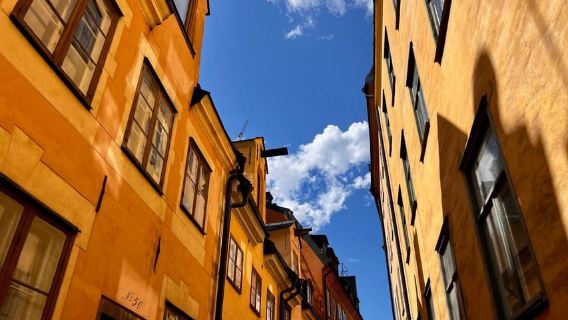
Stockholm's Gamla Stan is located on an island in the city center. The area where the Royal Palace is located is all part of Gamla Stan, which has over 700 years of history and is the birthplace of Stockholm. Gamla Stan has narrow streets. Strolling through these ancient alleys, you will see many magnificent medieval buildings: the majestic Royal Palace, towering churches, and fragrant street gardens. The rich aroma of coffee wafts from the fairytale-like houses, allowing you to fully experience the blend of history and modernity. Because Sweden has not experienced war for over 200 years, Gamla Stan has well preserved its medieval character. From the mid-19th century to the mid-20th century, Gamla Stan was considered a slum, and many historic buildings fell into disrepair; after World War II, houses in 5 alleys were demolished to expand the Parliament Building. Since the 1980s, Gamla Stan has attracted a large number of tourists due to its medieval and Renaissance architecture, and the value of its buildings has been recognized. In addition to numerous historical sites, Gamla Stan also has many craft shops, boutiques, restaurants, and cafes. Gamla Stan's history dates back to the 13th century. The area features medieval alleys, cobblestone streets, and ancient-style buildings, heavily influenced by the North Germanic style. Because Sweden has had no war for 200 years, Gamla Stan is well-preserved and is well worth spending some time strolling through, especially along the streets by the river and the sea. The main attractions in Gamla Stan include The Royal Palace, Storkyrkan, the Nobel Prize Museum, and Riddarholmen Church.Stockholm · 16.8 km from Vaxholm

Stockholm City Hall
Stockholm City Hall is located on the island of Kungsholmen by Lake Mälaren. Today, it serves as both the office of the Stockholm City Council and the venue for the banquet held after the annual Nobel Prize ceremony. The entire building is constructed of dark red bricks, with its horizontally expansive main structure forming a sharp contrast with the towering spire. Viewed from the water, it resembles a giant ship docked by the shore and is one of Stockholm's most recognizable landmarks. The walls of the Blue Hall are actually red brick. It can accommodate over 1,000 guests and houses a large pipe organ with over 10,000 pipes. Ascending the stairs leads to the Golden Hall, where the walls are inlaid with gilded glass mosaics. The patterns are inspired by Swedish history, with the massive "Queen of Lake Mälaren" being particularly striking. The tower stands at the southeast corner by the water. The three golden crowns at the spire are a national symbol of Sweden. Beside the base of the tower stands a gilded cenotaph of Birger Jarl, who is considered the founder of the city. Climbing the tower requires ascending over 300 steps, though you can switch to an elevator halfway up. The floor where the elevator is located houses the Tower Museum. Standing on the observation deck at the top, you can take in the view of the Old Town, Riddarholmen, and the Södermalm area, with over a dozen islands connected by waterways and bridges spreading out beneath your feet.Stockholm · 17.5 km from Vaxholm

Nobel Prize Museum
The Nobel Prize Museum is located in Stockholm, the capital of Sweden, serving as a comprehensive cultural venue that blends history with modernity. Through engaging exhibitions and interactive experiences, the museum showcases the historical background of the Nobel Prize, the stories of laureates, and their contributions to human society. Visitors can explore outstanding achievements in physics, chemistry, physiology or medicine, literature, and peace. The museum features multiple themed exhibition areas, such as "Journey of Discovery" and "Nobel Laureate Portrait Wall," allowing visitors to expand their knowledge in a relaxed and enjoyable atmosphere. Additionally, the Nobel Prize Museum regularly hosts lectures, workshops, and educational activities for children, offering diverse learning opportunities for visitors of all ages.Stockholm · 16.9 km from Vaxholm

Skansen
The Skansen Park Open Air Museum was built in 1891 and is the oldest open air museum in the world. There are traditional 18th and 19th century buildings moved from all over Sweden, including farmhouses, barns, churches, etc., to show people the old Swedish folk life and traditions from all over Sweden. There is also a zoo in the museum showing animals living in Scandinavia. Skansen Park Open Air Museum is a theme park and museum where you can experience outdoor life. In the wave of the Industrial Revolution, ethnologist Arthur, because he was very worried that the traditional culture of Sweden in the old days would gradually be forgotten, he invested money and contributed to relocate many traditional old houses, churches, workshops and other buildings from all over the country to here. The Skansen Open Air Museum was officially established in 1891. Skansen is one of the main visiting places for foreign guests to visit Sweden, and it is very representative for understanding Swedish culture. The museum is cleverly built to take advantage of the hillside terrain, and there are traditional craft learning areas that can be experienced hands-on. In addition, the museum also has an open-air music platform, which often hosts wonderful theatrical performances.Stockholm · 15.1 km from Vaxholm

ABBA The Museum
Just opened in 2013, the ABBA Museum is a must-see for all ABBA fans. There are various collections of records and performance costumes of this Swedish band on display, as well as some fragments of the band's deeds and performances, and more importantly, there are many interactive devices here, which can make fans realize their dream of being on the same stage with idols .Stockholm · 15.6 km from Vaxholm

Storkyrkan
Storkyrkan is located in the heart of the Old Town, nestled between the Royal Palace and the square housing the Nobel Prize Museum. Built of brick, it has undergone numerous renovations and expansions, resulting in a unique appearance that combines a medieval framework with a Baroque exterior. The church's signature highlight is the late 15th-century wood carving "Saint George and the Dragon," created by the Lubeck sculptor Bernt Notke. It was commissioned by Regent Sten Sture to commemorate the victory over the Danish army. The sculpture depicts Saint George on horseback, sword drawn, striking the dragon, with the rescued princess standing nearby. The figures of the man and horse are larger than life-size, and the dragon's fangs are even made of moose antlers, making the work full of dramatic tension. The church also displays the "Sun Dog Painting," which depicts the sun dog phenomenon over Stockholm. The painting captures the streets of the Old Town and the castle, serving as an early color depiction of the city.Stockholm · 16.9 km from Vaxholm

Art in the Subway
Art in the Subway is the nickname for the Stockholm subway, which now connects over 100 stations via 3 main lines: green, red, and blue. Since the 1950s, over 100 artists have participated in creating the stations. Most platforms are filled with paintings, sculptures, mosaics, and installations, and the entire network is often described as a sprawling underground art gallery. Each station has a distinct style. The T-Centralen transfer hub is covered in blue and white vine and leaf patterns, accompanied by silhouettes paying tribute to subway workers. The artist specifically chose a calming blue to soothe passengers. Stadion station features a cavern ceiling painted sky blue, with a rainbow spanning the platform to commemorate the 1912 Olympics held at the nearby stadium. Tekniska högskolan station has a giant Newton's apple suspended overhead, and the walls are embedded with a diagram of the solar system, complementing the academic atmosphere of the nearby university. Solna Centrum station uses a giant mural of a red sky and green forest to address environmental issues. Kungsträdgården station brings a Baroque garden into the cavern, displaying sculptures and architectural remnants from the former Makalös Palace. From Thorildsplan station, which uses tiles to create pixelated game graphics, to Rissne station, which lays out human history as a colorful timeline along the platform walls, this place has become an exhibition without walls.Stockholm · 16.5 km from Vaxholm

National Museum
The Swedish National Museum was built on the water and became the current museum in 1866. The museum displays the art treasures collected by Swedish kings from all over the world. It is worth mentioning that among the many works of art, there are several Rembrandt paintings that are well received, especially his light method paintings (the ones that focus the light source together). Light and shadow painting techniques), creating a better dramatic effect, which is very popular with everyone. The work was originally displayed on the walls of Amsterdam's city hall, and later Rembrandt added several strokes to the painting and sent it to Sweden. The original sketches are in Munich. In addition to Rembrandt's famous paintings, works by Greco and Renoir, as well as other silverware and antique furniture, are also displayed here. There is a pair of crowns on the bridge to the right of the National Museum, where the typical Stockholm "crown scenery" was taken.Stockholm · 16.3 km from Vaxholm
Experiences you can't miss in Vaxholm
Featured Day tours in Vaxholm
View all Day tours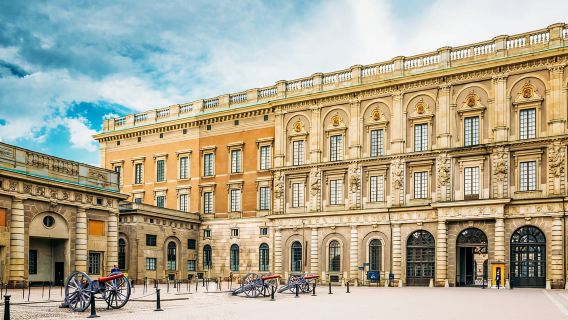
4.5/5
· 227 reviewsFree cancellation
Book now for tomorrow
5% off
Limited-time sale
FromSGD 125.25SGD 131.85

4.9/5
· 130 reviewsFree cancellation
44 consecutive positive reviews
5% off
Limited-time sale
FromSGD 193.80SGD 204
4.7/5
· 239 reviewsFree cancellation
95% of travelers recommend
5% off
Limited-time sale
FromSGD 40.22SGD 42.34

4.9/5
· 89 reviewsFree cancellation
Book now for today
39 consecutive positive reviews
5% off
Limited-time sale
FromSGD 168.81SGD 177.7

5.0/5
· 203 reviewsFree cancellation
Book now for today
100 consecutive positive reviews
5% off
Limited-time sale
FromSGD 152.47SGD 160.5

Free cancellation
Book now for today
5% off
Limited-time sale
FromSGD 154.42SGD 162.55

Featured Cultural experiences in Vaxholm
View all Cultural experiences
FromSGD 20.51

4.7/5
· 9 reviews· 77 bookedBook now for today
FromSGD 131.85

45 booked
Book now for today
FromSGD 76.73

FromSGD 128.21

5.0/5
· 1 review· 26 bookedFree cancellation
Book now for today
FromSGD 31.91

FromSGD 69.35
Free cancellation
Book now for today
FromSGD 23.11
Featured Food & drink in Vaxholm
View all Food & drink



Free cancellation
Book now for tomorrow
5% off
Limited-time sale
FromSGD 188.91SGD 198.86

5.0/5
· 6 reviewsFree cancellation
Book now for today
5% off
Limited-time sale
FromSGD 148.85SGD 156.69

5% off
Limited-time sale
FromSGD 115.22SGD 121.29
Featured Outdoor experiences in Vaxholm
View all Outdoor experiences
Free cancellation
Book now for tomorrow
FromSGD 160.29

5% off
Limited-time sale
FromSGD 158.44SGD 166.78

5.0/5
· 2 reviewsFree cancellation
Book now for tomorrow
5% off
Limited-time sale
FromSGD 84.44SGD 88.89

4.9/5
· 33 reviewsFree cancellation
Book now for tomorrow
33 consecutive positive reviews
5% off
Limited-time sale
FromSGD 152.36SGD 160.38
Free things to do in Vaxholm


What travelers say about Vaxholm

YoomieSeptember 27, 2026
5.0
Standing next to a fully restored 1628 warship hits completely different in person 🇸🇪⚓️ The level of detail preserved on the Vasa is insane. Hands down one of the best museums in Stockholm! ✨
Vasa Museum

Anonymous userSeptember 13, 2026
5.0
A wonderful, remarkable and outspoken place to tour.We were so astonished with the architecture, paintings and embroidery.A very beautiful palace.
The Royal Palace

Md Iqbal HasanAugust 13, 2025
5.0
Gamla Stan, Stockholm’s Old Town, is a charming maze of cobblestone streets, colorful 17th- and 18th-century buildings, and hidden courtyards. Founded in the 13th century, it’s one of Europe’s best-preserved medieval centers. The area brims with history, from the grand Royal Palace to Storkyrkan Cathedral and the Nobel Prize Museum. Cozy cafés, artisan shops, and atmospheric alleyways make wandering here a delight. In winter, festive markets fill the main square, Stortorget, with lights and warmth. Whether you’re after culture, architecture, or a leisurely stroll, Gamla Stan offers a magical glimpse into Sweden’s past while buzzing with modern Scandinavian charm.
Gamla Stan

M20***37October 31, 2025
5.0
Autumn is beautiful; reservations are required online or on-site. Guided tours are available in English for 150 kronor. The city itself is wonderful to stroll around and relax in the parks.
Stockholm City Hall
Anonymous userFebruary 14, 2026
5.0
Super worth it! Its a very unique place, and since its literally at gamla stan, can just head over here and enjoy the museum while at it.
Nobel Prize Museum

KayNojsOctober 21, 2025
4.0
Fun place for family and kids to explore.. It was a rainy day on our visit so that didn’t make it much pleasant but very fun for adult and kids to see the Swedish culture and more.
Skansen

Penny2026October 29, 2025
5.0
It was interactive and fun for all our family! Overall a great 2 hours!
ABBA The Museum

D了个YApril 14, 2022
4.0
The official name should be St. Nicholas Church. It is one of the oldest churches in the Old Town of Stockholm and was built in the 13th century. The cathedral is located on the island opposite the Riddarholmen, north of the Stock Exchange Building and close to the Grand Palace. It is the main access to the palace and the western apex of the palace slope. The cathedral slope, the main guard balcony and the narrow channel are located on its north and west sides respectively. The church displays the emblems of the royal knights of all dynasties and a famous wooden sculpture of St. George slaying the dragon, which is the largest wooden sculpture in Northern Europe. There is a statue in front of the church. I will study this later.
Storkyrkan

jkidd28July 8, 2022
5.0
Sweden is not a country of art, but it is full of art! The Stockholm Subway Art Exhibition is held every day! From the Olympic theme color scheme, to the mountain stone decoration, to the combination of heaven and earth, every subway has a theme!
Art in the Subway

愛滑雪愛芬蘭March 21, 2023
5.0
National Museum
Opened in 1866. Its predecessor was the Royal Museum, which was opened to the public in the Stockholm Palace in 1794. It is one of the oldest museums in the world. In 1958, the 20th century artworks were transferred to the Museum of Modern Art, and in 1963, the Far Eastern artworks were assigned to the Museum of Far Eastern Antiquities. The museum has a rich collection and is a collection center for Swedish paintings, sculptures, prints, sketches, and applied art. It has more than 11,000 Swedish paintings. The collection of icon paintings is extremely fine, second only to the Soviet Union. There are not many paintings from the Middle Ages and Renaissance in southern Europe, but there are many fine works. It also has a collection of more than 195,000 prints and sketches from the 14th century to the present, including more than 65,000 sketches, about half of which are works by famous painters such as Raphael, A. Dürer, Rembrandt, P.P. Rubens, A. Van Dyck, N. Poussin, A. Watteau, J.-B.-S. Chardin, and F. Boucher. There are more than 21,000 pieces of applied art collections, among which the 14th-century Spanish Alhambra vase, Venetian and German cut glassware, and 12th-century Swedish silverware are extremely famous.
Museum of Modern Art
Opened in 1958. There is a photo museum attached. It mainly collects paintings and sculptures of various schools in the 20th century. The collection is based on 1,200 works transferred by the National Museum. After the opening, the collection was collected through organizing exhibitions and seminars, and remarkable results were achieved. The collection has increased to 3,500 pieces. The museum's exhibits are mainly Swedish works. The exhibits illustrate how Swedish art works are influenced by foreign influences but maintain their own national characteristics. At the same time, it also pays attention to works of various schools around the world. The exhibitions include Expressionism: E. Munch, E. Nordi, P. Klee, O. Kokoschka; Cubism: P. Picasso, G. Braque,
National Museum
