Things to do in Zhijiang
Explore top experiences
Top 10 attractions in Zhijiang


Longjin Wind and Rain Bridge
Longjin Wind and Rain Bridge spans the Wu River in Zhijiang, Huaihua. First built in the 19th year of the Wanli reign of the Ming Dynasty, it was damaged and rebuilt several times over the past 400-plus years, remaining a vital crossing point for travelers and merchants between Hunan and Guizhou. The current bridge structure dates back to a large-scale reconstruction in the late 1990s, which still utilizes traditional Dong wooden construction techniques. The entire bridge is over 200 m long and more than 10 m wide, resting on 16 boat-shaped stone piers with pointed ends facing the current, bonded with a mortar of sticky rice and tung oil. The wooden structure on the bridge is entirely joined by mortise and tenon, without the use of a single nail or rivet. The name "Longjin" is said to be derived from the sight of the boat-shaped piers "spitting water" as they cut through the waves. A long corridor with triple-eaved roofs connects the two banks, interspersed with seven five-story pavilions. With their deep blue glazed tiles and upturned eaves, they look like a long dragon lying on the river from a distance. Nearly 100 stall-style shops line both sides of the bridge, filled with local snacks like pickled radish and Zhijiang duck, as well as Dong silver jewelry and daily goods. The scent of tea drifts from teahouses where locals often sit and relax, making a walk across the bridge feel more like strolling through an old street built over the river. Climbing up to the pavilions in the middle of the bridge offers a bird's-eye view of the stilt houses along both banks of the Wu River, with the nearby Zhijiang Tianhou Temple complementing the bridge. The bronze rhinoceros statue at the bridgehead, covered in Dong patterns, embodies prayers for flood control and peace.Zhijiang · 865m from downtown

Memorial Hall of the Victory of the War of Resistance against Japanese Aggression and the Acceptance of Japan’s Surrender
Memorial Hall of the Victory of the War of Resistance against Japanese Aggression and the Acceptance of Japan’s Surrender, located in Zhijiang County, Huaihua, is a memorial site where the Chinese people accepted the surrender of the invading Japanese army. It is also one of the earliest specialized memorial halls in China to comprehensively reflect the theme of the victory and surrender of the War of Resistance. In August 1945, Japan announced its unconditional surrender, and from August 21 to 23, the Nationalist Government held the surrender ceremony here. The main buildings of Memorial Hall of the Victory of the War of Resistance against Japanese Aggression and the Acceptance of Japan’s Surrender include theSurrender Memorial Archway, the Surrender Ceremony Hall of the China Theater, and others. Among them, theSurrender Memorial Archwayis known as the "Arc de Triomphe of China." It stands 8.5m high, 10.46m wide, and 1.15m thick, featuring a blue brick and cement exterior, a "mountain" character-shaped top, four pillars with three arches, and is inlaid with Yuanzhou purple robe jade belt stone. The venue includes the restored surrender hall and an exhibition of surrender materials, housed in a typical 1940s barracks-style building. It utilizes high-tech audio, light, and electrical displays to showcase thousands of important national cultural relics and documents. The memorial hall also includes the former headquarters of the Chinese Army and the Former Site of He Yingqin's Office, where the tables, chairs, and sofas on display are original items from that time. Not far away is Huaihua Zhijiang Airport, which was once the second-largest military airport for the Allied forces in the Far East during World War II. It served as a base for General Claire Lee Chennault's Chinese-American Composite Wing and the United States Fourteenth Air Force. The Sino-American Air Force Club and the airport control tower near the airport are still well-preserved. When visiting Memorial Hall of the Victory of the War of Resistance against Japanese Aggression and the Acceptance of Japan’s Surrender, it is recommended to hire a guide to gain a more detailed understanding of the history here.Zhijiang · 3.7 km from downtown

Flying Tigers Memorial Museum
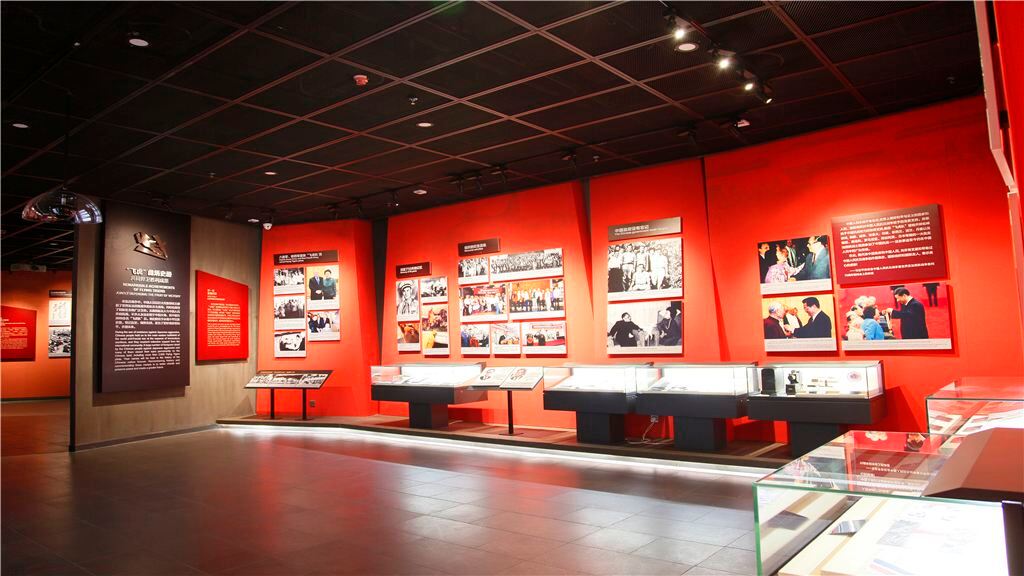
The Flying Tigers Memorial Hall is located on the east side of Lijiang Airport, about 2 kilometers away from Zhijiang County. It is a memorial hall dedicated to the history of the Flying Tigers troop led by Chen Nade (Claire Lee Chennault, 1893-1958) for providing American military assistance to China during the Second Sino-Japanese War (1937-1945). It was mainly composed of the former site of the China-US Air Force Command Tower during the Anti-Japanese War, the former site of the China-US Air Force United Club, and the Memorial Hall for the Flying Tigers. The shape of the Flying Tigers Memorial Hall is a ring structure that resembles two aircrafts. The museum includes exhibits about Chen Nade's first arrival at Zhijiang, the US Volunteer Air Force, and a large number of objects used by the Flying Tigers troop in everyday life and in battles.Zhijiang · 2.2 km from downtown

Suozi Street Stilted Houses
The Suozi Street Stilted Houses are a type of housing structure used by the Dong people in Zhijiang Dong Autonomous County. This combination of shops and residences, built along the water with narrow paths, has been renovated by the government and now resembles a pedestrian street.Zhijiang · 687m from downtown

Zhijiang Tianhou Temple
Located in Zhijiang County, it is one of the largest Mazu temples in the inland. It was built in the 13th year of Emperor Qianlong's reign in the Qing Dynasty (1748). The palace has pavilions, terraces, eaves and brackets, which are wide and solemn. The gate is built with stone, with exquisite carving skills and deep hollowing and engraving, which is very vivid. The gate of Tianhou Palace is 11 meters high and 6.3 meters wide. It is built with Guizhou bluestone and is in the shape of a star gate. There are male lions squatting on both sides, and there is a bluestone carved railing in front to form a platform. There are 15 steps in the middle to enter the door. There are 50 bluestone reliefs on the top, bottom, left and right, with large stone carvings of 2.5 square meters and small ones of 0.3 square meters. The patterns are mostly fish, dragons, phoenixes, lions, flowers, trees, gods, ghosts, and immortals, with vivid images and clear faces. In the center of the doorway, a stone plaque with the words "Tianhou Palace" is inlaid. The font is thick and round, and the axe and chisel are also very good at calligraphy. The Tianhou Temple covers an area of 3,700 square meters, and the current preserved area is nearly 2,000 square meters. The archway is 10.3 meters high and 6.3 meters wide. There are 95 reliefs on the archway, with large reliefs of 2.62 square meters and small reliefs of 0.09 square meters. The images of fish, dragons, phoenixes, lions, flowers, plants, bamboos, gods, ghosts, and immortals are vivid and lifelike, and the pictures are as clear as before. There is one classic in one picture or several in one picture. The Huagong "Fishermen and Woodcutters Singing in Harmony" is opposite to "Farming and Reading as the Foundation". There are eight reliefs on the side columns, such as "Eight Immortals Crossing the Sea", "Phoenix Facing the Sun", "Two Dragons and Phoenix Pearls", "Lion Rolling Embroidered Balls", etc. They are finely carved and hollowed out, which can be called supernatural craftsmanship.Zhijiang · 681m from downtown

Wanhe Drum Tower
Wanhe Drum Tower is located on the east bank of the Wushui River in the county town and is a landmark building of the Dong nationality. Completed in 2005, it consists of the central Lusheng Building, Pipa Building, Ditong Building, two anti-geo buildings and five drum towers. The eaves corridor composed of 360 dragon lanterns connects the four outer drum towers and encloses a round treasure. Living in the central drum tower is a metaphor for the dragon to protect the treasure here and never leave.Zhijiang · 1.5 km from downtown

Qianyang Ancient Town
Nestled in the upper reaches of Yuanshui, Qianyang Ancient Town is one of the well-preserved examples of ancient cities dating from the Ming and Qing Dynasties. The ancient city is surrounded by water on three sides. It is a frontier town in Xiang-Chu-Miao Region and also known as the “gateway to Yunnan and Guizhou”. Of the original five city gates, four still remain to this day. The West Gate is also known as Zhongzheng Gate. The gate and the building are incredibly well preserved with the words “Zhong Zheng Men” still inscribed on the gate, written by Dai Li, dating back from the days of the Warlord Era. The well-preserved fishbone-shape road layout is formed by the two main streets in the north and south. It was called Nine Streets and Eighteen Lanes in ancient times and there are a variety of ancient buildings on both sides of the street such as the county government, academies, temples, inns and theaters.HongJiang · 31 km from Zhijiang

Hunan Anti-Japanese War Memorial Hall
The Hunan Anti-Japanese War Memorial Hall was built using the space on the 1st and 2nd floors of Taihe Tower, covering an area of 10,532 m² with an exhibition area of over 5,000 m². This exhibition was organized to commemorate the 70th anniversary of the victory of the Chinese People's War of Resistance Against Japanese Aggression and the World Anti-Fascist War, and consists of 6 sections: "The Chinese nation at its most perilous moment," "The mainstay of the war of resistance," "An important rear area of the war of resistance," "Six bloody battles," "Hunan's anti-Japanese heroes and martyrs," and "History tells the future."Zhijiang · 3.5 km from downtown

Fenghuang Ancient Town
The ancient town of Fenghuang is located in the southwest of Xiangxi, Hunan Province. The ancient city was built during the reign of Emperor Kangxi of the Qing Dynasty. It is surrounded by mountains and rivers, with the Tuojiang River running through the city. The red sandstone walls stand on the shore, and the Nanhua Mountain is set against the city towers from the Qing Dynasty. A narrow wooden bridge with stone piers is across the river under the north gate of the ancient city. It was the passage out of the city in those days. The bluestone streets in the city, the stilt houses by the Tuojiang River, the numerous ancient buildings and the rich customs constitute the unique charm of western Hunan. The main attractions include the former residence of Shen Congwen, the ancient city museum, Chongde Hall, etc., which are worth visiting.Fenghuang County · 56.6 km from Zhijiang

Tianmen Mountain National Forest Park
Tianmen Mountain National Forest Park is named after the natural wonder "Tianmen Mountain National Forest Park - Tianmen Cave." When visiting the attraction, you can enjoy a bird's-eye view of the winding Heaven-Linking Avenue and the stunning mountain scenery from the cable car. The brave can also walk along the cliff-hugging glass skywalk for an exhilarating aerial experience. Tianmen Mountain National Forest Park is located close to Zhangjiajie city. The Tianmen Cave in the park is a natural karst cave, and locals believe it leads directly to heaven. For ordinary travelers, Tianmen Cave is not open year-round. During winter each year, due to snow and icy roads, both Tianmen Cave and the Avenue toward Heaven (a winding mountain road with 99 turns) leading to it are closed. The lower station of the attraction's cableway is located in Guanliping, Yongding District, and the upper station isTianmen MountainTop. In 2020, the attraction opened the express cableway. The lower station of the express cableway is near the entrance to Tianmen Mountain, and the upper station is atTianmen CaveNear the parking lot. Tianmen Mountain National Forest Park is filled with ancient towering trees and intertwined vines. The attraction is divided into several main areas, including Tianmen Mountain National Forest Park - Tianmen Cave, central route, eastern route and western route. Travelers can choose different routes and areas to explore based on their preferences and physical condition. The core attraction along the central route is Tianmen Mountain Temple. Nearby lies the "Child-seeking cave," where folk legends claim Guanyin, the child-giving bodhisattva, manifested her divine power—devout prayers here are believed to grant offspring. The western route's highlight is a 60 m-long glass walkway clinging to sheer cliffs, with fully transparent flooring that induces both vertigo and exhilaration as visitors tread above abysses. Currently, the eastern route and Panlong Cliff each feature their own approx. 60 m glass walkways. No stay is allowed in the attraction, so it can only be visited within one day. There is a "Cherry Bay Restaurant" near Tianmen Mountain Temple, which offers snacks and fast food. Near the lower station of Tianmen Mountain cableway, there is transportation to the "Grand Canyon Theater", where you can watch the live show and magical musical "Tianmen Fox Fairy". Adapted from the mythological tale "Liu Hai cuts firewood", it tells a touching love story between a human and a fox. With live music, lighting effects, and captivating scenes like a giant moon, fox spirit transformations, snowflakes filling the sky, and high-altitude flying bridges, this legendary romance is vividly brought to life.China · Zhangjiajie
Experiences you can't miss in Zhijiang
Featured Day tours in Zhijiang
View all Day tours


5.0/5
· 1 reviewBook now for tomorrow
FromSEK 726.00

Free cancellation
Instant confirmation
FromSEK 632.00

Free cancellation
Instant confirmation
FromSEK 849.00

Free cancellation
Book now for tomorrow
FromSEK 206.00

Free cancellation
Instant confirmation
FromSEK 776.00

Free cancellation
Instant confirmation
Book now for tomorrow
FromSEK 1,026.00
More things to do
Free things to do in Zhijiang
Longjin Wind and Rain Bridge
Zhijiang · 865m from downtownMemorial Hall of the Victory of the War of Resistance against Japanese Aggression and the Acceptance of Japan’s Surrender
Zhijiang · 3.7 km from downtownZhijiang Tianhou Temple
Zhijiang · 681m from downtownHunan Anti-Japanese War Memorial Hall
Zhijiang · 3.5 km from downtownFenghuang Ancient Town
Fenghuang County · 56.6 km from Zhijiang
China's Dong Nationality Cultural City
Zhijiang · 21.6 km from downtown
What travelers say about Zhijiang

tzy798798May 3, 2025
5.0
Longjin Wind and Rain Bridge is located in Zhijiang Dong Autonomous County, Huaihua City, Hunan Province. It is a Dong wind and rain bridge that integrates trade, tourism and leisure.
The following is a detailed introduction for you:
Historical Origin
Longjin Wind and Rain Bridge was first built in the 19th year of Wanli in the Ming Dynasty (1591). It was donated by the famous monk Kuanyun. Because the bridge piers and flowing water are shaped like a dragon's mouth spraying water, it is named "Longjin Wind and Rain Bridge". The bridge has been damaged and repaired many times in history. It has always been a traffic fortress on the Hunan-Guizhou Highway, and it is also the most prosperous place for merchants and tourists to travel. It is known as the "No. 1 Bridge in the Southwest of the Three Chus". In early 1999, Longjin Bridge was rebuilt again and completed on November 7 of the same year.
Architectural features
The bridge is 246.7 meters long and 12.3 meters wide, with a sidewalk width of 5.8 meters. It is a mortise and tenon hollow wooden structure covered bridge. The highest point of the covered bridge is 17.99 meters. There are 7 exquisite bridge pavilions in between. The main building pavilion in the middle is an octagonal five-story bridge pavilion. There are 94 wing-style shops on both sides of the corridor. The architectural style has strong Dong ethnic characteristics. The corridor-style building of the bridge can shelter pedestrians from wind and rain, and the bridge pavilion is a place for people to rest. The entire wind and rain bridge is a full wooden structure without a single nail or rivet, reflecting the contemporary Dong ethnic garden architectural style.
Cultural value
Longjin Wind and Rain Bridge is a cultural relic protection unit in Hunan Province. It was included in the Shanghai Guinness World Records in December 2000 and is the world's largest wind and rain bridge. It is a perfect fusion of historical monuments and architectural art, and has become a rare cultural landscape in China.
Longjin Wind and Rain Bridge

苦海无边,望不到岸May 4, 2022
5.0
"Eight years of war started in Lugou, and a letter of surrender came out of Zhijiang".
The Surrender Memorial Arch is the only landmark building in China that commemorates the victory of the War of Resistance Against Japanese Aggression. It is known as the "China Arc de Triomphe". It is a historical witness to the victory of the Chinese People's War of Resistance Against Japanese Aggression and the World Anti-Fascist War, and a great and immortal historical monument of the Chinese nation.
Zhijiang is the general surrender site of the Chinese theater, the first surrender site in the country, and the command center of the national surrender work. The surrender in Zhijiang handled the specific surrender terms of the millions of Japanese invaders in China, representing the victory of the Chinese People's War of Resistance Against Japanese Aggression and the World Anti-Fascist War.
Memorial Hall of the Victory of the War of Resistance against Japanese Aggression and the Acceptance of Japan’s Surrender

盛夏的清凉February 23, 2025
5.0
Although Zhijiang is a small and remote county, it was very famous during the Anti-Japanese War. There was an airport for the Flying Tigers here, so the Flying Tigers Memorial Hall is located in Zhijiang. The memorial hall is not big. In addition to the exhibition hall, you can also visit the former site of the Air Force Control Tower. This hall is charged and is open every day throughout the year.
Flying Tigers Memorial Museum

西格玛 123May 25, 2025
5.0
Zhijiang is a beautiful town in western Hunan. Suozi Street, a cluster of stilt buildings by the Wushui River, is about one kilometer long. The colonnade downstairs is a leisure passage for people to shelter from the wind and rain. At dusk, many citizens gather here, enjoying a lazy and comfortable slow life. After the lights are turned on in the evening, the river bank is full of lights and the lights are brilliant. It is very beautiful.
Suozi Street Stilted Houses

牛奶海April 20, 2023
4.0
Tianhou Temple is located at No. 29, West Street, Zhijiang Dong Autonomous County, Huaihua City, near the west bank of Zhijiang Third Bridge. Tianhou Temple is the largest Mazu temple in the inland area. It has a long history and many attractions.
Zhijiang Tianhou Temple

大 牛July 6, 2026
5.0
This drum tower is in the Dong ethnic style, quite different from the styles in inland areas. It's a cluster of drum towers, all constructed entirely of wood using mortise and tenon joints, and its color scheme is also unique. The layers of buildings, interspersed with white, create a distinctive aesthetic. Now, it serves as a stage for the local people to perform, with songs rising and falling in waves. Hehe.
Wanhe Drum Tower

dl6906July 6, 2026
5.0
The ancient town is quaint and not overly commercialized, with a beautiful and comfortable surrounding environment, situated by the river. It's relatively quiet, with many shops closed and virtually no restaurants, but this adds to its tranquility.
Qianyang Ancient Town

khccJanuary 18, 2020
4.0
Walk 3-400 meters from the Japanese Surrender Memorial Hall to the site. You can get the admission ticket with your ID card. There is a large square in front of the memorial hall, which mainly records the historical facts of the Red Army's resistance against Japan after the Japanese invasion of China. It is a good historical teaching material.
Hunan Anti-Japanese War Memorial Hall

oueryujiSeptember 13, 2026
5.0
Fenghuang Ancient Town, located in Xiangxi Tujia and Miao Autonomous Prefecture, Hunan Province, is a border town renowned for its literary significance. A national 5A-level tourist attraction, it was praised by New Zealand writer Rewi Alley as "China's most beautiful small town." The Tuojiang River flows gently through the town, with stilted houses standing along its banks and winding ancient cobblestone alleys. This is the spiritual home of Shen Congwen's novel "Border Town," harboring unique Xiangxi charm. In the morning, a thin mist blankets the river; at night, lights reflect on the water. The landscape and culture blend seamlessly, half poetic, half down-to-earth; every step reveals the gentle warmth of time.
#TravelRecommendationOfficer #HealingScenery #FenghuangAncientTown #XiangxiTourism
Fenghuang Ancient Town

Anonymous userOctober 23, 2026
5.0
This place worth definitely a visit. Unfortunately the weather wasn't so good but neither so cloudy than you can't see anything. We took the escalator and completed the visit in 5:00 hours. Consider 1:30/2 hours just to complete the escalator up and down.
Tianmen Mountain National Forest Park


