OverviewReviewsWin PrizesTrip MomentsDetailsNearby
Share to
Show all
Guide Confucian Temple and Yuhuang Pavilion
玉皇阁景区
3.6
4.6/5
36 reviews
 Based on 6 reviews
Open Opening hours of Guide Confucian Temple and Yuhuang Pavilion
Recommended sightseeing time: 4–5 hours
Address:
Heyin North Street, Heyin Town, Guide County, Qinghai Province
Map
Phone:Ticket inquiry: +86-974-8553293
Guide Confucian Temple and Yuhuang Pavilion attraction highlights
Some information may have been translated by Google Translate
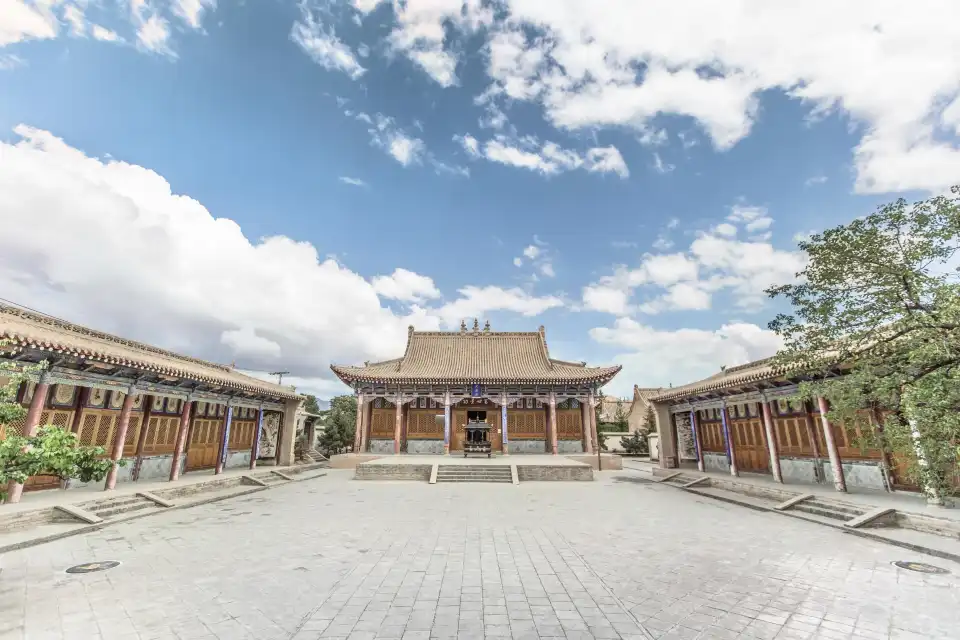
Guide Confucian Temple and Jade Emperor Pavilion are ancient buildings integrating Confucianism, Buddhism and Taoism. school field. Guide Confucian Temple is a relatively well-protected one in Qinghai Province. The main buildings of the Confucian Temple are: Archway, Panchi, Jimen, Xiangxian Temple, Mingguan Temple, Dacheng Hall, and Seventy-two Xian Temple. One of the buildings in the Confucian Temple is a four-column and three-story archway, which acts as a sign. Passing through the archway, the semi-circular pool in front is called Panchi. It is an architectural layout in front of the school. It was also a pool for teachers and students to study ink and draw water in the past. Now it is surrounded by carved guardrails. Come to the gate. The Jimen is the main entrance of the Confucian Temple. The Jimen divides the Confucian Temple into two courtyards, the front and the back. After passing through the Jimen, you come to the backyard of the Confucian Temple. The Dacheng Hall in the middle is a building with a single eaves and a hilltop, with four corners flying up and down, majestic. Dacheng Hall is also the largest single building in the Yuhuangge ancient building complex. The east and west hatches are the 72 ancestral halls. To the east of the Dacheng Hall is the Wenyuan, the garden of the Confucian Temple. During the beginning of summer, the peony flowers are in full bloom, with colorful and fragrant flowers. This is the largest peony garden in Guide County. The Wanshou Temple was first built in the Ming Dynasty and belongs to the Taoist temple. The main buildings are Shanmen, Lingguan Hall, Sanguan Hall, Leizu Hall and Jade Emperor Pavilion. It enshrines the statues of Houtu Huangdi, Emperor Sanguan, and Emperor Wenchang. The hall of the Jade Emperor Pavilion is the Hall of Lingguan, which enshrines the standing statue of Wang Lingguan-Wang Shan, and the four marshals on both sides: Wen Qiong, Yue Fei, Ma Sheng, and Zhao Gongming. Passing through the Lingguan Hall is the Jade Emperor Pavilion. It has the reputation of "Xiange Inserting Clouds" in Guide's "Eight Ancient Scenes". The Jade Emperor Pavilion is a three-storey Xieshan-style attic built on a high platform with three-storey bricks and earth. The height is 25.5 meters, which is equivalent to the height of an eight-storey building. Guanyue Temple is the joint temple of Guan Yu and Yue Fei, commonly known as Wu Temple, also known as Mazu Temple. Now there are statues of Guan Yu, Yue Fei, Ma Zu and Zhao Gongming. The architecture of Guanyue Temple includes brick-carved screen walls, gate tower, bell tower, drum tower, passage hall, main hall, and east and west side halls. The hall of Guanyue Temple is the God of Wealth Hall, a building with a single eaves and a mountain top. To the east of the Temple of Fortune is the Bell Tower, and to the west is the Drum Tower. After leaving the Temple of Wealth, I climbed the steps and came to the main hall of Guanyue Temple. In the middle of the main hall is a statue of Guan Yu. Guan Yu's left side is enshrined with the seated statue of Yue Fei, King Wumu.
Guide Confucian Temple and Yuhuang Pavilion Reviews: Insider Insights and Visitor Experiences
Write a review
Guide Confucian Temple and Yuhuang Pavilion Photos: Trip Moments
 Stayed at the hotel of a lifetime in Guide, the aftertaste is incredible.🌿 Escaping to the 22℃ plateau 'Jiangnan' in June Who understands, folks! In June, when the whole country is in 'barbecue mode,' I found a true summer retreat in Guide! A hidden gem of a small town, just a 1.5-hour drive from Xining. The daytime high is only 25℃, and you still need a blanket at night. What kind of heavenly climate is this! · -- 🌊 First Stop: The Yellow River in Guide is Clear It truly subverts expectations! The Yellow River can actually be emerald green! 💚 Standing on the Yellow River Clear Bridge, looking down, the water is so clear you can see the pebbles at the bottom, creating a strong visual contrast with the crimson Danxia landforms on both banks. ✅ Recommended Photo Spots: · Middle section of Yellow River Clear Bridge: Best for panoramic overhead shots · Waterwheel Square: Get up close to the Yellow River water · China Fortune Wheel: The world's largest prayer wheel, incredibly effective for blessings 💡 Tip: The light is softest after 5 PM, making the Yellow River water appear its most translucent jade green in photos. · -- 🏔️ Second Stop: Ashigong Colorful Danxia Guide's Danxia is truly different from Zhangye's! It's not the endless red, but rather layers of red, orange, yellow, green, and brown colorful peaks. 🎫 Entrance Ticket + Sightseeing Bus: 95 RMB, no backtracking on the entire route. ✅ Must-Visit Spots: · Nüwa Gorge: The most photogenic gorge, with incredible light and shadow. · Thousand Buddha Gorge: Stone pillars of various shapes, resembling a thousand Buddhas paying homage. · Wentian Platform: The highest point for panoramic views of the entire Danxia landform. ⏰ Visiting Time: 3 hours, recommend wearing light-colored clothes for a strong contrast. · -- 🍜 Guide Food Hall of Fame How can you come to the Northwest and not eat meat! 🐑 Hand-grabbed Mutton: Local grass-fed sheep, incredibly fragrant when boiled in plain water, absolutely delicious with salt and pepper, not a hint of gaminess! 🫓 Dog Pee Cake (Gou Jiao Niao Bing): Funny name but incredibly delicious! Made with highland barley flour and caraway powder, crispy with a herbal aroma, 3 RMB per piece. 🥛 Yak Yogurt: Thick like tofu pudding, with a golden milk skin on top, sprinkle with sugar for an addictively sweet taste. 🍲 Plateau Hot Pot: Cooked in a copper pot over charcoal, yak meat + pickled cabbage + vermicelli, warming and satisfying. 🍐 Guide Soft Pear: Eat it frozen in summer! After thawing, it's sweet, sour, and icy cold, a perfect summer cooler. · -- ✨ Local Secret Activities 1. Qianzi Lake Wetland Park: Free! Reeds + Yellow River water + water birds, like a Jiangnan water town. 2. Guide Ancient City: A 600-year-old ancient city, free to explore. You can climb the Jade Emperor Pavilion for distant views. 3. Hot Spring Resort: Natural plateau hot springs, soak away all your fatigue. 4. Cycling along the Yellow River: Rent a bike and ride along the Yellow River greenway, the 22℃ breeze is so comfortable. 💡 June Exclusive Benefits: Fewer crowds! Beautiful scenery! Low prices! Accommodation hasn't increased yet! --- Accommodation 🏨 Guide Liyuan Linka Hotel Tibetan garden-style hotel, adjacent to the Yellow River scenic area, walking distance to major attractions, rooms with underfloor heating are super comfortable. 🏨 Guide Romantic Bick Country Homestay Located in Meidi Huatian Farm, adjacent to snow-capped mountains and geological park, independent log cabins, open the window to a sea of flowers. 🏨 Guide Yellow River Yiyuan International Hotel A 10-minute walk to the Yellow River, spacious and bright rooms, with a large garden, suitable for family travel. 🏨 Guide Haitang Courtyard Central location in the county town, courtyard design, with a bar and restaurant, you can watch the stars in the courtyard at night.MARIAH ADKINS

 Stay at a hostel by the Yellow River in Hainan Prefecture; the clear waters and Danxia landforms of Longyang Gorge are incredibly photogenic.Many people only know Qinghai Lake when visiting Hainan Prefecture. But let me tell you, the real treasures of Hainan Prefecture are Longyang Gorge and Guide. If Qinghai Lake is a "refined lady," Longyang Gorge and Guide are "wild, secret realms"—fewer crowds, raw scenery, and incredibly photogenic. This is a no-fluff itinerary; save it and follow along. 🏞️ Longyang Gorge: Known as the "Colorado of China" 📍 Location: Longyangxia Town, Gonghe County, Hainan Prefecture 💰 Admission: Approx. 50 yuan for the Grand Canyon; the dam is free ⏰ Recommended duration: Half a day to a full day Longyang Gorge is home to the first large-scale hydropower station on the upper reaches of the Yellow River. The 178-meter-high dam cuts across the river, creating a massive plateau lake. The most breathtaking part is the Longyang Grand Canyon—red Danxia cliffs on both sides with the emerald-green Yellow River flowing below. The contrast between the red and green is visually stunning. There is a suspended walkway in the gorge; walking along the cliff with the green river beneath your feet might make those with a fear of heights feel weak in the knees, but the scenery is absolutely worth it. 📸 Photo spots: · Qingtianzhu Viewing Platform: The best spot for an overlook of the Grand Canyon, with fewer crowds and soft light in the early morning · Yixiantian (A Glimpse of the Sky): The cliffs close in, making for an imposing shot when looking up · Dam Viewing Platform: View the 178-meter-high dam and the flood discharge (luck is required to see the discharge) · Earth Forest Scenic Area: Unique earth forest landforms that look like an alien surface; perfect for aerial photography ⚠️ Practical tips: · The full walk along the plank road takes about 2 hours; wear non-slip, flat shoes · Be careful when taking photos near the cliff edge; do not climb over the railings · It is windy in the gorge; bring a windbreaker · You can take a boat tour of the gorge for about 120 yuan; it offers a different perspective from the water 🎨 Guide National Geopark: A palette of colorful Danxia 📍 Location: Guide County, Hainan Prefecture 💰 Admission: Approx. 80–100 yuan (includes sightseeing bus) ⏰ Recommended duration: 2–3 hours The Danxia in Guide is different from that in Zhangye. Zhangye's Danxia features "distinctly layered" colorful hills, while Guide's features "towering" colorful peaks—red stone pillars rising from the ground in various shapes, like a sculpture exhibition by nature. The scenic area has a sightseeing bus that stops at several viewing platforms, so you don't have to walk too much, which is great for those with limited stamina. The Ashigong Colorful Peak Cluster is the core area, featuring 13 cultural themed landscapes, each with different shapes and stories. 📸 Photo tips: · The light is best after 4:00 PM, when the Danxia colors are most saturated · Wear white or light-colored clothing for a strong contrast with the red rock walls · Use a wide-angle lens for large scenes; panoramic mode on your phone also works well · Don't go on cloudy days, as the Danxia colors will look dull 🌊 Guide: The Yellow River is clearest in Guide Everyone's impression of the Yellow River is that it is "muddy and yellow," but the Yellow River in Guide is emerald green and clear. Standing on the Yellow River Qing Bridge and looking down, the water is as green as jade, and you can see the stones at the bottom. This is because the Yellow River has not yet passed through the Loess Plateau in the Guide section, so the sediment content is low, making it exceptionally clear. Next to the bridge is the Yellow River Culture Square, where you can take a walk and take photos. By the river, there is also the Qianzihu Wetland; the combination of reed marshes, the clear Yellow River, and the distant Danxia is incredibly beautiful. 🏯 Guide Ancient City: A 600-year-old Ming Dynasty city Guide Ancient City is one of the best-preserved Ming Dynasty cities in Qinghai. The rammed earth walls are still standing, and ancient buildings like the Yuhuang Pavilion and Zhenzhu Temple are well-arranged. The ancient city is not large; an hour is enough to stroll through it slowly. Walking through the streets and alleys, you can feel the sense of history that has accumulated over 600 years. It is not overly commercialized and is very quiet. You can climb up the Yuhuang Pavilion to overlook the entire ancient city and the distant Danxia mountains. 🗺️ 2-day, 1-night itinerary Day 1: In-depth tour of Longyang Gorge 08. 00 Depart from Gonghe County, drive about 1 hour to Longyang Gorge 09. 00–12:00 Longyang Grand Canyon hike + suspended walkway 12. 00–13:00 Lunch in Longyangxia Town 13. 30–15:30 Earth Forest Scenic Area + dam viewing platform 16:00 Depart for Guide (approx. 1.5-hour drive) 18:00 Watch the sunset at the Yellow River Qing Bridge in Guide Day 2: 1-day tour of Guide 08:30 Guide Ancient City + Yuhuang Pavilion 10:30 Qianzihu Wetland 13. 00 Lunch 14. 30–17:00 Guide National Geopark (best light in the afternoon) 17:30 Return or head to the next destination 🚗 Transportation tips · The attractions are far apart; self-driving or hiring a car is the best option · Gonghe County to Longyang Gorge is about 1 hour; Longyang Gorge to Guide is about 1.5 hours · Guide is about 90 km from Xining, a 1.5-hour drive; you can make a round trip from Xining · There are many mountain roads on the plateau; watch your speed and do not overtake on curves 📌 Summary If you have already been to Qinghai Lake or want to avoid the crowds, this Longyang Gorge + Guide route will definitely not disappoint you. Clear waters, Danxia landforms, gorges, and ancient cities—see it all in one trip, and with far fewer people. The place I stayed was by the Yellow River; I could see the emerald-green water and the distant Danxia mountains just by opening the window. The room was minimalist in style with a large balcony. Sitting on the balcony in the morning to watch the sunrise over the Yellow River was incredibly relaxing. The owner knows a lot about photography and would tell me the best times and places to take photos, and even lent me a tripod. It was very quiet at night, with only the sound of the Yellow River flowing, and I slept very well.TheodoreLivingstondvg

 Secret Summer Escape for Dragon Boat Festival: The Yellow River Can Be This Clear! It Will Change Your Perception🌊 "The Yellow River in Guide is Clear" — this saying is truly not a lie. For most people, the Yellow River is yellow, muddy, and filled with silt. But in this place, the Yellow River completely overturns your perception — it is emerald green, crystal clear, with visibility reaching several meters, like a jade embedded on the plateau. Coming here during the Dragon Boat Festival, you can not only witness the spectacular "emerald water and red cliffs" but also enjoy a cool summer at 22°C. 🌡️ Why is this place a summer paradise? Guide is located in eastern Qinghai, at an altitude of 2200 meters. The average summer temperature is only 22°C, and you even need a blanket at night—no air conditioning needed. Moreover, it is dry and cool here, without the sultry humidity of southern summers, making it very comfortable. Most importantly, there are very few tourists here, so you won’t be crowded and can quietly enjoy the scenery. 🚗 Super convenient transportation, just go whenever you want From Xining, it’s only a 1.5-hour drive! The entire route is highway plus provincial roads with excellent conditions, perfect even for new drivers. Along the way, you’ll pass Laji Mountain at 3800 meters altitude, with breathtaking scenery, a great spot to check out on the way. If you don’t want to drive, there are direct buses from Xining Bus Station that take 2 hours, costing about 30 yuan—super convenient. 🗺️ Three days and two nights in-depth itinerary Day 1: Arrival + First Experience of the Clear Yellow River Arrive in Guide at noon and have lunch in the county town. In the afternoon, head straight to the Yellow River Clear Wetland Park, the essence of Guide. Walk slowly along the boardwalk by the Yellow River and get up close to the emerald green water. You’ll be shocked to find the Yellow River water so clear that you can see the stones at the bottom. At dusk, go to the Yellow River Clear Bridge to watch the sunset, where the setting sun dyes the river golden—breathtakingly beautiful. Day 2: Danxia Landform + Cultural History In the morning, visit Ashigong Colorful Peak Cluster Geological Park. The Danxia landform here is truly stunning! The red cliffs layer upon layer with unique shapes look especially magnificent against the blue sky and white clouds. There are wooden boardwalks in the park for close-up views of the Danxia landform, perfect for amazing photos. In the afternoon, visit Guide Ancient City and Yuhuang Pavilion. This ancient city is over 600 years old and preserves many buildings from the Ming and Qing dynasties. Walking on the stone-paved streets feels like traveling back in time. Day 3: Leisurely Tour + Return In the morning, visit Qianzi Lake Wetland Park, a lake formed by a tributary of the Yellow River. It has lush aquatic plants and many water birds, with an excellent ecological environment. You can rent a bike to circle the lake or stroll and relax by the lakeside. After lunch, it’s time to head back, arriving in Xining by the afternoon—just perfect timing. 🌈 Must-Visit Attractions 1. Yellow River Clear Wetland Park ⭐⭐⭐⭐⭐ The soul of Guide! Not coming here is like missing the whole trip. The emerald Yellow River water, green trees on both banks, and distant Danxia cliffs form a stunning picture. Be sure to walk the boardwalk to experience the river’s clarity up close. 2. Ashigong Colorful Danxia ⭐⭐⭐⭐⭐ One of China’s most beautiful Danxia landforms, with especially rich colors—red, orange, yellow, green, gray, white—like God spilled a palette. The park is large; it’s recommended to take the sightseeing bus and then walk around the core area. 3. Guide Ancient City ⭐⭐⭐⭐ One of the best-preserved ancient cities in Northwest China, with city walls from the Ming dynasty, full of historical atmosphere. Inside the city are Yuhuang Pavilion, Confucian Temple, and Buddhist temples, blending Confucianism, Buddhism, and Taoism uniquely. 4. Qianzi Lake ⭐⭐⭐⭐ A hidden gem! Very few people, excellent ecology, lots of reeds and water birds, perfect for photos and relaxing. If you like quiet places, you must come. 5. China Fortune Wheel ⭐⭐⭐ The world’s largest prayer wheel, holding a Guinness World Record. It’s spectacular and worth a visit if you’re interested in Tibetan Buddhism. 💡 Practical Tips 1. Sunscreen, sunscreen, sunscreen: The plateau UV rays are very strong, so be sure to protect your skin. 2. Bring a jacket: The temperature difference between day and night is big, especially after rain it gets cold. 3. Respect local customs: Don’t wear short skirts or shorts in temples, and don’t take photos of monks casually. 4. Drink plenty of water: The plateau is dry, so remember to stay hydrated. 5. Take it slow: Guide is perfect for a slow pace, no need to rush through attractions, just enjoy the vacation vibe. 📸 Photo Tips · By the Yellow River: Wear white or red dresses, stand on the boardwalk with the emerald Yellow River as the background for stunning shots. · Danxia landform: Wear light-colored clothes to contrast with the red cliffs, capturing grand scenes that are breathtaking. · In the ancient city: Wear traditional-style clothes, walk on the stone-paved roads for vintage-style photos. · Qianzi Lake: Wear forest-style clothes and shoot among the reeds for a great atmosphere. This Dragon Boat Festival, don’t go to crowded popular spots. Come to this hidden gem, see the emerald Yellow River, the red Danxia cliffs, and enjoy a cool 22°C summer. · -- Accommodation 🏨 Guide Liyuan Linka Hotel Located in the heart of the plateau’s "Little Jiangnan," adjacent to the South Bank Scenic Area Waterwheel Square, within walking distance to attractions, offering a garden-style resort experience. 🏨 Guide Romantic Bike Country Homestay Situated at Meidi Flower Farm, near Zhihai Snow Mountain, Geological Park, and Qianzi Lake, combining accommodation, dining, and leisure for a quality vacation. 🏨 Guide Jingyuege International Hotel Located in the center of Guide County, very close to Yellow River Clear Wetland Park, warm and elegant with a strong plateau ethnic atmosphere. 🏨 Guide Yellow River Yiyuan International Hotel A 10-minute walk to the clear Yellow River bank, adjacent to Yellow River Strange Stone Garden and China Fortune Wheel, a long-established high-end hotel in Guide. · --Ward Liam 85

 Subvert your perception and discover the clearest side of the Yellow RiverWhat is your impression of the Yellow River? Murky, turbulent, yellowish? Come here, and you will completely overturn your understanding of the Yellow River. Visit during the Dragon Boat Festival to see the crystal-clear Yellow River water and the colorful Danxia landforms reflecting in the blue water—this is nature’s surprise for us. 🌊 Why visit here during the Dragon Boat Festival? ✨ Clearest river water: During the Dragon Boat Festival, before the rainy season, the Yellow River water is crystal clear with visibility of several meters, truly "The Yellow River in Guide is the clearest in the world." 🌡️ Pleasant climate: Around 20°C, neither cold nor hot, perfect for outdoor activities 🌈 Most vibrant Danxia: Early summer brings the richest Danxia colors, with red mountains contrasting sharply against the green water 🚶 Fewer crowds, beautiful scenery: Compared to the crowds at Qinghai Lake, there are far fewer tourists here, allowing you to quietly enjoy the scenery 🗺️ 2 days 1 night essential itinerary Day 1: Clear Water and Danxia ・ A Visual Feast 09:00-12:00 National Geopark This is the must-visit first stop! Ashigong Colorful Peaks, with layers of red Danxia landforms, look like nature’s palette. During the Dragon Boat Festival, the sunlight angle is just right, making the Danxia colors especially vivid—red, orange, yellow, brown, gray interwoven, truly stunning. · Take the sightseeing bus and get off at each viewing platform to take photos · Best photo time is around 10 AM when the light is soft · Wear light-colored clothes for photos; the red Danxia background is gorgeous 14:00-16:00 Huangheqing Bridge Standing on the bridge, you won’t believe your eyes—the Yellow River water beneath your feet is clear turquoise! During the Dragon Boat Festival, the water volume is moderate and the riverbed is visible with pebbles. You can walk down to the shallow riverbank under the bridge and touch the clear Yellow River water by hand—this experience is truly special. 17:00-19:00 Waterwheel Square Sunset The square features the iconic Yellow River Maiden sculpture and an ancient large waterwheel. At dusk, the sunset shines on the Yellow River’s surface, sparkling waves, and the waterwheel slowly turns, creating a very atmospheric scene. The sunset is around 7:40 PM during the Dragon Boat Festival; it’s recommended to arrive by 5 PM to stroll slowly and wait for the most beautiful sunset moment. Day 2: Ancient City Wetlands ・ Blend of Culture and Nature 08:30-10:30 Qianzi Lake Wetland Park This is the essence of the Yellow River wetlands. During the Dragon Boat Festival, the water plants are lush and many water birds are present. The wooden boardwalk winds through the wetlands with multiple viewing platforms along the way, allowing you to appreciate the beauty of the Yellow River wetlands from different angles. There are very few people here; often you’ll be the only one on the entire boardwalk, so you can quietly enjoy nature. 11:00-12:30 Guide Ancient City A Ming Dynasty ancient city with over 600 years of history, the city walls are well preserved. Walking through the ancient city, you can feel a strong historical atmosphere. The city is not overly commercialized and reflects the daily life of local residents, full of authentic local charm. Yuhuang Pavilion is the highest point in the city, where you can climb up to overlook the entire ancient city and the distant Yellow River. 14:00-16:00 China Fortune Wheel The world’s largest prayer wheel, very spectacular. You can join locals in spinning the wheel and experience Tibetan Buddhist culture. Next to the prayer wheel is the Yellow River; after spinning, you can take a walk by the river and enjoy the river breeze—it’s very relaxing. ⚠️ Practical Tips for Dragon Boat Festival Travel 1. Transportation: It’s a 1.5-hour drive from Xining with very good road conditions. It’s recommended to depart early during the Dragon Boat Festival to avoid peak traffic. 2. Sun protection essential: The plateau UV rays are strong, so bring sunscreen, hats, and sunglasses. 3. Temperature difference: Large temperature difference between morning/evening and midday; bring a light jacket and wear short sleeves at noon. 4. Best photo times: 9-11 AM and 4-6 PM when the light is softest. 5. Environmental reminder: The Yellow River wetlands are an ecological protection zone; please do not litter. 💎 Hidden Unique Experiences · Sheepskin Raft Experience: At Waterwheel Square, you can ride a sheepskin raft drifting on the Yellow River (30 RMB/person), the oldest form of transportation on the Yellow River. · Hiking along the Yellow River: There is a riverside trail from Huangheqing Bridge to Waterwheel Square, about 3 km long, perfect for walking and enjoying the scenery. · Danxia Sunrise: If you can get up early, the sunrise at the Geopark is breathtaking with very few people—you’ll have the entire Danxia to yourself. · Hot Spring Experience: The county town has natural hot springs; after a day of sightseeing, soaking in a hot spring is very relaxing. · -- Accommodation 🏨 Guide Liyuan Linka Hotel Located in the core area of the plateau’s "Little Jiangnan," adjacent to the Yellow River scenic area, featuring a century-old courtyard design with a garden barbecue area, peaceful and elegant environment. 🏨 Guide Romantic Bike Country Homestay Situated within Meidi Flower Farm, a resort hotel combining accommodation and leisure, close to snow mountains, the Geopark, and Wetland Park, with picturesque pastoral scenery. 🏨 Guide Jingxi Holiday Hotel A riverside hotel by the Yellow River, located in the core area of Binhe Road, most rooms have river views, excellent location and complete facilities. 🏨 Guide Yellow River Yiyuan International Hotel A 10-minute walk to the clear Yellow River bank, surrounded by core attractions such as the Yellow River Strange Stone Garden and China Fortune Wheel, with convenient transportation. · --BYRON PERKINS

 I didn’t want to leave after staying in Guide for summer vacation, it’s so healing❄️ Escaping 35℃+ heat, I spent a 22℃ summer in Guide I really regret not coming to Guide earlier! At an altitude of 2200 meters, there’s basically no altitude sickness. The average summer temperature is 22℃, long sleeves during the day and a quilt at night. This is what summer should really feel like! · -- 🚗 3 Days 2 Nights Itinerary Day 1: Arrive in Guide → Qingqing Yellow River Scenic Area → Waterwheel Square to watch the sunset If you arrive in the afternoon, go straight to the Yellow River. In June, the sunset is around 8:30 PM, with golden sunlight shining on the emerald river—breathtakingly beautiful. Day 2: Guide National Geopark → Qianzi Lake → Ancient Town Night Tour Danxia landforms in the morning, wetlands in the afternoon, and strolling the ancient town and night market in the evening—a perfect day. Day 3: Chinese Fortune Wheel → Guide Soft Pear Picking → Return trip Pray in the morning, then pick cherries and soft pears at the surrounding orchards, returning fully loaded. · -- 📸 Complete Guide to Photography in Guide How to shoot Danxia: · Use light and shadow: before 9 AM and after 5 PM · Composition tips: have people stand in front of the colorful rock layers, shoot from a low angle looking up · Clothing suggestions: white/cream dresses, red shawls also look great in photos How to shoot the Yellow River: · Stand on the bridge for panoramic shots, with people walking in the middle of the bridge · Crouch by the riverbank to capture reflections where water meets sky · Close-ups: hands holding Yellow River water, showing crystal-clear details How to shoot the Ancient Town: · Shoot the ancient city gate for a traditional vibe · Yuhuang Pavilion for panoramic views · Capture cultural scenes on the old streets · -- 🌿 Details that Maximize the Summer Vacation Experience 🌬️ Temperature: 23-25℃ during the day in June, 12-15℃ at night, really no need for air conditioning! 🌞 UV rays: Strong highland UV, be sure to apply sunscreen and wear a hat 💧 Dryness: Remember to bring moisturizing skincare and drink plenty of water 🚗 Transportation: 1.5 hours self-drive from Xining, also buses available at 25 RMB/person 🏃 Altitude sickness: At 2200 meters, 99% of people won’t experience altitude sickness, come with confidence! · -- 🎁 Recommended Souvenirs 1. Guide Soft Pear Dried Fruit: sweet and sour, great for soaking in water too 2. Highland Honey: rapeseed flower honey, pure and natural with no additives 3. Tibetan Incense: handmade with authentic fragrance 4. Yak Jerky: perfect for binge-watching, the more you chew, the tastier it gets · -- 💭 Final Thoughts During these days in Guide, I was woken up every morning by birdsong. Opening the window reveals the emerald Yellow River and distant snow-capped mountains. Strolling in the 22℃ breeze during the day, watching the Milky Way in the yard at night. This slow-paced life really makes you not want to return to the city’s hustle and bustle. If you’re tired of the city’s scorching heat, then come to Guide. Here you’ll find the clearest Yellow River, the coolest summer, and the kindest people. · -- Accommodation 🏨 Guide Yellow River Home Boutique Guesthouse Open the window to Yellow River views, some rooms have private hot spring pools, rooms include tea tables with a Zen vibe. 🏨 Guide Sanqianli Hotel Conveniently located near the bus station, very warm front desk service, rich breakfast options including Chinese and Western styles. 🏨 Guide Qianzi Lake Camping Base Starry sky tent experience, watch the Milky Way at night, roast marshmallows and enjoy Tibetan folk stories, very atmospheric. 🏨 Qinghai Lake Meet·Muyun Inn Tibetan-style design, rooms with floor heating, free shuttle service, windows open to snow-capped mountains.JuhoKuosisto

 Sleep by the sea of flowers and enjoy a flower-viewing trip to the secret plateau paradiseWhere to see flowers during the Dragon Boat Festival? Stop crowding the popular spots! This plateau flower sea guide will unlock the secret of "The Yellow River in Guide is the clearest in the world." Although the vast pear blossoms have passed, the summer grassland flower sea is in full bloom, with the clear Yellow River + colorful Danxia landform + romantic flower sea, completely changing your impression of Northwest China! ✈️ Transportation and Best Time Drive 1.5 hours from Xining with excellent road conditions, no pressure for ordinary cars. The best travel time is during the Dragon Boat Festival (June): temperatures range from 15-28°C, neither cold nor hot, the grassland flower sea is blooming, the Yellow River water is clearest, and there are very few people! 🌊 Day 1: Clear Yellow River and Danxia Wonders Guide National Geopark (4 hours) Known as the "Little Jiangnan of the Plateau," this is the core attraction with stunning colorful Danxia landforms! · Ashigong Colorful Peaks Cluster: layers of red, orange, yellow, and brown mountains, resembling the surface of Mars · Best visiting time: before 9 AM or after 5 PM, when the sunlight is slanting and colors are most vivid · Photo spots: Nuwa Gorge entrance, Qianfo Cliff viewing platform, Wentian Valley · In-depth experience: don’t just stick to the main trail; the side trails have fewer people and more beautiful scenery. Hike 1 hour deep into the canyon Yellow River Qing Wetland Park (2 hours) The best spot to appreciate "The Yellow River in Guide is the clearest in the world!" The Yellow River water here is crystal clear, completely overturning your impression of the Yellow River. · Yellow River Suspension Bridge: stand on the bridge and watch the clear Yellow River water flow slowly, it’s amazing · Riverside walking trail: reeds, water birds, sunset, full of atmosphere · Dragon Boat Festival special: dragon boat races by the Yellow River, very lively 🌼 Day 2: Flower Sea and Ancient City Meidi Flower Field Farm (3 hours) The largest flower sea farm in Northwest China, during the Dragon Boat Festival, lupines, poppies, lavender, and gesang flowers bloom in competition, an endless sea of flowers that is so healing! · Must-shoot scenes: flower sea ladder, white church, windmill, hot air balloon · Best photo time: 8-10 AM, soft light and fewer people · Unique experience: horseback riding in the flower sea, strolling among the flowers, extremely romantic · Note: sun protection! The plateau UV rays are very strong, hat, sunglasses, and sunscreen are all essential Guide Ancient City (2.5 hours) A Ming Dynasty ancient city with over 600 years of history, well preserved and almost non-commercialized. · Yuhuang Pavilion: the highest point of the ancient city, climb to the top to overlook the entire city and the distant Yellow River · Ancient city streets: stroll through Ming and Qing dynasty streets and feel the accumulation of time · Century-old pear orchard: the ancient city is full of pear trees hundreds of years old; although spring has passed, the green shade in summer is also beautiful · Dragon Boat Festival activities: flower fairs in the ancient city where you can hear authentic Northwest folk songs 🏔️ Day 3: Snow Mountain and Hot Springs Zhihai Snow Mountain (3 hours) A lesser-known snow mountain 40 km from the county town, with snow on the summit even in summer, and grassland flower seas at the foot, creating a strong contrast! · Hiking at the foot of the snow mountain: altitude 3200 meters, gentle route, suitable for ordinary people · Alpine flower sea: various wildflowers bloom in June, creating a stunning scene with the snow mountain · Note: bring a thick jacket, it’s windy and cold on the mountain, avoid strenuous exercise to prevent altitude sickness Guide Hot Springs (2 hours) A famous natural hot spring in Northwest China, soaking in the hot springs after hiking is very relaxing! · Outdoor hot spring pools: soak while enjoying mountain views, an immersive experience · Medicinal bath pools: Tibetan medicine hot springs, very good for the body · Suggestion: go in the evening, fewer people and you can watch the sunset 📸 Photo Tips Danxia landform: wear white, blue, or red clothes to contrast with the colorful mountains Flower sea: wear light-colored long dresses, straw hats, French romantic style By the Yellow River: casual style, denim + white T-shirt, fresh and natural Ancient city: wear traditional Chinese or Hanfu clothing to perfectly blend with the ancient architecture 💡 Practical Tips 1. The plateau UV rays are very strong, be sure to protect yourself from the sun. Getting tanned is minor, sunburn is troublesome 2. Large temperature difference between day and night, even in summer bring a thick jacket, mornings and evenings are only around ten degrees Celsius 3. Dry climate, drink plenty of water, bring lip balm and hand cream 4. The geopark is very large, be sure to take the sightseeing bus, walking will be exhausting 5. Few people during the Dragon Boat Festival, no need to queue, the experience is excellent Accommodation 🏨 Guide Liyuan Linka Hotel Tibetan-style garden hotel, adjacent to the Yellow River scenic area, walking distance to major attractions, rooms with floor heating, very comfortable for plateau stays 🏨 Guide Romantic Bike Country Homestay Located inside Meidi Flower Field Farm, near the snow mountain and geopark, standalone wooden cabins with windows opening to a vast sea of flowers 🏨 Guide Yellow River Yiyuan International Hotel 10-minute walk to the Yellow River, spacious and bright rooms, large garden courtyard, suitable for family trips 🏨 Guide Haitang Courtyard Boutique homestay in the county center, 3 km from Yellow River Qing Square, convenient transportation, quiet and elegant courtyard environmentSofiaHaugland

 Subvert your perception! The Yellow River can actually be this clear - Danxia and emerald water guide🎨 Foreword What is your impression of the Yellow River? Murky, yellow, full of silt? But in this small county town in Qinghai, the Yellow River water is clear and emerald green like jade, harmonizing with the Danxia landforms on both banks, earning it the nickname "Little Jiangnan on the Plateau." Come here in July for both summer cooling and spectacular sights—two benefits in one trip. · -- 🌊 Why is the Yellow River so clear here? Geography tips (understand better to play better): · The upper reaches of the Yellow River flow through grasslands and mountains, with little silt · The water here mainly comes from snowmelt, clean and clear · The Longyangxia Reservoir’s sedimentation further settles the silt · July has moderate water volume, the clearest time of the year · 💡 Tip: Water gets murky a day or two after rain, choose sunny days to visit · -- 📸 Best spots to view the clear Yellow River Each spot has its own unique features, recommended to visit all Spot 1: Huangheqing Bridge (Clear Yellow River Bridge) · 🌟 The most classic check-in spot · Features a stone tablet inscribed "The Yellow River in Guide is the clearest in the world" · Overlook from the bridge, emerald water and Danxia mountains in one frame · Best time: Sunset, golden sunlight on the water · Duration: 30-45 minutes · Photo tip: Use telephoto lens for stronger compression effect Spot 2: Huangheqing Wetland Park · 🌟 Best place for a leisurely stroll · Wooden boardwalk extends along the Yellow River · Close contact with the clear Yellow River water · Many water birds in the wetland, excellent ecology · Best time: Morning, soft light · Duration: 1.5-2 hours · Suitable for: walking, portrait photography, bird watching Spot 3: Waterwheel Square · 🌟 Most atmospheric place · Ancient waterwheels paired with emerald Yellow River water · Strong western style vibe · Best time: Afternoon, side light for good photos · Duration: 1 hour · Suitable for: cultural photography, leisurely walks Spot 4: Ashigong Village (hidden gem) · 🌟 Few people, most unique perspective · See the spectacular "Danxia reflecting emerald water" · Red mountains and green water, stunning color contrast · Best time: Before sunset, Danxia turns golden red · Duration: 1-1.5 hours · ⚠️ Note: The road is rough, ask locals for directions · -- 🏔️ How to enjoy the Danxia landforms? After seeing the Yellow River water, don’t miss the nearby Danxia wonders Guide National Geopark · Ticket: about 80 RMB · Main attraction: Ashigong Colorful Peak Cluster · Features: Danxia colors are rich—red, orange, yellow, green, cyan, blue, purple · How to tour: sightseeing bus + hiking · Duration: 2-3 hours · 💡 Suggestion: Go in the afternoon, Danxia colors are most vivid at sunset Danxia photography tips: 1. What to wear: white, black, red for strong contrast with Danxia 2. How to shoot: low-angle upward shot to make mountains look taller 3. Light and shadow: side light is best to capture Danxia’s texture layers 4. Composition: use people as reference to highlight Danxia’s grandeur 5. Time: 1 hour after sunrise or before sunset, light is warmest --- 🚗 Recommended one-day self-driving route Starting from Xining, round trip in one day is totally doable 08. 00 Depart from Xining ↓ (1.5-hour drive, crossing Laji Mountain) 09. 30 Arrive in Guide, first visit Waterwheel Square ↓ (1-hour visit) 10. 30 Head to Huangheqing Wetland Park ↓ (1.5-hour walk along the river) 12. 00 Lunch in the county town ↓ (1-hour rest) 13. 30 Visit Guide National Geopark ↓ (2.5-hour tour) 16. 00 Go to Ashigong Village hidden spot ↓ (1-hour photo session) 17. 00 Watch sunset at Huangheqing Bridge ↓ (wait for sunset + photo 1 hour) 18. 00 Return to Xining 19. 30 Arrive in Xining · -- 🎒 July travel essentials ✅ Three-piece sun protection set: · Sunscreen (SPF50+): strong UV on the plateau · Sun hat: wide brim preferred · Sunglasses: protect eyes and look good in photos ✅ Clothing: · Light jacket: cool mornings and evenings, big temperature difference · Long pants: mosquito and sun protection · Comfortable shoes: lots of walking ✅ Other essentials: · Power bank: photos drain battery fast · Thermos cup: drink warm water to prevent altitude sickness · Wet wipes: convenient for hands and face · Trash bags: everyone’s responsibility to protect the environment · -- ⚠️ Notes & pitfalls to avoid About altitude sickness: · Guide’s altitude is about 2200m, usually no altitude sickness · But crossing Laji Mountain from Xining (3800m) · Avoid strenuous exercise when crossing, walk slowly · Take medicine in advance if you have a history of altitude sickness About weather: · July is rainy season, mostly showers, clears up after rain · Bring a lightweight raincoat, more practical than umbrella · Plateau weather changes fast, can experience four seasons in one day · Temperature difference over 10℃ between morning and night, dress accordingly Pitfall reminders: ❌ Do not swim in the Yellow River, the current looks slow but is actually fast ❌ Do not climb Danxia landforms, it’s destructive and dangerous ❌ Ignore "wild guides" at the scenic area entrance, they can scam you ❌ Don’t buy overpriced roadside souvenirs, county supermarkets are cheaper · -- 💡 Niche activity recommendations 1. Sheepskin raft experience: float on the Yellow River on a sheepskin raft, a unique experience, about 100 RMB/person 2. Picnic by the Yellow River: find a quiet riverside spot, lay a mat and picnic, very healing 3. Sunrise morning mist: get up early to see the mist over the Yellow River, like a fairyland 4. Star photography: low light pollution, starry sky photos by the Yellow River are stunning 5. Cycling: rent a bike and ride along the Yellow River, slow and comfortable --- Accommodation 🏨 Guide Liyuan Linka Hotel A garden-style resort hotel in the core area of the plateau "Little Jiangnan," adjacent to the South Bank scenic Waterwheel Square, with century-old courtyard design, garden BBQ area, walking distance to attractions, quiet and elegant environment. 🏨 Guide Romantic Bike Countryside Homestay Located in Meidi Huatian Farm, near Zhihai Snow Mountain, National Geopark, and Qianzi Lake Wetland Park, combining accommodation, dining, and leisure, with beautiful pastoral scenery, an ideal place to escape the hustle and bustle. 🏨 Guide Yellow River Yiyuan International Hotel A long-established international hotel on Yingbin West Road in Hexi Town, about a 10-minute walk to the clear Yellow River bank, within 2 km are attractions like Yellow River Strange Stone Garden and Chinese Fortune Wheel, convenient transportation and mature facilities. 🏨 Guide Haitang Courtyard Boutique homestay in the county center, 3 km from Huangheqing Square, 2 km from Yuhuang Pavilion, with a 4.8 rating and excellent reputation, pet-friendly design, with a bar, a cozy courtyard style popular with young people.Elysium^Wanderer!333

 Qinghai Guide One-Day Tour: A Step-by-Step Guide|8 Must-Visit SpotsJust 1 hour from Xining! Experience the breathtaking "Clear Yellow River of Guìdé," the romantic plateau sunrise, and the lively ancient market all in one day. Fun and photogenic, all for just around 100 RMB per person! Meet in downtown Xining at 5:30 AM, depart at 5:50 AM, and follow this itinerary for an easy, fulfilling, and relaxing day👇 1. Laji Mountain The perfect spot to catch the first dawn of 2025! Witness the majestic plateau sunrise and enjoy surprise live music. The desolate yet romantic atmosphere of the vast northwest is fully immersive. Tip: It’s much colder at the summit, so wear a thick jacket and prepare for wind protection. 2. Swan Bay The shimmering lake surface is stunningly beautiful, leaving you speechless. The clear morning light instantly heals sleepy eyes. Cycling along the lake in summer is super pleasant, and winter photos come with a naturally cool filter—every shot looks like a masterpiece. 3. China Fortune Wheel Spin the fortune wheel to pray for smooth luck, rich with cultural significance. The museum’s multi-level exhibits are worth exploring slowly to deeply understand local history and experience a unique northwest vibe. 4. Waterwheel Square See the famous scene of the "Clear Yellow River of Guìdé" with your own eyes! On sunny days, the Yellow River water is crystal clear, with children playing by the shore, full of lively local charm. Photo tip: Stand by the waterwheel for panoramic shots of the Yellow River—great photo success guaranteed. 5. Wenchang Pavilion A sacred place to pray for success in exams and official careers! Visit with a sincere heart and wish for a smooth year ahead. The rustic architecture is very photogenic—don’t miss it if you love cultural photography. 6. 567 Chasing Light Market This quaint alley is full of surprises, with a variety of vendors and a bustling atmosphere. You might even run into the God of Wealth to catch some good luck, making the festive vibe even stronger. 7. Yuhuang Pavilion Just a short walk from the market leads to this stunning historic site! Climb to the top for a panoramic view of Guìdé County, with scattered houses and rolling distant mountains in full view—definitely worth the visit. Tip: There are many steps to climb, so wear comfortable shoes. 8. Hidden City Hotpot The perfect way to end your trip! Locally sliced fresh beef is tender and flavorful, and the rich broth warms both heart and stomach. It’s so good, we sincerely hope the owner opens a branch in Xining! 🌟 Travel Tips · Transportation: Self-driving or carpooling is recommended. The road from Xining is in good condition and takes about 1 hour. · Clothing: The plateau has large temperature differences between day and night. Bring a thick jacket and windproof scarf in winter, and wear sun protection on sunny days. · Others: The attractions are close to each other, making the one-day tour time ample. It’s best to travel during off-peak times to avoid holiday crowds. Winter in Guìdé holds many surprises. Save this guide and set off this weekend!collinsthehollins

 Green Yellow River, colorful Danxia! The ultimate summer escape guide to Guide, Qinghai📍 Why choose Guide? ✅ Clear Yellow River scenery: Say goodbye to the “yellow soup” image. The Yellow River in Guide is jade green, creating a stunning contrast with the red Danxia rock formations! ✅ Geological wonder: Guide National Geopark’s colorful Danxia looks like a vibrant oil painting, perfect for photos that look like masterpieces. ✅ Cultural fusion: Tibetan Buddhist temples plus the Yellow River prayer wheel, where faith and nature come together with deep cultural roots. ✅ Summer retreat: Average summer temperature is 22℃, bring a light jacket for the evenings, the ultimate summer cool spot! 🚗 Transportation guide | easy to get there 1. ✈️ Flight + self-drive: • Fly to Xining Caojiabao Airport, rent a car and drive to Guide (about 1.5 hours). 2. 🚄 High-speed train + bus: • Take the high-speed train to Xining Station, then transfer to a bus to Guide (frequent service, ticket around 30 yuan). 3. 🚘 Self-drive route (recommended): • Depart from Xining → National Highway 227 → Laji Mountain (view snow-capped mountains and sea of clouds) → Guide, with breathtaking scenery along the way! 🗺️ Classic 2-day 1-night itinerary | deep experience 🔹 Day 1: Xining → Guide Geopark → Ashigong Village → Yellow River Clear Wetland Park → Guide County (overnight) 🔹 Day 2: China blessing prayer wheel → Jade Emperor Pavilion → Xiaqiong Temple → return trip 📸 Top 5 must-visit spots | magical landscapes 1. Guide National Geopark 🌈 • Colorful Danxia with layered peaks, best light at dawn or dusk, hike the boardwalk for close-up views of geological wonders. 2. Yellow River Clear National Wetland Park 🌊 • Qianzi Lake’s rippling blue waves and swaying reeds, witness the rare “clear and yellow river convergence” scene, even more stunning during swan season. 3. China blessing prayer wheel 🌟 • The world’s largest prayer wheel, powered by Yellow River hydropower, golden wheel reflecting red rocks, a breathtaking blend of faith and nature. 4. Jade Emperor Pavilion 🏮 • Ming and Qing dynasty architecture cluster, climb the pavilion for panoramic views of Guide, experience the unique blend of Confucianism, Buddhism, and Taoism. 5. Xiaqiong Temple 🌄 (hidden gem) • Birthplace of Master Tsongkhapa, a Tibetan Buddhist temple perched on a cliff, overlooking the Yellow River and Danxia, full of Zen atmosphere. 🍴 Guide’s local flavors | must-try foods 🔥 Guide local hot pot: lamb + cordyceps + wild mushrooms, warming and nourishing. 🥛 Yak yogurt: thick and fragrant, a perfect summer refresher. 🍜 Ga noodle slices: handmade noodles served with beef and lamb broth, authentic taste. 🌽 Roasted potatoes / barley cakes: street snacks with irresistible aroma. ⚠️ Avoid pitfalls & practical tips | must-read! ▪️ Sun and cold protection: strong UV on the plateau, sunscreen + sunglasses essential; big temperature difference between day and night, bring a jacket. ▪️ Save on tickets: Geopark ticket 80 yuan (discounts online), Jade Emperor Pavilion 60 yuan (half price for 60+). ▪️ Best season: July–August, when the Yellow River is clearest and wildflowers bloom. ▪️ Accommodation: recommended hotels in Guide County, great value, stroll the Yellow River night market after dinner. ▪️ Photo tips: wear bright colors (red/white) for better shots with Danxia, shoot early morning to avoid crowds. 💡 Nearby travel recommendations 1️⃣ Kanbula National Forest Park (water Danxia) 2️⃣ Laji Mountain (view plateau starry sky) 3️⃣ Guide hot springs (relax and unwind) ✨ Summary | why go now? 🌿 Summer retreat + photography + cultural experience, small crowd but stunning! 🌌 Rediscover the “pure youth” at the Yellow River source, touch the geological epic in Danxia. This summer, let Guide change your view of Qinghai!DiscoveringAdventures

 Guide! The "Little Jiangnan" of Qinghai, where the Yellow River is so clear it looks fakeGuide! The "Little Jiangnan" of Qinghai, where the Yellow River is so clear it looks fake! 🌊 Friends! If Qinghai is the "Roof of the World," then Guide is the "Jiangnan on the Roof"! 🏔️ It’s the face of the saying "The Yellow River is clear in Guide," a "Little Jiangnan on the plateau," and "the place in Qinghai that feels least like Qinghai"! It lacks the desolation of Qinghai but boasts a Yellow River clearer than Jiangnan's waters, Danxia landforms more magnificent than Jiangnan's, and pear blossoms more healing than Jiangnan's! 🌸 A 1.5-hour drive from Xining takes you straight from the "plateau wilderness" to the "Jiangnan of the frontier." Ready? Join me as we head to Guide to "shatter your perceptions"! 👇 🚗 2-day, 1-night in-depth itinerary (personally tested, stunning beyond words) Day 1: Depart from Xining > Guide Yellow River Bridge > Zhonghua Fortune Prayer Wheel > Guide Ancient City Depart from Xining in the morning and drive along Provincial Highway S101. The Danxia landforms along the way are so beautiful you won't believe your eyes! 🛣️ Arrive at the Guide Yellow River Bridge at noon—it's free! Looking down from the bridge, the Yellow River water is as clear as jade and glows green, completely shattering your perception of the "Yellow River"! 🌊 In the afternoon, head to the Zhonghua Fortune Prayer Wheel—admission is CNY 60! This is the world's largest prayer wheel, standing 42 meters tall. Turning it once is equivalent to reciting 1.24 million scriptures. Turn it three times for endless good luck! 🙏 In the evening, visit the Guide Ancient City—it's free! This is a Ming Dynasty ancient city with rammed-earth walls. Walking inside feels like traveling back 600 years. The ancient city also houses the Yuhuang Pavilion; climb to the top for a view of the entire Guide County! 🏯 Stay at a Guide hotel in the evening, averaging CNY 120 per person. You can see the Yellow River as soon as you open your window! 🌅 Day 2: Ashigong Colorful Peak Cluster > Yellow River Clear Wetland Park > Return trip Head to the Ashigong Colorful Peak Cluster at 8:00 AM—admission is CNY 60 + CNY 20 for the sightseeing bus! This is one of the "most beautiful Danxia landforms in China." The red mountains look like flames, shimmering in the sunlight. Every photo you take is a masterpiece! 🔥 The Danxia landforms in Ashigong feature 7 colors: red, yellow, orange, green, white, gray, and purple. It’s like God spilled a palette, beautiful beyond words! 🎨 In the afternoon, visit the Yellow River Clear Wetland Park—it's free! This is the largest wetland in the upper reaches of the Yellow River. The water is so clear you can see the bottom, and water birds fly over the lake. It’s like stepping into a "bird paradise"! 🦆 You can go boating in the wetland park for CNY 50 for half an hour. Boating on the Yellow River is such a magical feeling! 🚣 Depart at 4:00 PM and drive back to Xining from Guide, ending this "perception-shattering journey"! 🚗 🍜 Guide food map: Where locals eat until they're stuffed ❌ Avoid the traps: Many "Yellow River carp" sold at attraction entrances are fake, so don't waste your money. ✅ Eat like a local: Guide Night Market: Yellow River carp is a must-order. It's steamed, the meat is so tender it melts in your mouth, and it has few bones. Average cost: CNY 50 per person. Guide Ancient City Snack Street: Try the liangpi (cold noodles), tianpei (fermented oats), and yogurt. You can experience the local daily life for just CNY 5. Street stalls: Guide Ruan'er pears, CNY 10 a bag. Eat them frozen—they're like ice cream and sweet to the core! 🍐 Guide Hotel Restaurant: You must try the hand-grabbed lamb! Average cost: CNY 80 per person. The lamb is so tender it melts in your mouth. Pair it with garlic—it's mouthwateringly delicious! 🍖 💡 Money-saving tip: When ordering, say "give me a small portion," and the owner will know you're a local expert and won't overcharge you! 🏠 Accommodation recommendations: A trip is only great if you stay in the right place Budget-friendly in the county: Guide Hotel, Yellow River Hotel, etc., CNY 120–180/night, clean and hygienic. Homestays by the Yellow River: Homestays near the Yellow River Clear Wetland Park, around CNY 200. You can hear the sound of the Yellow River at night and watch the sunrise in the morning! 🌅 Hostels: There are a few hostels in Guide with beds for CNY 40/night, perfect for budget travelers. ⚠️ Avoid the traps: Don't stay at guesthouses near the train station; the environment is poor and unsafe. It's more reliable to spend an extra CNY 50 and stay at a chain hotel! 💡 Ultimate guide to avoiding traps (lessons learned the hard way) Transportation: Guide's attractions are concentrated, so self-driving or taking a taxi is recommended. The starting taxi fare is CNY 5, and it costs less than CNY 100 for the whole day. Clothing: Guide is at an altitude of 2,200 meters, and there's a large temperature difference between day and night. Bring a jacket even in summer! Don't ask me how I know. 😭 Sun protection: The UV rays are ridiculously strong. SPF 50+ sunscreen, sunglasses, and a hat are all essential. Altitude sickness: Guide's altitude isn't high, so you generally won't get altitude sickness, but avoid strenuous exercise. Respect beliefs: Remove your hat and shoes before entering the Zhonghua Fortune Prayer Wheel. Don't point at Buddha statues, and don't speak loudly. Photography: Drones are prohibited in the Ashigong Colorful Peak Cluster. Don't bring one, or it will be confiscated. Shopping: Buy Guide Ruan'er pears at legitimate stores. Don't buy them from street stalls—99% are fake! 🌟 Final thoughts Guide isn't one of those "viral" spots. It's like a painting that requires you to calm down and take your time to appreciate it. Every drop of Yellow River water here is clear; every Danxia mountain is colorful; and every person here is warm and welcoming. If you're tired of the stereotype that "the Yellow River is yellow," why not come to Guide to "shatter your perceptions"? Here, you can go boating on the Yellow River, hike in the Danxia landforms, or just zone out in the ancient city. Guide, the "Little Jiangnan" of Qinghai, is the place that shattered my perceptions the most. 💬 Interaction time: Have you been to Guide? Or what is your favorite niche spot in Qinghai? 👍 Like + save, and you can copy this itinerary directly next time you go to Guide! ➕ Follow me to unlock more niche travel destinations and avoid being a sucker!UrbanWanderer$

 Stay in a Sea of Flowers: A Slow Life Vacation Guide on the PlateauDon’t want to rush your itinerary? This 3-day, 2-night slow travel guide lets you deeply experience the charm of the plateau’s Little Jiangnan—see flowers, mountains, and the Yellow River, soak in hot springs, stroll through ancient towns, slow down your pace, and enjoy the most relaxing Dragon Boat Festival holiday. 🌅 Day 1: Leisurely Yellow River Time No need to get up early in the morning; wake up naturally and set off after breakfast. Qianzi Lake Wetland Park (3 hours) A more niche wetland than the Yellow River Qing Wetland Park, with very few people and a pristine natural environment. · Lakes, reeds, water birds, and Danxia landforms all in one frame, creating richly layered scenery · You can row boats on the lake, passing through the reed beds—very healing · Many wild bird species; birdwatching enthusiasts must visit · Photography: At sunset, the lake glistens with golden light, and the reflections are stunning Yellow River Waterwheel Square (1 hour in the evening) A landmark of Guide County, featuring a huge Yellow River waterwheel that is very distinctive. Watch the Yellow River sunset here; the scene where water meets sky is breathtaking. During the Dragon Boat Festival, there is also a light show at night, making the waterwheel especially beautiful under the lights. 🏛️ Day 2: In-depth Cultural and Historical Tour Yuhuang Pavilion Ancient Architecture Complex (2 hours) A national-level cultural relic protection unit, this Ming and Qing dynasty ancient architectural complex integrates Confucianism, Buddhism, and Taoism, with exquisitely crafted buildings. · Climb Yuhuang Pavilion: a three-story pavilion with different views on each floor; the top floor offers the best panorama · Architectural details: wood carvings, brick carvings, and murals are all very delicate and worth savoring · During the Dragon Boat Festival, there is a Confucius memorial ceremony, creating a strong traditional cultural atmosphere Nanhai Hall (2 hours) A Tibetan Buddhist temple built halfway up the mountain, overlooking the entire Guide County and the Yellow River valley. · The temple’s architecture is resplendent and dazzling in the sunlight · Prayer wheels: walk along the prayer wheel path and feel the power of faith · Viewing platform: the best spot to overlook the full panorama of Guide—county town, Yellow River, Danxia landforms, and snow-capped mountains all in view Zhenzhu Temple (1 hour) A lesser-known Tibetan Buddhist temple with over 700 years of history, housing many precious cultural relics. The temple is very quiet, with no tourists, only the sound of chanting, purifying the soul. 🎠 Day 3: Family Fun and Leisure Around Yellow River Qing Bridge (2 hours) A great place to bring kids, with shallow riverbanks perfect for playing in the water, especially cool in summer. · Riverside picnic: lay out a picnic mat, enjoy the river breeze and food—so comfortable · Kite flying: large open spaces by the river and strong winds make for great kite flying · Rock collecting: there are many beautiful stones by the Yellow River that kids love Songba Folk Culture Village (3 hours) A Tibetan ancient village hidden by the Yellow River, nestled by the mountains and water, like a paradise. · The whole village features Tibetan-style architecture with bright colors, perfect for photos · Tibetan family guesthouse experience: drink butter tea, eat tsampa, and experience Tibetan life · Millennium-old poplar trees: the village has many poplar trees hundreds of years old, very spectacular · During the Dragon Boat Festival, there are lively Tibetan song and dance performances 🚗 Recommended Self-Driving Routes Xining → Guide One-Day Tour: Xining → Laji Mountain (see snow-capped mountains and grasslands) → Guide National Geopark → Yellow River Qing Wetland Park → Xining, an easy and relaxed trip Guide In-Depth 3-Day Tour: Day 1 Geopark + Yellow River, Day 2 Ancient Town + Temples, Day 3 Snow Mountains + Hot Springs, a slow-paced and enjoyable experience ⚠️ Pitfall Tips 1. Don’t buy specialties at scenic spot entrances; prices are high and items may be fake. County supermarkets are more reliable. 2. Laji Mountain is 3,800 meters high; avoid strenuous exercise and walk slowly. 3. Don’t soak in hot springs too long; the plateau is prone to oxygen deficiency. Take a break every 20 minutes. 4. Don’t take photos of locals casually, especially monks in temples; always ask for permission first. 5. The weather during the Dragon Boat Festival is cool in the morning and evening, hot at noon; layering clothes is most convenient. Accommodation 🏨 Guide Yellow River Riverside · Qichi Wild Luxury Courtyard A wild luxury resort courtyard by the Yellow River, each room has a private viewing terrace + starry sky bathtub, with a clear view of the Yellow River right outside the window. 🏨 Guide Pear Blossom Mountain Villa A resort villa in a century-old pear orchard, surrounded by old pear trees; enjoy pear blossoms in spring and coolness in summer, an authentic Northwest courtyard. 🏨 Guide Yellow River Tibetan-Style Homestay An authentic Tibetan-style homestay by the Yellow River, with river views from the window and the sound of water at night; the owner is warm and welcoming, offering a genuine Tibetan living experience. 🏨 Guide Ancient Town Siheyuan Inn A siheyuan-style homestay inside the ancient town, renovated from a century-old residence; the owner will take you to experience local life and feel the vibrant atmosphere of the ancient town.David&Davis27

 The Yellow River is clearest in Guide🌟 First impressions of Guide (key takeaways) Guide is known as the "Pear Capital of the Plateau." In spring, pear blossoms look like snow, and in summer, the trees provide lush shade. The Yellow River here is crystal clear and jade green, which will change your perception of the river! The altitude is about 2,200 meters, with minimal risk of altitude sickness, making it suitable for seniors and children. Best time to visit: April (Pear Blossom Festival) and May–October (for escaping the summer heat). 🏞️ Must-visit attractions (by category) 🏔️ Geological wonders (stunning visuals) 🌋 Guide National Geopark (Ashigong Colorful Peaks): A must-visit! The Danxia landform here is incredibly vibrant, with red, yellow, orange, green, and white colors, like God spilled a palette of colors 🎨. Take the park shuttle inside and hike through the canyons; every photo looks like a blockbuster from Mars! 🌉 Yellow River Qing Bridge: A modern bridge spanning the green Yellow River and the best viewing spot! Standing on the bridge, watching the clear Yellow River water flow slowly beneath your feet with the red Danxia mountains in the background, the visual impact is incredible. 🏯 History & culture (traveling back to the Ming and Qing dynasties) 🏰 Guide Ancient City (Yuhuang Pavilion): A complex of ancient buildings from the Ming Dynasty. The core is Yuhuang Pavilion; climbing to the top offers a panoramic view of the entire Guide County and the Yellow River valley—the view is amazing! The ancient city walls, Confucian Temple, and Guanyue Temple are connected, giving it a strong sense of history. 🛕 Nanhai Temple: A Taoist temple built against the mountain, known as the "Immortal Pavilion in the Clouds." It houses a huge open-air statue of Guanyin. It is very popular, and locals often go there to pray for blessings. 🌳 Nature & leisure (great for families) 🌲 Yellow River Wetland Park (Qianzi Lake): Located right by the Yellow River, it has large reed marshes and lakes. You can take a boat to tour the lake and watch water birds play. It is especially suitable for a walk in the evening to watch the sunset 🌅, which is peaceful and beautiful. 🌸 Spring specials (don't miss out) 🌸 Pear Blossom Avenue (surrounding pear orchards): Every year in mid-to-late April, the pear blossoms in Guide are in full bloom. The century-old pear trees on both sides of the road are covered in white flowers like snow. You can find a pear orchard farmhouse, eat and drink tea under the trees, and watch the petals fall—it is extremely romantic! 🍜 Food guide (highland farmhouse flavors) Guide's food leans towards the Qinghai Hui style, which is hearty and filling! 🥘 Yellow River carp: A Guide specialty! The meat is tender and has no muddy taste. Whether scallion-braised or sweet and sour, it is incredibly delicious and a must-order! 🍜 Ga mianpian: A home-style noodle dish for Qinghai people. These are small, hand-pulled noodles served with diced lamb, radishes, and vermicelli. A bowl with the soup is very comforting. 🐑 Kangguo lamb: Lamb, potatoes, and vermicelli are roasted in an aluminum pot until sizzling and oily. It is fragrant and crispy, suitable for 2–3 people to share. 🍐 Soft pears: A fall and winter specialty! These pears are frozen until black. After thawing, you suck out the juice, which is sweet, refreshing, lung-moistening, and cuts through grease. You must try it! 🍵 Ao tea: A Qinghai specialty. Brick tea is boiled with salt and Sichuan peppercorns. It is salty, fragrant, and warms the stomach. It pairs perfectly with shouzhuarou (hand-grabbed lamb). 🗺️ Perfect 2-day itinerary ✔️ Day 1: Arrive in Guide > National Geopark (play for 3–4 hours, stunning Danxia) > Lunch in the county for Yellow River carp > Afternoon photo session at Yellow River Qing Bridge > Climb Yuhuang Pavilion in the Ancient City > Evening walk in Yellow River Wetland Park to watch the sunset > Dinner of Kangguo lamb. ✔️ Day 2: Morning visit to Nanhai Temple for a panoramic view > If in April, go to the pear orchards to enjoy flowers and tea > Afternoon visit to Songba Folk Village (a Tibetan-style village, a hidden paradise by the Yellow River, free!) > Before leaving, bring back some soft pears and Guide honey 🍯. 🚗 Transport & accommodation 🎈 How to get there: Drive from Xining via the S1113 Ning-Gui Expressway, which takes about 1.5 hours and offers beautiful scenery along the way! There are also buses from the Xining Bus Station, but the attractions are scattered, so driving or chartering a car (about CNY 200–300/day) is highly recommended. 🎈 Where to stay: It is recommended to stay in a hotel by the Yellow River or a homestay near the Ancient City. You can see the river or the ancient city from your window, creating a great atmosphere. Be sure to book in advance during peak season (Pear Blossom Festival, summer vacation)! ⚠️ Tips & etiquette (take notes) 1. Sun protection! Sun protection! The plateau's ultraviolet rays are a hidden killer. Wear hats, sunglasses, and sunscreen, and don't be lazy even on cloudy days. 2. Respect local customs: Guide has a mix of Hui and Tibetan residents. When entering mosques or Tibetan temples, dress appropriately and do not be noisy. 3. Be careful by the Yellow River: Do not get too close to the water while enjoying the scenery, as the current is swift in some sections. 4. Restroom tips: There are few public restrooms outside the scenic areas, so it is recommended to use them inside the scenic areas or restaurants. 5. Buying local products: Guide walnuts, honey, and Sichuan peppercorns are all good, but it is recommended to buy them at farmhouses or regular stores. Be careful with quality and weight at roadside stalls. Compared to Xunhua, Guide has a bit more of the grandeur of Danxia and the vicissitudes of the ancient city, but what remains unchanged is that clear and gentle Yellow River water. Combine Xunhua and Guide for the most complete "Little Jiangnan of Qinghai" two-city tour! 💚 Have fun, and feel free to ask if you have any questions~ 😉🌊SerendipitysResple

Additional information
Surrounding area map of Guide Confucian Temple and Yuhuang Pavilion
Attractions near Guide Confucian Temple and Yuhuang Pavilion
Show more

Hotels near Guide Confucian Temple and Yuhuang Pavilion
Show more
Restaurants near Guide Confucian Temple and Yuhuang Pavilion
Trip.com picks
Popular cities in China
Popular Destinations
Things to do in ZhuhaiThings to do in ChengduThings to do in BeijingThings to do in YangshuoThings to do in TaipeiThings to do in ShenzhenThings to do in JiuzhaigouThings to do in HangzhouThings to do in GuangzhouThings to do in YulongThings to do in MacauThings to do in ChongqingThings to do in ChinaThings to do in ShanghaiThings to do in Zhangjiajie
Things to do in ShanghaiThings to do in BeijingThings to do in Hong KongThings to do in OsakaThings to do in ZhangjiajieThings to do in SingaporeThings to do in ChongqingThings to do in TokyoThings to do in GuangzhouThings to do in Xi'anThings to do in ChinaThings to do in JapanThings to do in ThailandThings to do in VietnamThings to do in South KoreaMore recommendations
Nearby Attractions
Guide National Geopark Ashigong Qicai Peak Cluster Scenic Area | Qingqing Yellow River Scenic Area | Qinghai Guide Huangheqing National Wetland Park | Kanbula Global Geopark | Guide Ancient City | Chinese Fuyunlun | Qinghai Guide National Geological Park Museum | Yellow River Qishiyuan | Qingqinghuanghe Waterwheel Plaza | Zhenzhusi | Guide Confucian Temple | Yellow River Girl Lavender Garden | Guide Huanghe Bridge | Nanhai Palace | Aqiongnanzong Temple | Sumba Folk Culture Tourism Village | Qinghai Guide Wenquan Yuliao Villa
Popular Types of Attractions in Guide
Sightseeing tours | Boat tour | Night view | Nature and wildlife | Natural scenery | Climbing & viewpoints | Historical attractions | Outdoor activities | Water sports | Cultural institutions | Leisure activities | Farms and pastures | Camping and campsites | Exhibitions & events | Performances | Exhibitions
Popular Restaurants in Guide
LI XIANG LOU FAN DIAN | 金元烤肉美食城 | 君念美食火锅 | 星月美食城(迎宾西路店) | 老陕面馆(黄河人家店) | 华莱士·全鸡汉堡(尚德广场店) | 清真隐市火锅 | 德克士(贵德店) | 老春台东乡手抓 | 觅炙烤肉 | 24k国际饭店餐饮部 | 雅苑私房菜 | 蜜雪冰城(纵四路店) | LAO ZI HAO SHOU ZHUA MIAN SHI GUAN | 尕让老字号羊肉面片 | 河韵坊卤肉面片(三和小区店) | DE CHENG MEN HUO GUO | 清源农庄 | HUANG MEN JI MI FAN | 伊兴园农庄 | 川香阁(同德家园店) | 乐江藤椒鱼(友谊路店) | 鸿图食府 | 马英生烤美食城 | 名蘭纯汤牛肉面 | 胖子烤肉面馆 | 梨都面片(迎宾西路店) | DING DING XIANG CAI GUAN | 青丰园 | 嘉缘石锅鱼
Recommended attractions at popular destinations
Popular Attractions in Bangkok | Popular Attractions in City of Manila | Popular Attractions in Tokyo | Popular Attractions in Taipei | Popular Attractions in Hong Kong | Popular Attractions in Seoul | Popular Attractions in Kuala Lumpur | Popular Attractions in Los Angeles | Popular Attractions in Shanghai | Popular Attractions in New York | Popular Attractions in Shenzhen | Popular Attractions in Osaka | Popular Attractions in Singapore | Popular Attractions in London | Popular Attractions in Guangzhou | Popular Attractions in San Francisco | Popular Attractions in Beijing | Popular Attractions in Macau | Popular Attractions in Bali | Popular Attractions in Jakarta | Popular Attractions in Paris | Popular Attractions in Ho Chi Minh City | Popular Attractions in Istanbul | Popular Attractions in Phuket | Popular Attractions in Chicago | Popular Attractions in Seattle | Popular Attractions in Toronto | Popular Attractions in Orlando | Popular Attractions in Cebu | Popular Attractions in Chiang Mai
Popular Ranked Lists
Popular Premium Hotels in Leesburg | Top 20 Global Traveller-Picked Hotels in Wuhan | Top 10 Global Traveller-Picked Attractions in Zhangye | Top 20 Global Traveller-Picked Hotels in Guilin | Top 10 Global Traveller-Picked Attractions in Jingdezhen | Popular Global Traveller-Picked Attractions in Tai'an | Top 50 Global Traveller-Picked Restaurants in Yangshuo | Top 20 Global Traveller-Picked Restaurants in Zhangjiakou | Top 20 Global Traveller-Picked Restaurants in Datong | Top 20 Global Traveller-Picked Hotels in Zhuhai | Popular Global Traveller-Picked Attractions in Pingyao County | Top 50 Global Traveller-Picked Hotels in Guangzhou | Top 20 Global Traveller-Picked Restaurants in Lingshui | Popular Premium Hotels in Lika-Senj County | Popular Premium Hotels in Demerara-Mahaica | Top 20 Global Traveller-Picked Attractions in Yangshuo | Top 20 Global Traveller-Picked Attractions in Wuxi | Top 20 Global Traveller-Picked Restaurants in Nantong | Top 50 Global Traveller-Picked Restaurants in Harbin | Popular Global Traveller-Picked Attractions in Wuyishan | Top 50 Global Traveller-Picked Restaurants in Urumqi | Popular Global Traveller-Picked Attractions in Burqin | Top 50 Global Traveller-Picked Hotels in Shanghai | Top 20 Global Traveller-Picked Hotels in Jiuzhaigou | Popular Premium Hotels in Horta | Top 50 Global Traveller-Picked Restaurants in Wuhan | Popular Global Traveller-Picked Attractions in Rongcheng | Top 20 Global Traveller-Picked Hotels in Changsha | Top 50 Global Traveller-Picked Hotels in Sanya | Top 20 Global Traveller-Picked Attractions in Shaoxing
Popular Trip Moments
Must-see for budget travel in November! 8 low-budget hidden gem cities | Take the kids by high-speed rail! This hidden gem is so stress-free | Take your parents to 8 cities, stress-free and relaxing | Where is the best place to travel in November? This guide is all you need | If you've visited 3 of these 8 lesser-known cities, you're impressive! | Traveling with kids in November? Don't miss these great spots | Golden peaks at sunrise on Laji Mountain in winter | Where to go in November and December? This article has it all! | Don't miss these places to broaden your child's horizons in November | I stayed here for three days in November, and this city is perfect for relaxing and unwinding. | Where to take the kids in November–December? These places are perfect | A three-day getaway, I explored eight hidden gem cities | A 3-day November getaway, this city is perfect for unwinding | Don't miss these places to broaden your child's horizons in November! | November-December travel list: These places are perfect! | Must-visit places for budget travelers in November and December: These destinations are truly affordable. | The best cities to visit in November, don't miss out | 8 cities you must visit in your lifetime—how many have you been to? | Must-see itineraries for traveling with parents! Amazing routes perfect for middle-aged and elderly travelers. | These 8 cities: visit 3 and you're a travel pro | Looking for a relaxing getaway in October and November? These 8 autumn destinations are less crowded and more affordable. | Travel on a budget this October: Spend less, enjoy more | Off-peak travel in October: these spots are uncrowded and hassle-free | 8 budget-friendly cities for October: A stress-free travel guide | 8 uncrowded and affordable places to visit in October, perfect for off-peak travel | Looking to save money in October–November? These 8 affordable spots are great for exploring | Traveling with kids in October: 8 destinations that are educational and fun to explore | Ultimate 2-day Xining travel guide – save this for later! | Enjoy a leisurely city tour with your parents! The third stop was surprisingly the easiest. | I went on a reverse trip during the National Day holiday and just got back. I advise you not to crowd around.
More Things To Do in Guide
Xining Kumbum Monastery + Qinghai Lake + Laji Mountain one-day tour (White clouds, blue lake and golden roof gaze at each other from afar) | Xining Laji Mountain, Qinghai Lake, Riyue Mountains Day Tour: Private Transfer Service | Hainan Tibetan Autonomous Prefecture: Qinghai Lake travel photo shoot appointment shoot follow-up shoot wedding shoot aerial photography videography translation | Xining: 1-day tour of the Yellow River and Kanbula Park | Xining: 1-day tour to Ashigong colorful peaks and the Yellow River | Xining Laji Mountain + Kumbum Monastery + Zongkala Tse Half-Day Tour - Visit Three Iconic Landmarks in Half a Day | Depart from Xining: Laji Mountain, Qinghai Lake & Riyue Mountains (Sun and Moon Mountains) Day Tour with Private Car & Tickets Included | Xining Laji Mountain & Kumbum Monastery & Zongka Laze Private Half-Day Tour | Depart from Xining: Laji Mountain & Zongkharaze Private Half-Day Tour (Private Car & Tickets Included) | Xining Laji Mountain & Kumbum Monastery & Zongkharaze Half-Day Tour: Private Car Service | Xining Laji Mountain and Zongka Laze Half-Day Tour: Private Car [Flexible Departure!] | Xining Riyue Mountains (Sun and Moon Mountains) + Qinghai Lake + Chaka Salt Lake 1-day tour with English private charter + includes admission ticket | Private Charter | Hotel Pickup & Drop-off | Ta'er Monastery + Ashigong National Geopark | English guided tour service in Xining | Guide National Geopark and Yellow River 1-day tour (includes an English-speaking guide and admission ticket) | China (Mainland and Macau) 5G/4G eSIM|China Unicom official product | [Mainland China / Hong Kong / Macau] 5G & WiFi Rental | Unlimited Data | High-speed Network | Pick-up & Return at Hong Kong Airport | Supports Google Maps | Multi-user Sharing | 24-hour Customer Service | Orange World 4G/LTE eSIM | Calls + SMS | 31 Days Total 50MB–20GB | Calendar-Day Billing | QR code | [Mainland China] China Unicom 5G SIM Card | Daily Necessities | Pick-up at Shanghai/Beijing/Dalian Airports | 7/10 Days | Supports Local Calls & SMS + App Registration + Internet Access | Global (77 Countries) 5G/4G eSIM | Supports Google Maps/TikTok/ChatGPT | Total Data Plan | 24-Hour Billing | 1–30 Days | QR code | Xining round-trip Qinghai Lake private small group 1-day tour | Plateau blue gem · Riyue Mountains (Sun and Moon Mountains) · lakeside light travel | Mainland China/Hong Kong/Macau 4G/5G eSIM | Daily Package/Data Package | 24-Hour Billing | QR Code | Xining Qinghai-Tibet plateau wildlife park - Puning pearl line | Exclusive Tour | Kanbula One-Day Trip: Geological Forest Park + Zongka Sacred Lake + Glass Viewing Bridge | China Unicom Nihao 5G SIM Card – Local China Number for Calls, Data, SMS & App Registration | Beijing / Shanghai / Guangzhou / Chengdu Airport Pickup | Xining Tibetan culture, wildlife and food tour | [Depart from Xining] Qinghai Lake & Chaka Salt Lake & Riyue Mountain Private Day Tour | 5G/4G eSIM in 8 Asian countries | Multi-network support, supports ChatGPT & Google Maps | 500MB/day - 50GB total | 1-30 days | 24-hour billing | QR code | 1-day private tour of Tibetan culture exploration in Tongren, Qinghai (departing from Xining) | China Data Plans 4G/5G eSIM | 500MB/Days-5GB/Days | 24H Calculation|1-365Days
Some content is uploaded by users, and specific information is subject to actual conditions
Other visitors' reviews of Guide Confucian Temple and Yuhuang Pavilion
Show More ReviewsThe Jade Emperor Pavilion, located on North Street in Heyin Town, Guide County, Hainan Tibetan Autonomous Prefecture, Qinghai Province, is an important part of the Guide Confucian Temple and Jade Emperor Pavilion ancient architectural complex. This complex integrates Confucianism, Buddhism, and Taoism, comprising six courtyards including the Confucian Temple, Wanshou Temple, Dafosi Temple, Guan Yue Temple, City God Temple, and Public Education Hall, as well as an ancient drill ground and the ancient city of Guide. The Jade Emperor Pavilion is a landmark building in Guide, listed as a cultural relic protection unit by the Qinghai Provincial People's Government in 1986 and a national key cultural relic protection unit in 2001. The Jade Emperor Pavilion was first built in the 20th year of the Wanli reign of the Ming Dynasty (1592), expanded during the Daoguang reign of the Qing Dynasty, and destroyed by fire in the 6th year of the Tongzhi reign (1867). The existing buildings are mostly reconstructions from the Guangxu reign of the Qing Dynasty. The Yuhuangge Ancient Architectural Complex comprises six courtyards: Yuhuangge (Wanshou Temple), Confucian Temple, Dafosi Temple, Guanyue Temple, City God Temple, and the People's Education Center (now Lixinyuan), as well as the ancient drill ground (commonly known as Huangmiaochang) and the ancient city of Guide. The temples and monasteries are adjacent to each other, integrating Confucianism, Taoism, and Buddhism in a unique layout. The overall architecture adopts the traditional Chinese symmetrical form along a central axis, while individual buildings primarily feature styles from Gansu and Qinghai.