Sheqi's Shanxi-Shaanxi Guild Hall
山陕会馆 Based on 5 reviews
Opening hours of Sheqi's Shanxi-Shaanxi Guild Hall
Sheqi's Shanxi-Shaanxi Guild Hall attraction highlights
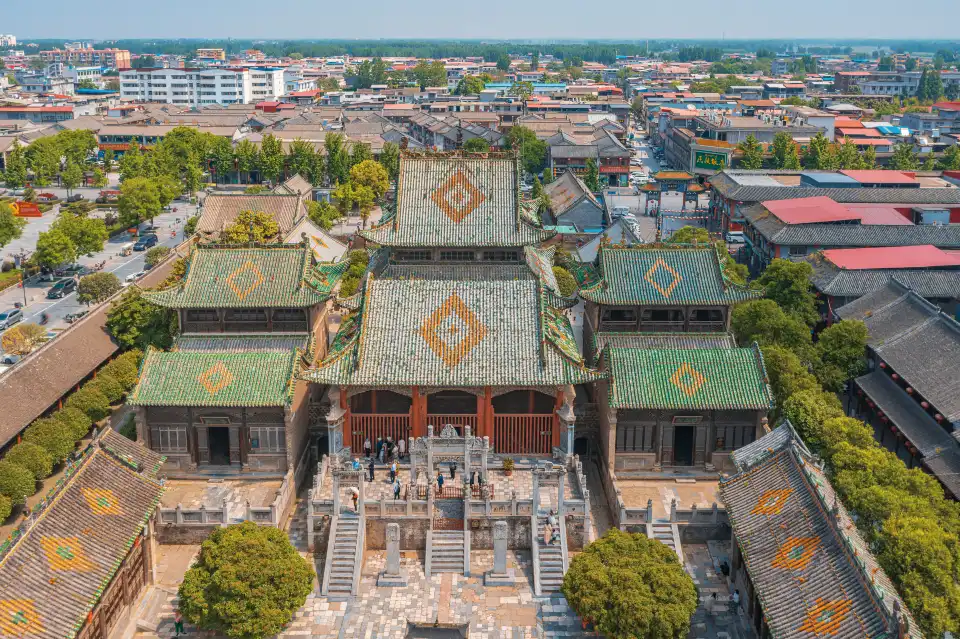
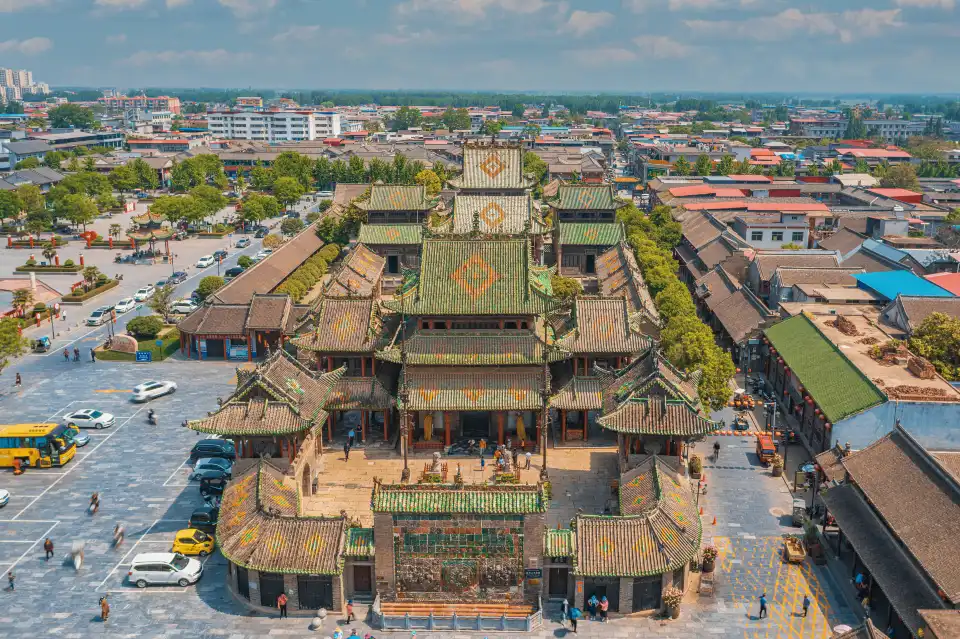
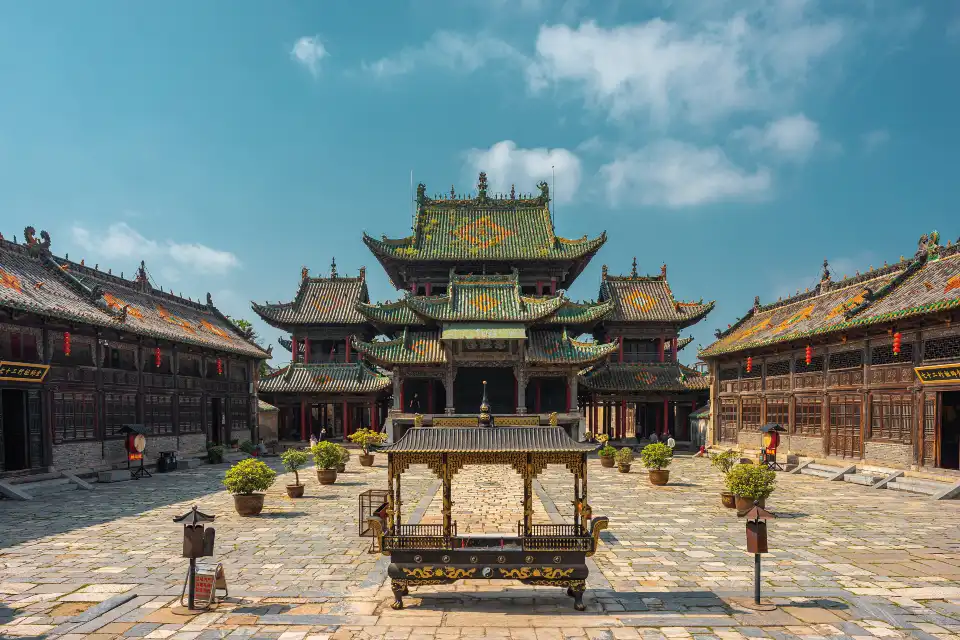
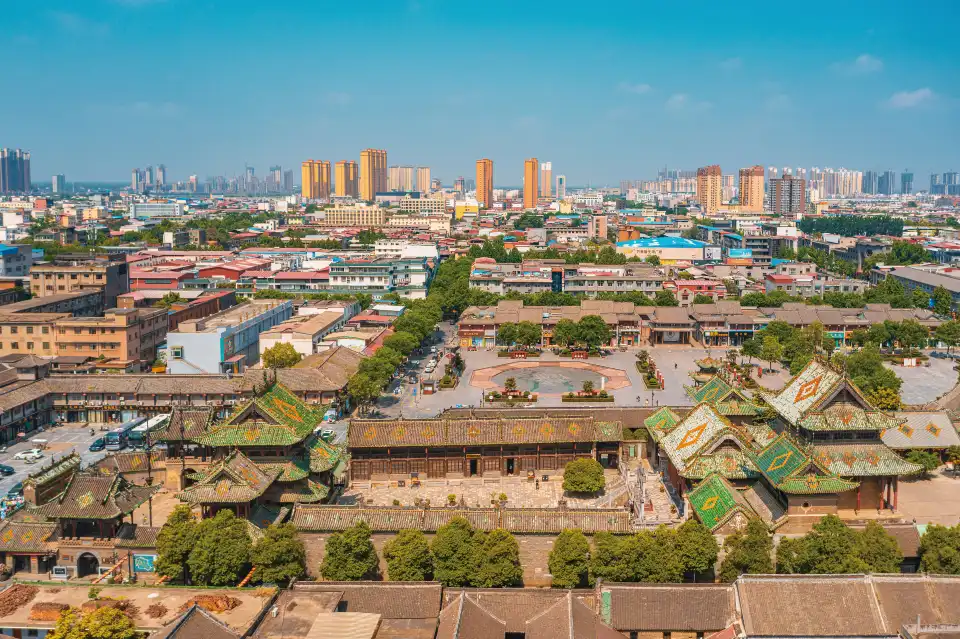
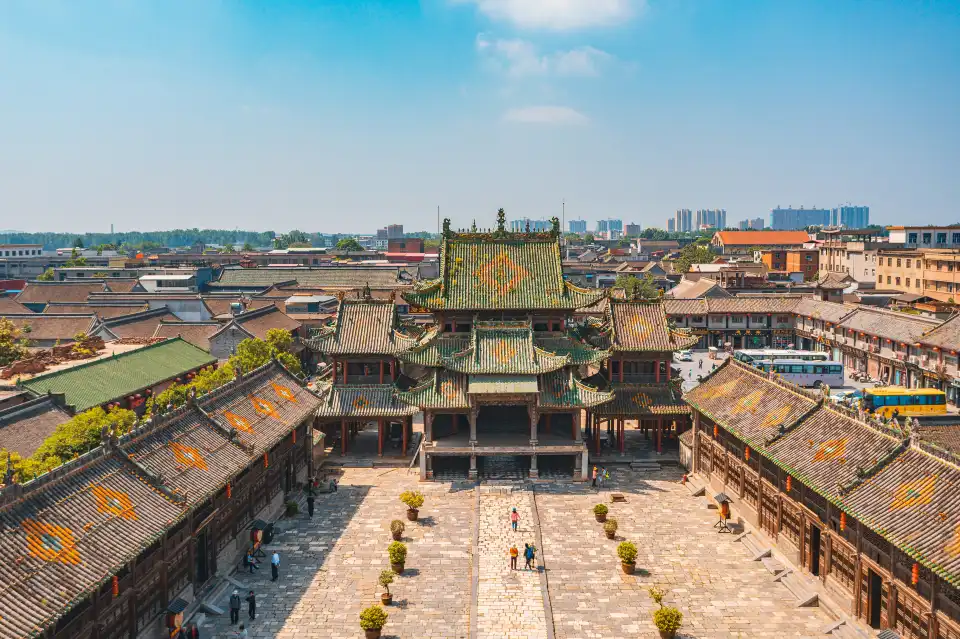
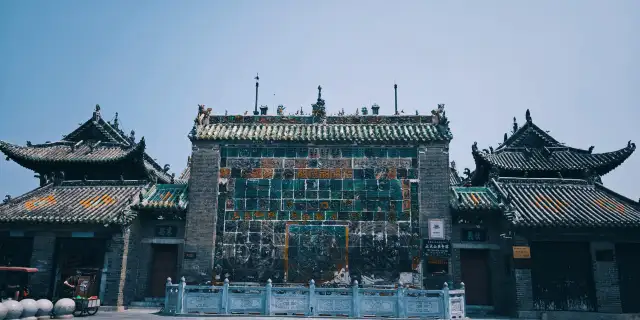
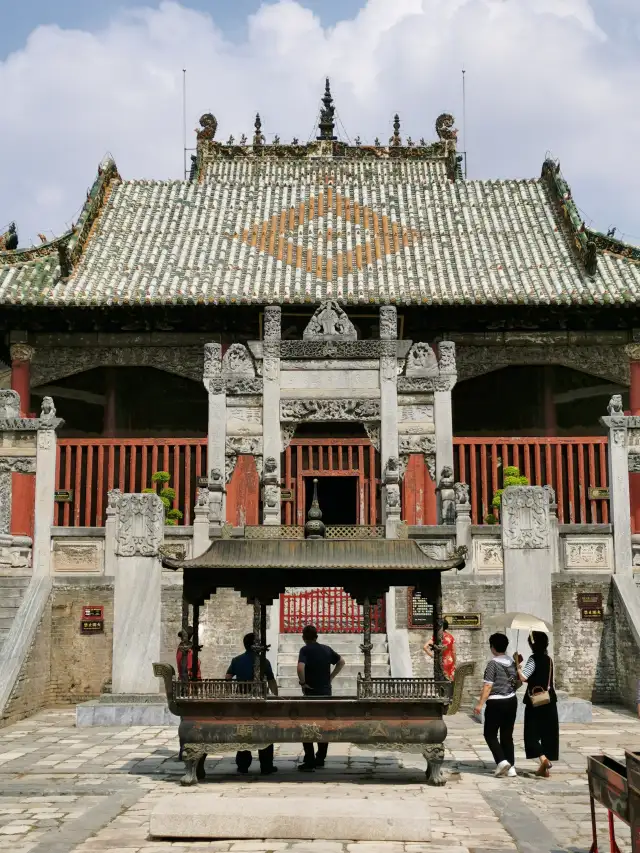
Located in Sheqi County, Nanyang, Shanxi and Shaanxi Guild Hall was first built in the 21st year of Emperor Qianlong's reign (1756) in the Qing Dynasty. It was completed in the 18th year of Emperor Guangxu's reign (1892) and lasted for 136 years under six emperors. The Guild Hall was built by merchants from Shanxi and Shaanxi provinces who lived here at that time. Because Guan Gong was worshipped in the hall, it was also called Guan Gong Temple and Shanxi and Shaanxi Temple. It is an ancient building complex that combines commercial guild halls with Guandi Temple buildings. It was built at the time of the last climax in the history of ancient Chinese architecture. The Guild Hall faces north and south, covers an area of about 7,750 square meters, and the ground is paved with blue-white stone slabs one foot square. There are more than 130 existing halls, halls, towers, pavilions and various buildings. The main building consists of four parts: the large glazed screen wall, the Xuanjian Tower, the Great Worship Hall, and the Spring and Autumn Tower, which are distributed in a central axis from south to north. In front are the glazed screen wall, iron flagpole, east and west gates and east and west stables; behind are the Xuanjian Tower, bell and drum tower, east and west corridors; behind are the Great Worship Hall, Medicine King Hall and Horse King Hall; and behind is the Spring and Autumn Tower. Sheqi Shanxi Guild Hall is a private chamber of commerce building among the national guild halls that has received the imperial calligraphy of Empress Dowager Cixi, and is recognized by industry experts as an "outstanding guild hall". The two mountains in front of the eaves of the main hall of the guild hall are embedded with the two-character tablets "Dragon" and "Tiger" of the imperial calligraphy of Empress Dowager Cixi. The tablet is 0.42 meters wide and 0.80 meters high, with a round top and a square bottom. On the top is a square seal with the nine characters "Empress Dowager Cixi's Imperial Brush Treasure". The left forehead is also inscribed with the nine characters "Empress Dowager Cixi's Imperial Brush Treasure", and the two characters "Dragon" and "Tiger" in cursive script are engraved in the middle, which are written in one stroke. The font is elegant and strong, and it runs through in one breath.
Sheqi's Shanxi-Shaanxi Guild Hall Reviews: Insider Insights and Visitor Experiences
Sheqi's Shanxi-Shaanxi Guild Hall Photos: Trip Moments
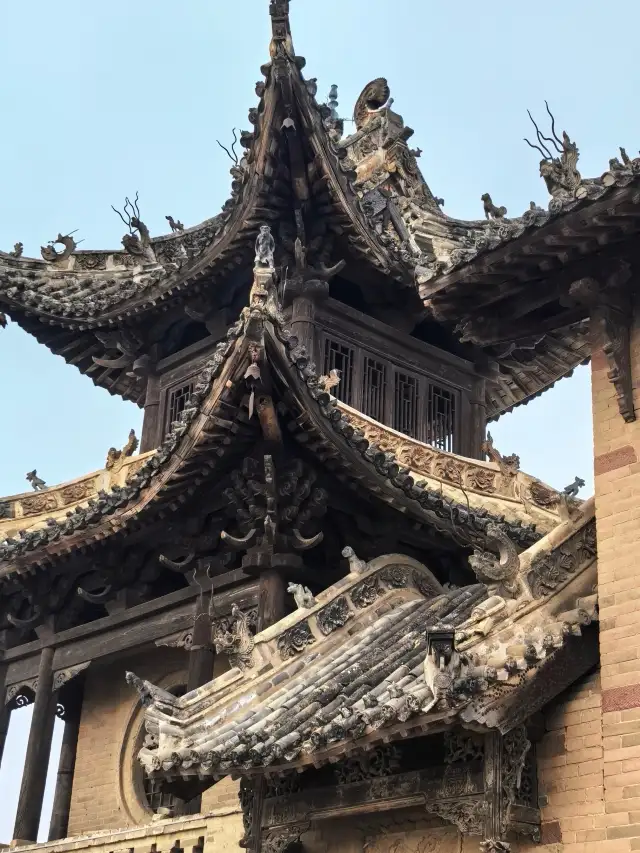
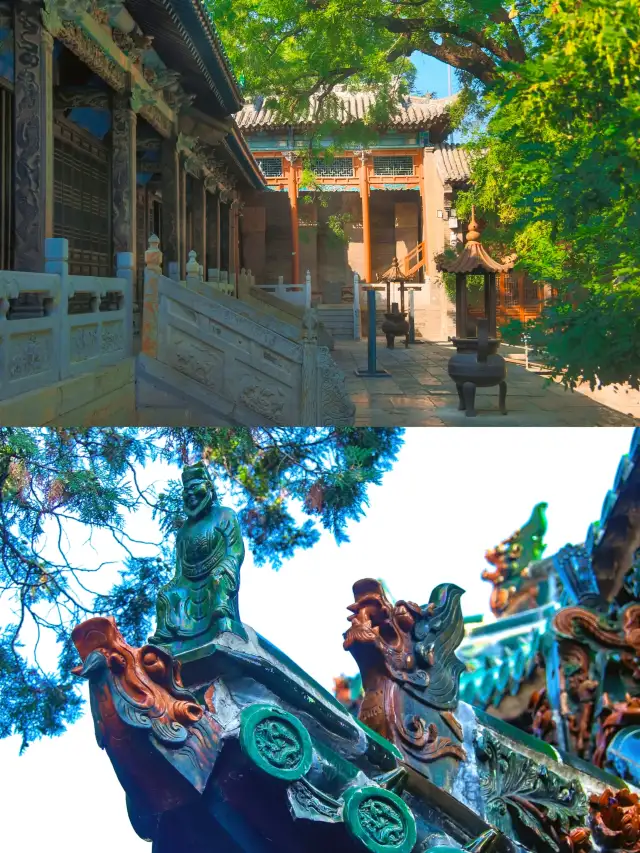
 No need to travel far to Shanxi! The ancient ceiling of Zhongyuan Guild Hall and the divine carvings of Shanxi-Shaanxi Guild Hall in SheqiShanxi-Shaanxi Guild Hall is one of the representative commercial guild halls from China's Ming and Qing dynasties. Its grand scale and exquisite architecture have earned it the title "The First Guild Hall of Central Plains." 1. Architecture: The Shanxi-Shaanxi Guild Hall is modeled after a palace, blending the solemnity of temples, the wealth of commercial halls, and the elegance of gardens. Its craftsmanship is superb, utilizing traditional Chinese wood carving, stone carving, brick carving, and glazed tile techniques, pushing ancient Chinese architectural technology to its peak. 2. Details: The architectural details of the Shanxi-Shaanxi Guild Hall are exquisitely refined, such as the roof tiles, carvings on the eaves, and calligraphy and paintings on the door lintels—each element is worth careful appreciation. 3. Best time to visit: It is recommended to visit in the early morning or late afternoon when the sunlight is soft, allowing for better appreciation of the building’s details and patterns. 4. Touring tips: When visiting the Shanxi-Shaanxi Guild Hall, hiring a guide to provide detailed explanations of the building’s history and details will enhance your experience and help you fully appreciate the charm of this ancient structure.Savory Sojourns

 Sheqi Shan Shanxi Guild Hall Qingming Festival ActivitiesFrom April 4 to April 6, 2026, the Sheqi Shanxi Guild Hall Scenic Area will launch a series of cultural activities for the Qingming Festival. The event, themed "Qingming Season · Spring Outing," will be concentrated in the Sheqi County Shanxi Guild Hall Scenic Area (the core area of Shedian Ancient Town). 【Ticket Purchase Gift · Taste Surprise】 Visitors who purchase and redeem the seven-attraction combined ticket can present their order or paper ticket at the Cultural and Creative Space Store (south side of the Guild Hall’s west gate) to receive a free cup of hot and sour noodles, unlocking a spicy and fresh flavor surprise during the tour. 【Succulent DIY · Spring at Your Fingertips】 On Qingming Day, April 4, a succulent bonsai DIY experience will be held in the backyard of the Shanxi Guild Hall. Limited to 100 participants, visitors can collect materials with their tickets to create and take home their own miniature spring greenery. 【Free Admission in Hanfu · Time Travel】 During the event, visitors wearing a full set of traditional Hanfu (including makeup and styling) and passing on-site verification can enjoy free admission to all seven attractions in Shedian Ancient Town — Shanxi Guild Hall, Guangsheng Escort Agency, Lijin Bureau, Weisheng Long Ticket Office, Fujian Guild Hall, Fire God Temple, and Shedian Ancient Town Museum — immersing themselves in the prosperous commercial scene of the Qing Dynasty. 【Guzheng Elegant Gathering · Ancient Melody Flowing】 The central courtyard of the Shanxi Guild Hall will host daily guzheng performances, with the clear sounds of silk and bamboo music echoing between the flying eaves and dougong brackets, naturally blending traditional folk music with century-old architecture, creating a serene and changing scenic experience. Come to Sheqi Shedian Ancient Town and start your own Qingming cultural journey!Trip.Pulse

 The Must-Visit Shanxi-Shaanxi Guild Hall in the Ancient TownJia County Shanxi-Shaanxi Guild Hall is an important relic of the Shanxi-Shaanxi merchant guild from the Qing Dynasty in the Central Plains region, holding significant historical, cultural, and artistic value. Here is a travel guide: Basic Information · Address: East of Xiguan New Street, Jia County, Pingdingshan City, Henan Province (Southwest of Feilong Vocational Technical School). · Admission: Free. · Opening Hours: Currently, the opening hours are not clearly defined. It is recommended to call the relevant department before visiting. Transportation Guide · Public Transport: Take the intercity bus from Zhengzhou Central Station to Jia County, about 1.5 hours, then take a taxi for about 10 minutes to reach the guild hall. · Self-Driving: Navigate to "Jia County Shanxi-Shaanxi Guild Hall." Nearby parking is available at places like Jinding Building Parking Lot. Main Attractions · Zhenhe Screen Wall: Considered the pinnacle of 3D relief brick carving, featuring 13 layers of hollow-carved water beast totems. It is very spectacular, and to capture the full view in photos, you need to step across the street. · Spring and Autumn Tower Spiral Staircase: The only "suspended gallbladder" wooden staircase in the country. Shooting at a 45° upward angle can create a visual effect similar to the TV series "The Lost Tomb." · Opera Stage Caisson Ceiling: Made from 108 pieces of pear wood mortise and tenon joints, forming a "lion's roar" dome. Standing on the central axis and taking wide-angle photos yields excellent results. Travel Tips · The guild hall is closed every Monday except on public holidays, so please pay attention to visiting times. · There are no dining options inside the scenic area. You can visit "Sanwei Noodle House" on Xiguan Street to try the lamb soup noodles. · Don’t miss the nameless stele next to the restroom, which is the "unwritten rule" covenant of the Shanxi-Shaanxi merchant guild from the Daoguang era.DanielHolm

 Three Gorges Guild Hall|A Hidden Ancient-Style Secret Spot Loved by Locals, Perfect for PhotosLooking for a quiet and beautiful ancient-style secret spot in the Three Gorges? The Three Gorges Guild Hall, a local favorite, is definitely the top choice! There are no crowded crowds here, only authentic Ming and Qing dynasty architectural charm, making it a treasure trove for photography enthusiasts. The vermilion corridor pillars paired with blue-gray brick walls create a rich vintage atmosphere. Standing under the carved corridor with the flying eaves as a backdrop, you can easily capture atmospheric ancient-style photos. The courtyard’s clever skylight design lets sunlight pour in, casting dappled shadows that give every shot a cinematic quality. The ancient stage and council hall inside the guild hall are also perfect spots for photos. Put on a Hanfu, hold a round fan, and you’ll feel like you’ve traveled back to the days of the gorge a hundred years ago. When you’re tired of walking, you can relax at the teahouse beside the guild hall, sip a cup of clear gorge tea, and watch the river flow gently eastward—pure bliss.H3llf1r3_@byssus

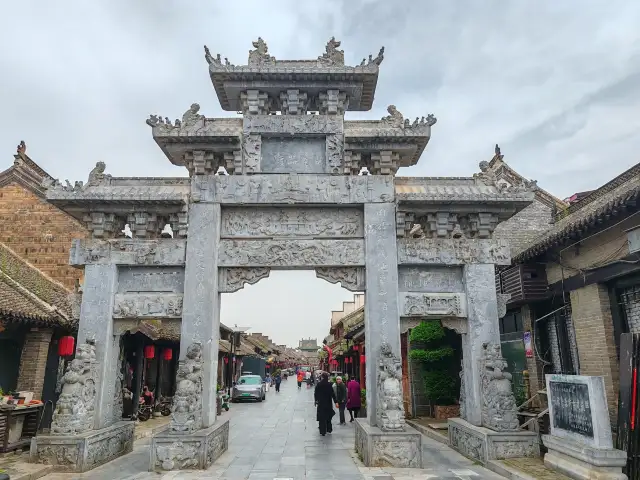 Once extremely prosperous, now returned to ordinary, Shedian Ancient TownOn the way back from a Qingming self-driving trip, I took a detour to Shedian Ancient Town, which is quite famous. It belongs to Sheqi County, Nanyang, and is also known as Sheqi Store or Sheqi Town. It is the center of Sheqi County. Liu Xiu, the founding emperor of the Eastern Han Dynasty, once fled here in hardship and borrowed a wine banner from a local shop. He then raised this banner to start his army and established the Eastern Han Dynasty. The town was named after this event and built nine city gates according to royal regulations, making it the only ancient town in the country with nine city gates. Historically, it was as famous as Jingdezhen, Foshan Town, and Zhuxian Town, and was one of the four major commercial towns in the country. After the founding of the People's Republic of China, Premier Zhou renamed Sheqi to mean the banner of socialism. Because the Zhao River and Pan River once converged here, Shedian could reach the Han River and Yangtze River by water to the south, and the Central Plains and Guanzhong by land to the north. Shedian gradually rose to become a major town on the north-south trade route. Shedian wine was also very popular at the end of the last century. Upon arrival, I couldn't help but feel a bit disappointed. Even during the Qingming holiday, there weren't many tourists. The city walls and gate towers are not very tall, and the places to visit (including the commercial street) are not large, mainly centered around a small area featuring the "World's Number One Guild Hall"—the Shan-Shaanxi Guild Hall. If you don't buy a ticket and just stroll on the street, it won't even take half an hour. I have to complain about the ticket policy here: the combined ticket for the Shan-Shaanxi Guild Hall and some optional sights like the Escort Agency and Fire God Temple is 120 yuan, discounted to 90 yuan (even tour guides with certificates are not exempt). So most visitors inside are elderly people who get free admission. Because ancient towns like this are not rare nationwide, let alone in Henan Province, there are many with more distinctive features, such as the Liulou Qijie in Yulin, which is free to visit even the arcade buildings! Zibo's "World's Number One Village"—Zhoucun—also has many free sights without tickets, and tour guides with certificates are fully exempt, so it is crowded with tourists even on non-holidays! You have nothing particularly unique, and what this means is self-evident. There is only a small free museum at the ticket center, which can be toured in ten minutes. Since the decline of water routes and the rerouting of land routes, Sheqi (Shedian)'s position has dropped sharply, and its former prosperity has faded, returning to ordinariness._1995_Mike_26

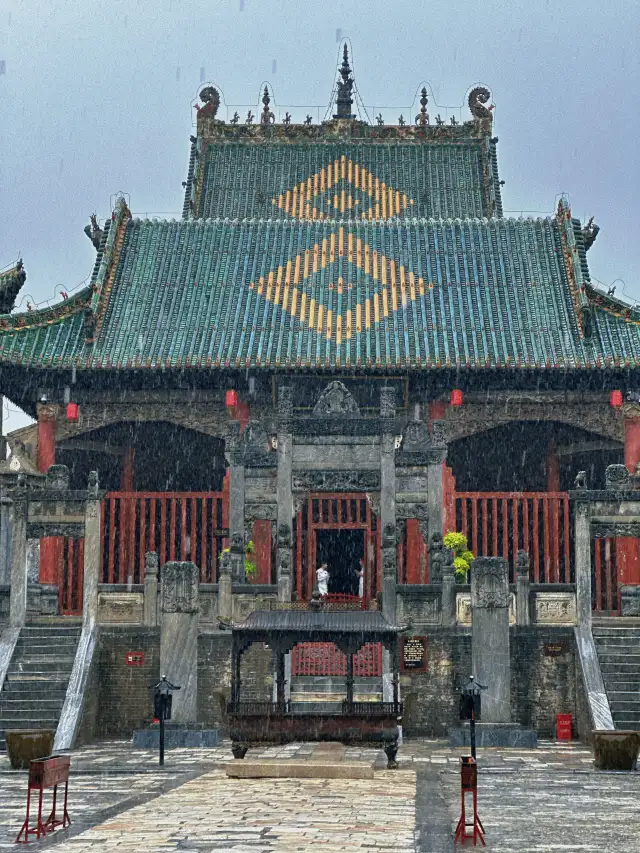 Shedian ancient town · Sheqi Shanxi-Shaanxi guild hall ③Back then, wealthy merchants from Shanxi and Shaanxi who did business in Shedian jointly funded the construction of this guild hall for social gatherings, discussions, and worship of Guan Yu. The main buildings are arranged along the central axis and include a glazed screen wall, a suspended mirror tower (opera stage), a stone archway, and a grand hall. More than 150 pavilions and towers still remain. We originally planned to get umbrellas from the car, but a kind security guard gave each of us a simple raincoat. Fortunately, the rain eased later, allowing us to finish touring the guild hall. It’s truly beautiful 🤩!Foster Charlotte92

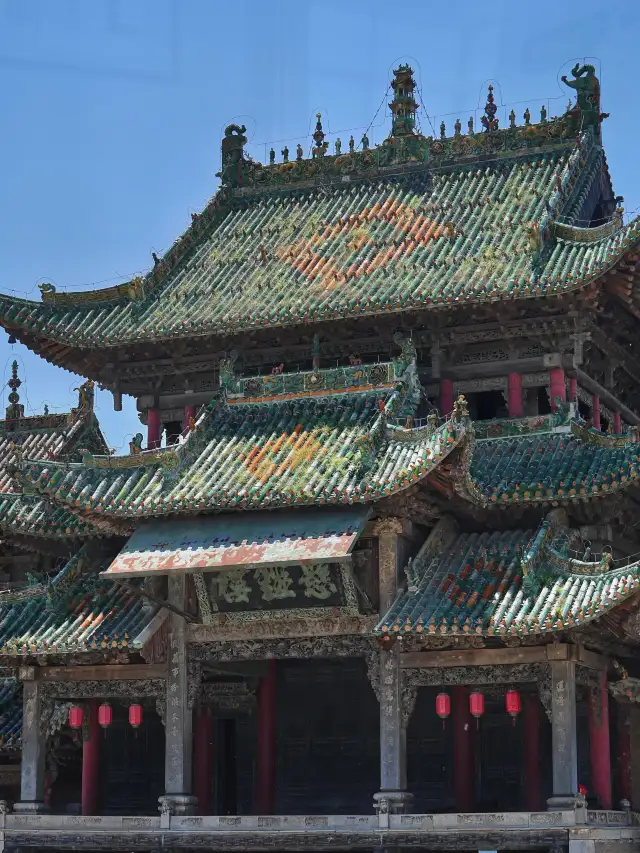 Shocked by Nanyang's "World's Number One Guild Hall"I rarely use the word "shocked" to describe a roof... But this Shanxi-Shaanxi Guild Hall I discovered in Nanyang during the May Day holiday truly left me speechless with its beauty!! 😍 This guild hall, with a history of several hundred years, is truly worthy of being called the "World's Number One Guild Hall." Especially the glazed tile roof, which sparkles under the sunlight✨. The carved patterns on it are so lifelike, every detail is exquisitely crafted, it gave me goosebumps!! 🤩 Even more magical, when I stood in front of the guild hall to take photos, there was a solitary tree in the green fields in the distance, with a pure blue sky and a rainbow🌈 in the background. This scene looked like it stepped right out of a Studio Ghibli animation, so dreamy that I thought it was a photoshopped picture. Every photo I took didn’t need any filters!! Highly recommend this to everyone visiting Nanyang. You’ll definitely regret it if you miss seeing this roof! 👍ExpeditionEnigma

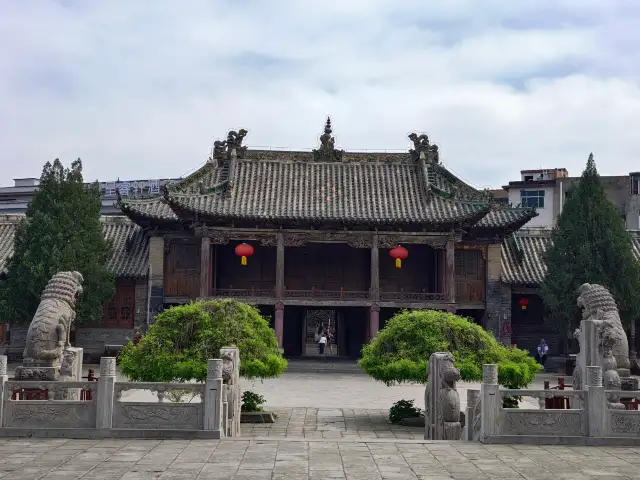 Henan. Luoyang City. Shanshan Guild HallThe guild hall was originally built during the Kangxi and Yongzheng periods of the Qing Dynasty. It was funded and constructed by merchants from Shanxi and Shaanxi provinces near Luoyang as a commercial gathering place. Its purpose was to "reminisce hometown ties, facilitate business relations, and honor Guan Yu." The site covers an area of over 10,000 square meters, with a building area of nearly 5,000 square meters, facing south with a layout that is dense in the front and sparse in the back. It features buildings such as a glazed screen wall, mountain gate, dance tower, main hall, and worship hall, with two pairs of imposing stone lions standing in front of the entrance. The main hall is the core building of the guild hall, five bays wide and three bays deep, with a Xieshan-style roof covered with glazed tiles. The screen wall is 12 meters high and 13.2 meters wide, made of blue carved bricks, with three square panels in the center inlaid with colorful glazed tiles depicting two dragons playing with a pearl, flowers, figures, and other vivid decorations. The base is adorned with exquisite patterns, making it the largest and most complete glazed screen wall in western Henan. The main hall, as the central building, is five bays wide and three bays deep, with a Xieshan roof, glazed tiles, and interlocking bracket sets, showcasing unique architectural features.Antonietta Hermiston

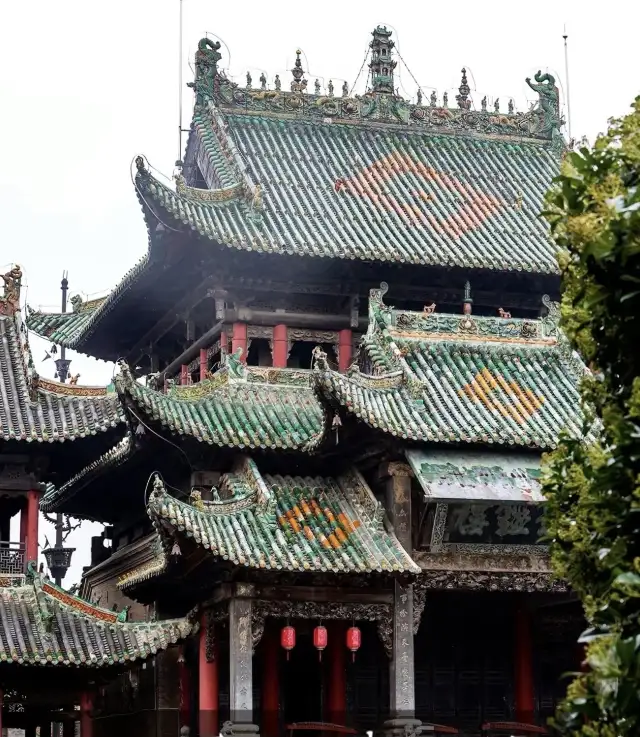 Explore the Ming and Qing Dynasties at Sheqi Shanxi-Shaanxi Guild HallExplore the Ming and Qing Dynasties at Sheqi Shanxi-Shaanxi Guild Hall The Sheqi Shanxi-Shaanxi Guild Hall is a National Key Cultural Relics Protection Unit, originally built during the Jiaqing period of the Qing Dynasty. It was constructed by merchants from Shanxi and Shaanxi in Henan to promote the culture of integrity of Jin and Qin merchants and to showcase their business achievements. The entire complex features an axially symmetrical layout, with hard-peak architecture, exquisite brick carvings, and wood and stone carvings, demonstrating the magnificent commercial architecture of the Ming and Qing dynasties. Zhonglinwan Hotel, where we stayed on the second day On the second day, we stayed at the Zhonglinwan Hotel on Changjiang West Road. The hotel is located in the city center, offering extremely convenient transportation. The hotel's decor is very modern, the hygiene is excellent, and the service attitude is very good and attentive, making guests feel at home. The hotel offers great value, with well-equipped rooms including air conditioning, a TV, free Wi-Fi, and toiletries. The hotel is surrounded by comprehensive amenities such as large shopping malls, supermarkets, and convenience stores. There is a bus stop right outside the hotel, providing easy access to various attractions in Sheqi County.Trave_sia*

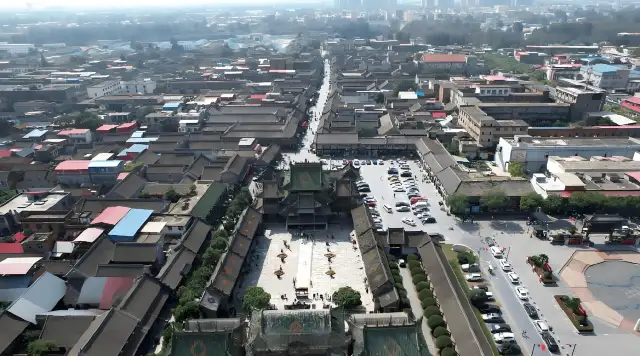 Please don’t get mad! This living millennium-old liquor town hardly has any touristsOne-day tour of Shedian Ancient Town (highlight route + liquor culture + cuisine) Highlights The number one liquor town in Central China, the first town on the Ten-Thousand-Mile Tea Road, a living commercial port from the Ming and Qing dynasties, a millennium-old baijiu culture ancient town, with the highest density of ancient buildings in Central China. Free to stroll the ancient streets. The core attractions are the Shan-Shan Guild Hall and Shedian Old Liquor. The old street is still a daily market for locals, with old-style shops, traditional snacks, and elderly people sitting and chatting leisurely. The ancient charm remains undiminished, full of everyday life atmosphere. There is no over-commercialization, no crowded crowds, only a slow-paced peaceful time, perfect for relaxing walks. Recommended as a rest stop when touring Nanyang, Xiangyang, and other places. Tour Information ★ Address: Shedian Ancient Town, Sheqi County, Nanyang (navigate to “Shedian Ancient Town Visitor Center”) ★ Tickets: Ancient town free; combined ticket 80 RMB (includes Shan-Shan Guild Hall, Guangsheng Escort Agency, Lijin Bureau, Weisheng Long Ticket Office, Fujian Guild Hall, Fire God Temple), half price for students, free admission for veterans with ID ★ Hours: 8:00–18:00; best in spring and autumn, the lantern night scene at dusk is stunning ★ Parking: Shan-Shan Guild Hall parking lot 10 RMB/day ★ Liquor Experience: Shedian Old Liquor cave cellar, liquor culture experience hall for tasting and buying souvenirs ★ Accommodation: For authentic original flavor + local atmosphere—Fuxinglong Inn; for location + ancient buildings + night view + photo spots—Tongfu Inn · In the Courtyard; for quiet, clean + tea culture + near attractions—Gudao Yishe. Note: Tongfu Inn offers discounts for veterans. One-day Highlight Route (no backtracking) Morning 9:00–12:00 Peak ancient architecture + merchant culture ① Shan-Shan Guild Hall (must-visit, about 2 hours) Title: The World’s Number One Guild Hall, 4A, National Protection Triple Treasures: glazed tile screen wall (476 glazed tiles), 28-meter iron flagpole, Xuandian Tower (nail-free opera stage); wood carving/stone carving/brick carving “three carvings” are legendary ② Porcelain Street (free, about 1 hour) Ming and Qing ancient street, bluestone slabs + red lanterns; visit Guangsheng Escort Agency, Lijin Bureau, Weisheng Long Ticket Office, immersive experience of escorting, paying taxes, and handling silver notes Afternoon 14:00–17:30 Fujian merchants + folk customs + liquor culture ③ Fujian Guild Hall (Tianhou Temple, about 1 hour) Minnan style, dedicated to Mazu; delicate brick carvings on the gate tower, blending northern and southern architecture ④ Fire God Temple (about 30 minutes) The largest Fire God Temple in Central China; murals of “Fire Dragon Spitting Water,” ancient fire-fighting water tanks, and water dragon carts on display ⑤ Shedian Ancient Town Museum (about 1 hour) Town treasures: Ming Dynasty Rishengchang account book, Qing Dynasty Ten-Thousand-Mile Tea Road map, Republic of China shop signs ⑥ Shedian Old Liquor Culture Area (about 1 hour) See millennium-old ancient cellar pools, mountain cave cellars; free tasting, buy original brew/creative liquor Evening 17:30–19:00 Zhao River sunset + night view ⑦ Zhao River Ancient Wharf: the junction of southern boats and northern horses, stone steps + mooring posts; the sunset over the river is stunning, you can take a painted boat night tour (about 50 RMB) ⑧ Porcelain Street night scene: a thousand lanterns light up, full of ancient atmosphere Recommended Food (full meal for 20 RMB) · Braised meat fire bake: crispy outside, tender inside, fragrant braised meat · Fermented noodle soup: sour and appetizing, local soul breakfast · Du Ji Oil Tea (intangible cultural heritage): mid-section of Porcelain Street, perfect with sesame salt · Ma Family Lamb Soup: milky white and rich, excellent with pot helmet bread · Shedian Old Liquor: mellow and lasting, a light sip brings a slight buzz Travel Tips ✅ Combined ticket is cost-effective, single ticket for Shan-Shan Guild Hall about 50 RMB ✅ Hanfu/Qipao photoshoot, best spots at Porcelain Street + Shan-Shan Guild Hall ✅ Main street is heavily commercialized, smaller alleys are more authentic ✅ Cellar visits are free, tasting limited to 1–2 small cups, original brew has high alcohol content, drink cautiouslySerendipity_Nora_60

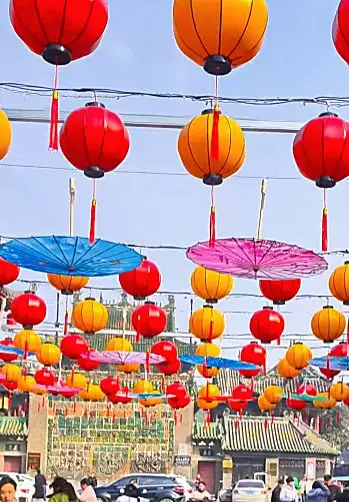 The Shedian Ancient Town Spring Festival Temple Fair OpensFrom February 13 to March 3, 2026 (the 26th day of the twelfth lunar month to the 15th day of the first lunar month), the Shedian Ancient Town Spring Festival Temple Fair will be held under the theme "Shedian Welcomes the New Year · Ancient Town Chinese New Year." The event will take place across the entire town, including the Ancient Town Square, Shanxi-Shaanxi Guild Hall, Huoshen Temple, Cultural Square, and Yongqing Street · Porcelain Street. The temple fair centers around the Ancient Town Square as the heart of the New Year atmosphere, with red lanterns hanging high, a Chinese-style corridor, a Hundred Family Surnames signature wall, and a Spring Festival dragon gate creating a strong festive vibe. Intangible cultural heritage performances such as fire-spitting, Sichuan opera face-changing, iron flower forging, dragon and lion dances, famous opera excerpts, and folk acrobatics will be staged in rotation. Thrilling circus acts, a magical giant Ferris wheel, and aerial acrobatics will provide visual excitement. More than 20 parent-child amusement facilities will be open for experience, and 20 to 30 stalls will gather authentic Shedian snacks and specialty foods. [Shanxi-Shaanxi Guild Hall] Ancient architecture and red lanterns create picturesque scenes, featuring a Year of the Horse-themed popular photo spot; Jinyiwei patrols the streets, guzheng storytelling, and cartoon character interactions enhance immersion; participants in the video check-in activity can receive creative cultural gifts. [Huoshen Temple] The "Immediate Wealth" themed inflatable decorations and festive setups are highly photogenic; paper-cutting, dough modeling, and other intangible cultural heritage handcraft experiences are offered, allowing visitors to create their own New Year memories. [Cultural Square] Light strips wrap around, and streets are hung with lucky bag poems; the New Year goods market gathers local specialties and handmade snacks, full of lively atmosphere. [Yongqing Street · Porcelain Street] Oil-paper umbrellas and lanterns intertwine to form a romantic light corridor; street vendors call out their wares, and street performers entertain, making a stroll here feel like traveling through a thousand years. Explore the sights by day, enjoy the lanterns by night, and savor the flavors throughout the area. The deep historical heritage blends seamlessly with the vibrant local life. Come to Shedian Ancient Town for the most authentic, lively, and festive Ancient Town Chinese New Year!Trip.Pulse
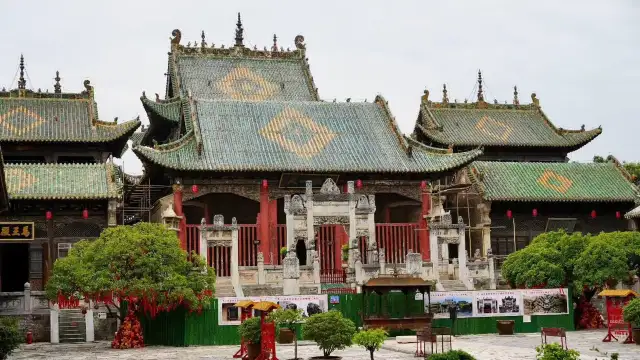 Chinese Architectural Ceiling HereWhen it comes to ancient Chinese architecture, Shanxi is often praised, but the Shanshan Guild Hall in Sheqi County, Henan, is truly the "ceiling" of ancient Chinese architecture. It has been acclaimed by ancient architecture expert Dan Shiyuan as the "Number One Guild Hall Under Heaven." This guild hall was funded and built over 136 years (from the Qianlong to Guangxu periods) by merchants from Shanxi and Shaanxi provinces. It is a hometown guild hall that perfectly combines a commercial guild hall with a Guandi Temple, forming an ancient architectural complex. The guild hall integrates the artistic essence of palaces, temples, commercial buildings, and residential architecture. Its wood carvings, stone carvings, and brick carvings are known as the "Three Wonders," with every detail telling the legendary wealth story of Shanxi and Shaanxi merchants. Three Must-See Highlights: The glazed tile screen wall is made up of 476 glazed bricks, vividly depicting two dragons playing with a pearl and carp leaping over the dragon gate; the Suspended Mirror Tower is a three-eaved pure mortise-and-tenon structure opera stage, with an exquisite sound-transmitting octagonal caisson ceiling at the top; the iron flagpole is 17.6 meters tall and weighs 25 tons, featuring coiled dragons and a base with a proud iron lion. Practical Information: Located at No. 9 Yongqing Street, Shedian Town, Sheqi County, Nanyang City, it is open year-round from 8:00 AM to 5:30 PM. Single tickets cost 40 RMB, and combined tickets are 90 RMB (including the Escort Agency, Lijin Bureau, and Piaohao). It is recommended to hire a guide (30-50 RMB) to deeply appreciate its artistic value. It is about a 40-50 minute drive from Nanyang.MERCY NEWTON


Other visitors' reviews of Sheqi's Shanxi-Shaanxi Guild Hall
Show More ReviewsThe Sheqi Shanxi-Shaanxi Guild Hall, originally named the Shanxi-Shaanxi Fellow Townsmen Guild Hall, also known as the Shanxi-Shaanxi Temple and Guan Gong Temple, and formerly called Dingyuan Society, is located at No. 9 Yongqing Street, Shedian Town, Sheqi County, Nanyang City, Henan Province. Construction began in the 21st year of the Qianlong Emperor's reign (1756) and was completed during the reigns of the Jiaqing, Daoguang, Xianfeng, Tongzhi Emperors, and finally the 18th year of the Guangxu Emperor's reign (1892), spanning 137 years under six emperors. The main buildings of the Sheqi Shanxi-Shaanxi Guild Hall consist of a screen wall, a hanging mirror tower, a stone archway, a main worship hall, and a spring and autumn tower. More than 130 pavilions and towers remain, all paved with bluish-white marble both inside and out. The buildings are decorated with exquisite stone carvings, wood carvings, cast iron, and ceramic sculptures, exhibiting the grandeur of palaces and temples, the opulence of merchant guild halls, and the elegance of southern folk gardens. It is a typical example of Qing Dynasty folk architecture. In 1963, the Sheqi Shanxi-Shaanxi Guild Hall was listed as a provincial-level key cultural relics protection unit. On January 13, 1988, the Sheqi Shanxi-Shaanxi Guild Hall was designated as a third batch of National Key Cultural Relics Protection Units by the State Council of the People's Republic of China. The iron flagpole is 15 meters high and weighs over 50,000 jin (approximately 25,000 catties). It sits on a Sumeru pedestal made of bluestone, with carvings of celestial horses, qilin, lions, and other mythical beasts on its waist. An iron lion stands atop the pedestal, and the flagpole passes through the lion. The flagpole has three cloud-shaped brackets (large, medium, and small), each with four wind chimes. Dragons intertwine between the cloud-shaped brackets, and each is topped with a phoenix poised for flight. The glazed tile screen wall is a mysterious wall in Chinese courtyards, used to block wind, gather energy, and protect privacy. The screen wall of the Shanxi-Shaanxi Guild Hall is composed of 476 glazed tiles forming three separate scenes: "Double Dragons Playing with a Pearl," "Carp Leaping Over the Dragon Gate," "Qilin Fighting Beasts," and "Fishing, Woodcutting, Farming, and Reading." These scenes are ingeniously combined into a single, magnificent composition. The Grand Hall of Worship is the main building of the guild hall, consisting of a main hall and a worship hall. It is 40 meters long, 22 meters wide, and 23.14 meters high. Two stone carvings, each 2 meters high and 1 meter wide, with a single-eaved gable roof, stand on either side of the hall. The left side is inscribed with "Eighteen Scholars Ascending Yingzhou." The image depicts Du Ruhui, Fang Xuanling, Yu Zhiyu, and others braving hardships, riding horses along a rugged path to Yingzhou, a place admired by all.