Things to do in Aksu Prefecture
Explore top experiences
Top 10 attractions in Aksu Prefecture


Tianshan Mysterious Grand Canyon
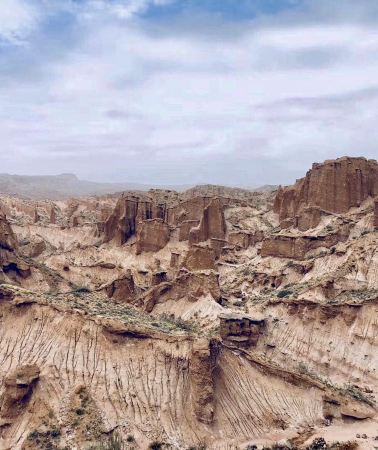
Tianshan Mysterious Grand Canyon is also calledTianshan Mysterious Grand Canyon, located in northern Kuqa, Aksu Prefecture, Xinjiang. "Kizilia" means "red cliffs" in Uyghur, as the grand canyon is composed of massive red-brown mountain formations. The red-brown peaks of Tianshan Mysterious Grand Canyon soar into the sky, appearing like clusters of burning flames under sunlight. Entering the canyon and walking among the reddish-brown mountains feels like stepping into a tranquil, cool world. The canyon mouth is quite open, but as you venture deeper, the path winds through peaks, alternating between wide and narrow sections—some spots are barely wide enough for one person to pass sideways. The canyon floor is relatively flat, allowing for leisurely strolls most of the time, flanked by towering rock walls. Looking up, against the backdrop of the blue sky, countless bizarre peaks and rocks take on myriad forms: the divine dog guarding the valley, the swirling ancient castle, the apparition cave, the jade maiden spring, and views like the Tianshan Mysterious Grand Canyon's resting camel peak—each vividly lifelike. Hidden in the canyon, the Tianshan Mysterious Grand Canyon-Ai Grotto is less than 2 km from the valley entrance, perched high on a sheer cliff. Research indicates the grotto was built during the mid-Tang dynasty. The small cave measures less than 5 m in depth and approx. one person's height, with an arched ceiling. Fragments of murals remain on three walls, unusually featuring Chinese characters—a stark contrast to hundreds of other grottoes in ancient Western Regions, clearly showcasing traces of Han culture.Kuqa · 45.8 km from downtown

Tianshan Tomur Grand Canyon
The Tianshan Tomur Scenic Area was once the essential passage of the ancient Muzart Post Road connecting the northern and southern Tianshan Mountains, locally known as "Xinjiang Tianshan Tomur Scenic Area Grand Canyon", meaning 'thrilling and mysterious' in Uyghur. Xinjiang Tianshan Tomur Scenic Area Grand Canyon is located in Wensu County, Aksu City, approximately 30 km from National Highway 314, covering a total area of 200 square kilometers. Tianshan Tomur Scenic Area is one of the most stunning Danxia geological wonders in western China and the largest rock salt karst landscape in the country. It features rare ancient rock salt formations, unique Yardang landforms, and China's only giant karst erosion geological marvel, earning its reputation as Xinjiang's "living museum of geological evolution." Entering the scenic area feels like stepping into a magnificent natural gallery. At Xinjiang Tianshan Tomur Scenic Area Grand Canyon, the clearly visible rock layers showcase dramatic folds formed by tectonic compression, with fractured rocks embedded between them. After billions of years of wind and water erosion, the canyon now displays towering cliffs, jagged peaks, and bizarre formations in vibrant colors—creating a spectacular array of peculiar and colorful views. To the northwest of Xinjiang Tianshan Tomur Scenic Area Grand Canyon, you can see the famous snow-capped Tomur Peak. Heading west leads to Wensu Sacred Tree Garden, while the east neighbors the renowned Ancient Xia Route and Kucha Cultural Tourism Zone. To the south lies the vast Taklamakan Desert.Wensu · 52.3 km from downtown

Kuqa Prince's Mansion
King Palace In Kuqa is located in the old town of Kuqa County, Aksu Prefecture, Xinjiang. It served as the residence for generations of Kuqa's local Uyghur princes since 1759. The original palace was reduced to ruins, and the current structure was meticulously reconstructed on its original site based on the memories of the last Kuqa prince, Dawut Mahsut. Covering a vast area of approximately 200–300 meters in length and width, the palace complex features multiple Uyghur-style buildings with vibrant interior designs, offering excellent photo opportunities throughout. The grounds include beautifully landscaped gardens and green spaces, creating a pleasant environment. The palace tour is divided into three main sections: the Kucha cultural exhibition area, the palace visiting area, and the ancient city wall. Visitors can explore the site on foot, with a recommended visiting time of around 2 hours. The Qiuci Culture Exhibition Area showcases the cultural customs of the ancient Qiuci Kingdom in Xinjiang's history, featuring numerous textual and pictorial descriptions, precious artifacts of Qiuci Buddhism, as well as exhibits of production tools, coins, and folk crafts from the ancient Qiuci Kingdom. The old city wall is an ancient structure within the princely residence and can be briefly viewed. The key visiting area is the princely residence section, which is displayed in its original form, including items once used by successive Kuqa kings. Wax figures recreate the daily life scenes of the princely family, allowing visitors to explore and experience the atmosphere of the Kuqa kings' lives. It's important to note that Dawut Mahsut, the last Kuqa king (also the last prince officially recognized by China's central government) who once resided in the princely residence, passed away on July 30, 2014. Visitors today can no longer meet him but can only tour the princely residence.Kuqa · 3.4 km from downtown

Duku Highway
Duku Highwayis the common name for the Dushanzi to Kuqa section of National Highway 217. It starts in the north at Dushanzi and ends in the south at Kuqa, the site of the ancient Qiuci kingdom. It spans approx. 561 km and runs through the Tianshan Mountains, cutting the travel distance between northern and southern Xinjiang, which originally required a detour of over 1,000 km, by nearly half. Half of the highway is at an altitude of over 2,000 m, and it crosses four mountain passes covered in snow year-round. One-fifth of the route lies in the alpine permafrost zone, and one-third consists of cliffs and precipices. It took ten years to build this road before it was fully opened to traffic. More than 100 soldiers who built the road rest forever in the Tianshan Mountains, and the Martyrs' Cemetery in Qiao'erma was built to commemorate them. It can be said that every kilometer was hard-won.Kuytun · 7.2 km from downtown

Daolang Tribe
Daolang Tribe, also known as Dolan Tribe, is located in Awat County, south of Aksu City, approximately 58 km from downtown Aksu and about 18 km from Awat County town. This attraction showcases the folk customs of the Daolang ethnic group, along with desert landscapes, rivers, and poplar forests. The scenic area features beautiful scenery and numerous recreational activities, offering visitors a glimpse into the mysterious culture of the Daolang people, making it a must-visit destination in Aksu. Covering a vast area of nearly 1 km in both length and width, the attraction is best explored on foot, with a recommended visit duration of 3–4 hours. The western side borders a river and features a lush fruit orchard, creating a refreshing oasis unique to Xinjiang's predominantly Gobi desert landscape. The riverbank area includes a sand sculpture park and a statue of Lin Zexu, perfect for photo opportunities. At the center of the river, visitors can enjoy a water recreation zone and an open-air ecological swimming pool. The middle section of the attraction focuses on leisure activities and exhibitions highlighting Daolang folk culture. The Dolan people are the indigenous inhabitants around the Tarim Basin in Xinjiang, having lived in isolated desert oases while preserving their unique folk customs. Here you'll find a folk culture exhibition hall where visitors can learn about the Dolan ethnic group's stories. The area also features vineyards, fig orchards, fishing zones, DIY barbecue areas, and farmsteads for recreational activities. The eastern section of the attraction showcases vast primitive poplar forests - these resilient desert trees make for spectacular photography. To the southeast lies a recreated traditional Dolan village, complete with authentic dwellings, wooden carts, farming tools, and other scenes replicating the Dolan way of life, open for exploration.Awat · 16.4 km from downtown

Kizilya Scenic Spot
Kizilya Scenic Spot is an ideal destination combining natural wonders with cultural heritage. It is hailed as the "Tianshan Mysterious Grand CanyonThe Danxia landforms and canyon terrain complement each other, showcasing unique natural beauty. The canyon stretches over 5,000 meters in length with a natural elevation drop exceeding 200 meters from end to entrance. Inside, jagged peaks twist and turn, springs murmur melodically, and birds sing cheerfully—creating a living landscape painting. Notably, 1,400 meters deep from the canyon entrance lies the Thousand Buddha Cave ruins dating back to the Tang Dynasty. Its exquisite murals hold immense artistic value as a precious Buddhist cultural heritage of ancient Western Regions. Strolling through Kizilya Scenic Spot, visitors not only witness nature's masterful craftsmanship but also immerse themselves in rich historical culture, making it an extraordinary travel destination.Kuqa · 43.5 km from downtown

Taklimakan Desert
Taklimakan Desert lies in the heart of the Tarim Basin in Xinjiang. With its arid climate and intense sandstorms, it is known as the "Sea of Death" due to its harsh environment. Over 2,000 years ago, the Silk Road ran along the edge of the basin. Ruins of ancient oasis city-states like Niya and Dandan Oilik are still scattered in the sea of sand, making this desert a window into exploring the ancient paths of the Western Regions. Desert highways, such as those from Luntai to Minfeng and Alar to Hotan, allow ordinary travelers to drive all the way into the heart of the desert. A green corridor made of red willows and saxaul stretches continuously along both sides of the road. Every few km, there is a well house for drip irrigation of the shelterbelt. This green line, a result of the tug-of-war between humans and the desert, is a rare sight in other deserts. If you join an off-road convoy to drive up the towering sand dunes, the rolling sand waves are dyed golden red at sunrise and sunset. At night, there is almost no light pollution, and when camping overnight, you can often see a clear Milky Way by looking up. In late autumn, the poplars on both banks of the Tarim River turn golden, creating a scene with the blue sky and the undulating sea of sand that is highly recognizable among the autumn colors of Southern Xinjiang.Aksu City · >100 km from downtown

Subash Buddhist Ruins
The Subash Buddhist Ruins, originally named "Subash Buddhist Temple" and also known as "Zhaohuli Grand Temple," are bisected by the roaring Kuqa River. Legend has it this river is the downstream section of the "Mother-Child River" from Journey to the West. These ancient ruins were first built during the Eastern Han Dynasty (1st century AD) and reached their zenith during the Sui and Tang Dynasties (6th–8th centuries AD). The renowned monk Xuanzang stopped here on his westward journey to India to obtain Buddhist scriptures. Seeing the temple filled with monks and bustling with incense offerings, he stayed for over two months to preach and spread Buddhist teachings. By the mid-7th century, after the Tang Dynasty's Anxi Protectorate relocated to Kucha, eminent monks from central China gathered here, with daily rituals flourishing amid morning bells and evening drums. However, the temple was burned down during warfare in the 9th century, leading to its gradual decline until its complete abandonment in the early 14th century. The East Subashi Temple faces the West Subashi Temple across the river. The East Temple has a slightly smaller architectural scale. The current ruins include a Buddhist hall with niches remaining on its damaged walls, and a pagoda standing outside the hall. The pagoda's base is square, with a three-tiered structure and a cylindrical upper section, now standing at a remaining height of approx. 8m. Surrounding the area are monastic quarters, meditation rooms, and other Buddhist architectural complexes.Kuqa · 17.5 km from downtown

Qiuci Wei and Jin Ancient Tomb Site Museum
The Qiuci Wei and Jin Ancient Tombe Site Museum is Xinjiang's first underground ancient tombs museum, located on Youyi Road in Kuqa City, Aksu Prefecture. Built on the original site of the Kuqa Youyi Road Tombs - a nationally protected cultural heritage site, it authentically displays the only Han-style brick-chambered tomb complex in Xinjiang that shares identical architectural forms with those found in Central Plains and Hexi regions. The museum features an "archaeological site + digital technology" exhibition area, employing digital cloud displays, VR experiences, gauze curtain projections, and interactive screens to vividly reconstruct the cultural customs and daily life of ancient Qiuci. More than just a museum showcasing ancient tombs, it serves as a bridge connecting past and present, allowing visitors to experience both the weight of history and the profound depth of Chinese culture.Kuqa · 482m from downtown

Kuche Temple
Kuche Temple is the second largest in Xinjiang.Id Kah MosqueThe second largest temple, located 4 km from Kuqa New Town. Among the numerous earthen buildings in Kuqa's old quarter, the green glazed dome of Kuche Temple shines brilliantly under the sunlight. The temple's gateway tower stands 18.3 meters tall, entirely built with blue bricks, with its towering minaret exuding solemn grandeur. The pillars are carved with Islamic-style patterns, and the domed roof resembles the celestial sphere. The prayer hall inside covers 1,500 square meters, accommodating up to 3,000 worshippers. Sixty-four hexagonal pillars arranged in eight rows, adorned with colorful carvings and paintings, support a magnificent ceiling composed of 102 grid-patterned panels, creating a splendid and awe-inspiring sight. Kuche Temple is said to have been built during the 16th century by Ishak Wali, leader of the Black Mountain faction of Islam in Xinjiang, while he stayed in Kuqa to preach after traveling from Kashgar. Originally constructed as an earthen mosque, it was rebuilt with wooden structures in the 17th century. After being destroyed by fire in 1923, the current temple was completed in 1931. Notably, north of the small prayer hall stands a historically significant "religious court"—a relic of theocratic governance and one of the few remaining Islamic judicial sites preserved in Xinjiang.Kuqa · 2.9 km from downtown
More things to do
Private Tours in Aksu Prefecture
View More Private Tours in Aksu Prefecture


Group Tours in Aksu Prefecture
View More Group Tours in Aksu Prefecture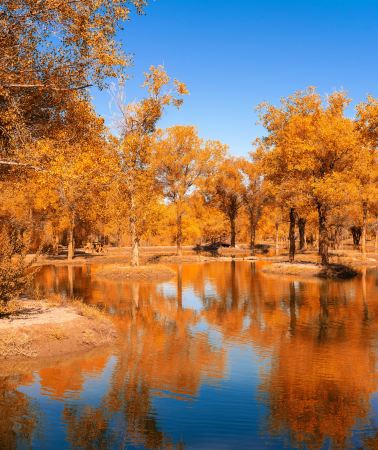

Free things to do in Aksu Prefecture
Duku Highway
Kuytun · 7.2 km from downtown
Xinjiang Tianshan Tomur Scenic Area ·Ta Cun
Wensu · 50.2 km from downtown
Aksu Old Street
Aksu City · 2.5 km from downtown
Old City of Kuche
Kuqa · 2.9 km from downtown
Aksu Regional Museum
Aksu City · 2 km from downtown
Resitan Road
Kuqa · 2.7 km from downtown
Dalongchi Scenic Area
Kuqa · 86 km from downtown
Aksu Dolan River National Wetland Park
Aksu City · 6.1 km from downtown
Qiuci Ancient City
Kuqa · 1.3 km from downtown
Tarim River
Xayar · 34.3 km from downtown
What travelers say about Aksu Prefecture

耳朵也不行October 23, 2026
5.0
I originally planned to go to Wensu Grand Canyon, but it was closed due to weather, so I went to Tianshan Mysterious Grand Canyon instead.
Luckily, the weather was great; with the blue sky, the canyon's colors were particularly bright, and the contrasts were even more striking, making it perfect for taking photos in bright colors.
The temperature difference inside the canyon is significant, depending on whether you get sun exposure. I recommend bringing a scarf this season; it's warm and can also be used as a photo prop.
Although the scenic area isn't very large, walking around and taking photos will still take about two hours. If you don't want to walk, you can take the park shuttle bus or choose to ride a camel.
Tianshan Mysterious Grand Canyon

金小牛儿October 20, 2026
5.0
Based on recommendations from online friends, we specifically chose this attraction for our trip. Overall, we had a fantastic experience. The scenic area was beautiful, the air was fresh, the service was excellent, and the facilities were comprehensive. We will definitely recommend it to our friends. We are extremely satisfied with this attraction and give it a five-star rating.
Tianshan Tomur Grand Canyon

密码2013October 20, 2026
5.0
The Kuqa Royal Palace was our first stop. Despite the large number of tourists, the staff patiently answered our questions and warmly welcomed us.
Our favorite parts were the exhibition hall and the restored murals; we lingered there, reluctant to leave.
Kuqa Prince's Mansion

M54***52July 11, 2026
4.0
Xinjiang Trip Day 9 ✨ Tangbula Hundred-Mile Gallery—Duku Highway—Urumqi
What incredible luck today! I woke up this morning to find out the Duku Highway was reopened! ✨ What would have been an 11-hour drive was reduced to just 8 hours! What amazing luck!
🌄 Surprise at the start: The Hundred-Mile Gallery is breathtakingly beautiful! Every snapshot is wallpaper-worthy scenery 🏞️
The Duku Highway truly deserves its title as Xinjiang's most beautiful highway 🏆 Today we witnessed:
✓ 20°C summer at the foot of the mountain vs. a sub-zero snowy world at the summit ❄️
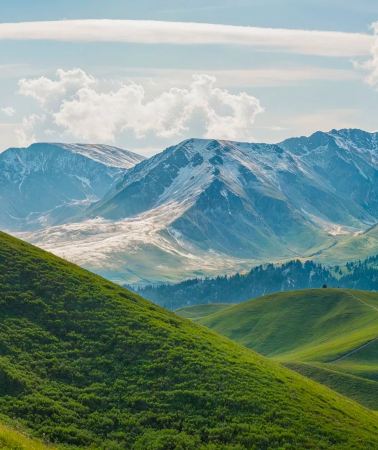
✓ A changing panorama of scenery throughout the four seasons: grassland → spruce forest → snow-capped mountains → Danxia canyons
✓ A southerner screamed with excitement upon touching a real snow-capped mountain for the first time (I won't say who it was 😝)
🚗 Driving Tips:
1️⃣ Duku Highway Opening Hours: June 1st - October 15th
2️⃣ Restricted Hours: 8:00 AM - 7:00 PM
3️⃣ Essential Items: Thick coat! Sunscreen! Sunglasses! (Don't ask how I know, I just got three shades tanned 😭)
💯 Today's highlights:
A snowball fight at the foot of the snow-capped mountains ☃️ Zero traffic jams + zero livestock = a silky smooth experience
Still savoring the experience on the way back to Urumqi, this was definitely the most worthwhile day of my Xinjiang trip! I highly recommend that everyone visiting Xinjiang add the Duku Highway to their must-see list~
#XinjiangTravel #DukuHighway #HundredMileGallery #TangbulaGrassland #UrumqiTourism
Duku Highway

wang6122zhengOctober 6, 2025
5.0
I didn't expect to get a surprise. It was free. The scenic area is still worth visiting. There was a city opening ceremony and performances. There was a large poplar forest. It was a pity that I came a little early and it was not yet yellow.
Daolang Tribe

何墩儿October 22, 2026
5.0
You can drive in and explore; some parts of the canyon are quite red, while others are grayish, but overall it's good value for money and produces some great photos.
Kizilya Scenic Spot

miss you every dayDecember 16, 2025
5.0
Time freezes here, heartbeats awaken here—the Taklamakan Desert Highway, the most solitary and breathtakingly beautiful journey on Earth.
This is no ordinary road.
The soft rustling of wheels over the asphalt is the most luxurious silence on Earth.
Ahead, yellow sand and sky merge at the horizon, the world simplified to its purest elements—blue and yellow, sky and earth, you and infinity.
On the chest of the world's second largest shifting sand desert,
a black ribbon cuts straight through the golden ocean.
The Taklamakan, a place that means "once you go in, you can't come out" in Uyghur,
now, you can drive your modern motorcycle
into this territory once forgotten by time!
Taklimakan Desert

110***68October 9, 2026
5.0
Kuqa
Finally, I can smell the scent of the Western Regions Protectorate!
Two World Heritage Sites: Kizilgaha Beacon Tower (Han Dynasty) and Subashi Buddhist Temple Ruins (Tang Dynasty).
Kizilgaha Beacon Tower is known as the Red Outpost, guarding the Han Dynasty.
Subashi Buddhist Temple witnessed the Tripitaka Master preaching and propagating Buddhism.
The temple ruins are not large; you can finish in an hour. Driving is recommended.
Drones are not allowed.
Subash Buddhist Ruins

M14***49October 12, 2026
4.0
Unless you're a professional or an enthusiast, there's no need to make a special trip here, and the price isn't great. However, it was very quiet during the National Day holiday, and the walk in and out took no more than 20 minutes. It's just one floor with a few excavation sites of Wei and Jin dynasty tombs, so you can see the fusion of Kucha and Central Plains cultures. I did manage to buy some Kucha travel-themed fridge magnets here, but the ones from other places weren't particularly special.
Qiuci Wei and Jin Ancient Tomb Site Museum

小豆冰果October 29, 2025
5.0
The Kuqa Grand Mosque is the second largest mosque in Xinjiang after the Kashgar Id Kah Mosque. It is located at the highest point of the Heidun Bazaar in the old city of Kuqa, Aksu Prefecture, Xinjiang Uygur Autonomous Region, about 4 kilometers from the new city of Kuqa. The following is a brief introduction:
Kuche Temple


