Things to do in Fenxi
Explore top experiences
Top 10 attractions in Fenxi
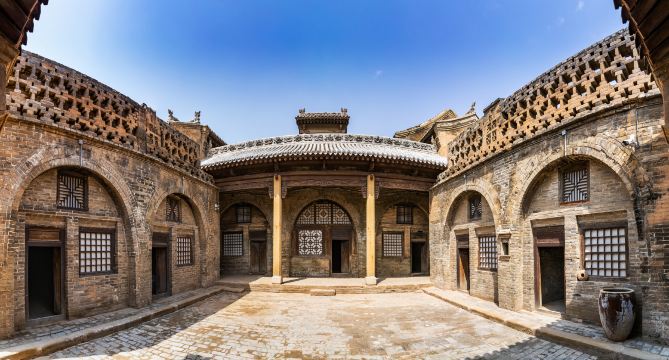
Courtyard of Family Shi
The cave dwellings in Shijiayuan were built in the 34th year of Emperor Qianlong's reign in the Qing Dynasty (1769). At that time, during the heyday of Emperor Qianlong, Shijia's family combined farming and business, and also operated banks and pawnshops, earning a lot of money. So they used the money to buy land, expand their family business, and build houses. It took them nearly 200 years to build a luxurious courtyard covering a large area. Its architectural style has typical northern and Shanxi residential features, and is divided into two parts: the main building and the ancillary buildings. The Shijia Courtyard has a total of 31 courtyards of various sizes, with quadrangle courtyards, two-entry quadrangle courtyards, second-floor quadrangle courtyards, and third-floor quadrangle courtyards as the main buildings, which are equipped with main rooms, living rooms, side rooms, halls, study rooms, embroidery towers, moon-viewing rooms, gatehouses, and stables for servants and other rooms. The most valuable art in Shijia Courtyard is the architectural sculpture art. Its wood carvings, stone carvings, and brick carvings are used to decorate the brackets, brackets, hangings, beams, screen walls, column bases, plaques, curtain frames, door covers, etc., with various styles and rich contents. For the character "Shou", there are as many as 108 different window lattice patterns. There are also many door plaques, plaques, and wood plaques, which are rare calligraphy works.Fenxi · 5.2 km from downtown


WANG JIA DA YUAN
The Wang Family Courtyard is 35 kilometers away from the ancient city of Pingyao. Built by the Jingsheng Wang family during the Ming and Qing Dynasties, its construction took over 300 years to complete. Among Shanxi's courtyards, Its scale and grandeur are absolutely second to none. People who have been to the Wang Family Courtyard would exclaim that it is virtually a city! It is precisely because of its majestic grandeur, as well as its architectural and cultural achievements, it has always had the reputation "the Wang family does not return to see courtyards".Lingshi · 38.6 km from Fenxi

Huozhou Ancient Government Office
Huozhou Ancient Government Office is a cultural attraction with profound historical significance, located in Huozhou, Shanxi Province. Originally built during the Sui and Tang dynasties, it boasts a history of over 1,300 years and serves as an ideal destination for studying and experiencing local government culture from the Ming and Qing periods. As one of the most well-preserved ancient government office complexes, it showcases not only the architectural artistry of historical administrative buildings but also reflects the political systems and social life of its era. The architectural layout within the attraction is meticulously designed with clear hierarchy. Visitors can explore various functional buildings such as the main hall, secondary hall, and inner residence, experiencing the solemnity and dignity of ancient government offices. The main hall, as the core of the yamen, once served as the place where officials handled administrative affairs and adjudicated cases. Here, visitors can learn about ancient judicial systems and the daily work of officials. For history enthusiasts and cultural explorers, Huozhou Ancient Government Office is not just a sightseeing destination, but a window to deeply understand and experience ancient government office culture. Here, you can travel through time, feel the weight of history and the charm of culture, creating unforgettable travel memories.Huozhou · 17.2 km from Fenxi

Huozhou Drum Tower
Huozhou · 17 km from Fenxi

Guangsheng Temple
Guangsheng Temple is located at the southern foot of Huo Mountain in Hongtong County, Linfen, Shanxi. It is said to have been initially built during the Eastern Han Dynasty and renamed to its current name in the Tang Dynasty. Despite being repeatedly destroyed by wars, fires, and earthquakes over the centuries, the surviving halls are primarily structures from the Yuan and Ming Dynasties. The attraction consists of the upper temple on the mountain peak, the lower temple at the foot of the mountain, and the Water God Temple, forming a high-low connection that creates a natural upward visiting route. The Feihong Pagoda in the upper temple is the visual center of the entire complex. This octagonal thirteen-story brick pagoda, standing over forty meters tall, is adorned with glazed tiles in yellow, green, blue, white, and other colors from the second floor upwards. Figures of Buddhas, bodhisattvas, celestial beings, coiled dragons, and lion-like beasts protrude from the brick surfaces layer by layer. When sunlight hits it on clear days, the entire structure refracts rainbow-like brilliance, which is said to be the origin of its name "Feihong" (Flying Rainbow). The 1986 TV adaptation of *Journey to the West* filmed the episode where Tang Monk sweeps the pagoda to uncover an injustice here. In the 1930s, Liang Sicheng and Lin Huiyin also highly praised the quality and craftsmanship of the pagoda's glazed decorations during their survey. Behind the pagoda, a row of dark red sutra cabinets still stands in the Amitabha Hall, where the Buddhist canon "Zhaocheng Golden Tripitaka" was once stored. This engraved Tripitaka from the Jin Dynasty lay forgotten for centuries until its rediscovery in 1933. During the Anti-Japanese War, to prevent it from falling into Japanese hands, local soldiers and civilians risked their lives to transport it overnight. Now housed in the National Library of China, it is regarded as one of the library's most treasured collections. The sutra cabinets remain in the hall, and this legendary tale is worth pausing to hear. The Water God Temple at the foot of the mountain, the Mingying Wang Hall, is adjacent to the Huo Spring outlet. Its walls are adorned with over ten Yuan Dynasty murals centered around themes of praying for rain, rainfall, and giving thanks to deities. These murals depict water god worship and urban life rather than the typical Buddhist or Taoist subjects found in ordinary temples. The eastern section of the southern wall features "The grand performance troupe Zhongduxiu performing here," showcasing over ten actors and musicians representing various role types (sheng, dan, jing, mo, chou) on the same stage. This is a precious image for studying Yuan Dynasty zaju performances and, along with "The ball-hitting game," has been included in history textbooks. The adjacent Great Buddha Hall of the Lower Temple is a Yuan Dynasty wooden structure. Its original large-scale murals were stripped and sold overseas in the late 1920s, with the famous "Illustration of the Bhaisajyaguru Sutra" now housed at the Metropolitan Museum of Art in New York. To appreciate Yuan Dynasty murals, focus your attention on the Water God Temple. A bottom-up route is recommended: first visit the water god temple and lower monastery, then ascend via stone steps or the mountain road to see the Feihong pagoda at the summit. The glazed colors appear especially vibrant on sunny days, making it easier to capture great photos.Hongtong · 45.1 km from Fenxi

Little Western Paradise
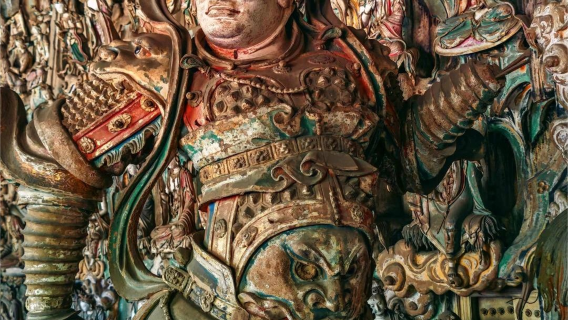
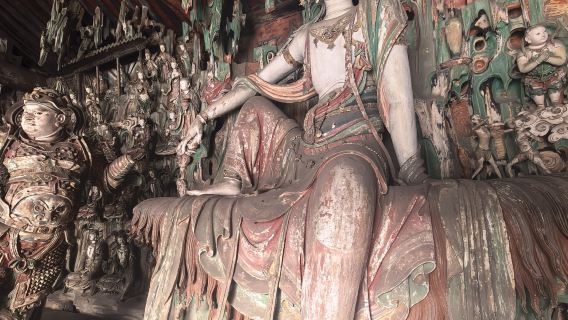
Little Western Paradise is perched atop Phoenix Mountain in Xi County, Linfen, Shanxi Province. This Buddhist temple, originally named the Thousand Buddha Nunnery, was established during the Chongzhen era of the Ming Dynasty. It earned its initial name from the thousand Buddha statues enshrined in its Main Hall of the Great Hero. Later, it was renamed due to the inscription "Entering the Western Paradise" above its gate and to distinguish it from another ancient temple, "Great Western Paradise," located south of the city. Surrounded by mountains on three sides and facing a river in front, the temple is compact yet ingeniously laid out across its upper and lower courtyards. Ascending the stone steps and passing through the secluded "Heavenly Grotto" corridor evokes a sense of gradually entering a Buddhist paradise. The upper courtyard centers around the Main Hall of the Great Hero, flanked by the Manjusri Hall and Samantabhadra Hall. The Main Hall is the temple's crowning jewel: within its modest 100-square-meter space, nearly 2,000 suspended sculptures adorn niches, gables, beams, and rafters, transforming the hall into a museum of suspended sculpture art. Five interconnected niches dominate the rear wall, housing the Medicine Buddha, Amitabha, Sakyamuni, Vairocana, and Maitreya seated on lotus thrones, with ten principal disciples standing beside them. The southern wall depicts Buddhist narratives featuring the Four Sages and Four Heavenly Kings, while the northern wall portrays the 33 celestial palaces of Mount Sumeru. Flying apsaras, divine birds, and musician bodhisattvas dance among clouds on the beams, their gilded polychrome surfaces retaining vibrant hues after centuries. This rare collection of late Ming to early Qing suspended sculptures has gained wider recognition since the temple became a filming location for the popular game Black Myth: Wukong, attracting many travelers for dedicated visits. The lower courtyard also rewards exploration: the Immeasurable Hall faces east, where dozens of bronze Buddha statues interplay with wooden celestial palaces in what was once the monks' meditation hall. Opposite stands the Skanda Hall, housing a single nanmu-carved statue of Skanda. The temple also preserves thousands of volumes from the Yongle Northern Canon, a Ming imperial gift. Visitors are advised to spend extra time in the Main Hall—dim lighting requires slow, upward gazes to appreciate the intricate details of the high-placed sculptures. After exploring both courtyards, one can ascend Solitary Paulownia Peak via the "Seemingly No Path" route behind Skanda Hall, where the Cloud-Touching Pavilion offers panoramic views of the rural landscape below.Xi County · 56.6 km from Fenxi

Hongtong Dahuaishu Ancestor Memorial Garden
Hongtong Dahuaishu Ancestor Memorial Garden is a national AAAAA-level tourist Attraction and a key cultural relic protection unit in Shanxi Province. The Attraction is located in Hongtong County, Shanxi Province, 2 kilometers away from Hongtong Railway Station, 3 kilometers away from Dayun Expressway Intersection, 8 kilometers away from Daxi High-speed Railway, and 22 kilometers away from Linfen Airport. The transportation is extremely convenient. The Attraction consists of four major theme sections: "Immigration Historic Site Area", "Ancestor Worship Activity Area", "Folk Customs Tour Area" and "Fenhe Ecological Area", with a total of more than 60 scenic and cultural attractions. It is the only folk worship holy place in the country with the themes of "seeking roots" and "worshiping ancestors". In recent years, Hongtong Dahuaishu Root-seeking and Ancestor-worshiping Park has achieved brilliant results with the joint efforts of all employees. It has been awarded "National Civilized Unit", "National Youth Civilized Unit", "National Primary and Secondary School Students' Research and Practice Education Base", "High-level Service Industry Standardization Demonstration Project", "China Overseas Chinese International Cultural Exchange Base", "China Couplet Cultural Garden", "National Model Workers' Home", "National Factory Affairs Open Democratic Management Demonstration Unit", "Second Shanxi Quality Award Nomination Award", "Shanxi May 1st Labor Award", "Shanxi Top Ten Quality Tourist Attraction", "Shanxi National Traditional Festival Protection Demonstration Site", "Shanxi Civilized Scenic Attraction", "Shanxi Civilized Tourism Advanced Unit", "Shanxi Cultural Industry Advanced Unit", "Shanxi Cultural System Reform Advanced Unit" and more than 100 other major brand honors. Its unique "Dahuaishu Ancestor Worship Custom" has been listed as the second batch of "Intangible Cultural Heritage". On the morning of October 29, 2018, the Ministry of Culture and Tourism held a plaque awarding ceremony for new 5A-level tourist Attraction, and Hongtong Dahuaishu Root-seeking and Ancestor-worshiping Park was officially promoted to a national 5A-level tourist Attraction. Nowadays, it has gradually formed a comprehensive tourism service area with Attraction, folk hotels and travel agencies as the main business sectors, tourism cultural and creative product development and cultural media development as the flanks, integrating food, accommodation, transportation, travel, shopping and entertainment.Hongtong · 43.7 km from Fenxi

Longmen Grottoes
One of the four major grottoes of China and a UNESCO World Heritage Site, the Longmen Grottoes are a trove of 1000 years of Buddhist art treasures. Bounded by the Yi River, the caverns are divided into two sections at East Hill and West Hill. The caverns at East Hill contain mostly Tang dynasty (618-907) works, while the caverns at West Hill were cut out during the Northern, Sui, and Tang dynasties and contain the carvings that are most representative of the site. The Buddha and bodhisattva sculptures that inhabit the caverns are carved into an endless variety of poses and expressions of mercy and kindness, while the caves themselves lend a stately and dignified atmosphere. The artistry of these sculptures is truly a priceless inheritance of Buddhist art.China · Luoyang

Pingyao Ancient City
Pingyao Ancient City is approx. 85 km from Taiyuan. The streets, shops, and residences within the ancient city still maintain their traditional layout and appearance, making it one of the best-preserved ancient cities in China. It is also the only ancient county town in China that has successfully been listed as a UNESCO World Heritage Site as an entire city. Pingyao was once the financial center of China during the late Qing Dynasty. Walking through this once-prosperous ancient city, you can feel the essence of Shanxi merchant culture everywhere. The ancient city has six gates in total, with the north gate near Pingyao bus station and the west gate nearPingyao train stationThe south gate and west gate are places with many travelers. Entering the ancient town does not require an admission ticket, but if you want to climb the city wall or visit attractions like the ticket number, you need to purchase a pass for the ancient town. The ancient town is not very large, and walking is enough to explore it all. If you prefer not to walk, you can also take electric bikes. The streets of the entire ancient city are laid out in the shape of the Chinese character "土" (earth). When visiting, you usually enter the city from the West Gate and walk along West Street to Rishengchang Draft Bank, known as the "ancestor of modern Chinese banking". Here you can not only learn about the development history of ancient banking, but also have the old manager in a long robe and mandarin jacket write a draft for you using the early draft method, which is particularly historical. Moving forward is the north-south spanningSouth street, it is the central axis of the ancient city. During the Ming and Qing dynasties,South streetControlling over half of the nation's financial institutions, it was hailed as the "Wall Street of China" in its heyday. Today, it remains a bustling area of the ancient city, known as the Ming-Qing Ancient Street. Most attractions in Pingyao Ancient City are concentrated here, centered around the landmark structure, the Ancient City Tower. Surrounding it are attractions like Xie Tong Qing ticket number (China Banking Museum) and Wei Tai Hou (Ticket number museumAttractions such as Baichuantong, China Escort Museum, Tongxinggong Escort, Weishengchang, China Rare Newspaper Exhibition Hall, and Tianjixiang are available, along with restaurants, musical instrument stores, cafes, and bars. After strolling along the street, you can dine here, buy some souvenirs, and then continue south for more sightseeing. At the Pingyao Ancient City's county government office on the south side of the ancient city, you can see a large number of ancient documents and torture instruments, with daily performances of court sessions; near the Shangdong Gate are the Pingyao Ancient City's Chenghuang Temple andConfucian templeIt is quite grand and meticulously built, with thriving incense offerings where you can burn joss sticks. The Pingyao Ancient City wall is also one of the highlights of the ancient city, being not only majestic but also remarkably well-preserved. Climbing the wall offers a panoramic view of the entire ancient city. Among the gates, the tower of the south gate (Yingxun Gate of Pingyao Ancient City wall) is exquisitely crafted, and this area is close to residential buildings, allowing visitors to observe the daily life of the locals. If time permits, you can walk around the ancient city along the wall to fully appreciate its charm, which takes about an hour. Watching the sunset from the wall in the evening presents a beautiful scene. Besides the ancient town itself, Pingyao has two other major attractions: Zhenguo Temple and Shuanglin Temple. Zhenguo Temple was built without a single nail, with all structures joined by interlocking wooden components. Shuanglin Temple houses over 10 halls containing exquisitely crafted painted sculptures dating from the Yuan to Ming dynasties. It is highly recommended to stay overnight in the ancient town to enjoy its night view. You can also rent a bicycle to explore the small alleys and experience the authentic Pingyao, where the local culture and customs or photography make excellent subjects. Especially during the Chinese New Year, Pingyao is full of festive atmosphere. The town features old courtyards converted into inns, which are usually affordable, with clean and tidy accommodations available for just a few dozen yuan. Additionally, Pingyao is renowned for its beef. In the late Qing Dynasty, Empress Dowager Cixi passed through Pingyao and was so fond of the local beef after tasting it that she designated it as a royal tribute. Shops bearing the name "Guanyun beef" can be seen everywhere in the ancient town, making it hard to distinguish authenticity, and prices are generally high. You may consider buying some outside the town to try or give as gifts to friends and relatives.Pingyao County · 82.4 km from Fenxi

Jinci Temple Museum
Jinci Temple is located on the banks of the Jin River at the foot of Xuanweng Mountain, 25 km southwest of Taiyuan. It was built by later generations to commemorate Tang Shuyu, the founding feudal lord of the Jin State, and served as the ancestral temple of the Jin State. It is often said that "a visit to Taiyuan is incomplete without seeingJinci Templethe saying "a wasted trip to Taiyuan". After getting off at Jinci Temple, the first place you'll reach isJinci MuseumThis is a free park with a pleasant environment, perfect for casual strolling. After about a 10-minute walk through the park, you'll reach the main area of Jinci. Inside Jinci Museum,Jinci TempleThe "Three Treasures" (Xian Hall, Flying Bridge Across Fish Pond, and Shengmu Hall) and "Three Wonders" (Zhou-bai, Nanlao Spring Pavilion, and painted clay sculptures) are must-sees for every visitor toJinci Templeview that everyone must see. Jinci TempleThe "Three Treasures" are connected and located atJinci Templeon the central axis, allowing for a combined visit. Xian Hall is a place for offering sacrifices, with fence-like walls on all four sides, providing good ventilation and coolness. Notably, not a single iron nail was used in the beams and pillars throughout the hall. The Flying Bridge Across Fish Pond is located in front of Xian Hall and was built during the Song Dynasty. The entire view resembles a modern overpass, making it the only existing example among ancient bridges in China. One end of the "Flying Bridge" connects to Shengmu Hall, which is the earliest existing main building in Jinci Museum. The main hall is spacious, and a major highlight is its beam-and-pillar structure without internal columns. Eight wooden carved coiled dragons, appearing ready to fly, are carved on the eight corridor pillars in front of the hall, which, together with the "Flying Bridge Across Fish Pond," present a magnificent sight. Centered around the Hall of the Holy Mother, it's easy to find the "Three Wonders." The painted clay figurines are located inside the Hall of the Holy Mother, with the main statue of the Holy Mother seated majestically in a wooden shrine, dignified and resplendent, while the other 42 attendant statues stand on either side. These figurines are dressed in vibrant colors with varied expressions, including one maidservant dressed as a flower-dan (young female role in Chinese opera), her face half joyful and half sorrowful, evoking complex emotions in viewers. Master Mei Lanfang once stood before this maidservant statue for a long time, carefully studying her posture and inner emotions, and praised it highly. The Zhou Cypress, located north of the Hall of the Holy Mother, was planted during the Western Zhou Dynasty and is over 3,000 years old. The Pavilion of the Never-Aging Spring stands south of the Hall of the Holy Mother, where the source of the Jin River flows continuously year-round. In addition,Jinci TempleInside, there is also the extremely precious "Jinci Inscription" stele, personally composed and handwritten by Emperor Taizong of Tang, Li Shimin. At the southernmost part, you can find the Shifang Fengsheng Zen Temple, which is said to have originally been the villa of Yuchi Gong, a founding general of the Tang Dynasty. In the northern part of the temple complex, the Futu Courtyard houses the Sheli Shengsheng Pagoda. Climbing the pagoda offers a panoramic view.Jinci TempleThe panoramic view is clearly visible.China · Taiyuan
Experiences you can't miss in Fenxi
Featured Day tours in Fenxi
View all Day tours
Free cancellation
Instant confirmation
From€136.95
Free cancellation
Instant confirmation
Book now for tomorrow
From€121.73
Free cancellation
Instant confirmation
From€98.91
Free cancellation
Instant confirmation
From€106.52
Free cancellation
Instant confirmation
From€91.30
Free cancellation
Instant confirmation
From€115.28

Free things to do in Fenxi
Courtyard of Family Shi
Fenxi · 5.2 km from downtown
Luoyang Museum
China · Luoyang
Shanxi Museum
China · Taiyuan
Henan Museum
China · Zhengzhou
Xinzhou Ancient City
China · Xinzhou
Guangfu Ancient City
China · Handan
Taiyuan Ancient County
China · Taiyuan
Luoyi Ancient City
China · Luoyang
The Luoyang Museum of Ancient Tombs
China · Luoyang
Donghu Vinegar Garden
China · Taiyuan
What travelers say about Fenxi

JessigzDecember 8, 2019
5.0
Shijiayuan is located in the mountains, so it is a relatively unpopular scenic spot. It is free to visit. The residents inside have basically moved out, and it is well preserved. It's a pity that there is no detailed information to introduce it. Personally, I think it is no less than Wangjiayuan.
Courtyard of Family Shi

超酷的小王同学。October 24, 2026
5.0
The Wang Family Compound, known as the "Folk Palace," is a grand complex built against a mountain, with its courtyards stretching out in layers. Unlike ordinary residences, it reveals the family traditions and ingenuity of Shanxi merchants in every detail. The brick, wood, and stone carvings are exquisite and delicate, with lifelike depictions of flowers, birds, auspicious beasts, and poetic allusions. High walls, deep courtyards, and crisscrossing alleyways make you feel as if you've stepped into the life of a prominent Shanxi merchant family in bygone days. It's not just a mansion, but also a testament to the rise and fall of Shanxi merchants. Compared to popular tourist attractions, it offers a genuine experience of the profound and ancient atmosphere of northern courtyards, making it well worth a visit for those who appreciate ancient architecture and history.
WANG JIA DA YUAN

老酒店收割机August 4, 2026
5.0
There are many historical sites inside, including a seven-bay main hall, a three-story bell tower, a drum tower, and a stage. There is also a garden at the back, which is a well-preserved official garden and quite large. I only had time to visit it quickly.
Huozhou Ancient Government Office

andylindaMay 10, 2023
5.0
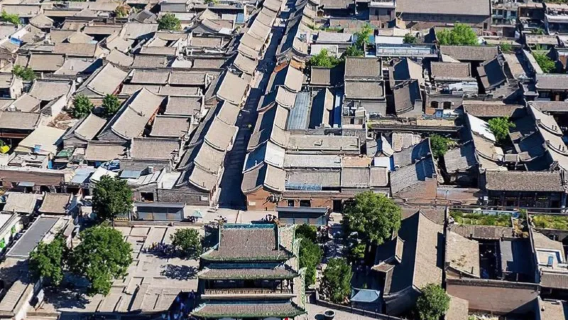
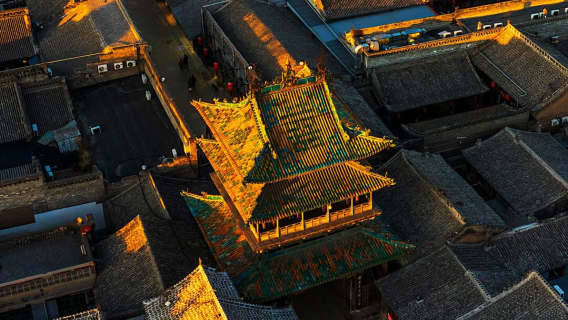
Driving here, you can see the Drum Tower right when you enter the city. It was built in the 11th year of the Wanli reign of the Ming Dynasty (1583), also known as the Wenchang Pavilion. It was rebuilt in the Qing Dynasty. The base is high and a cross-vaulted passage is built with a mixture of bluestone and blue bricks, which runs through in four directions. There are two floors of wooden pavilions on top, with a width and depth of five rooms each, three drips on the second floor, and a cross-shaped hip roof.
Huozhou Drum Tower

皮皮泡泡哦哦哦October 20, 2026
5.0
The ancient pagoda was particularly impressive, and the glazed sculptures shimmered brilliantly in the sunlight. Their forms were incredibly lifelike. The only downside was the long wait for the shuttle bus; we got on the bus five minutes ago, but waited for another 40 minutes.
Guangsheng Temple

脆皮晕车精October 26, 2026
5.0
This over 400-year-old suspended sculpture masterpiece is enveloped by a dense array of statues upon entering the main hall. The rich, heavy use of red, green, and gold paint, along with the intricate layout, creates a sense of oppression and a uniquely eerie atmosphere. It is a one-of-a-kind Buddhist dreamscape.
Little Western Paradise

M29***18October 24, 2026
5.0
The booking process was smooth, and the information verification upon arrival was quick. The room matched the description on the website, had good natural light, and no unpleasant odors. The front desk staff were efficient in checking in and even proactively provided directions for getting around the area. I had a comfortable and worry-free stay, and I will definitely choose this hotel again next time I travel.
Hongtong Dahuaishu Ancestor Memorial Garden

飘呀飘的喵October 26, 2026
5.0
I entered the park at 5:30 PM, and the lights came on just as I reached the grotto area. The night view was beautiful and I wasn't exposed to the sun. However, if you want to see all the grottoes thoroughly, this is not the best time to enter.
Longmen Grottoes

139***52October 25, 2026
5.0
We paid 120 yuan to hire a tour guide to lead us through the five most distinctive attractions included in the pass. The guide's explanations were insightful, easy to understand, and engaging. Visiting the paid attractions is a must when visiting Pingyao Ancient City; otherwise, it's as if you haven't truly experienced the city.
Pingyao Ancient City

xxf0711October 25, 2026
5.0
A taxi only goes to the entrance of Jinci Park. You can walk into the Jinci Museum or take a 10-yuan round-trip sightseeing bus. It's worth a visit! Due to limited energy, I only visited the main attractions. I had lunch at the market outside Jinci Park, which was quite good.
Jinci Temple Museum


