Things to do in Guide
Explore top experiences
Top 10 attractions in Guide


Guide National Geopark Ashigong Qicai Peak Cluster Scenic Area
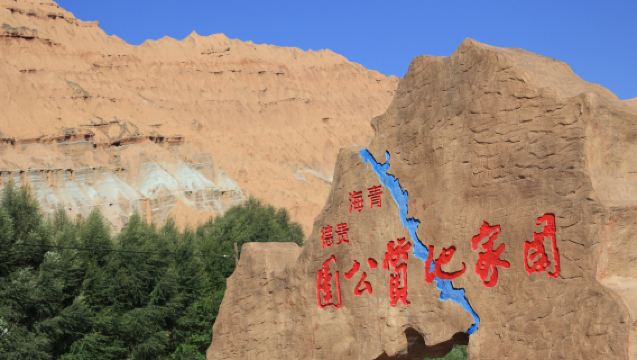
Ashgang Colorful Peaks Scenic Area in Guide National Geological Park, comprising 13 cultural theme squares and seven Danxia canyons, is an ideal destination for tourism and sightseeing, dining and entertainment, as well as relaxing and releasing the mood. A variety of geological relics reflect the evolution of the Qinghai-Tibet Plateau during the geological history, and also record the development history of the Yellow River and the changes of the natural environment of Guide. This place is available for sightseeing, leisure and vacation, as well as science popularization education and scientific research.Guide · 17.6 km from downtown

Laji Mountain
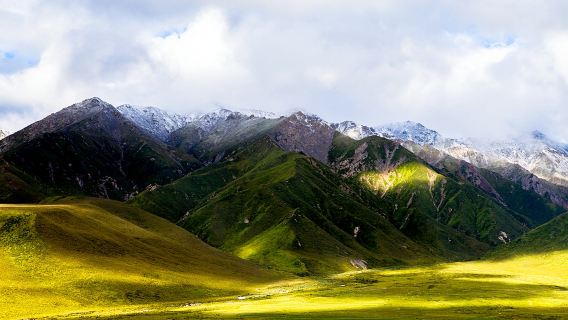
Laji Mountain, also known as Laji Mountain, is located in Guide County, Hainan Prefecture, Qinghai Province. It is called "Gongmaola" in Tibetan, which means the place where Gala chickens (stone chickens) inhabit. The highest peak on the top of the mountain is 4524 meters above sea level. Laji Mountain is the dividing line between Huangzhong and Guide, as well as a dividing line between the Loess Plateau and the Qinghai-Tibet Plateau. The geographical location of Laji Mountain Pass is important. Ningguo Highway passes through it. On the south side of the pass, there is a road leading to Huangyuan on the north slope of Laji Mountain. Except in summer, the slopes are often covered with snow. The southern slope is gentle, with grasslands growing, and it is an alpine pasture. The mountain produces Cordyceps sinensis. Due to the high altitude and various climate types on the mountain, you can experience the climatic landscapes such as rain, snow, fog, haze, overcast, sunny, song, and sleet many times in one day when you drive up the pass. The Hongshanzui pasture has gentle slopes and lush water plants. When summer comes, the green grass and flowers bloom on the hillside.Guide · 33 km from downtown

Qingqing Yellow River Scenic Area
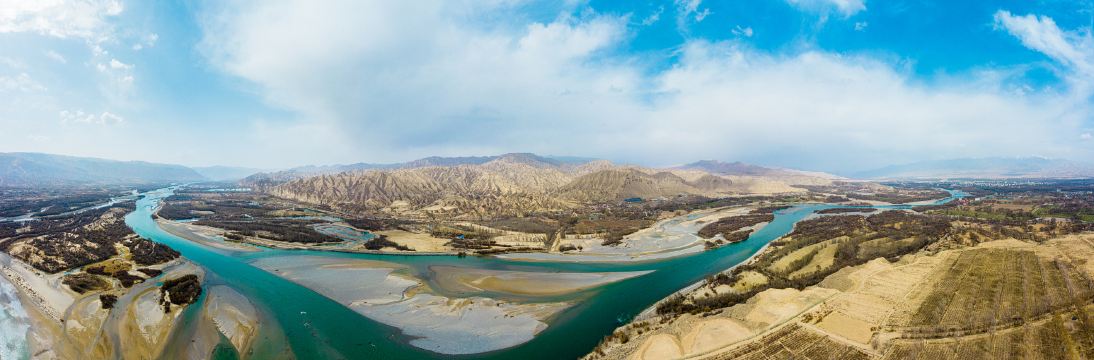
Qingqing Yellow River Scenic Area is located on Nanbinhe Road, where you can stroll along the banks of the Qingqing Yellow River, admire the red mountains and clear waters, and enjoy the sightseeing yachts, making for a very pleasant experience.Guide · 2.8 km from downtown

Guide Confucian Temple and Yuhuang Pavilion
Guide Confucian Temple and Jade Emperor Pavilion are ancient buildings integrating Confucianism, Buddhism and Taoism. school field. Guide Confucian Temple is a relatively well-protected one in Qinghai Province. The main buildings of the Confucian Temple are: Archway, Panchi, Jimen, Xiangxian Temple, Mingguan Temple, Dacheng Hall, and Seventy-two Xian Temple. One of the buildings in the Confucian Temple is a four-column and three-story archway, which acts as a sign. Passing through the archway, the semi-circular pool in front is called Panchi. It is an architectural layout in front of the school. It was also a pool for teachers and students to study ink and draw water in the past. Now it is surrounded by carved guardrails. Come to the gate. The Jimen is the main entrance of the Confucian Temple. The Jimen divides the Confucian Temple into two courtyards, the front and the back. After passing through the Jimen, you come to the backyard of the Confucian Temple. The Dacheng Hall in the middle is a building with a single eaves and a hilltop, with four corners flying up and down, majestic. Dacheng Hall is also the largest single building in the Yuhuangge ancient building complex. The east and west hatches are the 72 ancestral halls. To the east of the Dacheng Hall is the Wenyuan, the garden of the Confucian Temple. During the beginning of summer, the peony flowers are in full bloom, with colorful and fragrant flowers. This is the largest peony garden in Guide County. The Wanshou Temple was first built in the Ming Dynasty and belongs to the Taoist temple. The main buildings are Shanmen, Lingguan Hall, Sanguan Hall, Leizu Hall and Jade Emperor Pavilion. It enshrines the statues of Houtu Huangdi, Emperor Sanguan, and Emperor Wenchang. The hall of the Jade Emperor Pavilion is the Hall of Lingguan, which enshrines the standing statue of Wang Lingguan-Wang Shan, and the four marshals on both sides: Wen Qiong, Yue Fei, Ma Sheng, and Zhao Gongming. Passing through the Lingguan Hall is the Jade Emperor Pavilion. It has the reputation of "Xiange Inserting Clouds" in Guide's "Eight Ancient Scenes". The Jade Emperor Pavilion is a three-storey Xieshan-style attic built on a high platform with three-storey bricks and earth. The height is 25.5 meters, which is equivalent to the height of an eight-storey building. Guanyue Temple is the joint temple of Guan Yu and Yue Fei, commonly known as Wu Temple, also known as Mazu Temple. Now there are statues of Guan Yu, Yue Fei, Ma Zu and Zhao Gongming. The architecture of Guanyue Temple includes brick-carved screen walls, gate tower, bell tower, drum tower, passage hall, main hall, and east and west side halls. The hall of Guanyue Temple is the God of Wealth Hall, a building with a single eaves and a mountain top. To the east of the Temple of Fortune is the Bell Tower, and to the west is the Drum Tower. After leaving the Temple of Wealth, I climbed the steps and came to the main hall of Guanyue Temple. In the middle of the main hall is a statue of Guan Yu. Guan Yu's left side is enshrined with the seated statue of Yue Fei, King Wumu.Guide · 918m from downtown

Qinghai Guide Huangheqing National Wetland Park
Guide Yellow River Qing Wetland Park is built on the basis of the Yellow River Forest Park and wetland. It starts from Ashgong Village, Garang Township in the east, and reaches Laxiwa Hydropower Station in the west, with a total length of 28,000 meters. It is 2,100 meters wide and has a total area of 83,200 mu, including about 39,800 mu of wetlands on both sides of the Yellow River and tidal flats on both sides (including 5,700 mu of beaches on the Yellow River), 2,400 mu of lake wetlands, 10,000 mu of marsh wetlands, and 10,000 mu of wetlands on both sides of the Yellow River. The forest and shrub area is 31,000 mu.Guide · 6.9 km from downtown

Kanbula Global Geopark
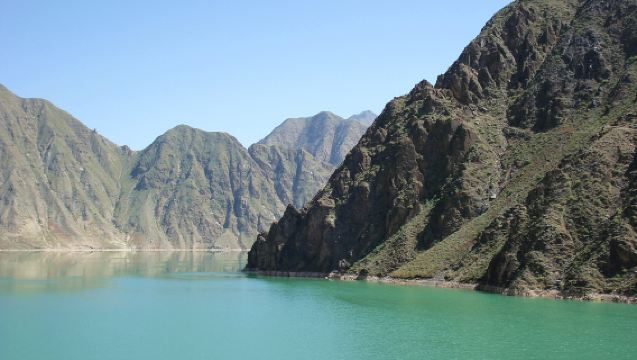
Kanbula National Forest Park is located in Jianzha County, Huangnan Prefecture, Qinghai Province, about 110 kilometers away from Xining. The Attraction is centered on the Yellow River Reservoir formed by the Lijiaxia Dam. The reservoir is emerald green and clear, surrounded by red and steep Danxia landform peaks. The scenery is very spectacular and it is a popular niche tourist destination in Qinghai. Kanbula Forest Park is very large, with a depth of dozens of kilometers. The main entrance of the Attraction is on the east side. After entering, you can take a shuttle bus or a Cruise to visit, which is divided into water and land tours and lake tours. In addition, if you come from Guide, you can also enter from the back door of the Attraction on the west side, which is more convenient.Jainca · 28.9 km from Guide

Guide Ancient City
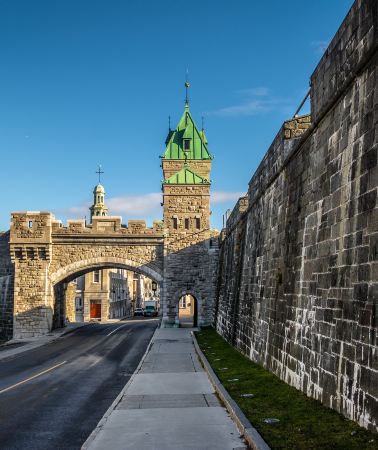
The ancient city of Guide is a building complex in the Ming Dynasty with a history of more than 600 years. Now the city walls are well preserved. Among them, the Jade Emperor Pavilion is the landmark building of Guide. It is located in the center of the town, and the entire building complex is arranged in characters.Guide · 755m from downtown

Kumbum Monastery
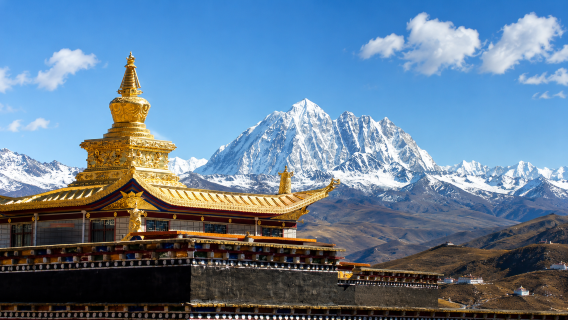
Kumbum Monastery is one of the important monasteries of the Gelug (Yellow Hat) sect of Tibetan Buddhism and the birthplace of Tsongkhapa, the founder of the Yellow Hat sect. The monastery features magnificent architecture, abundant treasures, and a strong religious atmosphere, making it one of the more popular travel destinations in Xining. Overview of the visit It has distinct differences in architectural layout compared to Han Chinese Buddhist temples in inland China: the complex here is not symmetrically arranged along a central axis. The monastery is an ancient architectural complex composed of numerous halls, scripture halls, stupas, and colleges, with each sutra hall, main hall, and stupa irregularly distributed on a small hill. Travelers can explore the site in a relatively free manner rather than following a straight path along a central axis. The Great Golden Roof Hall of Kumbum Monastery is the center of the entire architectural complex. It is said that Master Tsongkhapa was born here, and when he was born, his umbilical cord blood dripped on this spot, from which a bodhi tree grew. Later, a stupa was built around the tree, and a monastery was constructed, hence the name. Believers hold that this tree and stupa are the embodiment of the master. The three unique features of the attraction: butter sculptures, murals, and appliqué embroidery. Butter sculptures are made by mixing butter with various pigments to mold and carve into figures of Buddhas, people, flowers, birds, animals, and pavilions. Travelers can admire exquisite butter sculptures at the butter sculpture hall inside the temple (located far from the main gate). Vibrant centuries-old murals can be appreciated in the main halls, corridors, and front galleries of the temple. Appliqué embroidery involves cutting colored satin into desired shapes, such as Buddha figures or animals, stuffing them with wool or cotton, and embroidering them onto cloth hangings. In the temple's great sutra hall, two rare large appliqué embroidery pieces—"Sixteen Arhats Displaying Divine Powers" and "Eight Immortals Crossing the Sea"—hang on either side. The four major religious festivals (based on the lunar calendar): 1. Cham dance (14th day of the first month) and butter sculpture exhibition (15th day of the first month); 2. Cham dance (14th day of the fourth month), Buddha unveiling, and Cham dance (15th day of the fourth month); 3. Buddha unveiling, Cham dance (6th day of the sixth month), and golden Buddha procession (8th day of the sixth month); 4. Full-day Buddha unveiling (22nd day of the ninth month) and Cham dance (23rd day of the ninth month). During these festivals, activities like Buddha unveiling and ritual dances take place, attracting large crowds of devotees and travelers, creating a lively atmosphere.Xining · 51.2 km from Guide

tian xia huang he gui de qing
Guide · 3.3 km from downtown

Chinese Fuyunlun
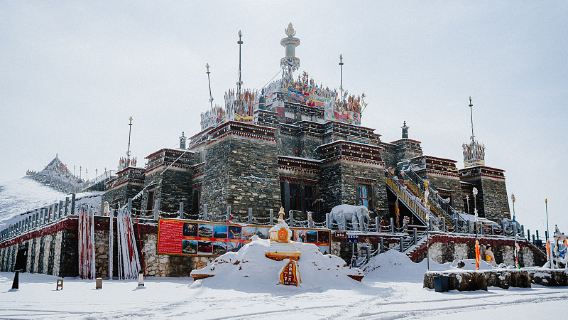
The Yellow River is the clearest in Guide County, Qinghai Province. A clear section of the Yellow River winds through Guide County, Qinghai Province. Guide County is the gateway to Tibet, and Tibetan Buddhism, the bright pearl of Tibetan culture, shines here. The profound Yellow River culture reflects the dazzling light of Tibetan Buddhism culture. In order to better display Tibetan Buddhism culture, the Tourism Development and Management Committee of Guide County, Qinghai Province, carefully built a large cultural landscape on the bank of the Yellow River - the Chinese Fortune Wheel. It took two years to complete the construction, covering an area of 90 mu and a construction area of 12,000 square meters. Standing on the bank of the Yellow River, the Chinese Fortune Wheel not only plays an important role in displaying the Yellow River culture and creating a new cultural tourism attraction in Qinghai, but also has a very important significance in praying for the prosperity of the motherland and the harmony and well-being of compatriots of all ethnic groups. At the same time, it allows religious culture to bloom here, providing a platform for local Tibetan people to place their faith, and also telling the Tibetan Buddhist culture on the bank of the Yellow River to tourists. The Chinese Fortune Wheel has a distinct Tibetan style. The Yellow River flows quietly, reflecting the huge prayer wheel. We can appreciate the profound Tibetan Buddhist culture in the exhibition hall of the Chinese Fortune Wheel Attraction. The huge prayer wheel carries the blessings of the years. When the devout Buddhist believers hold the prayer wheel, the moment when the sutra shines in the sun, it undoubtedly blooms the sacred Buddha light. A section of the Yellow River, an ancient city, and a Chinese Fortune Wheel make Guide a tourist paradise in the hearts of tourists.Guide · 1.6 km from downtown
Experiences you can't miss in Guide
Featured Day tours in Guide
View all Day tours
4.0/5
· 2 reviewsFree cancellation
Instant confirmation
From€53.24
Free cancellation
Instant confirmation
From€45.64

5.0/5
· 1 reviewInstant confirmation
From€98.42
5.0/5
· 1 reviewFree cancellation
Instant confirmation
From€68.27
Free cancellation
Instant confirmation
9% off
Limited-time sale
From€35.07€38.96
Free cancellation
Instant confirmation
9% off
Limited-time sale
From€35.07€38.96
From€82.60

Instant confirmation
From€93.86
More things to do
Private Tours in Guide
View More Private Tours in Guide





Group Tours in Guide
View More Group Tours in Guide



Free things to do in Guide
Laji Mountain
Guide · 33 km from downtown
Qingqinghuanghe Waterwheel Plaza
Guide · 2.6 km from downtown
Gansu Provincial Museum
China · Lanzhou
Zongka Laze Scenic Area
Xining · 35.2 km from Guide
Yellow River Girl Lavender Garden
Guide · 3.8 km from downtown
Guide Huanghe Bridge
Guide · 3 km from downtown
Lanzhou Old Street
China · Lanzhou
What travelers say about Guide

M37***68July 19, 2026
5.0
I never imagined there were such beautiful Danxia landforms near Xining. As evening fell, we entered the colorful geological park. The glow of the setting sun cast different colors across the continuous Danxia mountains – it was so beautiful! There were also free guided tours, allowing us to learn more about the beauty of Guide.
The only downside was the park's design, which lacked user-friendliness and fun. Adding more information and reducing artificial structures would have made it even better.
Guide National Geopark Ashigong Qicai Peak Cluster Scenic Area

岱山香橙June 8, 2025
5.0
🍎We went to Ta'er Monastery first after getting off the plane. The second stop was Laji Mountain. It had just snowed before May Day, and the snow covered the dry and yellow mountains, which was very beautiful;
🍎The mountain road was winding and the altitude rose quickly, so the child had slight altitude sickness and vomited. Fortunately, the driver had oxygen tanks in the car
🍎It was beautiful to fly a drone on the mountain, magnificent and majestic
Laji Mountain

水漫三楼September 4, 2026
5.0
The Jade Emperor Pavilion, located on North Street in Heyin Town, Guide County, Hainan Tibetan Autonomous Prefecture, Qinghai Province, is an important part of the Guide Confucian Temple and Jade Emperor Pavilion ancient architectural complex. This complex integrates Confucianism, Buddhism, and Taoism, comprising six courtyards including the Confucian Temple, Wanshou Temple, Dafosi Temple, Guan Yue Temple, City God Temple, and Public Education Hall, as well as an ancient drill ground and the ancient city of Guide. The Jade Emperor Pavilion is a landmark building in Guide, listed as a cultural relic protection unit by the Qinghai Provincial People's Government in 1986 and a national key cultural relic protection unit in 2001.
The Jade Emperor Pavilion was first built in the 20th year of the Wanli reign of the Ming Dynasty (1592), expanded during the Daoguang reign of the Qing Dynasty, and destroyed by fire in the 6th year of the Tongzhi reign (1867). The existing buildings are mostly reconstructions from the Guangxu reign of the Qing Dynasty.
The Yuhuangge Ancient Architectural Complex comprises six courtyards: Yuhuangge (Wanshou Temple), Confucian Temple, Dafosi Temple, Guanyue Temple, City God Temple, and the People's Education Center (now Lixinyuan), as well as the ancient drill ground (commonly known as Huangmiaochang) and the ancient city of Guide. The temples and monasteries are adjacent to each other, integrating Confucianism, Taoism, and Buddhism in a unique layout. The overall architecture adopts the traditional Chinese symmetrical form along a central axis, while individual buildings primarily feature styles from Gansu and Qinghai.
Guide Confucian Temple and Yuhuang Pavilion

把剑长歌June 22, 2020
5.0
The Yellow River in Guide is the cleanest! This is true.
I was also amazed when I arrived in Guide! It turns out that this section of the Yellow River in Qinghai is so clear and pure! It's even a bit like Jiuzhaigou and Huanglong!
There is an ancient city in Guide, which is very beautiful. You must go up to the city tower to see the rich and wonderful contents in the city.
There is also a Mina Temple in Guide. How about it? Do you know the word "Mena"? 😄
Qinghai Guide Huangheqing National Wetland Park

135***20September 13, 2026
4.0
It's changed a lot; I haven't been here for ten years, but the scenery is still beautiful. The reservoir is azure, the Danxia landforms are magnificent, and the peaks stand tall. There are now man-made walking trails, which adds to the fun, and shuttle buses and escalators have been installed, making things much more convenient. Overall, it's quite good, and it's still the scenery I love!
Kanbula Global Geopark

牛奶海August 6, 2019
4.0
The ancient city of Guide is located in Guide County, Hainan, Qinghai. It is called an ancient city, but it is actually just a city gate plus some old buildings. Due to its remote geographical location, it cannot be compared with the large-scale ancient cities in the mainland. It is still okay to visit it.
Guide Ancient City

M33***46October 22, 2026
5.0
As the birthplace and memorial monastery of Tsongkhapa, the founder of the Gelug school of Tibetan Buddhism, this historical and cultural site, over 600 years old, is a must-see. Photography of the stupa at the entrance is permitted, but not of the Buddha statues inside. The monastery currently houses over 1000 monks and more than a dozen Living Buddhas. While the throngs of worshippers are bustling, the atmosphere is peaceful and serene (perhaps the burning of large incense sticks is not part of the ritual). Many areas allow you to light lamps for blessings (20 yuan per person, depending on your conscience), and there are places to exchange change for prayers. Best of all, there are Chinese-language guided tours, and the guides are very professional; I learned more about Tibetan Buddhism than I did during my previous trip to Lhasa!
Kumbum Monastery


_CF***84July 1, 2016
5.0
The world's largest prayer wheel. According to the tour guide, this prayer wheel has been consecrated by more than 60 eminent monks. It contains 6 billion copies of the Six-Syllable Mantra Sutra and 200 copies of the Tripitaka. Turning this prayer wheel can eliminate karma and bring good fortune!
Chinese Fuyunlun


