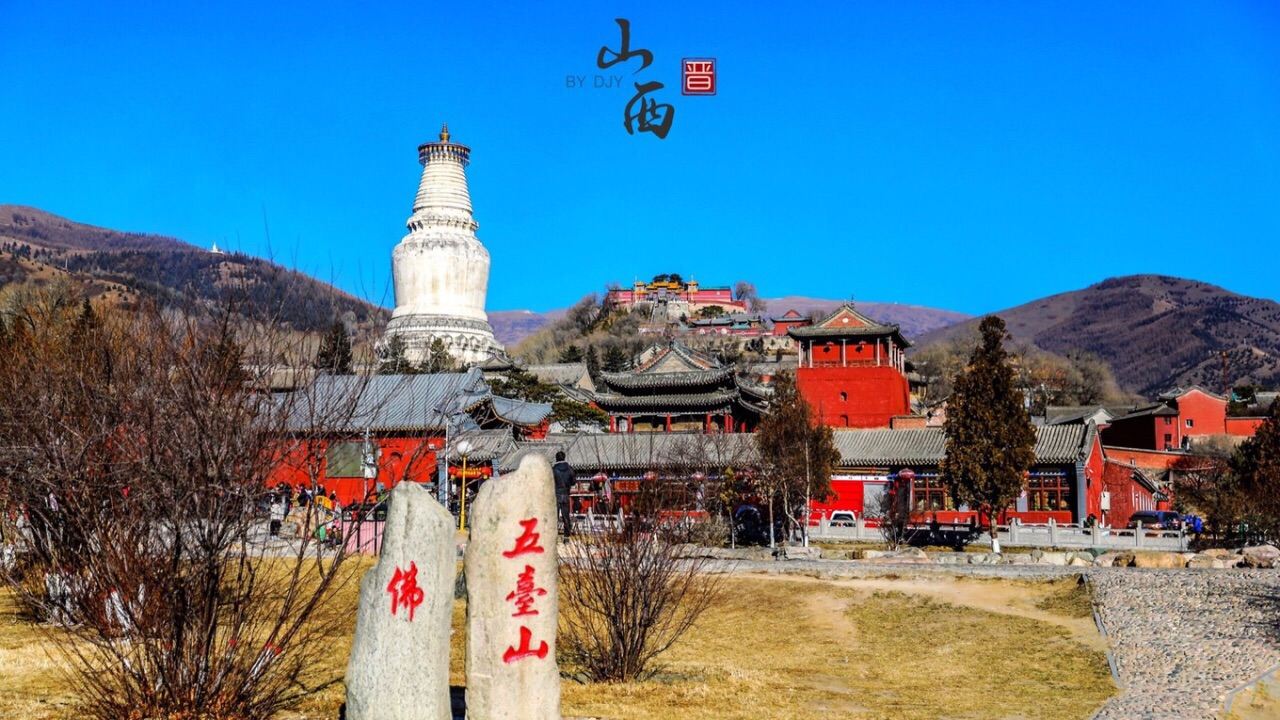
Things to do in Wutai Mountain
Explore top experiences
Top 10 attractions in Wutai Mountain


Wu Tai Shan
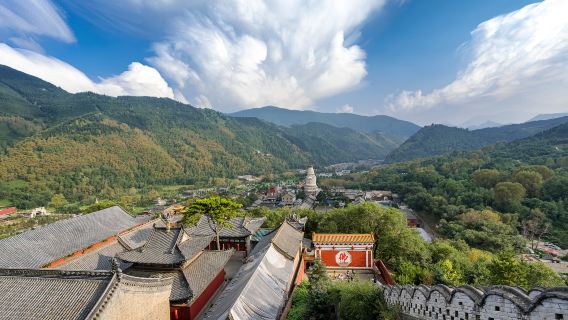
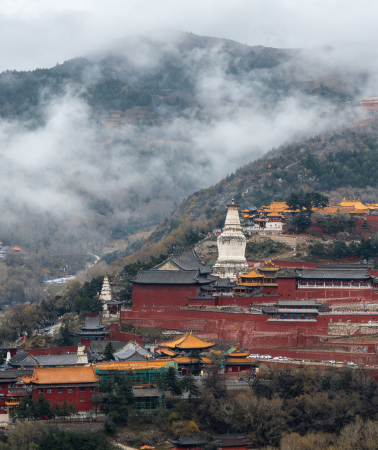
Mount Wutai is one of China's famous Buddhist scenic spots and even contains the bodhimanda (place of enlightenment) of the bodhisattva Manjushri. Taihuai Town is at the geographical center of the Mount Wutai scenic area and serves as the lodging and dining center for the area. Most of the temples are also clustered here, so it is a must-visit for travelers here. Visitors typically stay in Taihuai for 2-3 days, which allows plenty of time to visit the main temples.Wutai County · 39.5 km from downtown

Yanmenguan
Yanmenguan, located approx. 30 km northwest of Dai County in Xinzhou, is a pass on the inner Great Wall of the Ming Dynasty, andNingwu Pass, together with Pianguan, they are known as the "three outer passes". There is no public transportation from Dai County town to the attraction, so you can only get there by private charter. Inside the attraction, you have to rely entirely on walking.YanmenguanSince ancient times, it has been a crucial pass for the Central Plains dynasties to defend against invasions from northern nomadic tribes. Its earliest history can be traced back to the Warring States period when King Wuling of Zhao fought against the Xiongnu here. Han Dynasty generals Li Guang, Wei Qing, and Huo Qubing once led troops to battle the Xiongnu in this area. During the Northern Song Dynasty,YanmenguanIt became the main battlefield between the Song and Liao dynasties, and the prototype of the well-known story of the Yang family generals took place here. A statue of Yang Liulang stands in the attraction. ExistingYanmenguanIt was built in the seventh year of the Hongwu era of the Ming Dynasty (1374) (with multiple reconstructions in recent years). Currently, there are three gates (east gate, west gate, and small north gate). A wild goose tower stands atop the east gate, and the lintel of the small north gate (i.e., the barbican gate) is inscribed with "Yanmenguan"Three large characters flanked by brick-carved couplets: 'Foremost strategic pass in three frontiers, most revered fortress among nine passes,' both inscribed by the great calligrapher Fu Shan of the late Ming and early Qing dynasties. You can visit the ruins of Ming and Qing military barracks on the hill north of the fortress. To the right outside the west gate areGuan Yu templeOutside the east gate stands the Jingbian Temple, dedicated to Li Mu, a renowned general of the Zhao state during the Warring States period. If you are a fan of the Great Wall, when you visit Yanmenguan, you can walk along the ancient pass trail here. The ancient pass trail in the attraction is built along the local mountain terrain, winding through the peaks. Climbing this section of the trail may be slightly tiring for those who usually work in offices, but when you ascend a peak along the ancient path and gaze at the vast expanse of withered grass outside the pass, quietly feeling the weight of history, you'll find the physical effort well worth it. There are some farmhouse inns near Yanmenguan that can provide food and stay, but most visitors return to Dai County or go to other counties or cities for accommodation. Walking the ancient pass consumes a lot of energy, so you can bring some dry food and drinking water.Dai County · 65.8 km from Wutai Mountain

Foguang Temple
Foguang Temple was rebuilt in the tenth year of Emperor Xuanzong's reign in Tang Dynasty (856). In terms of construction time, it is second only to the main hall of Nanchan Temple in Wutai County, which was built in the third year of Tang Jianzhong (AD 782). The existing wooden structure in the country Second place in the building. The Tang Dynasty buildings, Tang Dynasty sculptures, Tang Dynasty murals, and Tang Dynasty inscriptions in Foguang Temple are of high historical and artistic value, and are called "Four Wonders". The halls of Foguang Temple are tall and stacked on top of each other, and the layout is sparse, with clear priorities. The east hall stands on a high platform, and there are 35 painted sculptures of the Tang Dynasty on the Buddhist altar in the hall. Sakyamuni Buddha sits in the center of the Buddhist altar, Amitabha Buddha is on the right, Maitreya Buddha is on the left, and the two Bodhisattvas are Samantabhadra and Manjusri. This is different from ordinary temples. In general temples, Manjushri is on the left and Samantabhadra is on the right. However, in all the temples in Foguang Temple and Mount Wutai, Manjusri is on the right and Samantabhadra is on the left. The Bodhisattva Servant and the Bodhisattva in the hall are both daughters, and there is a little red dot in the middle of the crooked eyebrows, which looks quite charming. In front of the inner wall surrounding the Buddhist altar, there are 500 Arhats, shaped for the Ming Dynasty, which are "sketches" of the same size. It is worth noting that there is a Tang Dynasty mural on the back of the Buddha seat. This painting is 80 cm long and 30 cm high. It depicts the story of the heavenly king subduing demons and ghosts. In the middle stands a woman wearing a flower crown and looking panic. Although this painting is more than a thousand years old, its color is still fresh. There is also a mural painted in the fourth year of Xuanhe in the Northern Song Dynasty (1122), which is also quite distinctive. There are seven round lights on the painting, and there are 10 Buddha statues in each round light, and the names of the Buddhas are also written in the boxes under the round lights. The title on the left: "Liu Taizhi, a Buddhist disciple of Foguangzhuang... Xuanhe four years in early March..." These murals, together with the Buddha statues, some black traces under the beams and the building of the East Hall, are known as the "Fourth" of Foguang Temple. absolutely".Wutai County · 21 km from Wutai Mountain

Yanmen Pass Section of the Great Wall
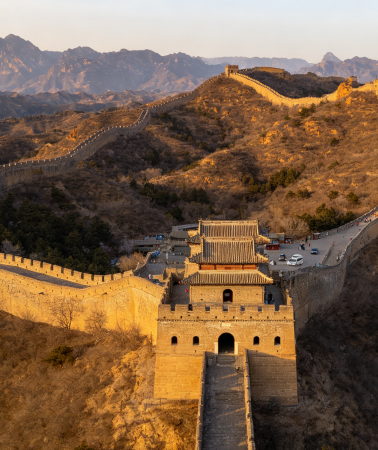
Yanmen Pass Section of the Great Wall,located 3,000m east of Baicaokou Village, Yanmenguan Township, Dai County, extending southwest from Xinguangwu, Shanyin County, and entering Dai County,starting at 3,000m east of Baicaokou Village, Yanmenguan Township, and ending at 1,500m northwest of Baicaokou Village.Dai County · 66.7 km from Wutai Mountain

Dailuoding
Dailuoding Temple is located east of the central temple cluster area in Taihuai Town, perched on the steep mid-mountain ridge of Dailuoding. Commonly known as the "Little Wutai Pilgrimage," Dailuoding Temple offers a condensed version of the sacred circuit. The five peaks of Wutai Mountain each enshrine a distinct statue of Manjushri Bodhisattva. Completing the full pilgrimage to all five summits to worship these statues is called the "Great Wutai Pilgrimage," which requires considerable physical stamina and ample time. At Dailuoding, replicas of all five Manjushri statues are gathered together, allowing visitors to complete their devotional circuit in one location—hence earning it the name "Little Wutai Pilgrimage." To reach Dailuoding, visitors can either walk or take the cable car. There are two walking routes available. Most visitors choose the staircase path called "Great Wisdom Path," which consists of 1,080 steps spanning approximately 500 meters. Devotees believe this path leads to wisdom, and those who walk it will gain intelligence and insight. Alternatively, there is a northern mountain trail that is longer but gentler in slope. After ascending the stone steps, you'll see the archway, stone lions, and mountain gate of Dailuoding. Along the central axis of Dailuoding Temple from west to east are the Heavenly King Hall, Sandalwood Hall (Standing Altar Hall), Five Manjushri Hall, and Mahavira Hall. Inside the Sandalwood Hall, you'll find a unique standing statue of Sakyamuni Buddha on the altar instead of the usual seated posture. The Five Manjushri Hall houses statues of five manifestations of Manjushri: Childlike Manjushri, Stainless Manjushri, Wisdom Manjushri, Intelligent Manjushri, and Lion's Roar Manjushri. From the summit of Dailuoding, you can gaze upon the surrounding scenery, including the four peaks of Wutai (South, West, North, and Central) as well as numerous temples in the central area of Taihuai Town, such as Tayuan Temple, Pusading Temple, Xiantong Temple, and Wanfo Pavilion (part of the Wutai Mountain Scenic Area). Just a few dozen meters below Dailuoding (along the Dazhi Road hiking path), you'll find Shangshancai Cave Temple, an extension of Shancai Cave Temple. Inside Shangshancai Cave lies a large burial ground called "Shituolin," where many monks who took vows at Wutai Mountain are laid to rest.Wutai County · 43.8 km from downtown

Shuxiang Temple
Shuxiang Temple was built in the early years of the Eastern Jin Dynasty. It was rebuilt many times in the Ming Dynasty, and it was called the Wutai Mountain "Five Zen Place" together with Xiantong Temple, Tayuan Temple, Bodhisattva, and Luohou Temple. Facing the Fanxian Mountain, it is named after the Manjushri Bodhisattva in the temple. The iconic building of Shuxiang Temple is the Manjusri Pavilion, and the existing temple was built by Zen Master Tielinguo in the Ming Dynasty. When visiting Shuxiang Temple, don't forget to visit the "Prajna Spring" at the gate. "Prajna Spring" means "the spring of wisdom" in Sanskrit. It is said that drinking the spring water here can help grow wisdom and get rid of folly. When the emperors of the Qing Dynasty came to Wutai Mountain to worship the Buddha on the mountain, they would also drink the spring water.Wutai County · 42.3 km from downtown

Hebian Folk Museum
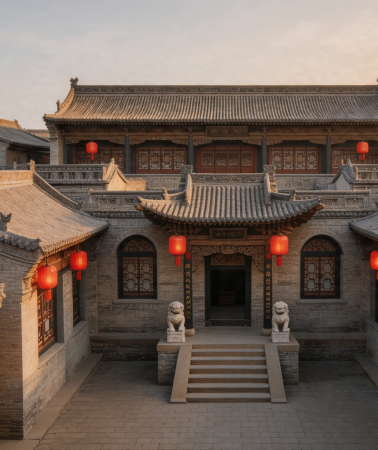
The Hebian Folk Museum was established based on the former residence of Yan Xishan. It is located in Hebian Village (formerly Wutai County), 22 kilometers northeast of Dingxiang County. The entire building complex faces east and west, with nearly 30 courtyards and more than 800 houses. The exhibits in the museum are mainly folk cultural relics, arranged in six major series of agriculture, food, housing, transportation, entertainment and faith, including folk dough modeling, embroidery, carving, food, faith, wedding customs and Lantern Festival folk customs street, with a total area of 1,980 square meters. The exhibits in these exhibition rooms are relatively independent and cross-related to each other, vividly reflecting the unique folk culture and colorful folk art of northern Shanxi in the late Qing Dynasty and the early Republic of China. Yan Xishan's former residence is divided into two courtyards, the upper and lower courtyards, and the east and west gardens in front and back. The buildings in the east garden are mainly traditional Chinese palace-style buildings, and the gate is an ancient archway. Passing through the rockery, you will reach the first courtyard, where the ground is made of pebbles and blue bricks in geometric patterns. Opposite is a tall two-story building. Across the corridor is the second courtyard, and the main hall of the second courtyard is three large rooms for the Yan family to discuss and hold meetings. The palace-style building in the third courtyard is tall and magnificent, and you can overlook the whole village from the building.Dingxiang · 60.2 km from Wutai Mountain

Pusa Ding (Bodhisattva Top)
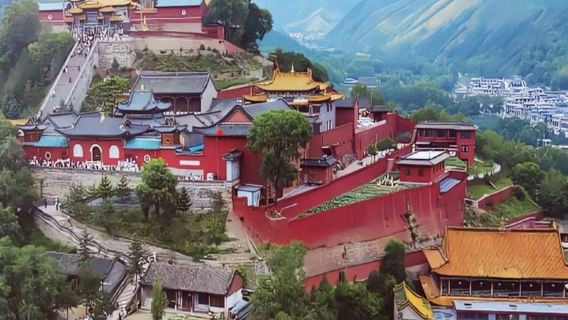
Pu Si Ding is located on Lingjiu Peak in Taihuai Town, Wutai Mountain. It is said to be the place where Manjusri Bodhisattva lives. It is commonly known as Zhenrongyuan or Da Wenshu Temple. The temple was founded during the reign of Emperor Xiaowen of the Northern Wei Dynasty (471-499). In the 17th year of Shunzhi in the Qing Dynasty (1660), Pu Si Ding was changed from a green temple to a yellow temple, and an abbot was sent from Beijing. During the reign of Emperor Kangxi of the Qing Dynasty, the temple was granted the "Fan-Han Superintendent Seal", and the archway in front of the mountain gate was built in the form of four pillars and seven floors.Wutai County · 43.2 km from downtown

Xiantong Temple
Xiantong Temple is located in Wutai Mountain, Xinzhou, Shanxi Province, China. It is one of the temples with a long history in Wutai Mountain. The temple attracts many tourists and believers with its profound Buddhist culture and unique architectural style. The architectural complex of Xiantong Temple includes the Main Hall, the Heavenly King Hall and the Sutra Library, which show the exquisite craftsmanship of ancient Chinese architecture. The Buddha statues in the temple are exquisitely carved, especially the statue of Sakyamuni Buddha in the Main Hall, which is awe-inspiring. Xiantong Temple is not only a center of religious activities, but also a good place to appreciate ancient architecture and art. The environment around the temple is quiet and suitable for meditation and feeling the atmosphere of Buddhist culture. Xiantong Temple is close to the central area of Wutai Mountain. Tourists can choose to take local tourist buses or taxis to get there. Xiantong Temple will have religious activities during Buddhist festivals. Tourists can choose to visit during these times to experience richer cultural activities. Xiantong Temple is not only a religious holy place, but also an ideal place to explore the history and architectural art of Chinese Buddhism.Wutai County · 43 km from downtown

Tayuan Temple
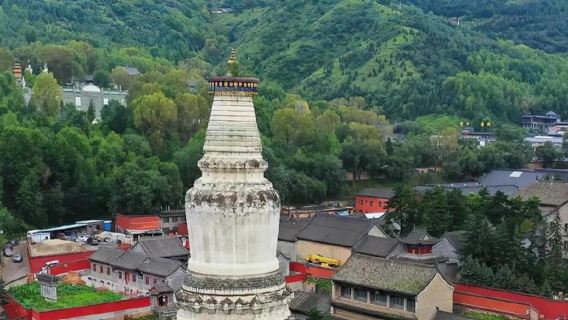
The Pagoda Temple is located south of Xiantong Temple, Taihuai Town, Mount Wutai. It got its name from the big white pagoda in the temple. Its full name is "Sakyamuni Dagoba." The big white pagoda is the main symbol of the temple. It looks magnificent against the backdrop of the temple's red walls and glazed tile roof. The temple is built around the big white pagoda, with structures arranged along a central axis, including a screen wall, memorial archway and gate.Wutai County · 42.9 km from downtown
Experiences you can't miss in Wutai Mountain
Featured Day tours in Wutai Mountain
View all Day tours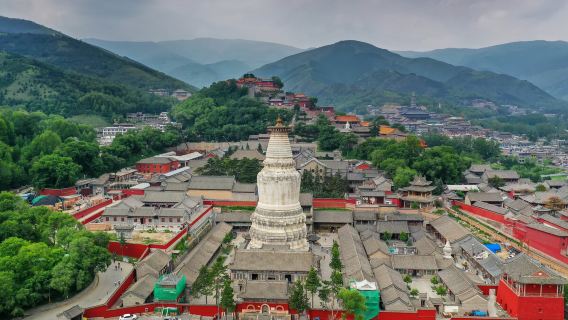
Free cancellation
Instant confirmation
From€240.95
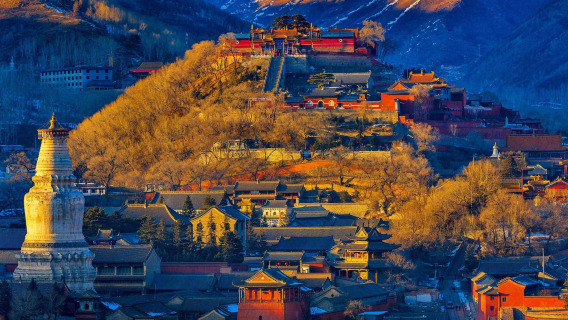
Free cancellation
Instant confirmation
Book now for tomorrow
From€182.54
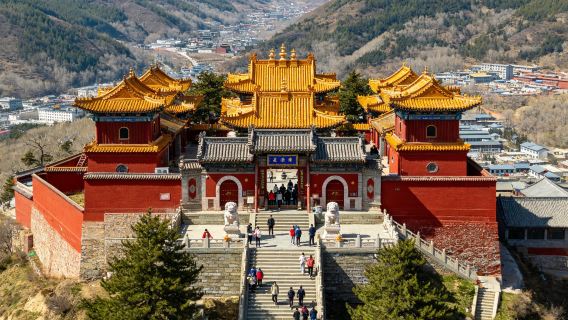
Free cancellation
Instant confirmation
Book now for tomorrow
From€60.24
5.0/5
· 1 reviewFree cancellation
Instant confirmation
Book now for tomorrow
55 travelers saved
From€562.22


More things to do
Private Tours in Wutai Mountain
View More Private Tours in Wutai Mountain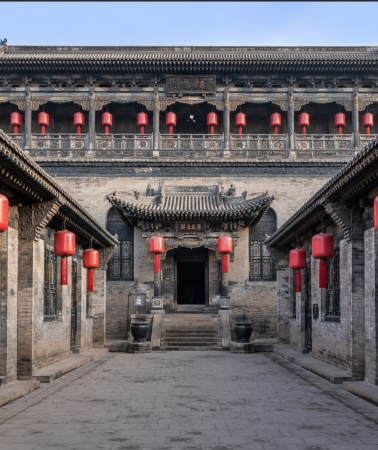


Free things to do in Wutai Mountain
Yanmen Pass Section of the Great Wall
Dai County · 66.7 km from Wutai Mountain
Tianya Mountain Scenic Area
Yuanping · 74.3 km from Wutai Mountain
Gongzhu Temple
Fanshi · 26.5 km from Wutai Mountain
Temple at Beitaiding Peak
Fanshi · 29.2 km from downtown
Yanshan Temple
Fanshi · 28.6 km from Wutai Mountain
Tianya Mountain Stone Drumsticks
Yuanping · 74.8 km from Wutai Mountain
Lingying Temple
Fanshi · 29.1 km from downtown
Guangji Temple (Dongmishi Street)
Wutai County · 40.5 km from Wutai Mountain
What travelers say about Wutai Mountain

LIOctober 6, 2026
5.0
It was excellent and breathtaking, especially Daxiantong Temple and Guanghua Temple, which were the most beautiful among the representative temples. It's said there are over 120 temples in the area; two days wasn't enough, so we could only visit some of the famous ones. Thankfully, we climbed 1080 steps to reach the top of Dailuo Peak, making the trip quite fulfilling.
Wu Tai Shan

Luks_usOctober 22, 2026
5.0
The Yanmenguan Pass is an absolute masterpiece of ancient defensive architecture and one of those places that leaves a colossal impression in person. Standing on the walls wedged between the rugged, steep slopes of the Hengshan Mountains, you immediately feel the immense weight of history. For centuries, this was the strategic and incredibly bloody border between imperial China and the nomadic tribes from the north.What captivates about Yanmenguan is the incredible combination of raw nature and monumental architecture. The fortifications, massive gates, and watchtowers look as if they literally grew right out of the rocks. Hiking along these sections of the Great Wall delivers a huge rush of adrenaline—the climbs can be steep, but the view of the wild, empty mountain ranges completely makes up for it. It lacks the heavy crowds and commercialism found near Beijing, allowing you to absorb the raw, almost cinematic atmosphere in peace.
Yanmenguan

包包军团August 3, 2026
5.0
Teacher Li Zi's explanations were amazing! Having listened to so many explanations of ancient architecture in Shanxi, Teacher Li Zi's is undoubtedly the best I've ever heard. He has a profound understanding of architectural history and many unique insights, which were truly impressive. He even prepared many props to help us understand the structure of the dougong (bracket set) and the load-bearing functions of different structures. Next time I come to Shanxi, I will definitely seek out Teacher Li Zi again.
Foguang Temple

封云起September 30, 2025
5.0
There is an observation deck on the internal road from the north gate to the south gate of Yanmen Pass, where you can see the panoramic view of Yanmen Pass from the south gate. The through bus from the north gate of the scenic area to Yanmen Pass Station passes by the observation deck when taking the internal road. Such a beautiful scenery can only be seen from the internal road. It's a pity that tourists can't see it. It is recommended that the scenic area study the tourist viewing route. The first picture I found on the Internet, I didn't have time to take a photo on the scenic bus
Yanmen Pass Section of the Great Wall

张家老飞侠September 20, 2025
5.0
I came to Mount Wutai with my family for the weekend, so I had to check in at Dailuoding. I had to experience the 1,080-step Dazhi Road. It took me about 40 to 50 minutes to walk with my children, stopping here and there. The scenery on the mountain was beautiful. I could make a wish to Manjushri Bodhisattva and hope that my wish would come true.
Dailuoding

大眼世界June 2, 2021
5.0
Shuxiang Temple is probably the largest temple dedicated to Manjushri Bodhisattva that I have seen in many temples across China. The entire temple is very large, and the houses inside are also very unique. Most importantly, here you can see many traces of history, which is very helpful for us to understand Buddhist culture and feel the history of this place.
Shuxiang Temple

Anonymous userJuly 29, 2026
5.0
Built on the site of Yan Xishan's former residence, the complex features numerous courtyards, ancient alleyways with blue bricks, and pavilions blending Chinese and Western architectural styles, creating a unique charm. Over fifty folk custom exhibition rooms quietly display old farm tools, dough figurines, and wedding items, each piece evoking the everyday life of northern Shanxi in bygone days. Wandering through the corridors and exploring hidden tunnels, one is enveloped in a profound sense of history. Free from crowds, it's perfect for a leisurely stroll, allowing you to appreciate the exquisite ancient architecture while learning about the folk culture of northern Shanxi. Architecture enthusiasts and history buffs alike will find it worthwhile. Only by taking the time to explore can one truly understand the turbulent years and local memories this courtyard embodies.
Hebian Folk Museum

seashanghaiAugust 23, 2023
4.0
The first of the Yellow Temples in Wutai Mountain, it is a must-visit temple when visiting Wutai Mountain. As a royal temple, there are many royal traces in it. The temple is located on the top of a small hill, and it is a bit high to climb up. It is recommended to drive to the back door to enter, and the front door to exit. Going downhill, you can go to Xiantong Temple, the first of the Green Temples.
Pusa Ding (Bodhisattva Top)

亮点liangpointAugust 28, 2022
5.0
Xiantong Temple is the largest and oldest temple among the many temples in Wutai Mountain. It is also one of the five major Zen temples in Wutai Mountain and one of the ten temples listed as cultural landscapes in the World Heritage List. It was first built during the Yongping period of Emperor Ming of the Eastern Han Dynasty (58-75), and most of the existing buildings are from the Ming and Qing Dynasties.
It was first built during the Yongping period of Emperor Ming of the Eastern Han Dynasty (58-75), and most of the existing buildings are from the Ming and Qing Dynasties.
Xiantong Temple

M43***18February 25, 2025
5.0
1. Historical and cultural value
Tayuan Temple has a long history and is one of the important temples in Mount Wutai. Its unique architectural style and profound cultural heritage make it a treasure for studying Chinese Buddhist architectural art. The Great White Pagoda (Sakyamuni Relic Pagoda) in the temple is a landmark building in Mount Wutai and has extremely high historical and artistic value.
2. Architectural style and layout
The architectural layout of Tayuan Temple is rigorous and layered, integrating a variety of architectural styles, such as the eaves of the Tang Dynasty and the carvings of the Song Dynasty, showing the diversity of ancient Chinese architectural art. The carving art in the temple is extremely exquisite, and each one reflects the superb skills of the craftsmen.
3. Tour experience
Tayuan Temple is not only a place for religious activities, but also a good place for tourists to experience Buddhist culture and appreciate ancient architectural art. Visitors can participate in the morning and evening classes of the temple, listen to the monks chanting, and feel the depth and tranquility of Buddhist culture. At the same time, the environment in the temple is beautiful, and the natural scenery of Mount Wutai and the temple architecture complement each other, providing tourists with an excellent tour experience.
Tayuan Temple


