Things to do in Wuwei
Explore top experiences
Top 10 attractions in Wuwei

Qilian Mountains Binggou River Scenic Area
Chairlong lake, at an altitude of 4,008 m, is a sacred natural alpine lake in the Qilian mountains with high elevation and vast area. The lake water, formed by melting snow from the mountains, displays emerald, azure and other colors as the light changes. Backed by the majestic Anigangar snow mountain, the landscape resembles a heavenly pool on earth. The round-trip hiking route is approximately 20 km, featuring wooden walkways and the Hero's slope viewing platform along the way. Successful summiters can receive a dedicated climbing certificate. The entire trail remains pristine with well-preserved natural features, accompanied by meadows, unique rocks and wild flowers, free from excessive commercial development. It's ideal for outdoor hiking enthusiasts and travelers seeking unspoiled natural scenery, offering pure and healing alpine views. The vast native alpine meadow bursts into bloom with purple iris flowers around the Dragon Boat Festival each year, creating a stunning visual spectacle across the wilderness. Gentle wooden boardwalks extend deep into the floral expanse, where cattle and sheep graze leisurely while wild marmots occasionally appear, all framed by distant rolling green mountains under expansive skies. During non-blooming seasons, the lush grassy fields serve as ideal spots for leisurely walks, picnics and aerial photography. With its flat terrain requiring no strenuous climbing, the attraction is easily accessible for seniors and children alike. At sunset when golden light blankets the grassland, the atmosphere becomes magical, making it a prime location for travel photography and camping throughout the year, with each season offering distinct pastoral landscapes. Vast stretches of pristine spruce and juniper forests form alpine woodlands, with wooden boardwalks winding along mountain streams. The area boasts exceptionally high negative oxygen ion levels, earning its reputation as a natural wellness oxygen bar. In spring and summer, lush greenery shades the paths accompanied by babbling brooks and constant birdsong. Come fall, the mountains transform into a breathtaking tapestry of red and gold hues. The interconnected canyons and forest sea provide continuous shade, shielding visitors from summer heat while offering soothing walks. The thriving ecosystem frequently rewards travelers with squirrel sightings and encounters with mountain birds. With gentle slopes suitable for all ages, it's an ideal destination for leisure, relaxation and rejuvenation. Nimela Grand Canyon, meaning "valley of the sun" in Tibetan, boasts unique wonders like "June glaciers with flowers blooming on ice." Glacial streams surge endlessly through the canyon, flanked by rugged rock formations where primitive spruce trees and alpine rhododendrons grow in harmony. A gentle wooden walkway runs the entire length, making for effortless exploration. Legend says this was the habitat of the three-legged golden crow, with dense forest vegetation and abundant negative oxygen ions. With an average summer temperature of just 18°C, it's a natural cool retreat. Afternoon mist often creates rainbows arching across the canyon, offering picturesque views at every step. Combining refreshing air, wilderness charm, and unique glacial landscapes, it's a hidden gem for light hiking. Princess Honghua ranch is the historical site where Princess Honghua of the Tang dynasty once herded livestock. On the vast and gentle alpine meadows, prayer flags flutter in the wind amidst scattered Tibetan tents and herds of yaks, immersing visitors in the rich Huari Tibetan culture. The location offers expansive views with a complete panorama of the Ani Gangkar snow mountain, complemented by cultural activities like Tibetan costume photography and butter-making workshops. Adjacent to the Malanhua grassland and the starting point of Tianchi hiking trails, it serves as an ideal resting spot during travels. At dusk, the setting sun bathes the entire meadow in warm golden hues, while the night sky remains unpolluted by light, providing excellent stargazing conditions. Blending millennia of history, grassland scenery and Tibetan folk customs, the site harmoniously combines cultural heritage with natural beauty. The Aniganggar snow mountain is the main peak of the eastern Qilian Mountains, standing at 4,874 m with perennial snow and crisscrossing glaciers, serving as the source of the entire Binggou River water system. The majestic mountain features alternating ice cliffs and bare rocks, shrouded in year-round mist, exuding a sacred and grand plateau aura. The hiking trail to Chairlonghai Tianchi offers a panoramic view of the snow-capped mountain, with golden sunlight covering the summit during sunrise and sunset, creating a breathtaking spectacle. Meltwater from the mountain flows down the valleys, forming streams that nourish grasslands, forests, and lakes, completing the ecological network of the attraction. As the iconic landmark of this hidden paradise, it presents unique charm in every season and is a must-visit destination for photography enthusiasts. The sea of azaleas is located on the mountainside of the Nimela Gorge, serving as a seasonal attraction in spring and summer. Every June, while remnants of ice still linger in the mountains, vast stretches of alpine azaleas bloom in competition, with clusters of pink-purple and white flowers dotting the evergreen pines and glacial rivers, creating a unique scene where ice and blossoms coexist. The gentle trail is easy to walk, allowing close-up appreciation of the floral branches and distant views of the gorge streams and faraway mountains. With few visitors, the area offers a tranquil escape from crowded hotspots. The floral sea, framed by glaciers and forests, provides rich compositional layers, making it ideal for capturing mountain portraits and stunning landscape shots. This hidden gem is a niche viewing spot, only accessible during the blooming season, making it highly time-sensitive. The great khan's camp is a 1:1 restoration of the Tuyuhun royal camp, faithfully replicating ancient nomadic tents, living utensils, and nomadic scenes to recreate the grassland lifestyle during Princess Honghua's marriage alliance period. The camp displays nomadic artifacts and historical exhibition panels, detailing the millennium-old stories of the Hexi Tuyuhun tribe and Princess Honghua, combining educational value with visual appeal. Located near Princess Honghua's ranch, it offers a convenient stop after exploring the grasslands, providing an immersive experience of ancient nomadic civilization. Unlike purely natural views, it adds profound cultural depth to your itinerary, making it ideal for family-friendly educational trips and history enthusiasts. The Shili gallery is a gentle mountain trail connecting Honghua ranch and Nimeila canyon, featuring minimal elevation changes. Along the way, it unfolds meadows, streams, and pristine pine forests, presenting ever-changing views like a flowing landscape painting. Multiple viewing platforms along the route unlock panoramic vistas of snow-capped mountains, flower fields, and forests with unobstructed sightlines. The entire trail is easy to walk with minimal physical exertion, perfect for leisurely strolls and spontaneous photo stops. Linking two core scenic areas, it serves both as a transit route and an independent attraction, offering richly layered landscapes and exceptional touring comfort throughout. Hidden deep in the Qilian forest lies Banmu Fangtang, a tranquil pond with a mirror-like surface that perfectly reflects the surrounding spruce trees, wildflowers, and distant mountains, blending the landscape and its reflection into a serene, healing scene. Encircled by dense woods that block out the outside noise, this secluded spot remains peaceful with few visitors, making it a hidden gem to escape the crowds. The forest trail passes by here, offering a brief stop to capture atmospheric photos of the water reflections, with soft and elegant lighting. Free from bustling crowds, it's ideal for solitary relaxation and quiet photography, allowing you to fully appreciate the quiet beauty of the forest. This underrated waterside spot is a must-visit highlight along the forest route.Tianzhu · >100 km from downtown


Tiantishan Grottoes
Tiantishan Grottoes, also known as the Great Buddha Temple, is located in Dengshan Village, Zhonglu Township, approx. 50 km south of the city. Established during the Northern Liang period of the Sixteen Kingdoms in the Eastern Jin Dynasty, it has a history of about 1,600 years. Tiantishan Mountain stands majestic and steep, towering into the clouds. With stone steps carved into the mountain, the rugged path winds upward like a suspended ladder, hence its name "Heavenly Ladder Mountain." Now the Tiantishan Grottoes only have 3 remaining tiers with 17 caves of varying sizes. The larger caves stand 30 m in residual height, 19 m in width, and 6 m in depth. Inside the caves, there is a 15 m tall and 10 m wide statue of Sakyamuni, flanked by six other statues including Manjusri, Samantabhadra, Virupaksha, Vaisravana, Kasyapa, and Ananda. These sculptures are vividly shaped, exuding solemn expressions and distinct appearances. The north and south walls of the cave are adorned with large murals. The south wall features a cloud-patterned azure dragon, with an elephant and sika deer in the middle section—the elephant carries glowing scriptures on its back—while the lower section depicts fierce tigers amid trees and flowers. The north wall's upper part shows another azure dragon, its middle section portrays a white horse and black tiger (with shining scriptures on the horse's back), and the lower part displays peony blossoms. The entire mural exhibits fresh brushwork, vibrant colors, majestic momentum, and lifelike imagery. The Tiantishan Grottoes are representative of China's early cave-temple complexes. In 2001, the Tiantishan Grottoes were designated as a fifth-batch national cultural heritage site. The attraction features the Tiantishan Villa and a grotto cultural relics exhibition hall.Wuwei · 41.6 km from downtown

Wuwei Confucius Temple
Wuwei Confucian Temple is located in the southeast of Wuwei City and is also the location of Wuwei City Museum. This Confucian Temple was built in the Ming Dynasty, with a large scale and a high status in history. Today, you can come here to worship the first sage Confucius, visit the quaint historical buildings and courtyards, and visit the many cultural relics collected in the museum. The Confucian Temple is very large, with a depth of nearly 200 meters and a width of more than 100 meters. After entering, you can walk and play. Generally, it is advisable to play for 1-2 hours. There are many ancient buildings in the temple, such as Chongsheng Temple, Zunjing Pavilion, Zhuangyuan Bridge, Shanmen, etc. There are also some towering ancient trees in the courtyard. The whole scenic area is antique and suitable for visiting and taking pictures. When visiting the Confucian Temple, you can pay attention to the many plaques hanging on the building, some of which are written in ancient Uighur and Western Xia scripts, which are very special. The inscriptions in the temple are also worth noting. Some of the inscriptions have all the jinshi who have ever been out of Wuwei. You can go and see. In addition to the buildings and courtyards, the Confucian Temple is also the location of the Wuwei City Museum. There are exhibitions about the history of Wuwei. You can visit here and learn about the heyday of ancient Liangzhou in history. The Zhuangyuan Bridge in the Confucian Temple is covered with red banners with various gold prayer lists, and many parents with students at home will come here to offer incense and pray for blessings.Wuwei · 608m from downtown

Leitai Han Culture Museum
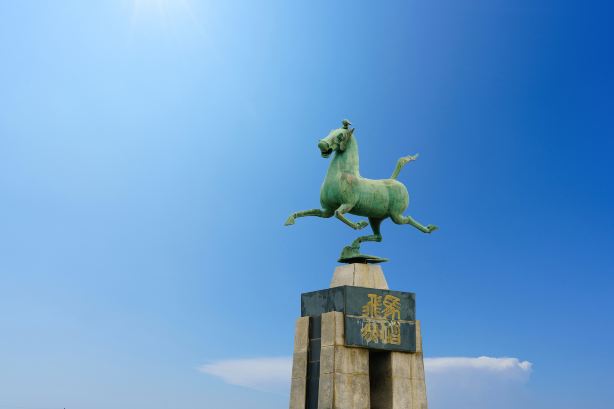
Leitai Han Culture Museum is a national AAAA-level tourist Attraction located in the urban area of Wuwei City. It is also the site where the Chinese tourism symbol "Horse Stepping on Flying Swallow" was unearthed. It is called a rich "underground museum" by historians. Among the unearthed cultural relics, the most prominent ones are the 99 exquisitely cast bronze chariot and horse ceremonial figurines and a bronze galloping horse with high artistic value. The Attraction has a beautiful environment and profound cultural heritage. The Taoist culture, Han culture and horse culture display complement each other and are unique in charm. Witness the magical "Horse Stepping on Flying Swallow" and the "Millennium Army" with golden weapons and iron horses, as well as the mysterious wonders of Leitai.Wuwei · 1.5 km from downtown

Liangzhou Baita Temple
Liangzhou Baita Temple was built during the Yuan Dynasty and has a history of over 770 years. In 1247, Köden, the Prince of Xiliang and grandson of Genghis Khan, held the historically significant "Liangzhou Alliance" with Sakya Pandita Kunga Gyaltsen (abbreviated as Sapan), the religious leader of the Sakya school of Xizang, at Liangzhou Baita Temple. During this event, the "Letter from Sakya Pandita to the Tibetans" was issued. From then on, the central government of the Yuan Dynasty officially implemented administrative jurisdiction over Xizang, making Liangzhou Baita Temple a historical witness to Xizang's incorporation under the central government's administration. Liangzhou Baita Temple is now a national key cultural relics protection unit, a national education base for ethnic unity and progress, a national 4A-level tourist attraction, and one of the first education bases in Gansu Province for forging a strong sense of community for the Chinese nation. The main views of the attraction include the bronze statue of Sakya Pandita, the restored Sakya Pagoda, the pagoda forest, the ruins of Sakya Pandita's relic pagoda, and the Liangzhou Alliance Memorial Hall.Wuwei · 20.2 km from downtown

Wushao Mountain Range
Wushao Mountain Range is a high-altitude natural landscape with distinct regional characteristics. The mountain range stretches about 17 km from east to west, with the ridge altitude mostly around 3,000 m, and the main peak reaching an altitude of 3,562 m. The undulating mountains form a natural barrier, with a majestic and open terrain. Standing on the ridge and looking into the distance, you can see layers of mountains and a vast expanse of sky and earth, feeling the boundless and magnificent natural atmosphere of the high-altitude regions in the Northwest. The east of the ridge belongs to the Longzhong Plateau, and after crossing the mountain pass, you gradually enter the Hexi Corridor. With changes in terrain and climatic conditions, this is also an important transition area from semi-arid to arid regions, and the natural boundary between the monsoon and non-monsoon zones also roughly follows the mountain ridge. The landforms, vegetation, and air humidity on both sides of the mountain range present different characteristics with changes in altitude and region, forming a unique and rich natural landscape here.Tianzhu · 35.3 km from downtown

Wuwei Kumarajiva Temple
Wuwei Kumarajiva Temple was first built during the Later Liang period. Legend has it that it was built by Lü Guang, the founding emperor of the Later Liang, to accommodate the eminent monk Kumarajiva from the Western Regions. It has a history of over 1,600 years and has become an important witness to Wuwei's long history and Silk Road culture. Stepping into the temple, the hustle and bustle of the city seem to fade away, and the simple, tranquil environment naturally encourages visitors to slow their pace. The ancient buildings within the temple are scattered about, featuring solemn and elegant traditional architectural styles. The pagoda's brick eaves are layered, appearing even more ancient under the sunlight. Standing beneath the pagoda and looking up, you can feel the historical weight conveyed by the architectural lines. Arriving at the front of the hall, you can see pilgrims coming and going amidst curling incense smoke, creating a sharp contrast between the quiet temple and the city streets.Wuwei · 482m from downtown

Leitai Park - Han Tomb
Leitai Park - Han Tombis an important site for understanding the Han Dynasty history and Silk Road culture of Wuwei. In 1969, while digging a tunnel under Leitai, locals accidentally discovered a large brick-chamber tomb from the late Eastern Han Dynasty, bringing the Han tomb that had been sleeping underground for over 1,800 years back to light. The bronze galloping horse unearthed from the tomb has a unique design; the horse has three hooves in the air, with one hoof stepping on a flying bird looking back, and its overall posture is vigorous and unrestrained, full of a sense of speed and power. Walking down the tomb passage into the underground, you can experience the layout and craftsmanship of Han Dynasty tomb architecture up close. The tomb chamber consists of a front chamber, a central chamber, a rear chamber, and left and right side chambers, with a complete structure and distinct spatial layers. Particularly noteworthy is the arched tomb ceiling; the bricks used for construction were not laid with mortar but relied on the interlocking of the bricks themselves to form a stable structure, reflecting the superb architectural wisdom of Han Dynasty craftsmen.Wuwei · 1.3 km from downtown

Maya Snow Mountain
It is called Anigazhuo in Tibetan and is located in the west of Tianzhu County, 35 kilometers away from Tianzhu County. It runs from northwest to southeast. It is about 45 kilometers long from east to west and about 10 kilometers wide from north to south. Mount Sumeru, 4447 meters above sea level. Maya Snow Mountain is named after the teeth that resemble a horse and are covered with snow all year round. At the foot of Maya Snow Mountain, there is Yinyin grassland stretching for more than 10 kilometers. Every year on June 13 of the lunar calendar, local herdsmen will hold a grand ceremony of offering sacrifices to Tianchi in Maya Snow Mountain. The Tianchi Lake is tightly embraced by cliffs and cliffs. It is about 0.5 square kilometers in size and looks like a crescent moon. The water of the pool is clear and blue, and the four seasons are as usual. There is a huge rock standing on the top of the Maya Snow Mountain, with a crack in the middle, as if a sharp blade was split. According to legend, King Gesar used this stone to test his sword when he went on an expedition, hence the name "Sword Test Stone". Every July and August, Maya Snow Mountain has a unique natural phenomenon. If there is a loud noise or roar at the top of the mountain, there will be thunder and thunder, dense clouds and mist, and heavy rain pouring down in moments, which is hard to prevent. . After a short while, the fog dissipated, and the snow-capped snow peaks reappeared in front of the eyes against the green grassland. At about 6 in the morning, when you climb the mountainside of the tent mountain in Wushaoling, you can clearly see the Ma Ya Zhaohui. It is generally divided into three stages: "morning light, red sun bathing peak, sun dew and gold". In less than a minute or two, it slowly turned into light red, golden yellow, and milky white, and its landscape was very beautiful.Tianzhu · 32.8 km from downtown

Wuwei Museum
Wuwei Museum was established in September 1982. It is a department-level institution under the management of Wuwei Municipal Bureau of Culture, Sports and Tourism. It is now located in Wuwei Confucian Temple, a national key cultural relic protection unit. The museum has more than 46,000 cultural relics of various types, including jade, bone, pottery, wood, bronze, iron, gold and silver, porcelain, silk, calligraphy and painting, currency, furniture, ancient books, Chinese and Tibetan classics, etc. The collection of Qijia culture artifacts, Han and Tang cultural relics, Xixia cultural relics, Buddhist cultural relics, Qing Dynasty water and land paintings, Chinese and Tibetan classics, etc. all have distinct local characteristics and strong national style, providing detailed information for the study of ancient Liangzhou's politics, economy, military, culture, and ethnic relations.Wuwei · 2 km from downtown
More things to do
Free things to do in Wuwei
Wushao Mountain Range
Tianzhu · 35.3 km from downtownWuwei Kumarajiva Temple
Wuwei · 482m from downtownMaya Snow Mountain
Tianzhu · 32.8 km from downtownWuwei Museum
Wuwei · 2 km from downtown
Xixia Museum of Wuwei
Wuwei · 761m from downtown
Haicang Temple
Wuwei · 3.4 km from downtown
Nancheng Gate Tower
Wuwei · 577m from downtown
Desert Sculpture Park
Minqin · 29.5 km from downtown
Hongyashan Reservoir
Minqin · 31.9 km from downtown
Gulang Battle Memorial Hall
Gulang · 1.7 km from downtown
What travelers say about Wuwei

姚思圆October 7, 2026
5.0
I went during the National Day Golden Week holiday and stepped into the autumn of the Qilian Mountains. The golden grasslands, the melting snow from the glaciers, and the dense forests were breathtaking. I took photos every step of the way. The only regret was not being able to climb to Tianchi Lake. I will definitely come back next time.
Qilian Mountains Binggou River Scenic Area

慢步地球October 18, 2026
4.0
The scenery at Tianti Mountain is delightful, with the Huangyang Reservoir's shimmering blue waters sparkling in the sunset. The view of the Buddha statue from the sky bridge is excellent; the setting sun casts its shadow on the Buddha, creating unique photographic opportunities. The overall tour route is short, making it easy for seniors and children to hike.
Tiantishan Grottoes

柚子胡椒October 22, 2026
4.0
Revered as the crown jewel of Longyou Confucian temples, this is the largest and best-preserved Confucian temple in Northwest China. Construction began during the Zhengtong era of the Ming Dynasty, nearly 600 years ago. Its unique layout, combining temple and academy (Wenchang Palace + Confucius Temple + Confucian Academy), is quite distinctive.
The biggest highlight is the dozens of ancient plaques in the Guiji Hall, spanning from the Kangxi era of the Qing Dynasty to the Republic of China period. The calligraphy is rich and varied, with two particularly noteworthy plaques: "The City Never Sleeps" and "Gathering Talent and Promoting Discipline," both renowned in China, showcasing exceptional calligraphic quality and well worth close examination. The courtyard is filled with ancient cypress trees, red walls, and gray tiles, offering a tranquil and serene atmosphere, rarely crowded, making it perfect for taking photos.
Located in the city center, not far from the Leitai Han Tomb, it's a convenient stop along the way, ideal for tourists interested in history, calligraphy, and ancient architecture. The Pan Pond and Zhuangyuan Bridge are worth a stroll, symbolizing success in the imperial examinations.
Wuwei Confucius Temple

Anonymous userAugust 26, 2026
5.0
The Leitai Han Tomb, located in Wuwei, Gansu Province, is the site where the iconic "Flying Horse of Gansu" (bronze galloping horse) was unearthed, a symbol of Chinese tourism. Above ground lies the Leitai Temple, a Taoist holy site from the Ming and Qing dynasties, while underground lies a Han Dynasty tomb dating back nearly two thousand years. The main attractions are threefold: First, the national treasure, the bronze galloping horse (Flying Horse of Gansu), currently housed in the Gansu Provincial Museum. Second, the bronze chariot and horse procession, composed of 99 bronze figurines (including warriors, servants, chariots, and horses), is the largest Eastern Han Dynasty bronze chariot and horse procession discovered to date, recreating the grandeur of the tomb's occupant, "Zhang Jun" (who held the official position of "Governor of Zhangye"). Third, the ancient Han Dynasty well, where coins thrown in appear magnified due to perspective and optical principles. The tomb is low and cramped, requiring visitors to crouch in many places.
Leitai Han Culture Museum

歪YfOctober 20, 2026
5.0
This is a good place to learn about the history of the Liangzhou Alliance, where Sakya Pandita and Godan made contributions to the sovereignty of Tibet. The park is very large and clearly well-designed, creating a peaceful atmosphere. Be sure to visit the ancient pagoda at the very back to experience the historical charm. The memorial hall, which recreates historical events, is also worth a visit. The withered lotus flowers in the lotus pond also complement the scene. The cultural and creative products are a bit lacking.
Liangzhou Baita Temple

JeanwestranJune 29, 2026
4.0
I stopped here while driving by. The hike was fairly easy, with wooden boardwalks throughout. The last platform had a sign indicating it was where three plateaus met. However, the snow on the opposite mountain had already melted at this time of year. The scenic area is great because it's free, so stopping by was no problem at all; you can finish in about an hour if you're quick. Later, while driving, I also saw several sections of the Great Wall, supposedly ruins of the Ming Dynasty Great Wall. Those interested can check them out.
Wushao Mountain Range

Bolton ChenSeptember 20, 2026
5.0
This trip to Kumarajiva Temple was truly worthwhile. This ancient temple, over 1600 years old, is where the great Buddhist translator Kumarajiva resided and propagated Buddhism for 17 years. The Kumarajiva Pagoda within the temple houses his tongue relic. The octagonal, twelve-story pagoda has miraculously withstood major earthquakes. The main hall is magnificent, and the scripture repository and memorial hall exude a thousand years of Buddhist heritage. Standing beneath the pagoda, one can almost hear the camel bells of the Silk Road and the chanting of translators. Its profound cultural significance makes it well worth a tranquil visit. Parking is also convenient, and there's even a small courtyard that's free.
Wuwei Kumarajiva Temple

M29***12July 17, 2026
4.0
Leitai Han Tomb is a large brick chamber tomb from the late Eastern Han Dynasty, located in Wuwei City, Gansu Province. It is world-renowned for the discovery of the national treasure-level cultural relic "Flying Horse of Gansu" (bronze galloping horse), and is now a national key cultural relics protection unit.
Leitai Park - Han Tomb

💗任槑槑💗August 13, 2026
4.0
Taking kids to see the Maya Snow Mountain? A distant view is enough!
The jagged, snow-capped mountain stands majestically before you, a truly breathtaking sight. No need for a long hike; simply park along the roadside to admire the view, making it incredibly family-friendly.
Climbing to the summit would be quite challenging, so enjoying the scenery from afar with children is perfect. The journey follows the Hexi Corridor, with snow-capped mountains paired with grasslands, creating a rich and varied landscape. Stop along the way to take photos and experience the unique grandeur of Northwest China.
Maya Snow Mountain

盛夏的清凉July 23, 2025
4.0
武威市博物馆是近年新建的,里面展出了反映武威各时期历史的文物。当地气候比较干燥,有些木制文物保存很好,如木佣,木马等。武威历史悠久,汉朝时就是著名的边关重镇,这些展品对了解武威历史很有意义。
Wuwei Museum


