Things to do in Xingan
Explore top experiences
Top 10 attractions in Xingan

Dayangzhou Shang Dynasty Bronzes Museum
The Shang Dynasty tomb in Dayangzhou was excavated in September 1989, and a total of 475 bronze artifacts, 754 jade artifacts, and 139 pottery artifacts were unearthed, of which five cultural relics were designated as national treasures. The number of bronze artifacts unearthed from the tomb, the beauty of the patterns, the exquisiteness of the casting, and the ingenuity of the shapes shocked both China and foreign countries, so it was hailed as the "Jiangnan Bronze Kingdom". In order to better display and promote bronze culture, the local government built the Dayangzhou Shang Dynasty Bronze Museum, covering an area of 53,000 square meters, to the west of the Shang Dynasty Tomb Site in 2003. So far, it has received 420,000 visitors. In 2017, Xingan County focused on building the Dayangzhou Bronze Cultural Tourism Industry Cluster, completed the overall planning of the Dayangzhou Bronze Cultural Industry Project with high standards, built an exhibition hall on the Shang Dynasty Tomb Site, and integrated it with the Shang Dynasty Bronze Museum. The newly designed exhibition area of this museum is more than 2,000 square meters, with 150 exhibits of various types. The exhibition hall is divided into four parts, namely, the site of the Niutou City of Hufang Capital, the magnificent picture of the kingdom, the rare treasures of the creation of nature, and the historical echoes of Gandi's character. The exhibition hall makes full use of modern expression techniques such as LCD display system, dual-channel projection system, touch system, model sculpture system, etc., to revive history and travel through time and space, meeting the needs of tourists of various cultural levels and different age structures.Xingan · 20.7 km from downtown


Orange Isle Scenic Area
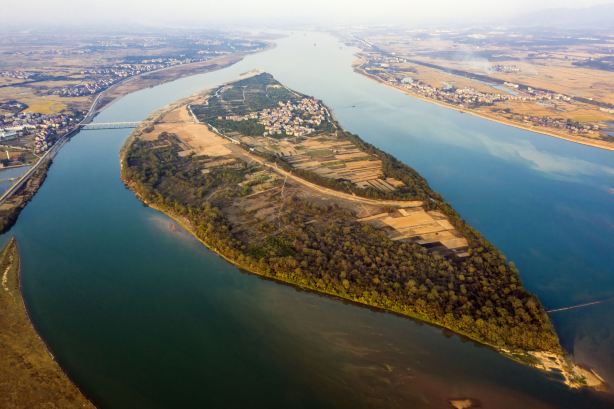
Orange Isle Scenic Area is a narrow sandbar lying across the heart of the Xiang River in Changsha, stretching approx. five km. It faces Yuelu Mountain to the west and borders Changsha's old city to the east, surrounded by water on all sides. Named after the abundant orange trees planted on the isle, it was historically called Shuiluzhou. Formed by river alluvium, this sandbar has existed for over a millennium, where the "River and sky in evening snow" scenery was once among the Eight Views of Xiaoxiang. In 1925, the poem "Spring in a pleasure garden - Changsha" was composed here, with its iconic line "Alone I stand in the biting fall, watching the Xiang River flow north past Orange Isle's head," which made this riverine landmark widely renowned. The highlights of the visit are concentrated at the islet's head: A granite art sculpture over 30 m tall, modeled after the 1925 youth image, stands facing the river as Changsha's highly recognizable landmark. Nearby, the Questioning Heaven Platform extends toward the river center, where leaning on the railing reveals the mighty Xiang River flowing northward, with Yuelu Mountain and the city skylines on both banks facing each other across the water. The Songju Pavilion, white marble poetry stele, and the 200-year-old ancient phoenix tree at the islet head are all in this area. Heading north from the islet head, a hundred-acre orange orchard bears golden fruits in fall, while bamboo groves, peach orchards, plum gardens, and osmanthus groves take turns showcasing seasonal flora. The historic Zhuzhang Ferry (where Zhu Xi and Zhang Shi once crossed the Xiang River for lectures) and the Huxiang Culture Exhibition Hall are scattered along the way. At the islet's tail, the reconstructed Jiangshen Temple and Gongji Tower area was precisely where ancients admired the "River and sky in evening snow" scenery. The island is long and narrow, making round-trip walks quite tiring. A sightseeing train is available for transportation, with multiple stops along the way for hopping on and off. Travelers with limited time are advised to head straight to the island's tip to see the sculpture and river views, then stroll leisurely along the riverside path. At dusk, watching the sunset over the Xiang River and seeing the lights gradually illuminate both shores from the island's tip is especially worth setting aside time for.China · Changsha

Wangxian Valley
Vagoo is located in Wangxian Township, Guangxin District, Shangrao City, Jiangxi Province. It is a national AAAA-level scenic spot. It belongs to the Lingshan Mountains, just at the foot of the seventy-two peaks of Lingshan. The valley is remote and quiet, the stream is jubilant, and the pebbles are flying waterfalls. There are rammed earth walls, bluestone roads, yellow walls and black tiles, and original village houses unique to Jiangxi folk houses; there are also pines and bamboo seas and the unique Ganjia market. In the Vagoo, you can enjoy the folk customs, landscape and humanities of the Gan family, experience the long farming culture of our country, taste delicious food, and live a slow life for a few days. It is a good place for leisure, vacation, and parent-child study.China · Shangrao

Hunan Museum
Hunan Museum has a rich collection of cultural relics, especially of those from the Mawangdui Han Dynasty Tombs. The Mawangdui Han Dynasty Tombs Exhibition is a permanent exhibit at Hunan Museum. It features thin-as-cicada-wing plain yarn garments, undamaged printed cotton gowns, all kinds of exquisite embroidery, brightly painted lacquer wares, delicate and detailed paintings, and so on.China · Changsha

Tengwang Pavilion Tourist Area
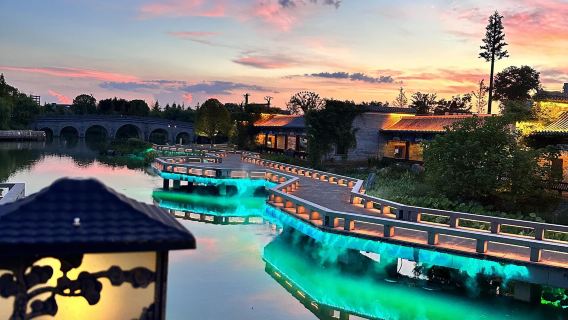
Tengwang Pavilion Tourist Area is located on the east bank of the Gan River in Nanchang, with the riverside Tengwang Pavilion as its centerpiece. Originally built in the fourth year of the Yonghui era of the Tang Dynasty by Li Yuanying, Prince of Teng and son of Emperor Gaozu of Tang, it gained eternal fame through Wang Bo's "Preface to Tengwang Pavilion." Alongside the Yellow Crane Tower and Yueyang Tower, it is hailed as one of the "Three Great Towers of Jiangnan." Historically destroyed and rebuilt nearly thirty times, the current structure is a Song-style replica completed in 1989, designed based on Liang Sicheng's reconstruction sketches. With its green tiles and layered eaves, it remains a landmark of Nanchang to this day. The main pavilion follows a "three visible, seven concealed" layout: appearing as a three-story structure with encircling corridors from the outside, while actually containing seven interior floors—nine levels including the two-tiered base symbolizing ancient city walls. Turquoise-roofed galleries extend north and south from the base's flanks, connecting at their ends to auxiliary pavilions named "River-taming" and "Greenery-embracing," forming a mountain-shaped silhouette with the main tower. Below, an artificial lake and the nine-bend wind-and-rain bridge add classical garden charm to the majestic architecture. Each floor of the pavilion offers something remarkable. The white marble relief "A timely wind delivers Tengwang Pavilion" in the first-floor preface hall depicts the legend of Wang Bo riding the wind to compose his famous preface. The second-floor mezzanine features the long scroll painting "Gallery of eminent figures," gathering Jiangxi's historical luminaries like Tao Yuanming, Ouyang Xiu, Wang Anshi, and Tang Xianzu in one artwork. The third-floor mural "Linchuan dream" recreates Tang Xianzu's staging of "The peony pavilion" here. The fourth-floor "Land of wonders" painting compresses Jiangxi's iconic landscapes—Mount Lu, Sanqing Mountain, Dragon-Tiger Mountain, and Poyang Lake—into a single masterpiece. The fifth floor is the highlight for panoramic views: its central hall displays a bronze tablet inscribed with Su Dongpo's calligraphic version of "Preface to Tengwang Pavilion," while the east hall exhibits a scale model of the pavilion. Strolling the veranda offers sweeping views of the Gan River and modern skyline across the water. The top floor bears the plaque "Ninth heaven," with its west hall housing an antique-style theater flanked by replica ancient instruments like chime bells and stone chimes. Above, spiral-arranged bracket sets adorn the caisson ceiling, and between the double eaves hangs Su Dongpo's gilded "Tengwang Pavilion" plaque. After descending from the main pavilion, take time to explore the garden area: the square in front of the pavilion, the grand Song-style archway, the antique street lined with calligraphy and antique shops, and the small Suzhou-style garden Fuchang Garden with its lake reflections and bridge views—perfect for slowing your pace. To experience the poetic scene of "a solitary wild duck flying with the sunset glow, while the autumn water blends with the vast sky," an evening ascent to the pavilion is ideal. The fifth-floor corridor offers an expansive view, making it a prime spot to admire the sunset over the Gan River.China · Nanchang

Wuyishan National Park
Wuyishan National Park is located in the northern section of the Wuyishan mountain range in northwestern Fujian, stretching across the border area between Fujian and Jiangxi provinces. It is one of China's first established national parks, and Wuyishan itself was inscribed as a UNESCO World Heritage Site for both culture and nature as early as 1999. The park was formed by integrating the former Wuyishan National Nature Reserve and Wuyishan Scenic Area: the Tongmu area in the north focuses on ecological conservation and scientific research, preserving a rare intact mid-subtropical forest ecosystem at this latitude. The main peak of the Wuyishan range, Mount Huanggang, is also located here, and this core area does not offer regular tourism activities. Sightseeing activities are concentrated in the scenic areas along both banks of the Nine-bend Stream, namely the four major sections: Tianyou Peak to Taoyuan Cave, Nine-bend Stream to Wuyi Palace, One-line Sky to Tiger Roaring Rock, and Dahongpao to Water Curtain Cave. The attractions in the scenic area are relatively scattered with considerable distance between them. A leisurely visit typically requires two to three days. If you only have one day, start by ascending Tianyou Peak for a panoramic view of the emerald waters and crimson mountains along the Nine-bend Stream, then take a bamboo raft downstream from Xingcun Wharf. Along the way, you'll pass landmarks like Jade Maiden Peak, Great King Peak, cliff inscriptions, and suspended boat coffins. The rafting journey ends at Wuyi Palace, making it an ideal classic route. Tea enthusiasts may prefer spending time on the leisurely Rock Bone Floral Trail between Dahongpao and Water Curtain Cave. This gentle path connects core Wuyi rock tea production areas like Liuxiangjian and Huiyuankeng, offering a uniquely fragrant experience. With two days, you can cover all four major sections. For more time, consider visiting the ancient tea merchants' residences in Xiamei Village, the starting point of the ancient Tea Horse Road, or exploring the ruins of the Minyue King's City near Chengcun Village—the latter also being part of Wuyishan's world heritage site. Bamboo rafting is very popular, so please make arrangements in advance during peak season. To get close to the ecological heart of the park, you can take the Wuyishan National Park No. 1 scenic route. Places like Moon Bay and Qinglong Waterfall are suitable for self-drive or private charter. As for food, street snacks like flat meat dumplings and Vietnamese noodles are common, while Langu smoked goose and local dishes cooked with alpine bamboo shoots and mushrooms are also worth trying.China · Wuyishan

Lushan National Park
Mount Lu is known as one of China's “four great summer retreats,” together with Jigongshan, Beidaihe, and Mount Mogan. Mountain peaks, waterfalls, unique views of “cloud oceans,” and garden architecture all lend Mount Lu its rich charm. The mountain climate allows visitors to feel the cool and comfortable feel of spring even in the summertime, and has secured Mount Lu's position as a famous scenic area and historic vacation spot and retreat.China · Lushan City

Sanqingshan Mount Scenic Area
Located in the northeastern part of Shangrao City, Sanqingshan Scenic Area is a national-level geological park and a world natural heritage. Sanqingshan Scenic Area is a famous Taoist mountain. It is known as the “Little Huangshan Mountain” and includes three peaks: Yujing, Yuxu and Yuhua. Their shapes resemble three Taoist gods, Yuqing, Shangqing and Taiqing, sitting on top of the mountain. In Sanqingshan, you can watch the beautiful sunrise amid the sea of clouds, admire the peculiar stones in the mountains, and walk the high-altitude plank path. The scenery is even more beautiful when the azaleas are in bloom during May and June.China · Yushan

Taoyangli Historical and Cultural District
Taoyangli Historical and Cultural District is located in the heart of Jingdezhen's old town, a historic neighborhood that grew around the ruins of the imperial kiln from the Ming and Qing dynasties. The old saying "Taoyang thirteen li, with tens of thousands of households" refers to this area. The imperial porcelain used by the royal families of the Ming and Qing dynasties was exclusively produced by the imperial kiln here, while rejected tribute items were shattered and buried on-site. The layers of underground porcelain fragments share the same origin as the collections in the Palace Museum, making this place often referred to as the key to understanding the porcelain capital. The core attractions of the district are concentrated around the ruins of the Taoyangli Historical and Cultural District and the imperial kiln museum. The ruins of the Taoyangli Historical and Cultural District have now been transformed into an archaeological site park, preserving relics such as kilns and workshops. The Longzhu pavilion, perched atop Zhushan hill, has been the iconic structure of the imperial kiln since the Ming dynasty and later became the symbol of Jingdezhen. The Zhushan hill beneath it was formed by layers of discarded porcelain fragments from imperial kilns throughout history. Nearby, the imperial kiln museum draws inspiration from traditional egg-shaped wood-fired kilns, featuring multiple brick arches arranged in a staggered layout. Many exhibits in the museum are restored from porcelain fragments unearthed at the site, including the Ming dynasty blue-and-white dragon jar—a signature exhibit pieced together from tons of discarded dragon jar fragments. Adjacent to the museum, the Xu family kiln, an old wood-fired kiln, still operates periodic firings. During kiln openings, the gate is wide open, allowing visitors to watch artisans retrieve freshly fired porcelain from saggars. The district also features winding alleyways lined with kiln-brick residences, guild halls, porcelain shops, and remnants of modern ceramic industry. The restored South goods street and Red shop street now host old teahouses, taverns, music bars, and craft workshops where you can observe traditional processes like clay throwing and porcelain painting, with some workshops offering hands-on experiences. It's recommended to set aside half a day for the visit—start with the kiln site and museum, then meander through the streets around Zhongshan north road and Longgang lane, where many historic courtyard houses hidden in deep alleys await patient discovery.China · Jingdezhen

Wunvzhou Resort
The resort is centered on the legend of the Wu girl flying to the sky, featuring the new Huizhou architectural style, and is a comprehensive holiday destination integrating sightseeing, leisure and vacation, parent-child entertainment, conferences and exhibitions. The park covers seven business types including "Encounter·Wuyuan", Huiyi culture, intangible cultural heritage experience, night tour experience, leisure and vacation, gourmet shopping, conference and exhibition, etc. , meeting, leisure and all-round travel needs......China · Wuyuan
Experiences you can't miss in Xingan
Featured Day tours in Xingan
View all Day tours
Free things to do in Xingan
Dayangzhou Shang Dynasty Bronzes Museum
Xingan · 20.7 km from downtownOrange Isle Scenic Area
China · ChangshaHunan Museum
China · Changsha
Mount Yuelu
China · Changsha
Jingdezhen China Ceramics Museum
China · Jingdezhen
Jiangxi Provincial Museum
China · Nanchang
Li Zijian Art Museum
China · Changsha
WuYi Plaza
China · Changsha
Ceramic Art Avenue Taoxichuan
China · Jingdezhen
Hunan Botanical Garden
China · Changsha
What travelers say about Xingan

M53***24March 25, 2025
5.0
I have always wanted to visit the Shang Dynasty Bronze Museum in Xingan Oceania. I visited it a few years ago, but was unable to see it because it was closed. I went to visit it again last week with my friends. The exquisite exhibits in the museum exceeded my expectations and rewrote the historical view of Jiangnan civilization. I really regretted not seeing it earlier. It is worth a visit and highly recommended!
Dayangzhou Shang Dynasty Bronzes Museum

YazonDinAltOctober 23, 2026
4.0
Orange Island is a bit of a mixed experience, and I'm honestly not entirely sure whether I'd consider it a must-visit in Changsha.It's a large, green, and pleasant park, with beautiful riverside views and plenty of space for walking. If you enjoy places with historical significance or simply want to experience a different side of the city, it's definitely worth considering.Most visitors seem to take the sightseeing train to the southern end of the island, where the famous Mao Zedong statue is located. That's also where you'll find plenty of people taking photos, so don't expect a particularly quiet experience.The main downside is that visiting the island takes quite a bit of time, especially if you want to explore it properly. And while it's certainly a nice place, I'm not sure the experience justifies spending several hours here if you have a limited amount of time in Changsha and other places you'd like to see.On the other hand, if you're simply looking for a relaxing walk through a green park, with opportunities to stop by the river and enjoy the scenery, it's a lovely option.Overall, I'd say it's worth visiting if you have some extra time or are particularly interested in Chinese history. Otherwise, I wouldn't necessarily put it at the very top of your Changsha itinerary.
Orange Isle Scenic Area

曾弈然October 23, 2026
4.0
It's worth a visit. Although it's a small, undeveloped scenic area, the natural scenery is still beautiful and perfect for taking photos. The lights are quite lovely at night. The area is large, and going up and down the mountain requires some physical exertion.
Wangxian Valley

尘尘October 23, 2026
5.0
The Hunan Provincial Museum boasts a magnificent collection of artifacts, connecting the Hunan civilization from Shang and Zhou bronzes to the Mawangdui Han Dynasty tombs. The museum houses a large number of national treasures, witnessing the splendor and legend of southern civilization. What makes the Hunan Provincial Museum unique compared to other museums is that it has replicated the tomb pit of Lady Xin Zhui from the Mawangdui Han Dynasty tombs at a 1:1 scale, extending across multiple exhibition halls. Visitors can see from above ground to underground, from everyday scenes to coffins and remains. Being there is truly awe-inspiring.
Hunan Museum

Anonymous userOctober 26, 2026
4.0
The performance was impressive, but I didn't understand it. It was outdoors, and even though I bought a VIP ticket and sat in the front row, the performance area was quite far and high up; the view wasn't as clear as from a regular ticket. It got a bit chilly at night. The Tengwang Pavilion is very large, and the night view is beautiful. You should allow plenty of time to explore; it's a great place for taking photos.
Tengwang Pavilion Tourist Area
Anonymous userOctober 25, 2026
5.0
Excellent value for money! Only have to pay for the buses and bamboo raft. We spent 2 days and covered most the park. Lovely!
Wuyishan National Park
320***88October 26, 2026
5.0
This shuttle bus ticket is practically a must-buy when visiting Lushan Mountain. It's incredibly cost-effective, including a combined round trip up and down the mountain, and unlimited shuttle bus rides within the scenic area for seven days. It only costs an average of ten yuan per day, cheaper than taking several subway rides in the city. There's no reason not to buy it.
Lushan National Park
Anonymous userOctober 26, 2026
5.0
Stepping into Sanqing Mountain is like entering a flowing landscape scroll. Strange peaks and rocks rise abruptly from the ground, with natural sculptures like the Giant Python Emerging from the Mountain and the Eastern Goddess creating breathtaking views, all shrouded in mist and clouds, exuding an ethereal and otherworldly atmosphere. Strolling along the high-altitude walkways feels like walking on clouds, with sheer drop below and the sound of pine trees whispering in the wind—a blend of thrill and grandeur. The mountain air is crisp and refreshing; every breath is invigorating. Sanqing Mountain not only dazzles the eye with its spectacular scenery but also nourishes the soul with its profound Taoist culture. Looking out from the summit, the hustle and bustle of the world vanishes, leaving only the vastness of heaven and earth and a sense of inner peace. This trip is not only a visual feast but also a spiritual cleansing, allowing one to deeply experience the essence of "a peerless blessed land, detached from worldly noise and chaos."
Sanqingshan Mount Scenic Area

anxinlsxOctober 26, 2026
5.0
The core site of the Ming and Qing imperial kilns was a place dedicated to firing porcelain for the imperial court. The imperial court dispatched supervisors to oversee the production, and the site gathered the nation's top porcelain craftsmen. The resulting porcelain was exquisitely crafted, elegantly shaped, and represented the highest level of Chinese porcelain-making techniques. The archaeological excavations and layers upon layers of broken porcelain fragments at the site tell a story of a prosperous era, with kilns burning continuously, artisans gathering, and meticulous porcelain production.
The scenic area is vast; a full day is not enough to see everything. One ticket is valid for three days, and with the Jiangxi cultural tourism consumption voucher, the price was 50% off.
Taoyangli Historical and Cultural District
Anonymous userOctober 23, 2026
4.0
feel welcome and clean. Comfortable beds for family with kids .
Wunvzhou Resort


