Things to do in Yongdeng
Explore top experiences
Top 10 attractions in Yongdeng

Lanzhou Danxia Geological Park
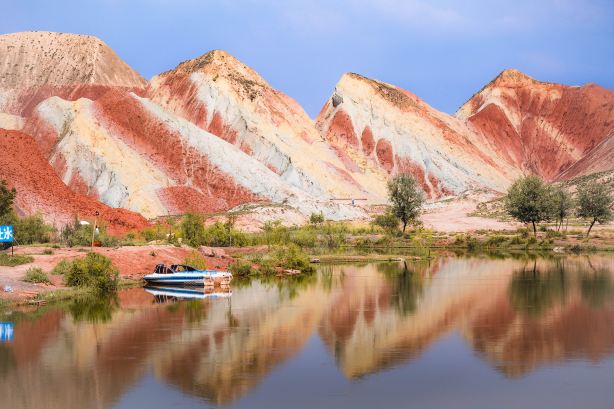
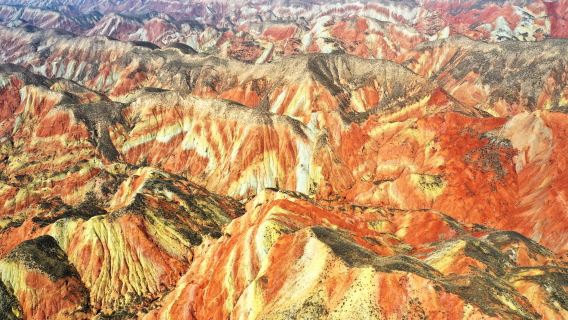
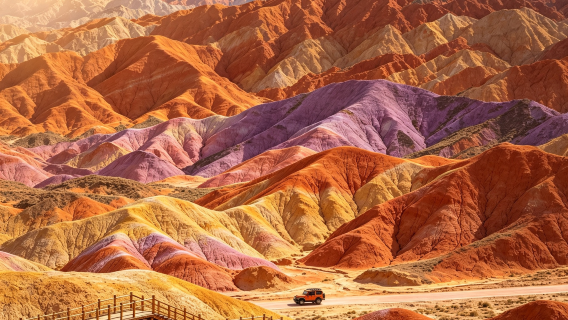
Lanzhou Danxia Geological Park is a key cultural tourism project in Gansu Province and a comprehensive cultural tourism initiative prioritized by the Lanzhou Municipal Committee and Government. Located by the Yellow River, the park is just 13 km from downtown Lanzhou and 30 km from Lanzhou Zhongchuan International Airport, making it one of the closest Danxia landform clusters to a major urban center in China. With a total planned area of 400 sq km and a core visiting area of 25 sq km in its first phase, it ranks among the largest discovered landscapes of its kind in the country. The park primarily features red mountain bay formations, along with spectacular Danxia cliffs, isolated peaks, secluded valleys, narrow gorges, and balancing rocks. Its colorful mountains set against winding waterways create a masterpiece of Danxia landform scenery. The attraction features seven viewing platforms showcasing the Danxia landforms: Silk Road Glow, Silk Road Eagle, Flying Apsaras Exploration, Nine-Colored Danxia, Danxia Reflecting Sky, Emerald Peaks Rippling Sky, and Danxia Summit Scenic View. It also includes the Ancient Silk Road Gateway, Shajing Tribe Cultural Square, Desert Bells Scenic Boulevard, and a 2,550m Danxia boardwalk viewing area. As a key cultural tourism project in the province, Lanzhou Danxia Geological Park adheres to the principles of "ecological protection, green development, preserving original features, and moderate development." Leveraging Lanzhou's unique resource advantages and focusing on the domestic tourism market, it aims to cultivate new growth drivers for Lanzhou's cultural tourism industry and establish a new highland for cultural tourism in the city.Yongdeng · 57.4 km from downtown

Lanzhou Shuimo Danxia Scenic Area - Ancient Silk Road
The entire structure of the Ancient Silk Road combines both movement and stillness. The arched gate, resembling a flowing ribbon, and the tower-like buildings symbolize this spot as a vital point along the Silk Road and the continued presence of its long-standing Silk Road culture. Embossed characters such as Kucha, Duguo, and Yuezhi all refer to ancient Silk Road states and ethnic minorities that once flourished in this vast northwest region, now largely forgotten. The surrounding Hongshanwan landform retains its pristine geological features. The large pictographs on the stone slabs represent a fusion of Northwest China and nomadic cultural elements. Passing tourists must take photos here, making it a popular check-in spot within the Lanzhou Ink Danxia Scenic Area. Whether tracing historical traces or admiring natural wonders, this spot offers a unique and unforgettable experience.Yongdeng · 57.6 km from downtown

Yongdeng County Kushui Town Danxia Self-Driving Campsite
Yongdeng County Kushui Town Danxia Self-Driving Campsite is 40 km from downtown Lanzhou. It is a rare Danxia landform with ponds. After freezing, the fish ponds, reflecting the blue sky, and the vibrant colorful Danxia form a striking blue-orange contrast. Recommended for photography enthusiasts.Yongdeng · 50.4 km from downtown

Kushui Town
Kushui Town is located in the southeast of Yongdeng County, Gansu Province, downstream of Zhuanglang River, adjacent to Hekou Township, Xigu District. The special rose has a large planting area and many varieties, and its output ranks first in China. It is known as the "hometown of roses". Rose is one of the world's most famous flowers, known as the "Queen of Flowers". According to industry experts, the best traditional Chinese roses are produced in the water town of Kukushui Town, Yongdeng County, Gansu Province, and Kushui Town also enjoys the reputation of "the first township of roses in China". In the 1990s, the dried buds of Kushui roses were once sold for a high price of 80 yuan per kilogram, and the rose oil extracted from roses was called "liquid gold" because of its high price.Yongdeng · 53.9 km from downtown

Tulugou National Forest Park
Turugou means "beautiful orchard" in ancient Mongolian. It is a beautiful natural scenic spot Souvenir Lanzhou. It is about 200 kilometers away from Lanzhou city. It is a good place for local residents of Lanzhou to relax on weekends. Tulugou is very humid due to the influence of mountain climate. The trees here are very dense, and the ravines are full of peaks and ridges, with many steep cliffs of various shapes and grasslands. The scenery is very beautiful. The main purpose of visiting here is to stroll in the canyon, grassland and mountains, and see many peaks, cliffs, grasslands, etc. In addition, there are wild flowers in spring and red leaves in autumn, which is also very good for photography. The Attraction is divided into Sancha Village, Datulugou, Xiaotulugou and grassland tourist area. After entering the Attraction, tourists can take the shuttle bus (fare 30 yuan) to Sancha Village first. There are two forward forks in Sancha Village. One leads to Datulugou, which is a canyon with unique landforms, with many beautiful cliffs and rock walls. If you continue forward on the road of Datulugou, you can see Gouzhang Grassland, which is the grassland tourist area of the Attraction, and you can enjoy the open grassland scenery. The other fork in Sancha Village leads to Xiaotulugou Attraction, which is dominated by dense trees, flowers and plants. The environment is very quiet and suitable for sightseeing and walking. It takes about half a day to play in the entire Attraction.Yongdeng · 49.9 km from downtown

Former Site of Lutusi Yamen
Lutusi Yamen is a relatively well-preserved palace-style ancient building group among the Tusi relic buildings at the border of Gansu. It sits on the bank of Datong River and consists of three parts: Lutusi Yamen, Miaoyin Temple, and Tusi Garden. Lutusi Yamen was the place where Lu Tusi worked and lived, along with his family. It was built during the 11th year of Ming Emperor Hongwu's reign (1378). The Yamen is near mountains and river. It sits in the north while facing the south. Inside, there are several buildings with significant folk atmosphere.Yongdeng · 41.1 km from downtown

Kushui Danxia Sightseeing Agriculture (Demonstration) Area
Yongdeng · 52.7 km from downtown

Lanzhou ShuiMo Danxia Scenic Area Observation Deck
Yongdeng · 57.2 km from downtown

shui ju dan xia
Yongdeng · 61.6 km from downtown

Zhutuo Mountain
Formerly known as Miaoshan Mountain, Zhutuo Mountain is located in the west of Kushui River. It is one of the surrounding peaks and is a Buddhist land. Because the local sorghum Li Fu used pigs and bricks to build a temple, it was renamed as a pig. Zhutuo Mountain is the sacred place of Kangxi Yufeng's “Golden Buddha”. It was built in the Kangxi reign of the Qing Dynasty. For more than 300 years, it has been extensively upgraded. The temperature of this mountain is superb, and the roses under the mountain are like the sea. There are many tourists during the flowering period.Yongdeng · 56.3 km from downtown
Experiences you can't miss in Yongdeng
Featured Day tours in Yongdeng
View all Day tours
4.3/5
· 7 reviews· 76 bookedFree cancellation
Instant confirmation
Book now for tomorrow
FromQAR 262.43

5.0/5
· 5 reviews· 22 bookedFree cancellation
Instant confirmation
Book now for tomorrow
FromQAR 276.08

4.9/5
· 62 reviews· 350 bookedFree cancellation
Book now for today
96.8% of travelers recommend
FromQAR 62.79
5.0/5
· 16 reviews· 95 bookedFree cancellation
Instant confirmation
Book now for tomorrow
77 travelers saved
FromQAR 228.21

4.9/5
· 79 reviews· 494 bookedFree cancellation
Instant confirmation
Book now for today
97.5% of travelers recommend
FromQAR 200.91
Free cancellation
Instant confirmation
Book now for tomorrow
FromQAR 217.14

Free cancellation
Instant confirmation
Book now for tomorrow
9% off
Limited-time sale
FromQAR 111.54QAR 123.93

5.0/5
· 3 reviewsFree cancellation
Instant confirmation
FromQAR 545.95
Featured Cultural experiences in Yongdeng
View all Cultural experiences
FromQAR 620.39
FromQAR 917.19
FromQAR 899.57

FromQAR 930.59
FromQAR 899.57
Free cancellation
Instant confirmation
Book now for tomorrow
9% off
Limited-time sale
FromQAR 135.62QAR 150.68
Free cancellation
Book now for tomorrow
FromQAR 876.24
Free things to do in Yongdeng
Yongdeng County Kushui Town Danxia Self-Driving Campsite
Yongdeng · 50.4 km from downtownKushui Town
Yongdeng · 53.9 km from downtown
Gansu Provincial Museum
Lanzhou · 87.5 km from Yongdeng
Hongchenggan'en Temple
Yongdeng · 33.6 km from downtown
Lanzhou Old Street
Lanzhou · 84.4 km from Yongdeng
Tengger Desert
China · Alxa Left Banner
Zhongshan Bridge
Lanzhou · 89.7 km from Yongdeng
Wushao Mountain Range
Tianzhu · 62.3 km from Yongdeng
Tengger Desert
China · Zhongwei
What travelers say about Yongdeng

Patrick Woodbourne ClarkeOctober 22, 2026
5.0
Lanzhou Danxia Geological Park is fabulous. One of the top three things I have done on this tour. I used Trip.com to get out to the park and that was very easy. Shuttle buses are necessary to get between the various vantage points. I would come for longer next time and do the zip line. I got an 8am bus from Xiaoxihu Subway Station and it leaves the Park at 12pm to return back to the city.
Lanzhou Danxia Geological Park

飞翔SabrinaJuly 29, 2026
4.0
The Shuimo Danxia Scenic Area is beautiful, featuring seven viewing platforms including Silk Road Glow, Nine-Colored Danxia, and Danxia Summit View, as well as a 3,500-meter-long Danxia boardwalk. The entire scenic area is unshaded with strong ultraviolet radiation; please take precautions against sunburn.
Lanzhou Shuimo Danxia Scenic Area - Ancient Silk Road

JJ77September 12, 2021
5.0
Kushui Danxia, a Danxia landform that looks like pork belly, do you want to come and see it? This Danxia landform has not been developed yet. It is called Kushui Danxia, not the famous Zhangye Danxia. Kushui Danxia is located in Yongdeng County, Lanzhou. There is a large area between Kushui Town and Xinghua Village, Shuping Town. This area located in Kushui is currently undeveloped, with almost no tourists, and occasionally a few photographers come to take pictures.
Yongdeng County Kushui Town Danxia Self-Driving Campsite

M85***97April 9, 2025
5.0
Kushui Town is a town under the jurisdiction of Yongdeng County, Lanzhou City, Gansu Province, China. It is named because the local water quality is slightly bitter, but it is more well-known for its unique natural scenery, cultural traditions and characteristic agriculture (especially rose planting). The following is a travel review and recommendation about Kushui Town for reference:
Highlights
Rose Town
Kushui Town is an important rose planting base in northwest China. Every year from May to June, thousands of acres of roses bloom, forming a spectacular "rose sea". Local products such as rose essential oil, rose jam, and rose tea have also been derived. Visitors can participate in the picking experience or buy souvenirs.
Kushui Danxia
The town is distributed with typical Danxia landforms, with reddish-brown mountains and green vegetation complementing each other, suitable for hiking and photography enthusiasts to visit.
Intangible Cultural Heritage-Kushui Gaogaoqiao
Kushui Gaogaoqiao is a national intangible cultural heritage project. Performers stand on wooden stilts more than 3 meters high and perform historical stories in traditional costumes. Performances are held every Spring Festival or major festivals, which are very folk.
Zhutuo Mountain Scenic Area
Located next to Kushui Town, Zhutuo Mountain is said to be related to the Qing Dynasty monk "Fengdian Monk". There are temples and statues on the mountain. You can overlook the Zhuanglang River and Danxia landscape when you climb to the top.
Travel Suggestions
Best season: May-June (rose blooming period), or autumn (cool climate in September-October).
Must-experience:
Visit the rose plantation and taste the rose banquet (rose cake, rose wine).
Watch the Kushui stilt performance (need to check the festival time in advance).
Hike the Danxia landform and take pictures of the natural scenery.
Transportation and Accommodation
Transportation:
From Lanzhou: drive for about 1.5 hours (70 kilometers), or take a bus from Lanzhou West Bus Station to Yongdeng County, and then transfer to a local vehicle.
Accommodation: The town is mainly composed of farmhouses and economic hotels. It is recommended to book in advance; you can also choose to return to Lanzhou city on the same day for accommodation.
Notes
There are many tourists during the rose blooming period. It is recommended to avoid the peak of holidays.
Pay attention to sun protection and mosquito prevention in summer; keep warm in winter because the climate is cold and dry.
Respect local customs and ask for permission before filming the stilt performance.
Summary
Kushui Town is a niche travel destination that combines natural wonders with folk culture, suitable for tourists who like rural scenery and cultural experience. Although the supporting facilities are not as complete as those in big cities, its original ecological simplicity and unique rose industry culture are still worth exploring.
If you plan to go there, it is recommended to plan the itinerary in combination with Lanzhou City (such as Zhongshan Bridge, Gansu Provincial Museum) or surrounding attractions (such as Turugou National Forest Park) to enrich the travel experience.
Kushui Town

过客过客过客过客过客过客过客过客September 8, 2023
5.0
Travel guide to Turugou National Forest Park,
[Scenery] It is recommended to stay in the scenic area, the natural scenery is infinitely beautiful,
[Value for money] Looking forward to your participation, there may be surprises when walking on the wooden plank road.
Tulugou National Forest Park

水漫三楼September 1, 2026
5.0
The Lu Tusi Yamen (Lu Chieftain's Office) is located in Liancheng Town, Yongdeng County, Lanzhou City, Gansu Province. It is the largest and best-preserved Ming and Qing dynasty Tusi manor, consisting of the Yamen, Miaoyin Temple, and the Tusi Garden. Construction of the complex began in the third year of the Hongwu reign (1370), covering an area of 33,000 square meters. It was listed as a fourth batch of National Key Cultural Relics Protection Units in 1996. The main buildings are modeled after the mansions of princes in Beijing, built according to the Ministry of Works style, with "thirty-six courtyards and seventy-two gates," earning it the nickname "Little Forbidden City of the West." The central axis features the main hall, Yanxi Hall, and Ancestral Hall. Miaoyin Temple on the west side preserves Ming dynasty Buddhist murals and brick carvings. The complex was formed after Tuohuan, a member of the Yuan dynasty imperial family, surrendered in the third year of the Hongwu reign and settled there. His grandson, Shijia, was granted the surname Lu for his meritorious service. The Lu Tusi system was hereditary, with 21 Tusi over 19 generations, governing approximately 9,000 square kilometers of the Gansu-Qinghai border for over 560 years. The existing buildings include an underground heating system and a complex drainage structure. During the reign of Emperor Jiaqing of the Qing Dynasty, the fifteenth-generation Tusi (chieftain) Lu Jixun renovated the yamen (government office), which included a main hall for hearing cases and the Tusi's living quarters.
The progenitor of the Liancheng Lu Tusi, Tuohuan, was a descendant of Genghis Khan, the founder of the Yuan Dynasty, and a great-grandnephew of Kublai Khan, the founder of the Yuan Dynasty. He was a member of the Yuan imperial family, enfeoffed as the Prince of Anding and concurrently serving as a Grand Councilor. In 1368 (the 28th year of the Zhizheng era of the Yuan Dynasty), when Zhu Yuanzhang's army attacked Dadu (Beijing), Emperor Shun of Yuan fled. Tuohuan was unable to follow and wandered to Hexi. In 1370 (the 3rd year of the Hongwu era of the Ming Dynasty), Tuohuan surrendered to the Ming and was settled in Liancheng as the first Tusi. Because his wife, Lady Ma, had captured high-ranking officials, he governed Liancheng and built a seven-bay building. In 1412 (the 21st year of the Yongle era), because Tuohuan's grandson, the third-generation Tusi Shijia, had repeatedly distinguished himself in battle, he was promoted to Commander-in-Chief. Emperor Yongle bestowed upon Shijia the surname Lu and the name Lu Xian. The Lu Tusi (chieftain) system existed through the Ming, Qing, and Republican eras. From the first chieftain in 1370 to the abolition of the hereditary chieftain system in 1932, there were 21 chieftains across 19 generations. These chieftains held prominent positions and high ranks, with many rising to the rank of first-grade generals stationed in Northwest China due to their military achievements.
The Lu Tusi were of Mongolian ethnicity and practiced Tibetan Buddhism. They were a powerful local regime in Northwest China, possessing military, judicial, and religious authority, with the power of life and death, and commanding over a thousand local soldiers. The Liancheng Lu Tusi ruled Yongdeng and the surrounding areas for over 560 years, significantly influencing local politics, culture, and religious beliefs.
Former Site of Lutusi Yamen

空林野寺April 27, 2025
5.0
Zhutuo Mountain is located in Kushui Town, Yongdeng County, Lanzhou City. It is a tourist attraction that integrates natural scenery and cultural landscape. There are towering temples, spectacular Danxia landforms and beautiful natural scenery on the mountain. It is named after the legend that a pig carried a Buddha statue up the mountain. The geographical environment here is unique, the mountains are steep, and the Danxia landform adds a bit of magnificence to it. When you stand at the foot of the mountain and look up, the mountains are undulating, and the red sandstone is like a burning flame under the reflection of the sun, showing a majestic and warm beauty. Self-driving: You can locate Zhutuo Mountain through navigation software, start from Lanzhou City, drive along the Beijing-Tibet Expressway, get off the expressway at the Kushui Town exit, and then follow the road signs to Zhutuo Mountain.
Public transportation: Take a shuttle bus from Lanzhou City to Yongdeng County, transfer to a bus to Kushui Town in Yongdeng County, and then walk or take local transportation to Zhutuo Mountain.
Zhutuo Mountain


