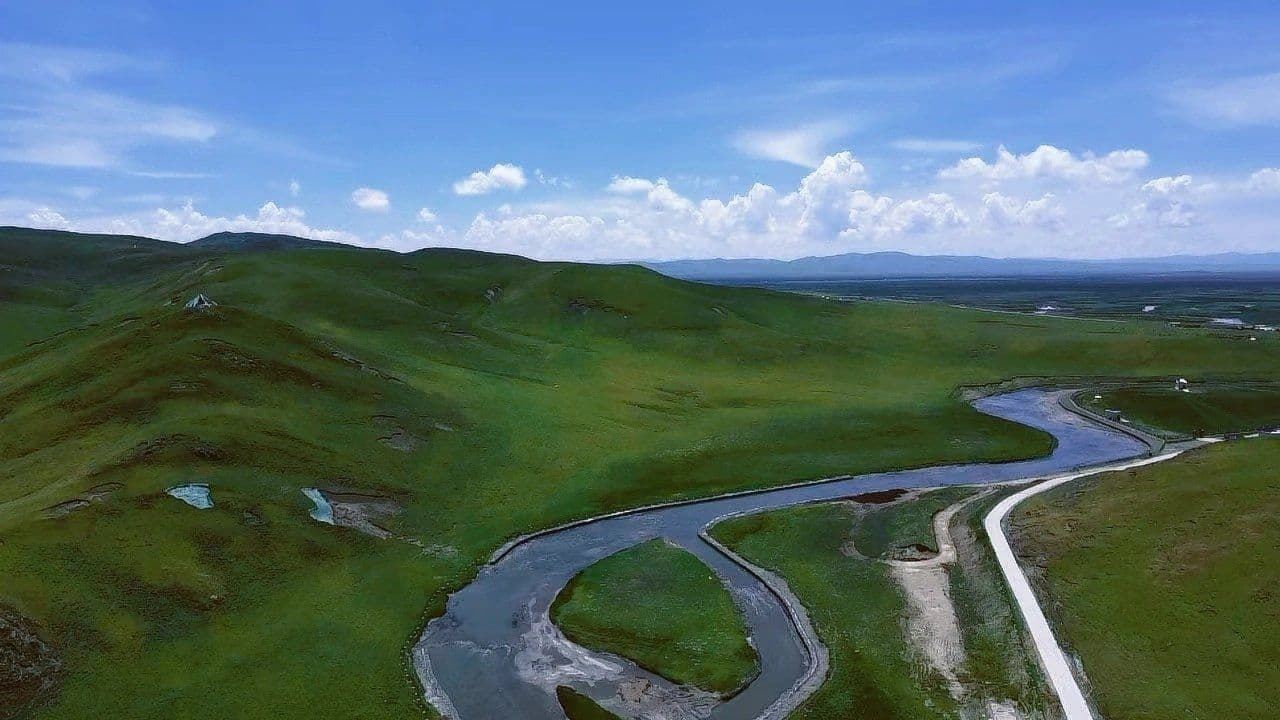
Things to do in Zeku
Explore top experiences
Top 10 attractions in Zeku


Chaka Salt Lake
Chaka Salt Lake is a 3,000-year-old salt field with highly saline water that naturally crystallizes into a white surface, beautifully reflecting the sky, clouds, and mountains on the opposite shore. Visitors can walk barefoot on the lake to observe and photograph their reflections, creating a mirror-like illusion of the sky. On sunny days, Chaka Salt Lake boasts highly crystallized waters where you can see a thin layer of brine covering the pristine white salt lake, creating clear and pure reflections. In the sculpture area of the attraction, you'll find the stone-carved Goddess of the Salt Lake, along with around a dozen other massive salt sculptures depicting figures like Maitreya Buddha and Genghis Khan. Walk along the path to the lakeshore, and you'll see the pristine white Chaka Salt Lake, perfect for exploration. A railway extends into the lake, with its starting point serving as the boarding area for the small train. Ride it to the deeper parts of the lake, where the scenery is even more breathtaking.China · Ulan

Qinghai Tibetan Culture Museum
Qinghai Tibetan Culture MuseumIt is a comprehensive museum themed on Tibetan medicine culture and featuring Tibetan culture.Qinghai Tibetan Culture Museum(also known as Qinghai Tibetan Culture Museum) is located in Xining, the capital of Qinghai Province in the eastern part of the Qinghai-Tibet Plateau. It officially opened in September 2006. The museum has basically formed a "one museum with two halls" layout, featuring 16 exhibition halls including the Silk Road and Tibetan civilization, the grand view of Chinese Tibetan art painting, and the history of Tibetan medicine.Qinghai Tibetan Culture MuseumThe collection is rich, historic, and diverse, possessing high historical, scientific, and artistic value. The museum houses the Guinness World Record-holding thangka masterpiece, "The Grand Thangka of Tibetan Culture and Art," which is 618 m long. It was planned by renowned thangka master Zongzhe Lajie and completed by 400 painters over four years. Its content encompasses the Tibetan understanding of the universe, the formation of the Qinghai-Tibet Plateau, history, religion, medicine, culture, art, and folklore. With its intricate details and brilliant colors, it is a magnificent sight and can be called an encyclopedia of Tibetan culture, hailed as a "contemporary national treasure." Through four major series—ancient books and documents, Tibetan medical thangkas, ancient Tibetan medical instruments, and Tibetan material specimens—the museum comprehensively displays the long history, profound theoretical system, clinical practice, and unique preparation techniques of Tibetan medicine, with four ancient books included in the National Catalogue of Precious Ancient Books. The Silk Road and Qinghai-Tibet Civilization exhibition hall uses history as its temporal dimension and the vast plateau landscape as its geographical dimension. Through thousands of precious cultural relics such as silk, gold and silver ware, and coffin paintings, it highlights Tibetan cultural elements and showcases the origin, inheritance, rise, and prosperity of the Qinghai-Tibet Plateau civilization throughout the long river of history. The Tibetan carpet exhibition hall is one of the largest exhibitions of ancient carpets in China, displaying more than 400 Tibetan carpet artifacts from different periods and eras, featuring magnificent patterns, intense colors, and unique ethnic styles and local characteristics. At the same time, there are also Tibetan-style architectural exhibition halls, Tibetan calligraphy art exhibition halls, as well as temporary exhibition halls, multimedia screening rooms, academic lecture halls, and cultural relic storage rooms, providing strong capabilities for inheritance, protection, and research, as well as conditions for cultural exchange.Qinghai Tibetan Culture MuseumIt will continuously improve the level of cultural relic preservation, exhibition design, scientific research, and management operations, becoming a platform for promoting ethnic unity and social development, a broad stage for cultural dissemination and academic exchange, a research center for cultural relic protection and Tibetan studies, and an exhibition center for treasured literature and collections, showcasing the splendid civilization and culture of the Tibetan Plateau to the world.China · Xining

Kumbum Monastery
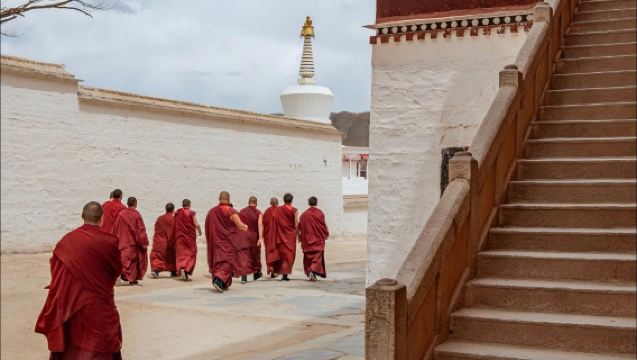
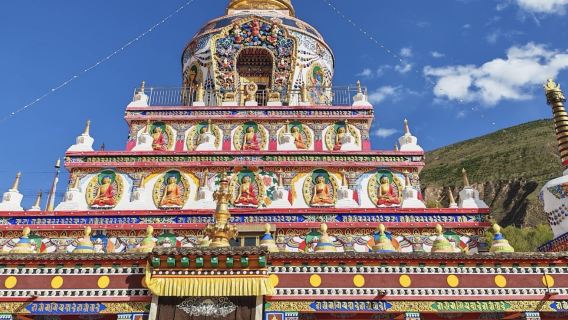
Kumbum Monastery is one of the important monasteries of the Gelug (Yellow Hat) sect of Tibetan Buddhism and the birthplace of Tsongkhapa, the founder of the Yellow Hat sect. The monastery features magnificent architecture, abundant treasures, and a strong religious atmosphere, making it one of the more popular travel destinations in Xining. Overview of the visit It has distinct differences in architectural layout compared to Han Chinese Buddhist temples in inland China: the complex here is not symmetrically arranged along a central axis. The monastery is an ancient architectural complex composed of numerous halls, scripture halls, stupas, and colleges, with each sutra hall, main hall, and stupa irregularly distributed on a small hill. Travelers can explore the site in a relatively free manner rather than following a straight path along a central axis. The Great Golden Roof Hall of Kumbum Monastery is the center of the entire architectural complex. It is said that Master Tsongkhapa was born here, and when he was born, his umbilical cord blood dripped on this spot, from which a bodhi tree grew. Later, a stupa was built around the tree, and a monastery was constructed, hence the name. Believers hold that this tree and stupa are the embodiment of the master. The three unique features of the attraction: butter sculptures, murals, and appliqué embroidery. Butter sculptures are made by mixing butter with various pigments to mold and carve into figures of Buddhas, people, flowers, birds, animals, and pavilions. Travelers can admire exquisite butter sculptures at the butter sculpture hall inside the temple (located far from the main gate). Vibrant centuries-old murals can be appreciated in the main halls, corridors, and front galleries of the temple. Appliqué embroidery involves cutting colored satin into desired shapes, such as Buddha figures or animals, stuffing them with wool or cotton, and embroidering them onto cloth hangings. In the temple's great sutra hall, two rare large appliqué embroidery pieces—"Sixteen Arhats Displaying Divine Powers" and "Eight Immortals Crossing the Sea"—hang on either side. The four major religious festivals (based on the lunar calendar): 1. Cham dance (14th day of the first month) and butter sculpture exhibition (15th day of the first month); 2. Cham dance (14th day of the fourth month), Buddha unveiling, and Cham dance (15th day of the fourth month); 3. Buddha unveiling, Cham dance (6th day of the sixth month), and golden Buddha procession (8th day of the sixth month); 4. Full-day Buddha unveiling (22nd day of the ninth month) and Cham dance (23rd day of the ninth month). During these festivals, activities like Buddha unveiling and ritual dances take place, attracting large crowds of devotees and travelers, creating a lively atmosphere.China · Xining
Lanzhou Danxia Geological Park
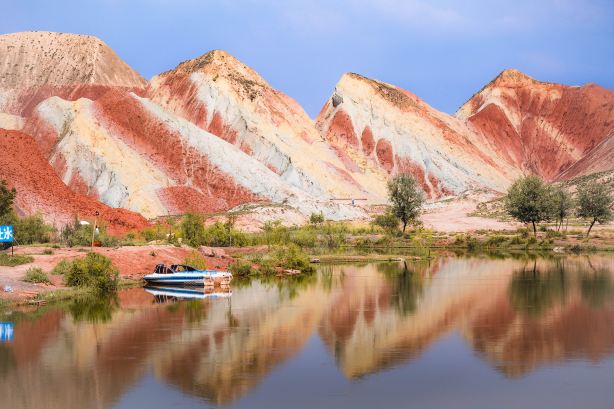
Lanzhou Danxia Geological Park is a key cultural tourism project in Gansu Province and a comprehensive cultural tourism initiative prioritized by the Lanzhou Municipal Committee and Government. Located by the Yellow River, the park is just 13 km from downtown Lanzhou and 30 km from Lanzhou Zhongchuan International Airport, making it one of the closest Danxia landform clusters to a major urban center in China. With a total planned area of 400 sq km and a core visiting area of 25 sq km in its first phase, it ranks among the largest discovered landscapes of its kind in the country. The park primarily features red mountain bay formations, along with spectacular Danxia cliffs, isolated peaks, secluded valleys, narrow gorges, and balancing rocks. Its colorful mountains set against winding waterways create a masterpiece of Danxia landform scenery. The attraction features seven viewing platforms showcasing the Danxia landforms: Silk Road Glow, Silk Road Eagle, Flying Apsaras Exploration, Nine-Colored Danxia, Danxia Reflecting Sky, Emerald Peaks Rippling Sky, and Danxia Summit Scenic View. It also includes the Ancient Silk Road Gateway, Shajing Tribe Cultural Square, Desert Bells Scenic Boulevard, and a 2,550m Danxia boardwalk viewing area. As a key cultural tourism project in the province, Lanzhou Danxia Geological Park adheres to the principles of "ecological protection, green development, preserving original features, and moderate development." Leveraging Lanzhou's unique resource advantages and focusing on the domestic tourism market, it aims to cultivate new growth drivers for Lanzhou's cultural tourism industry and establish a new highland for cultural tourism in the city.China · Yongdeng

Qinghai Lake
Qinghai Lake is called "Qinghai Lake" in Tibetan (meaning "blue sea"). Located in the northeastern part of the Qinghai-Tibet Plateau, within Qinghai Province, it is formed byQilian MountainsDatong Mountain,Riyue Mountain and South Qinghai MountainFormed by fault subsidence, it is one of China's largest inland lakes and the origin of Qinghai Province's name. The lake covers a vast area, with a circumference of approx. 360 km. Its waters are boundless, azure, and ethereal. Surrounded by mountains, the lakeshore blends into expansive grasslands. Qinghai Lake boasts spectacular views and numerous attractions, making it a key destination in Qinghai. Natural environment: Qinghai Lake features a plateau continental climate with abundant sunlight and intense radiation. Winters are cold, summers are cool, warm seasons are brief, and cold seasons are prolonged. Spring brings frequent strong winds and sandstorms. Rainfall is scarce, concentrated in the warm season, with distinct wet and dry periods. This climate creates unique beauty in each season. The lake's color shifts with weather and light, sometimes displaying multiple hues in a single day. Scenery varies by season, with the ideal visiting period from April to August. July and August are particularly stunning, as vast rapeseed fields bloom along the shore, their golden yellow contrasting beautifully with the endless blue waters. In addition, when Qinghai Lake is frozen for thousands of miles in winter, you can also experience a different kind of natural grandeur. Historical legend: It is said that over 1,000 years ago, the Tang Dynasty and Tibet formed a marriage alliance, with Princess Wencheng marrying the Tibetan king Songtsen Gampo. Before her departure, the Tang emperor gave her a sun-moon treasure mirror that could reflect images of her hometown. On the journey, the princess missed her hometown and took out the mirror, indeed seeing the long-lost Chang'an. Tears welled up in her eyes. However, she suddenly remembered her mission and resolutely threw the mirror away. Unexpectedly, when it hit the ground, a golden light flashed, and it transformed into Qinghai Lake. Attraction introduction: Some attractions have been developed around Qinghai Lake. South of the lake is the main attraction, Qinghai Lake Erlangjian scenic area, where you can take a boat tour. East of the lake lies the famousRiyue Mountain and Daotang Riveretc.; to the north there areJinyintan and the atomic cityand other attractions. In addition, when touring around Qinghai Lake, nearby attractions such as those west of the lake are usually included.Chaka Salt Lake, Hubei'sRapeseed flowers in MenyuanEtc. Ways to explore: You can visit just one side of Qinghai Lake or take a circular tour around it. Most travelers choose the south side for a simple lake view, where the grassland is lush and the scenery is stunning. For a circular tour, you can take a private charter from Xining and travel clockwise, which is also the direction local Tibetans follow for their lake pilgrimage.China · Gonghe

Qinghai Lake Erlangjian Scenic Area
Erlangjian Scenic Area is Qinghai Lake's main attraction. It is located on the south shore of the lake and is home to a shopping center, restaurants, and hotels. The visitor site consists of two areas, the first of which is located near the entrance and provides a range of commercial facilities and a harbor for tourist boats. The other area is a narrow peninsula that stretches out over 10 km into the lake. Taking a boat trip on the lake is one of Erlangjian's most popular activities.China · Gonghe

Qinghai-Tibet Plateau Wildlife Park
The Qinghai-Tibet Plateau Wildlife Park is located in Xishan, Xining. It is a beautiful zoo with some special animals such as snow leopards and desert cats. It is not easy to see in other cities. The size of the Qinghai-Tibet Plateau Safari Park is not large. There are mainly beasts and aboriginal areas, such as the Beasts Reserve Area, and the Aquarium. The famous beasts are scattered areas. Currently, the plank road is built. Visitors can watch the beasts on the plank road.China · Xining

Heri Temple Stone Scripture Wall, Zeku County, Huangnan
Zeku · 47.2 km from downtown

Zha Ga Na
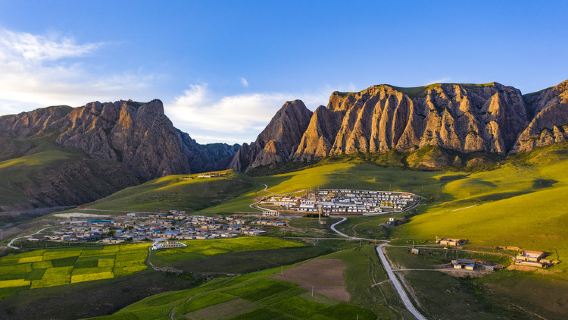
Zhagana, also known as Zhagala, is located in Diebu County, Gannan Tibetan Autonomous Prefecture. It is a small Tibetan village surrounded by a circle of pretty cliffs. It has beautiful and magical scenery and is one of the most beautiful places in the entire Gannan Tibetan area. The ancient wooden Tibetan houses in the village are built along the mountain, and the locals work quietly and simply between the hillsides and rivers, forming a beautiful pastoral scenery. Whether you want to sightsee, take photos, or visit the traditional life of the simple Tibetan people, this is a wonderful place that you cannot miss. Zhagana is located in the valley of Yiwa Township, Diebu County. It takes about 1 hour to drive from Diebu County and about 2 hours from Langmusi. Zhagana is suitable for visiting in July and August, when the grassland is green and the scenery is beautiful. Most tourists come from Langmusi when they take the Gannan-Sichuanbei route. The usual time to visit is to arrive in the afternoon of the same day and take a leisurely stroll in the village to enjoy the beautiful scenery. Stay in a Tibetan homestay for one night, and leave the next morning after taking pictures of the early morning clouds and sunrise. In addition, there is a two-day hiking route in the back mountain of Zhagana, where you can rent a horse in the village or walk there. Zhagana Village is divided into four small villages, from bottom to top, they are Dongwa Village, Yeri Village, Dari Village and Daiba Village. Dongwa Village and Daiba Village are about 5 kilometers apart, and there is a winding road connecting the four villages. You can walk or drive to visit and take photos one by one. It takes about 1 hour to walk from the bottom to the top. Driving in from the entrance of the village, the first place you arrive at is Dongwa Village at the foot of the mountain. There is a big stone here called Dashimen. The small hillside next to Dashimen is a good place for taking photos. Here you can look up and take pictures of the beautiful scenery of the village built along the mountain. The back of the village is wrapped by cliffs, and there is a Tibetan Buddhist temple on the top of the village. The scenery is fantastic and beautiful. Dongwa Village has a large population and is also a good place to stay. You can book a stay at a farmhouse here, and then walk or drive to several higher villages to play. It takes about 1 hour to walk to the higher place. Going up the mountain along the road, you will reach Yeri Village. Next to Yeri Village is a vast barley field where you can often see Tibetans busy in the fields. The scene is peaceful and simple. In addition, there is a house in Yeri Village where the famous traveler Joseph Locke once lived for more than a year, but now it can only be visited from the outside. Continue to go up, after passing Dari Village, there is a viewing platform with a wide view, suitable for taking bird's-eye views of the whole village. You can see the whole village and the fantastic rock wall behind. All the houses are old wooden roofs and earthen walls, which look simple and peaceful. Under the cliff, they form a beautiful picture scroll, which is also a wonderful place to take good photos. After taking the panoramic view, you can go back to Dongwa Village for accommodation. Daiba Village is relatively remote and there are fewer scenery to see, so you can skip it. In addition to taking photos in the afternoon, there are many other things to look forward to in Zhagana. Every morning, there are almost clouds and mists between the rock walls on the mountain, and the starry sky is beautiful and brilliant at night when the lights are off, which are good opportunities for taking photos. If you have enough time, you can also take 1-2 hours to climb the back mountain of Dongwa Village to see the temple on the top of the mountain. The houses you pass by along the way are all ancient buildings, and the wooden wedge-rivet structure is even more ancient and peculiar. If you are lucky, you can meet kind locals and be invited to their homes to taste traditional food such as tsampa butter tea and experience the simple enthusiasm of the locals. In addition, there is a two-day hiking route behind the village, which leads to the rarely visited lakes and stone forests with pristine and beautiful scenery. However, this route is only suitable for outdoor enthusiasts and requires camping for one night. When walking this route, you can rent a horse in the village and find a horseman to lead the way. Generally, a horse costs about 150 yuan a day.China · Diebu

Gansu Provincial Museum
Gansu Provincial Museum is a large comprehensive museum centered on the civilization of the Silk Road. Located at a strategic point along the Silk Road and a convergence zone of Han and Tibetan cultures, its collections embody the diverse characteristics of the Central Plains, Western Regions, and the Tibetan Plateau. The three treasured artifacts—the Galloping Bronze Horse, the mural brick of a courier, and the painted pottery vase with a human-head-shaped mouth—serve as iconic representations of the museum. The museum has three floors, featuring permanent exhibitions on themes such as the civilization of the Silk Road, Buddhist art of Gansu, painted pottery of Gansu, paleontological fossils, and revolutionary Gansu. The Silk Road civilization exhibition on the second floor is the museum's centerpiece: the bronze galloping horse unearthed in 1969 from the Leitai Han tomb in Wuwei is displayed here. The horse has three hooves in the air and one stepping on a flying bird, standing steadily on a single hoof. Its image is now the symbol of Chinese tourism. In the same hall, the mural brick depicting a courier from the Wei-Jin tombs in Jiayuguan shows a messenger galloping on horseback, notably without a mouth, symbolizing the need for couriers to "keep their mouths shut." This pattern was later adopted as the emblem of China Post. The exhibition also features a procession of chariots and horses excavated from the same tomb as the bronze horse, along with Han and Tang dynasty silk textiles, gold and silver artifacts, making the prosperity of Silk Road trade vividly tangible. The Buddhist art exhibition hall on the third floor features replicas of caves from the Mogao Grottoes and Maijishan Grottoes, alongside statues, ritual objects, white pagodas, and prayer wheels from both Han and Tibetan Buddhism. Stepping into the hall feels like entering a temple, and this harmonious blend of Han and Tibetan styles is rarely seen elsewhere. On the same floor, the painted pottery exhibition showcases ceramics from cultures such as Dadiwan, Yangshao, and Majiayao, with intricate and fluid patterns like spiral and sawtooth designs. Among them, the painted pottery bottle with a human-head-shaped spout unearthed at Dadiwan in Qin'an, which integrates facial sculpture with the pottery vessel, is a highly popular exhibit. If you're interested in natural history, the paleontological fossils exhibition hall features the impressive skeleton of the Yellow River ancient elephant unearthed in Heshui, and the dinosaur fossils and reconstructed models are also popular with children. The revolutionary Gansu exhibition hall showcases historical artifacts and materials from periods such as the Nanliang base area and the Shaan-Gan-Ning border region, narrating the modern history of this land. The museum houses a large quantity of exhibits, and even a quick tour would take half a day. It's recommended to start with the Silk Road exhibition on the second floor, then proceed to the third floor for Buddhist art and painted pottery, following a logical route. In the exhibition halls, you can scan to listen to the audio guide, and at certain times, volunteers also provide guided explanations.China · Lanzhou
Experiences you can't miss in Zeku
Featured Day tours in Zeku
View all Day tours
4.8/5
· 223 reviews· 1.1k bookedFree cancellation
Instant confirmation
27 consecutive positive reviews
FromAU$187.98
5.0/5
· 2 reviewsFree cancellation
Instant confirmation
FromAU$126.23
5.0/5
· 2 reviewsFree cancellation
Instant confirmation
Book now for tomorrow
FromAU$84.96

Instant confirmation
FromAU$232.79
Free cancellation
Instant confirmation
Book now for tomorrow
FromAU$104.38
Free cancellation
Instant confirmation
FromAU$106.33
Free cancellation
Instant confirmation
FromAU$133.51
Free cancellation
Book now for tomorrow
FromAU$361.69
Free things to do in Zeku


What travelers say about Zeku

HerotomOctober 26, 2026
5.0
The scenery was beautiful, but the rented shoe covers got wet, soaking my right shoe. I told the staff when I returned them, and they waived the rental fee. The service was good, but I'd still like to hope they check the shoe covers' quality regularly.
Chaka Salt Lake

我要我疯我要我爱就是我要我疯我要我爱October 9, 2026
5.0
It's definitely worth a visit; it's truly breathtaking. Every detail is meticulously crafted, completely contrary to online claims of shoddy workmanship. The 600-meter-long mural is said to have taken 27 years to paint. I didn't spend the entire fourth-floor Tibetan cultural mural exhibition, but I saw the other exhibits. The guided tours all use headphones, but the volume is extremely low, making it difficult to hear the explanations.
If you're just rushing through, don't bother renting a guided tour. However, if you want to take your time and spend an afternoon at each exhibit, it's well worth it.
Qinghai Tibetan Culture Museum

M33***46October 22, 2026
5.0
As the birthplace and memorial monastery of Tsongkhapa, the founder of the Gelug school of Tibetan Buddhism, this historical and cultural site, over 600 years old, is a must-see. Photography of the stupa at the entrance is permitted, but not of the Buddha statues inside. The monastery currently houses over 1000 monks and more than a dozen Living Buddhas. While the throngs of worshippers are bustling, the atmosphere is peaceful and serene (perhaps the burning of large incense sticks is not part of the ritual). Many areas allow you to light lamps for blessings (20 yuan per person, depending on your conscience), and there are places to exchange change for prayers. Best of all, there are Chinese-language guided tours, and the guides are very professional; I learned more about Tibetan Buddhism than I did during my previous trip to Lhasa!
Kumbum Monastery

Patrick Woodbourne ClarkeOctober 22, 2026
5.0
Lanzhou Danxia Geological Park is fabulous. One of the top three things I have done on this tour. I used Trip.com to get out to the park and that was very easy. Shuttle buses are necessary to get between the various vantage points. I would come for longer next time and do the zip line. I got an 8am bus from Xiaoxihu Subway Station and it leaves the Park at 12pm to return back to the city.
Lanzhou Danxia Geological Park

leowxpOctober 22, 2026
4.0
A trip to Qinghai will definitely include Qinghai Lake in the itinerary. The lake is vast, with a loop of over 300 kilometers. There's an annual cycling race around the lake, so the ecological environment and water quality are well-preserved. The officially developed area is Erlangjian, where there are many accommodations.
The cliffs and Fairy Bay are on the opposite side.
Heimahe is famous for its sunrise views. While passing by, I saw many new guesthouses still under construction; the accommodations there were previously quite basic.
Due to weather conditions, our original itinerary for the lake loop was changed. We'll save the cliffs for another time. It's relatively close to Xining.
The weather improved slightly when we arrived at Erlangjian. I took a peek at the lake from the viewing platform.
Qinghai Lake

薛定谔的鳄梨October 18, 2026
5.0
Buy tickets for the 9:00 AM bus from Xining Bus Station to Qinghai Lake. You can buy tickets through the Xining Bus Station's WeChat mini-program! The journey takes about 2.5 hours, with a stop at a service station for restroom use. Arrive around 11:30 AM. (There will be grasslands along the way; you can see them from the window.) The tour guide will assist with buying tickets on the bus, or you can buy them at the ticket center. Upon arrival, take a fast cruise to the island, then either the cruise ship to the island or a small train or bus to the lake. On the island, you can play in the sand and see seagulls and yaks. Plan your itinerary carefully; less than 4 hours for sightseeing will feel rushed.
Qinghai Lake Erlangjian Scenic Area

Anonymous userOctober 26, 2026
4.0
I'd heard about snow leopards so many times in the news, and this time I finally had the chance to see them at the famous Xining Wildlife Park! I can't even remember when I last went to the zoo.
Built on a mountainside, it's so huge! You have to take your time, exploring step by step. The Xining Wildlife Park's F4 (snow leopards) were definitely worth the trip. Even though I went in the afternoon, thankfully they were all inside their glass enclosures and didn't sleep. They're all wild animals, but they were so cute! It's a shame I didn't get a chance to touch them, haha!
Qinghai-Tibet Plateau Wildlife Park

fxenvoyageJune 9, 2025
4.0
A very nice drive from Zeku to Heri Temple leads to this modern yet peaceful Stone Scripture Wall.Many pikas and different bird species roam around and offer opportunities for close pictures.A lovely place to visit, if around Zeku.
Heri Temple Stone Scripture Wall, Zeku County, Huangnan

素年锦时xhlgOctober 21, 2026
5.0
Zhagana is unbelievably beautiful! Surrounded by rocky mountains, the Tibetan village is shrouded in mist in the mornings, like a thin veil draped over it. Standing on the viewing platform, you can see terraced fields stretching out, with yellow rapeseed flowers and green barley, set against the backdrop of shimmering snow-capped peaks in the distance—every snapshot is wallpaper-worthy. The air is filled with the scent of grass and cooking smoke, and yaks graze leisurely. It's so relaxing, you won't want to leave!
Zha Ga Na

M14***99October 6, 2026
5.0
Lina, the lecturer at the Gambo Museum, is exceptionally skilled. During the two-hour learning experience, she demonstrated a thorough understanding of the chronological order and comparative analysis of the artifacts, meticulously integrating historical evolution with everyday life. I look forward to the completion of the new Gambo Museum and visiting it again next time.
Gansu Provincial Museum


