





 4.7/5
4.7/5 北国之春一
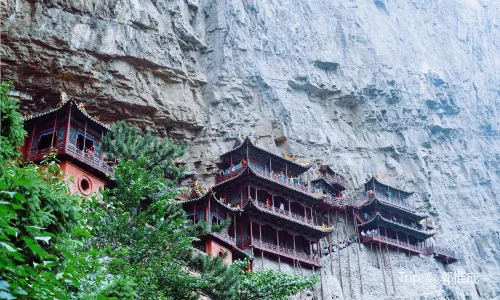
北国之春一The Hanging Temple of Hengshan Mountain in Datong, Shanxi Province, was first built in 491 AD (the 15th year of the Taihe reign of the Northern Wei Dynasty) by disciples of the Taoist master Kou Qianzhi, based on his dying wish to "reach the heavens above and sever all worldly clamor below." With a history of over 1500 years, it is the oldest existing high-altitude wooden cliff-side architectural complex in China. **Structural Features:** 27 hemlock beams are inserted into the rock face as an "aerial foundation." The wooden pillars at the bottom are merely for psychological comfort; the actual load-bearing structure relies on hidden crossbeams, achieving the "suspended" appearance. **Reasons for its excellent preservation:** The canyon terrain reduces sunlight erosion, the mountain shelters it from floods, and the mortise and tenon structure provides strong earthquake resistance. **Cultural significance:** One of the world's ten most dangerous architectural wonders, and the only temple where Buddhism, Taoism, and Confucianism coexist, reflecting the inclusiveness of diverse ancient beliefs. **Admission is free for those over 60, but tickets are extremely difficult to obtain during peak season; remember to book your visit in advance.**
 4.8/5
4.8/5 M14***58
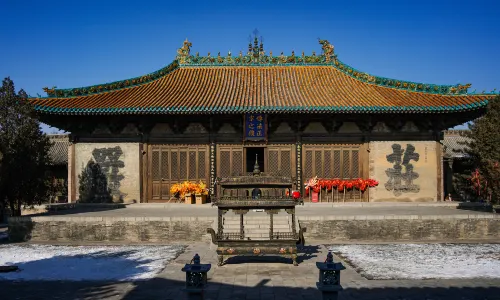
Yong'an Temple is located in Hunyuan County, Shanxi Province, very close to the Hanging Temple Scenic Area. I came specifically to see the murals of the Ten Great Kings. The ten kings in the murals are depicted with either three heads and six arms, or with blue faces and fangs, each holding a ritual implement, their eyes wide with anger, as if about to burst through the wall. The one that struck me most was the "Face-Tearing" King—tearing away the ferocious mask to reveal a compassionate Buddha face.
 Experience the awe-inspiring heights of Xuankong Temple
 Featured in 2025 Asia 100 - Best Things to Do
