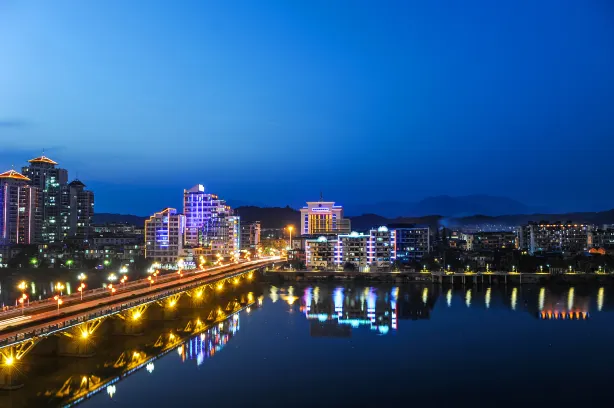
Shaowu

Things to do in Shaowu

Search attractions or local attractions & tours
Search

Explore top experiences

Top 10 attractions in Shaowu

View all Attractions
Xiandu Scenic Area
No. 14 of Best Things to Do in Zhejiang

Xiandu Scenic Area

7.9
4.6/5
6.5k reviews

Xiandu Scenic Area is located in Jinyun, Lishui, Zhejiang, where the Hao River meanders through mountain valleys with nine winding turns. This landscape has long been praised as "possessing the elegance of Guilin, the wonder of Huangshan, and the precipitousness of Huashan." The attraction's name has an interesting origin: legend says during the Tang Tianbao era, colorful clouds enveloped Jinyun Mountain with faint celestial music, prompting Emperor Xuanzong to bestow the name "Xiandu" (immortal capital), which remains in use today. The centerpiece is the 100-meter-high Dinghu peak, a giant stone pillar resembling a bamboo shoot. Flanked by Buxu Mountain to the east and the Hao River to the west, this sheer column features a small lake and ancient pines atop its summit. Folklore claims the Yellow Emperor once refined elixirs here, and when he ascended to heaven on a dragon, his cauldron fell to form the lake—hence the name "Dinghu" (cauldron lake). From nearby Buxu Mountain's peak, visitors can closely observe this sky-piercing pillar. Across the river at Zhutan Mountain, morning mist often blankets the water, framing the stone peak, bridge, and reflections like a flowing ink painting—the setting for that widely circulated photo of an old farmer leading an ox across the stream. Along the Hao River lie attractions like Little Red Cliff, Niweng Cave, and Dufeng Academy: the former features reddish cliffs stretching along the river; Niweng Cave preserves cliff carvings across dynasties, notably the precious Tang-dynasty seal script inscription by calligrapher Li Yangbing; Dufeng Academy commemorates Zhu Xi's lectures during the Southern Song. Below Dinghu peak stands the Yellow Emperor Temple, hosting solemn sacrificial ceremonies annually during Qingming and Chongyang festivals. This natural scenery has long been a favored filming location, featured in hundreds of productions from "Demi-Gods and Semi-Devils" and "The Smiling, Proud Wanderer" to "Swords of Legends" and "The Journey of Flower"—many ethereal wuxia scenes were shot on location rather than in studios. While exploring, visitors might recognize familiar scenes from these dramas.

China · Jinyun
Cheng Kan
No. 2 of Fall Viewing Attractions in Anhui

Cheng Kan

7.9
4.3/5
4.9k reviews

Cheng Kan is located in Huizhou District, Huangshan City. It is a thousand-year-old ancient village whose site and layout were chosen according to the yin-yang and bagua theory in the I Ching. At the end of the Tang Dynasty, the Luo family moved here from Nanchang, Jiangxi, and built the village according to the mountains and terrain. The streets and alleys extend in all directions, and entering the village is like entering a bagua maze. Eight peaks surround the village, and the Congchuan River flows through it in an "S" shape, naturally forming the dividing line of the yin-yang fish of the bagua. The entire village is like a living feng shui scroll. The ancient village preserves a large number of buildings from the Song, Yuan, and Ming dynasties, and such a wide chronological span is very rare among Hui-style villages. Changchun She in the southeast corner was first built in the Song Dynasty and is a community house for worshiping the earth god; Huanxiu Bridge in the northeast was built in the Yuan Dynasty, with a pavilion at the bridgehead, and Huanxiu Xuan beside the bridge houses many old Huizhou wood carvings and embroideries; Luo Huitai Residence, also from the Yuan Dynasty, also has a long history. When it comes to exquisite architecture, the Zhenjing Luo Dongshu Ancestral Hall (Baolun Ge) in the northeast of the village is the first choice. The hall of the second courtyard of this three-courtyard ancestral hall hangs a plaque written by Dong Qichang, and several thick and tall golden nanmu pillars stand in the hall; the two ends of the beams and architraves in Baolun Ge of the third courtyard are exquisitely carved, and many painted patterns on the beams can still be vaguely recognized today. The Ming Dynasty Yanyi Hall is three stories high, and its gate covered with iron nails and its beam and pillar components are impressive; the window railing carvings of Luo Runkun Residence are exquisite, and the beauty's leaning rail upstairs is also quite distinctive. Longxing Bridge in the southeast corner outside the village is a relatively large surviving Ming Dynasty single-arch stone bridge in southern Anhui, spanning the river with a majestic appearance. At the village entrance, white walls and black tiles are reflected in Yongxing Lake, making it a great place to photograph a panoramic view of the ancient village. In spring, rapeseed flowers bloom outside the village; in summer, lotus flowers in the lake shine in the sun; different seasons reveal village scenery with different charms. The village still preserves traditional folk customs such as the Lantern Festival fish lantern parade and autumn shaiqiu, and the ancient breath of life continues among the white walls and dark tiles.

China · Huangshan City
Dajue Mountain
No. 17 of Fall Viewing Attractions in Jiangxi

Dajue Mountain

6.3
4.6/5
1.2k reviews

Dajue Mountain, originating from Buddhism's concept of the Buddha, refers to enlightened practitioners; it is a world Buddhist natural and cultural park. Located in Zixi County, Fuzhou City, the mountain is divided into eastern and western sections. The eastern section features a 300,000-acre virgin forest as its core attraction, while the western section is a comprehensive tourist area centered on religious culture and canyon rafting. The Dajuezhe Peak is the mountain's iconic view, resembling the enlightened Sakyamuni Buddha. Amidst the layered peaks and towering mountains, the natural landscape of Guanyin (Avalokitesvara) appears serene and effortless, a heavenly gift concealing nature's endless mysteries. Between elevations of 300m and 1,200m, a sightseeing shuttle, monorail, cableway, tunnels, and walking paths form a 30km circular route. Visitors can tour the attraction via this loop, connecting planned mountaintop temples and cliffside views along the way. Hidden within are peaks, lakes, pavilions, caves, terraces, celestial lakes, sky roads, and bridges.TianyanTianquan, TianmenTiantaishan, TianjieThe celestial realm forms a wondrous "Nine Heavens" view; beneath the "Nine Heavens" at Dajue MountainLotus PeakShenguifengBijiafengEight towering peaks—Cuiping Peak, Jiangjun Peak, Wenqu Peak, Dieluo Peak, Jingang Peak, and three others—rise abruptly from the ground, forming the "Eight Earthly Realms" view. Immersed in the "Nine Heavens and Eight Earthly Realms, Hundred Views," one can take in the breathtaking panorama and suddenly realize why this is truly the "Sacred Mountain and Holy Waters, the Paradise of the Enlightened." Ascending Dajue Mountain, you'll arrive at the Dajue Rock Temple nestled in a high-altitude cave, where the chanting of Buddhist scriptures lingers in the air and incense smoke swirls. The temple was first built in the first year of the Xianhe era of the Eastern Jin Dynasty (326 AD), boasting a history of 1,700 years. It was later frequented by eminent monks of the Tang Dynasty—Lingyin Temple, HangzhouThe Great Enlightenment Zen Master sought seclusion from worldly affairs and once traveled here, giving the Great Enlightenment Rock Temple its name. The Great Enlightenment Rock is a massive granite cave, with a lower front and higher rear, measuring 69m deep, 99m wide, and 19m high—a truly rare geological formation.The temple consists of seven parts, including the Great Buddha Hall, Ksitigarbha Hall, Guanyin Hall, and Sangharama Hall.It evolved into a comprehensive temple integrating the three major religions. The "Eight Immortals Cave" and "Reading Cliff" on the western side are particularly marvelous. Located deep in mountain valleys, Jiangxi's Dajue Mountain Town has witnessed the footsteps of countless devout pilgrims over the centuries and inspired generations of literati. Today, the town is built soaring above the ground, with architecture as its form and culture as its soul, blending one river, three streets, six alleys, and nine mansions to recreate the grandeur of the Song Dynasty. It has become a sanctuary for meditation, relaxation, and vacation, continuing its millennium-old legacy of prosperity. The TV drama "The Legend of the Heavenly Match: Sequel" was filmed here.

Zixi · 50.9 km from Shaowu
Quanzhou Kaiyuan Temple
No. 1 of Global Traveller-Picked Attractions in Quanzhou

Quanzhou Kaiyuan Temple

7.7
4.7/5
2.4k reviews

Kaiyuan Temple is located in QuanzhouWest Street, Licheng DistrictBuilt in the second year of the Chuigong era during the reign of Empress Wu Zetian of the Tang Dynasty, it has a history of over 1,300 years. It is an important cultural relic along the southeastern coast of China and one of the larger-scale Buddhist temples in Fujian Province. The attractions of the monastery are arranged along the central axisWorship pavilion, the Baiting, the main hall of Kaiyuan Temple, the Sangpeng historic site, the Kaiyuan Temple's Sweet Dew Ordination Platform, the scripture depository, etc.Also,, as well as the stone pagodas on the east and west sides and the east and west corridors. Quanzhou Kaiyuan Temple - The heavenly king hall, also the mountain gate of the temple, was built in 1925. The stone pillars are slightly thinner at the top and bottom, thicker in the middle, shaped like a shuttle, reflecting the Tang dynasty stone pillar style. A wooden couplet hangs on the stone pillars, reading "This place is called the land of Buddha, where every street is filled with saints." It was composed by Zhu Xi, a great Neo-Confucian scholar of the Southern Song dynasty, and written by the modern eminent monk Hongyi. Crossing the mountain gate brings you toWorship pavilionStanding here, you can see the east and west pagodas rising from the ground and the spacious, bright east and west corridors symmetrically arranged on both sides. The east and west pagodas are among the more famous attractions in the area. The east pagoda is called "Zhenguo Pagoda (East Pagoda)," while the west pagoda is named "Renshou Pagoda." Standing over 40 m tall, they are one of the tallest pairs of stone pagodas in China and serve as landmarks and symbols of the ancient city of Quanzhou. Worship pavilionIn front, there is a large stone courtyard where officials and commoners from ancient and modern times gather for activities, becoming particularly lively during events. On both sides of the stone courtyard stand eight large banyan trees, beneath which are arranged 11 ancient sutra pillars and small stupas from the Tang, Song, and Ming dynasties in various styles, as well as two stone tortoises. Then there is the main structure, the Mahavira Hall of Kaiyuan Temple. The Mahavira Hall of Kaiyuan Temple also has an elegant name, "Hundred-Pillar Hall." Originally, the hall was planned to have one hundred pillars, but later, to accommodate the placement of Buddha statues and create space for Buddhist activities, the beams were extended, and the number of pillars was reduced, resulting in the "Hundred-Pillar Hall" with 86 pillars.

China · Quanzhou
Xidi
No. 3 of Night Attractions in Anhui

Xidi

7.7
4.6/5
12.3k reviews

Xidi is a typical Huizhou-style ancient village in Yi County, and together with Hongcun it is known as one of the two great ancient villages of southern Anhui. If Hongcun is known for its waterscape, Xidi focuses more on the architecture itself—the village preserves a well-laid-out complex of Ming and Qing dynasty buildings, with exquisite craftsmanship in the "three Huizhou-style carvings" of brick, stone, and wood. The patterns and branches are so finely detailed that they are a highlight worth savoring throughout the ancient village. Most residents of the village share the last name Hu. Legend has it that they are descendants of Li Ye, Emperor Zhaozong of Tang, who changed their surname to Hu to escape the chaos of war and have lived here for generations ever since. The ancient village was first built during the Huangyou era of the Northern Song dynasty. During the Ming and Qing dynasties, as Huizhou merchants rose to prominence, extensive construction took place, and a large number of Hu merchants returned home to build residences, once giving Xidi hundreds of courtyard houses. The ancient village was laid out in the shape of a boat, spanning three streams. In the south, the Qianbian Stream and Houbian Stream converge at Huiyuan Bridge inside the village to form the Xi Stream, which then joins the Shewu Stream to the north at the village entrance. All the streams flow from east to west, and this is how Xidi, meaning "westward flow," got its name. The main entrance is in the southwest corner, and the first thing that meets the eye is the Hu Wenguang Memorial Archway, built in the sixth year of the Wanli reign of the Ming Dynasty. It is entirely carved and built from local "Yi County bluestone" marble, with five tiers of stone carvings stacked layer upon layer, grand and imposing. Beside the archway, the broad surface of Mingjing Lake is a good spot for photographing the reflections of Hui-style buildings. Entering the village, Ruiyu Ting at the Henglu Street intersection is a typical Huizhou merchant residence. The couplets in the hall are quite meaningful, such as "Happiness is earned through hard work; good bargains often come from being willing to take a loss," which discusses business principles and also contains a philosophy of life. Heading east along the Front Stream, Jing'ai Hall is one of the larger surviving ancestral halls in the village. The "filial piety" character hanging in the center is ingeniously designed—the right half resembles a person bowing with hands clasped, while the left half resembles a monkey, meaning that only those who observe filial piety are truly human, and those who are unfilial are like macaques. Shangde Hall upstream is one of the oldest surviving Ming Dynasty buildings in the village. In addition, Taoli Yuan, which pairs a residence with a study hall; the Hui-style courtyards West Garden and East Garden; Dunren Hall, the late-life residence of the Qing Dynasty Huizhou merchant Hu Guansan; as well as Zouma Lou, Xiulou, and Zhuimu Hall, each have their own features and are worth visiting one by one. Art academy students often come here to sketch, and the young people setting up easels among the white walls and black tiles have also become a scene of the ancient village.

China · Yi County

Experiences you can't miss in Shaowu

Featured Day tours in Shaowu

View all Day tours
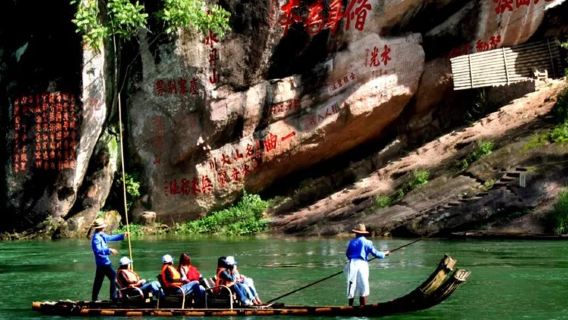
Wuyishan Classic Spots +Jiuquxi Bamboo Raft 1-Day Tour(Optional Impression Dahongpao Show)
Trip.Select
󱌍
4.8/5
· 5 reviews· 45 booked
Duration: 15.4 hrs
English
Free cancellation
Instant confirmation
Book now for tomorrow
FromSEK 560.00
Wuyishan + Nine-Bend Stream Bamboo Rafting Day Tour (Optional Impression Dahongpao Show)
Trip.Select
󱌍
Duration: 14.7 hrs
English
Free cancellation
Instant confirmation
Book now for tomorrow
FromSEK 615.00
Longhushan 1-day private tour (depart from Nanchang)
󱌍
Duration: 10.5 hrs
English
Free cancellation
Instant confirmation
Book now for tomorrow
9% off
Limited-time sale
FromSEK 669.00SEK 743
Shangrao to Gexian Village private 1-day tour (includes admission ticket)
󱌍
Duration: 9.5 hrs
English
Free cancellation
Instant confirmation
Book now for tomorrow
10% off
Limited-time sale
FromSEK 1,233.00SEK 1,370
From Shangrao: 1-day tour to Wuyishan [Private charter | Chinese/English guide]
󱌍
FromSEK 3,382.00

Featured Culture & history in Shaowu

View all Culture & history
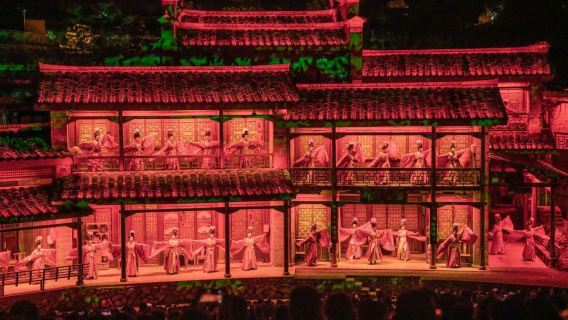
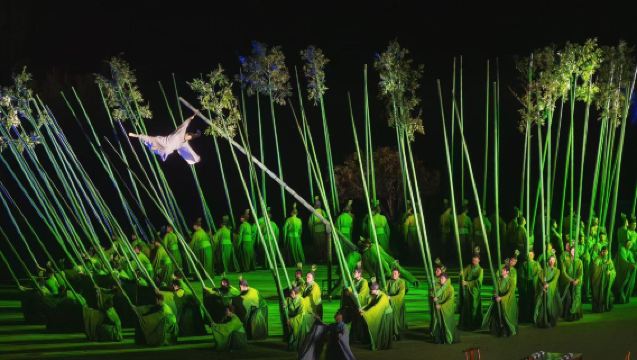
Half-day tour of Wuyishan Impression Da Hong Pao live performance: Experience millennia of tea culture and folk customs
󱌍
5.0/5
· 5 reviews· 48 booked
Duration: 1 hr
English
Instant confirmation
Book now for tomorrow
FromSEK 343.00
Fujian Wuyishan "Impression Da Hong Pao" (Live view performance + Wuyishan nightlife + Nine-bend danxia)
󱌍
5.0/5
· 1 review· 22 booked
Duration: 3 hrs
English
Free cancellation
Book now for tomorrow
FromSEK 360.00
World dual heritage Wuyishan | Jiuquxi Bamboo Rafting · sightseeing bus shuttle · intangible cultural heritage tea culture experience
󱌍
FromSEK 360.00
[Fujian] "Moon Over Wuyi" Performance (270° panoramic spectacle + Zhu Xi's ritual music ceremony)
󱌍
FromSEK 284.00
[Fujian] "Moon Over Wuyi" Performance show/concert ticket (immersive water stage + Song Dynasty painting elements)
󱌍
4.0/5
· 1 review
Duration: 1.1 hrs
English
Free cancellation
Instant confirmation
FromSEK 284.00
Shaowu Today's weatherLight rain 14-20℃
Shaowu weather for the next 2 days11/14: 15-19℃, 11/15: 14-23℃

Free things to do in Shaowu

What travelers say about Shaowu

user-avatar
数羊小狗October 9, 2026
5.0
When visiting Fuzhou, a leisurely stroll through the Three Lanes and Seven Alleys is a must. Walking on the cool cobblestone streets, looking up at the staggered saddle-shaped walls, white walls and gray tiles, you'll see the quintessential old Fuzhou. No need to rush to see the must-see spots; just wander into any alley, and you'll find ancient houses and courtyards brimming with stories. The streets are bustling with the aroma of everyday life—meat dumplings, fish balls, and peanut soup fill the air—a truly blissful experience as you stroll and savor the delicious treats.

Three Lanes And Seven Alleys

user-avatar
可爱的旅游生活89November 6, 2026
5.0
Qiandao Lake's charm lies in its expansive and expansive island layout, clean water, and strong sense of natural beauty, making it ideal for leisurely vacations and road trips around the lake. Taking a boat to the islands is a unique feature, but the boat routes are fixed, and long queues at the docks can occur during holidays. The attractions are scattered, making it inconvenient without a car. The overall pace is relaxed, not suitable for those seeking a dense itinerary; those who prefer lake views, leisurely walks, and a slower pace will enjoy it.

Qiandao Lake

user-avatar
Anonymous userOctober 18, 2026
5.0
Teacher Xiaoyu's explanation was excellent. She really wanted to tell us about the treasures of the Jiangxi Provincial Museum in a short time. You could feel her passion for her work. I am grateful to have had the opportunity to hear her explanation.

Jiangxi Provincial Museum

user-avatar
小冬瓜November 11, 2026
5.0
It's worth a visit. The scenic area is large, and there are park bus stops that stop at each attraction, which is very convenient. Since I went during the off-season, the experience was still quite good.

Xiandu Scenic Area

user-avatar
锡城阿真November 10, 2026
5.0
📍Location: Huizhou District, Huangshan City, Anhui Province. A national 5A-level scenic spot and a national historical and cultural village, belonging to the ancient villages of Huizhou in southern Anhui. Famous saying: "Visit Chengkan, and your life will be free of obstacles." Originally named Longxi, it was first built in the Eastern Han Dynasty, about 1800 years ago. Zhu Xi praised it: "Chengkan, the village of two sages, is the number one village in Jiangnan." Key attractions: 1. Luodongshu Ancestral Hall (Baolun Pavilion) | Top priority. Known as the number one ancestral hall in Jiangnan, it is one of the two national protected sites in the village and a masterpiece of Ming Dynasty ancestral halls. 1. **Hall 1:** Four massive golden nanmu pillars inside the hall, with Ming Dynasty painted beams—the ceiling of this ancient Huizhou building is a must-see. 2. **Yongxing Lake:** A lake at the village entrance, reflecting the white walls and black tiles, perfect for daytime photos; also the main venue for the fish lantern parade, creating a strong atmosphere at night. 3. **Bagua Gate:** A popular photo spot, a filming location for the TV series "Joy of Life," featuring an arched gate; great for creating depth-of-field shots with a telephoto lens. 4. **Changchun Society:** One of the oldest existing community houses in Huizhou, used for worshipping the land and grains, a remnant from the Song Dynasty. 5. **Huanxiu Bridge, Autumn Harvest Square, and Numerous Ming and Qing Dynasty Residences:** Over 150 ancient buildings from the Song, Yuan, Ming, and Qing dynasties are preserved. The number of Ming Dynasty buildings is among the highest in southern Anhui. Ancient bridges, wells, and watchtowers are scattered throughout the village, giving it a more vibrant, lived-in atmosphere than Hongcun and Xidi, while attracting fewer tourists. **Reminder:** Recommended visit duration: 2-3 hours during the day; for a more leisurely stroll and photo opportunity, an overnight stay is recommended.

Cheng Kan

user-avatar
大白弟弟October 4, 2026
5.0
It's great, but you need to allow enough time for the bullet train. The best arrangement is to plan all activities in the morning, take the cable car up the mountain, then the bullet train, followed by the high-speed rail, have lunch in Dajue Town, and go rafting in the afternoon. One day is just right. The local bread is really delicious; I thought I bought too much when I bought it, but then I realized I bought too little! 😀

Dajue Mountain

user-avatar
菁菁 者莪July 23, 2026
5.0
Kaiyuan Temple, a thousand-year-old temple, boasts imposing twin pagodas and towering banyan trees, offering a tranquil escape from the bustling city. Just a wall away lies West Street, a vibrant hub of activity, with its exquisitely carved ancient buildings that blend the diverse cultures of the Maritime Silk Road, making it a worthwhile destination to savor and appreciate the rich heritage of Quanzhou.

Quanzhou Kaiyuan Temple

user-avatar
炫音世界November 12, 2026
4.0
My initial impression of Huizhou was breathtaking, especially its architecture. However, after visiting the ancient city, Qiankou residences, and then Xidi and Nanping, I wasn't as impressed. I recommend visiting Xidi; Nanping is quite remote and difficult to access, especially on the return trip.

Xidi

user-avatar
_gf***82November 10, 2026
5.0
I took a two-day road trip to Lishui with friends. On the second afternoon, we went to Yunhe Terraces. We drove there ourselves, so we didn't have to take the scenic area shuttle bus. First stop: Jiuqu Yunhuan (Nine-Bend Cloud Ring). Vast terraced fields, golden yellow in autumn, absolutely stunning! Second stop: Kenggen Stone Village (Kenggen Stone Village). A centuries-old stone-walled village. And Baiyin Valley. We didn't have enough time, so we skipped Qixingdun.

YunHe Rice Terraces

Trip Moments in Shaowu

Popular cities near Shaowu

Frequently asked questions

When choosing a tour, start with how much time you have and the kind of experience you're looking for. Trending options right now include Wuyishan Classic Spots +Jiuquxi Bamboo Raft 1-Day Tour(Optional Impression Dahongpao Show), Wuyishan + Nine-Bend Stream Bamboo Rafting Day Tour (Optional Impression Dahongpao Show), and Fuzhou 1-Day Private Charter Tour: Dajue Mountain + Zhengjue Ancient Temple + Wenchangli (Chinese and English Services Available). Check the real-time availability and itinerary before you book.

As of November 14, 2026, the reference price for day tours and activities in Shaowu is around SEK 560 – SEK 4,075. Rates vary by duration, group size, transportation, tickets, meals, and any special admission requirements. Before you book, please confirm the billing currency and whether the price is quoted per person or per group.

Get help anytime, anywhere within 30 secondsContact customer support

Change and cancellation policies vary by attractions and tours. Please check the product details page for more information.

Ticket prices may vary between weekdays and weekends, as well as during peak and off-peak seasons. When booking with Trip.com, you can also use Trip Coins to get extra savings. For more tips on booking discounted tickets, please visit Trip.com for the latest information.