Things to do in Jingtai
Explore top experiences
Top 10 attractions in Jingtai

Yellow River Stone Forest National Geological Park
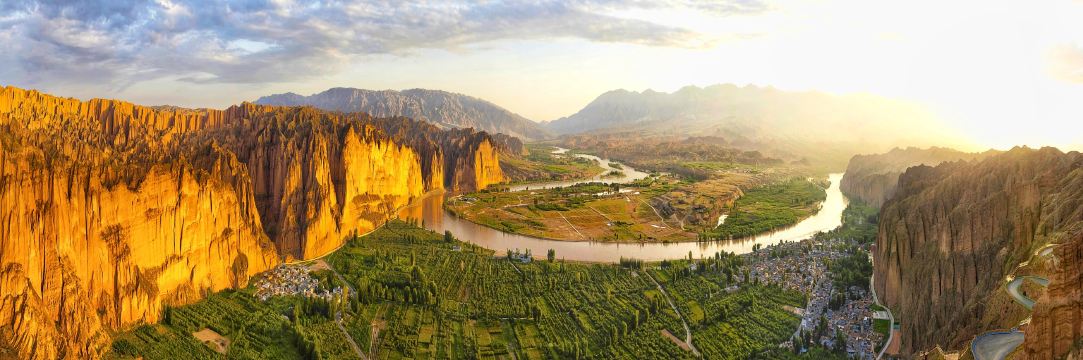
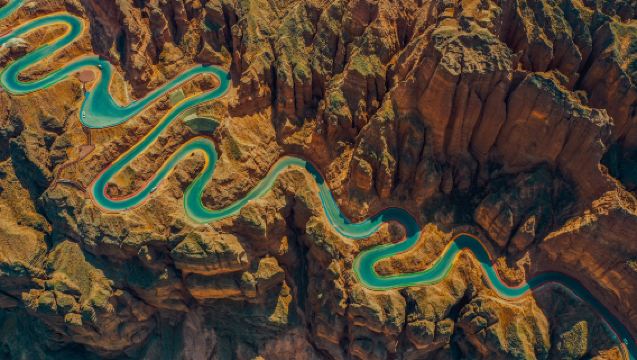
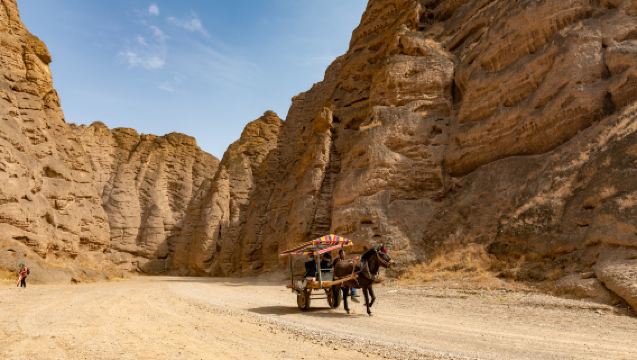
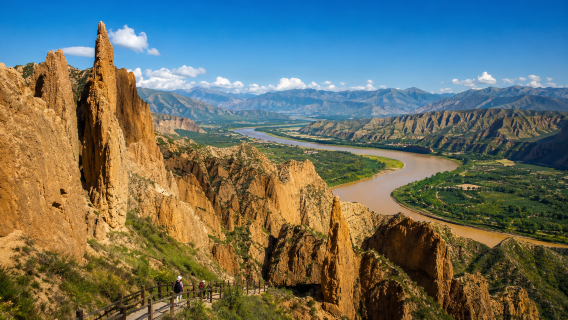
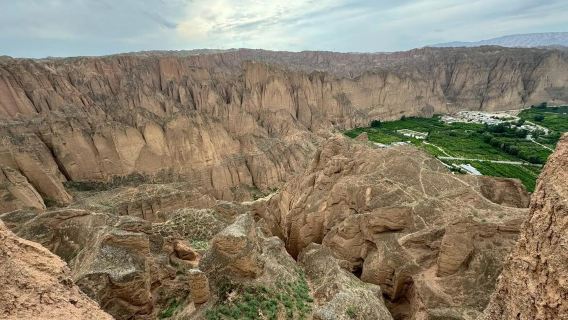
Yellow River Stone Forest National Geological Park is near the Yellow River, southeast Jingtai County, Baiyin City, Gansu Province. It is dominated by a large canyon about 9 kilometers (5.6 miles) long along the Yellow River. There are towering stone forests on both sides of the canyon presenting a very unique landform. The main attraction of the Stone Park is the observation deck at the end of the main grand canyon. In addition to the stone landscape, there is an opportunity to sample many of the local folk customs. The donkey carts in the canyon exemplify these folk customs. Local elderly women lead the donkey carts, often singing northwestern folk songs.Jingtai · 39.3 km from downtown

Yongtai Ancient City
Yongtai Ancient City is located in the Gobi wilderness of Baiyin, Gansu. Built in the 36th year of the Wanli reign of the Ming Dynasty (1608), it was a military fortress constructed by the Ming Dynasty to defend against northern border threats. Viewed from above, the ancient city's outline resembles a giant turtle, hence it is also known as "Yongtai Turtle City": the city's layout is oval, with the city gate facing south and slightly west, resembling a turtle's head; each of the four sides has a barbican, like turtle claws; a series of beacon towers to the north stretch into the distance, like a turtle's tail; and a moat surrounds the city. As an important barrier connecting Lanzhou and the Great Wall defense line during the Ming and Qing Dynasties, at its peak, the city housed over 2,000 soldiers, with auxiliary facilities such as gunpowder depots, fodder depots, and horse stables all in place. Beacon towers stretching for tens of miles toward Lanzhou and the Great Wall can still be traced today. The Qing Dynasty general Yue Zhongqi, said to be a descendant of Yue Fei, was born in the city. He rose to the rank of Governor-General of Sichuan and Shaanxi, and his father, Yue Shenglong, also served as the Provincial Commander-in-Chief of Sichuan. The three generations of the Yue family were all military leaders, bringing fame to this small frontier town. Today, only a few dozen households live in the city, most of whom are descendants of the soldiers who once guarded the border. Loess courtyards, Qing Dynasty residences, and an elementary school stand quietly in the city, and most of the city walls, gates, and barbicans have been preserved to this day. At dusk, the setting sun dyes the rammed earth walls gold, and villagers herding sheep pass by, framed against the mottled earthen walls; after nightfall, there is little light pollution, making it a great spot for stargazing.Jingtai · 19.7 km from downtown

Yinma Gou Grand Canyon
Yinma Gou Grand Canyon is located in Ningxia Hui Autonomous Region, China, and is a tourist destination famous for its magnificent natural views and unique geological features. It attracts many tourists and nature enthusiasts with its deep canyon landforms and rich natural resources. The rock walls inside are steep and varied in shape, having formed peculiar geological views through long-term weathering and erosion. Visitors can walk along the trails to admire these masterpieces of nature up close. Clear streams meander through it, adding a lively touch to the entire scenic area. It is not only a geological wonder but also an ecological treasure trove, home to a variety of flora and fauna. The natural environment here is well-preserved, making it an ideal place for ecotourism and nature observation. For photography enthusiasts, the changing light and shadow and rich natural colors here provide excellent shooting opportunities. In addition, it carries rich historical and cultural connotations, with the surrounding area boasting a long historical background and diverse cultural traditions, allowing visitors to experience the local cultural charm while enjoying the natural beauty. Whether for adventure, photography, or leisure, this is a destination worth exploring.Jingtai · 39.4 km from downtown

Wufoyan Temple
Wufoyan Temple is located on the west bank of the Yellow River at the eastern end of Jingtai County, 20 km from the Jingtai county seat. Since ancient times, Wufoyan Temple has been a ferry crossing for sheepskin raft transport on the Yellow River, as well as a necessary Yellow River crossing on the Silk Road for travelers heading east and west, and an important ferry crossing in the upper reaches of Heishanxia. The Wufoyan Temple Grottoes were built during the Northern Wei Dynasty. They face east, with their backs to the mountains and facing the river, and are named for the five large Buddha statues and over 1,000 small Buddha statues sculpted inside. The grotto is 9 m deep and 7 m wide, with a hollow pagoda pillar in the center reaching the ceiling. The pagoda pillar is square, 5 m wide on each side, with niches on all four sides. Each niche contains 1 Buddha statue, each with a different, serene expression. In the north and south corners of the room, there is 1 clay statue each, which are tall, with golden, plump faces and dignified postures. On the north and south walls, there are 7–9 rows of molded small Buddha statues, totaling 1,000. The Wufoyan Temple Grottoes were renovated during the Tang, Song (Western Xia), Ming, and Qing dynasties. During the 1982 renovation of the grottoes, several pages of Buddhist scriptures printed in Western Xia script were discovered. Approx. 100 m south of the temple, the River View Tower is built along the river. Climbing the tower and looking down, the rushing torrents are in full view. Looking across the river, the mountains are layered, tall, and beautiful. Two kilometers south of the temple are sections of The Great Wall from the Han, Tang, and Ming dynasties, and east of the river are several provincial-level cultural relic protection units, such as Beiditan and Goujiatan in Jingyuan County. The first pumping station of the first and second phases of the Jingdian Project is also located here. The Wufoyan Temple Scenic Area is a scenic spot that integrates natural and cultural landscapes. It is also a provincial-level patriotic education base and a great place for tourism, sightseeing, and vacationing.Jingtai · 20.5 km from downtown

Great Wall
The Ming Great Wall Site, distributed across Jingyuan and Jingtai counties in Baiyin City, is composed of structures including walls, passes, watchtowers, beacon towers, and fortresses. Construction was adapted to local conditions and flexibly applied. A few sections are made of brick, but most are constructed of rammed loess. Some sections utilize natural terrain, with stones piled on mountain ridges to form walls, or by taking advantage of steep mountains and ridges to carve walls directly into the mountainside. Others use deep trenches dug into the terrain as border moats. Wall platforms and square, conical beacon towers that protrude from the wall were built on the wall and along its inner side. Passes and fortresses were established in some important sections. For walls built of loess, the rammed layers are 13–20 cm thick and interspersed with wooden sticks, wild grass, and other materials. The Shandan, Yongchang, and Gulang sections are well preserved, with a wall base width of 2–4 m, a top width of 1–2 m, and a remaining height of approx. 8 m. The beacon towers are located on the inner side of the wall and connected to the Great Wall; they are square and conical in shape, with a base of 6 m and a remaining height of over 10 m. The distance between towers is approx. 5 km. They stand within sight of one another, creating a spectacular view. It is a Major Historical and Cultural Site Protected at the National Level.Jingtai · 31.3 km from downtown

Shapotou Scenic Area
The scenic spot is located 16 kilometers west of Zhongwei City, Ningxia, on the southeastern edge of the Tengger Desert. The scenic spot has successively won honors such as "the first batch of national 5A-level tourist attractions", "the top 500 global environmental protection units", and "the first batch of national tourism standardization demonstration units". The three major cultural elements of the scenic area include the "Yellow River Culture" based on the intangible cultural heritage sheepskin rafts, the "Desert Culture" based on straw grids and Desert Legend Park, and the "Starry Sky Culture" based on the Desert Star Hotel. The tourism resources of these three elements have created a unique and magnificent landscape of "sunset over the long river and starry sky in the desert". The "six major ways to play" are highly praised and loved by tourists. Among them, the Yellow River projects include sheepskin rafting, Huangtengda, Yellow River speedboat, drift boat, passionate sandboarding and high-altitude bungee jumping, etc. The desert projects include Desert Camel, Desert Flying (Stepping into the Blue Clouds), and Sand Sea. Surfing, etc., starry sky projects include stargazing lectures, meteor feasts, sand therapy experiences, star cakes and other special products. In addition, there are also privately customized products for hiking, desert expansion, and educational and entertaining study experiences. The scenic area not only has diverse cultural elements and fun project experiences, but also multi-level accommodation experiences waiting for you: the butler-style Diamond Hotel, the quiet Desert Star Hotel for stargazing, the quiet Yellow River Courtyard in the bustling city, and finally the economical and affordable business-style Tourist Service Center Hotel and other differentiated tourist accommodations for you to choose from.Zhongwei · 89.1 km from Jingtai

Qinghai Tibetan Culture Museum
Qinghai Tibetan Culture MuseumIt is a comprehensive museum themed on Tibetan medicine culture and featuring Tibetan culture.Qinghai Tibetan Culture Museum(also known as Qinghai Tibetan Culture Museum) is located in Xining, the capital of Qinghai Province in the eastern part of the Qinghai-Tibet Plateau. It officially opened in September 2006. The museum has basically formed a "one museum with two halls" layout, featuring 16 exhibition halls including the Silk Road and Tibetan civilization, the grand view of Chinese Tibetan art painting, and the history of Tibetan medicine.Qinghai Tibetan Culture MuseumThe collection is rich, historic, and diverse, possessing high historical, scientific, and artistic value. The museum houses the Guinness World Record-holding thangka masterpiece, "The Grand Thangka of Tibetan Culture and Art," which is 618 m long. It was planned by renowned thangka master Zongzhe Lajie and completed by 400 painters over four years. Its content encompasses the Tibetan understanding of the universe, the formation of the Qinghai-Tibet Plateau, history, religion, medicine, culture, art, and folklore. With its intricate details and brilliant colors, it is a magnificent sight and can be called an encyclopedia of Tibetan culture, hailed as a "contemporary national treasure." Through four major series—ancient books and documents, Tibetan medical thangkas, ancient Tibetan medical instruments, and Tibetan material specimens—the museum comprehensively displays the long history, profound theoretical system, clinical practice, and unique preparation techniques of Tibetan medicine, with four ancient books included in the National Catalogue of Precious Ancient Books. The Silk Road and Qinghai-Tibet Civilization exhibition hall uses history as its temporal dimension and the vast plateau landscape as its geographical dimension. Through thousands of precious cultural relics such as silk, gold and silver ware, and coffin paintings, it highlights Tibetan cultural elements and showcases the origin, inheritance, rise, and prosperity of the Qinghai-Tibet Plateau civilization throughout the long river of history. The Tibetan carpet exhibition hall is one of the largest exhibitions of ancient carpets in China, displaying more than 400 Tibetan carpet artifacts from different periods and eras, featuring magnificent patterns, intense colors, and unique ethnic styles and local characteristics. At the same time, there are also Tibetan-style architectural exhibition halls, Tibetan calligraphy art exhibition halls, as well as temporary exhibition halls, multimedia screening rooms, academic lecture halls, and cultural relic storage rooms, providing strong capabilities for inheritance, protection, and research, as well as conditions for cultural exchange.Qinghai Tibetan Culture MuseumIt will continuously improve the level of cultural relic preservation, exhibition design, scientific research, and management operations, becoming a platform for promoting ethnic unity and social development, a broad stage for cultural dissemination and academic exchange, a research center for cultural relic protection and Tibetan studies, and an exhibition center for treasured literature and collections, showcasing the splendid civilization and culture of the Tibetan Plateau to the world.China · Xining

Kumbum Monastery
Kumbum Monastery is one of the important monasteries of the Gelug (Yellow Hat) sect of Tibetan Buddhism and the birthplace of Tsongkhapa, the founder of the Yellow Hat sect. The monastery features magnificent architecture, abundant treasures, and a strong religious atmosphere, making it one of the more popular travel destinations in Xining. Overview of the visit It has distinct differences in architectural layout compared to Han Chinese Buddhist temples in inland China: the complex here is not symmetrically arranged along a central axis. The monastery is an ancient architectural complex composed of numerous halls, scripture halls, stupas, and colleges, with each sutra hall, main hall, and stupa irregularly distributed on a small hill. Travelers can explore the site in a relatively free manner rather than following a straight path along a central axis. The Great Golden Roof Hall of Kumbum Monastery is the center of the entire architectural complex. It is said that Master Tsongkhapa was born here, and when he was born, his umbilical cord blood dripped on this spot, from which a bodhi tree grew. Later, a stupa was built around the tree, and a monastery was constructed, hence the name. Believers hold that this tree and stupa are the embodiment of the master. The three unique features of the attraction: butter sculptures, murals, and appliqué embroidery. Butter sculptures are made by mixing butter with various pigments to mold and carve into figures of Buddhas, people, flowers, birds, animals, and pavilions. Travelers can admire exquisite butter sculptures at the butter sculpture hall inside the temple (located far from the main gate). Vibrant centuries-old murals can be appreciated in the main halls, corridors, and front galleries of the temple. Appliqué embroidery involves cutting colored satin into desired shapes, such as Buddha figures or animals, stuffing them with wool or cotton, and embroidering them onto cloth hangings. In the temple's great sutra hall, two rare large appliqué embroidery pieces—"Sixteen Arhats Displaying Divine Powers" and "Eight Immortals Crossing the Sea"—hang on either side. The four major religious festivals (based on the lunar calendar): 1. Cham dance (14th day of the first month) and butter sculpture exhibition (15th day of the first month); 2. Cham dance (14th day of the fourth month), Buddha unveiling, and Cham dance (15th day of the fourth month); 3. Buddha unveiling, Cham dance (6th day of the sixth month), and golden Buddha procession (8th day of the sixth month); 4. Full-day Buddha unveiling (22nd day of the ninth month) and Cham dance (23rd day of the ninth month). During these festivals, activities like Buddha unveiling and ritual dances take place, attracting large crowds of devotees and travelers, creating a lively atmosphere.China · Xining
Lanzhou Danxia Geological Park
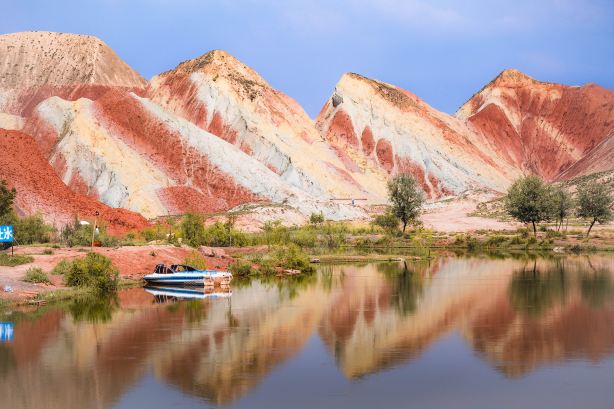
Lanzhou Danxia Geological Park is a key cultural tourism project in Gansu Province and a comprehensive cultural tourism initiative prioritized by the Lanzhou Municipal Committee and Government. Located by the Yellow River, the park is just 13 km from downtown Lanzhou and 30 km from Lanzhou Zhongchuan International Airport, making it one of the closest Danxia landform clusters to a major urban center in China. With a total planned area of 400 sq km and a core visiting area of 25 sq km in its first phase, it ranks among the largest discovered landscapes of its kind in the country. The park primarily features red mountain bay formations, along with spectacular Danxia cliffs, isolated peaks, secluded valleys, narrow gorges, and balancing rocks. Its colorful mountains set against winding waterways create a masterpiece of Danxia landform scenery. The attraction features seven viewing platforms showcasing the Danxia landforms: Silk Road Glow, Silk Road Eagle, Flying Apsaras Exploration, Nine-Colored Danxia, Danxia Reflecting Sky, Emerald Peaks Rippling Sky, and Danxia Summit Scenic View. It also includes the Ancient Silk Road Gateway, Shajing Tribe Cultural Square, Desert Bells Scenic Boulevard, and a 2,550m Danxia boardwalk viewing area. As a key cultural tourism project in the province, Lanzhou Danxia Geological Park adheres to the principles of "ecological protection, green development, preserving original features, and moderate development." Leveraging Lanzhou's unique resource advantages and focusing on the domestic tourism market, it aims to cultivate new growth drivers for Lanzhou's cultural tourism industry and establish a new highland for cultural tourism in the city.China · Yongdeng

Qinghai-Tibet Plateau Wildlife Park
The Qinghai-Tibet Plateau Wildlife Park is located in Xishan, Xining. It is a beautiful zoo with some special animals such as snow leopards and desert cats. It is not easy to see in other cities. The size of the Qinghai-Tibet Plateau Safari Park is not large. There are mainly beasts and aboriginal areas, such as the Beasts Reserve Area, and the Aquarium. The famous beasts are scattered areas. Currently, the plank road is built. Visitors can watch the beasts on the plank road.China · Xining
Experiences you can't miss in Jingtai
Featured Day tours in Jingtai
View all Day tours
5.0/5
· 5 reviews· 22 bookedFree cancellation
Instant confirmation
Book now for tomorrow
FromQAR 276.08
Free cancellation
Instant confirmation
Book now for tomorrow
FromQAR 217.14
Free cancellation
Instant confirmation
Book now for tomorrow
FromQAR 228.31
Free cancellation
Instant confirmation
Book now for tomorrow
9% off
Limited-time sale
FromQAR 154.29QAR 171.43
Free cancellation
Instant confirmation
Book now for tomorrow
FromQAR 173.71

Instant confirmation
Book now for tomorrow
FromQAR 526.09
Free cancellation
Book now for tomorrow
FromQAR 974.01
Free cancellation
Instant confirmation
FromQAR 353.63
Free things to do in Jingtai
Yongtai Ancient City
Jingtai · 19.7 km from downtownYinma Gou Grand Canyon
Jingtai · 39.4 km from downtownWufoyan Temple
Jingtai · 20.5 km from downtownGreat Wall
Jingtai · 31.3 km from downtown
Gansu Provincial Museum
China · Lanzhou
Tengger Desert
Zhongwei · 64.5 km from Jingtai
Shuidonggou Tourist Attraction
China · Lingwu
Tengger Desert
China · Alxa Left Banner
Lanzhou Old Street
China · Lanzhou
Zhongshan Bridge
China · Lanzhou
What travelers say about Jingtai

_We***48September 28, 2026
5.0
The Yellow River Stone Forest is truly awe-inspiring, showcasing the grandeur of Northwest China! The Yinmagou Grand Canyon boasts towering stone pillars and bizarrely shaped rocks on both sides. Climbing to the viewing platform offers panoramic views of the continuous stone forest, the winding Yellow River, and the Longwan Oasis. At sunset, the rocks are bathed in golden light, creating a truly cinematic experience. You can ride a donkey cart through the canyon, listening to the driver sing Northwest folk songs, or experience a sheepskin raft ride to immerse yourself in the Yellow River's charm. The pristine and magnificent natural scenery is perfect for those who appreciate geological wonders and love taking landscape photos—definitely worth a special trip!
Yellow River Stone Forest National Geological Park

水漫三楼September 21, 2026
5.0
Yongtai City Site, located in Yongtai Village, Sitan Town, Jingtai County, Baiyin City, Gansu Province, also known as Guicheng, is a large-scale earthen fortified city built during the Ming and Qing Dynasties, dating back to the 35th year of the Wanli reign (1607). The site is 520 meters long from east to west and 500 meters wide from north to south, covering an area of over 300,000 square meters. The city walls are constructed of rammed earth mixed with sand, reaching a height of 8-12 meters, with a base width of 6 meters and a top width of 5 meters. Semi-circular barbicans were built on the east, west, and north sides of the city. The city gates opened to the south and were surrounded by barbicans. Twelve watchtowers (or ramparts) were also present around the city. Archaeological exploration in 2017 revealed that only the flood control ditches on the east and west sides of the moat remain. Stone tablets and other artifacts were unearthed at the site. This ancient city was an important stronghold in the new border defense system of Gansu during the Ming Dynasty. Construction began in 1607 (the 36th year of the Wanli Emperor's reign) and was completed in 1608 (the 37th year of the Wanli Emperor's reign) under the supervision of Xing Yunlu, the Deputy Military Commissioner. In 1724 (the 2nd year of the Yongzheng Emperor's reign), Yue Zhongqi added the Five-Eyed Well and the Ganlu Pond water system. In 1914 (the 3rd year of the Republic of China), Yongtai Primary School, a school combining Chinese and Western styles with a Gothic influence, was established. It closed in 2014 and was converted into a museum. The ancient city contains ancient architectural complexes such as the Great Buddha Temple, the Zhushen Pavilion, and the Jade Emperor Hall, as well as several memorial archways, and is hailed as a textbook example of ancient Chinese military fortresses. In May 2006, it was listed as a sixth batch of National Key Cultural Relics Protection Units and was designated a Historical and Cultural Village of Gansu Province in the same year.
Yongtai Ancient City

游侠半仙February 29, 2024
5.0
"Yinmagou Grand Canyon" got its name. One theory is that this is the place where Genghis Khan hid his troops and drank horses. The other is that in Journey to the West, the Tang monk and his disciples drank white dragon horses here when they were studying in the West. They stood at the mouth of Yinmagou. It can be seen that the ancient Yellow River and ancient stone forest are moving and still, sheepskin rafts are floating from the upper reaches, and the mountains and rivers are beautiful, just like in the travel paintings. In the winding canyon, there are towering peaks and cliffs, majestic and majestic. The scenic spots such as goshawks looking back, lovers under the moon, and thousands of sails competing are various and vivid. They are strange, majestic, dangerous, ancient, wild, and secluded. They are so beautiful. Yinmagou is also an ideal place for film and television shooting. More than 80 film and television works have been shot here, including "Myth", "The Granary of the World", "Sweat-blooded BMW", "Old Persimmon Tree", "Beautiful Big Feet" Xuanyuan Sword" and so on.
Yinma Gou Grand Canyon

点都不沉默September 24, 2026
4.0
This is a less-visited scenic spot in Jingtai County, Baiyin City, located on the banks of the Yellow River. It takes about an hour by bus from the Dongfang Bathhouse in the county town; for the return trip, ask the driver what time it is, as buses are infrequent. There are a few temple caretakers who work out of love and don't receive a salary. An elderly man guards the entrance to the main Five Buddha Hall; if you want to see the Buddha statues, he will open the temple gate and lead you on a tour, explaining in detail the construction dates of the statues. Unfortunately, two Northern Wei Dynasty statues have been stolen, leaving only one beautifully crafted one. The two Buddha statues in the back corner were built during the Ming Dynasty, and the smaller Buddha statues next to them include both privately and officially commissioned works. At the very front, in the center, is Shakyamuni Buddha; there are actually six Buddhas in total. Admission is free; there's a WeChat donation option at the entrance for those who wish to donate. I scanned a small amount to show my support. You can also climb a short ladder to the top of the mountain, where there is a white jade Shakyamuni Buddha statue, or sit in the pavilion at the summit for views of the scenery below.
Wufoyan Temple

美梦成真123!!October 18, 2020
5.0
The Great Wall will never fall. Although we can't see the high walls, the thick loess piles have already shown our determination to resist foreign invaders.
Great Wall

M33***23October 20, 2026
5.0
When people mention Zhongwei, Ningxia, many immediately think of Shapotou. This is a rare spectacle in China, where the desert and the Yellow River embrace. On one side are rolling golden sand dunes, and on the other, the mighty Yellow River flows ceaselessly. With the distant Gobi Desert and mountains as a backdrop, the natural scenery is rich and layered, making it perfect for family outings and short trips.
Entering the scenic area and standing atop a sand dune, you'll see an endless desert below, with the Yellow River meandering beneath. The stark contrast between the yellow sand and the blue water vividly brings to life the scene described by Wang Wei: "A lone plume of smoke rises straight from the desert, the setting sun sinks round in the long river."
Shapotou offers a wealth of activities, balancing relaxation and excitement, with various activities that can easily fill a day. Most people, having made the trip to the desert, will ride camels, traversing the dunes and experiencing the unique, desolate atmosphere of the desert.
For thrill-seekers, be sure to try the signature activities. Sandboarding is a classic activity at Shapotou. Sliding down the high sand dunes amidst billowing sand provides an exhilarating experience. Other attractions include Yellow River bungee jumping, desert ziplining, and the "Flying Desert" ride, offering thrilling challenges for the most adventurous visitors. The scenic area also features unique desert-themed architecture with avant-garde designs, perfect for taking photos.
The scenic area is divided into two main sections: the desert area and the Yellow River area. It's recommended to explore the desert area first before heading to the Yellow River. At the Yellow River, you can experience riding sheepskin rafts and enjoying the grandeur of the river up close. Along the way, you'll see sculptures of galloping horses and Wang Wei, allowing you to stroll and feel the rich history of Northwest China.
Shapotou Scenic Area

我要我疯我要我爱就是我要我疯我要我爱October 9, 2026
5.0
It's definitely worth a visit; it's truly breathtaking. Every detail is meticulously crafted, completely contrary to online claims of shoddy workmanship. The 600-meter-long mural is said to have taken 27 years to paint. I didn't spend the entire fourth-floor Tibetan cultural mural exhibition, but I saw the other exhibits. The guided tours all use headphones, but the volume is extremely low, making it difficult to hear the explanations.
If you're just rushing through, don't bother renting a guided tour. However, if you want to take your time and spend an afternoon at each exhibit, it's well worth it.
Qinghai Tibetan Culture Museum

M33***46October 22, 2026
5.0
As the birthplace and memorial monastery of Tsongkhapa, the founder of the Gelug school of Tibetan Buddhism, this historical and cultural site, over 600 years old, is a must-see. Photography of the stupa at the entrance is permitted, but not of the Buddha statues inside. The monastery currently houses over 1000 monks and more than a dozen Living Buddhas. While the throngs of worshippers are bustling, the atmosphere is peaceful and serene (perhaps the burning of large incense sticks is not part of the ritual). Many areas allow you to light lamps for blessings (20 yuan per person, depending on your conscience), and there are places to exchange change for prayers. Best of all, there are Chinese-language guided tours, and the guides are very professional; I learned more about Tibetan Buddhism than I did during my previous trip to Lhasa!
Kumbum Monastery

Patrick Woodbourne ClarkeOctober 22, 2026
5.0
Lanzhou Danxia Geological Park is fabulous. One of the top three things I have done on this tour. I used Trip.com to get out to the park and that was very easy. Shuttle buses are necessary to get between the various vantage points. I would come for longer next time and do the zip line. I got an 8am bus from Xiaoxihu Subway Station and it leaves the Park at 12pm to return back to the city.
Lanzhou Danxia Geological Park

D12***71October 22, 2026
5.0
The Plateau Wildlife Park is excellent. The snow leopards are adorable, and the giant pandas are also worth seeing. There are many different kinds of animals, and many of them are well cared for. The environment is beautiful, built on a mountain, and there is also a botanical garden to visit. The prices are very reasonable.
Qinghai-Tibet Plateau Wildlife Park


