
Things to do in Jingyuan
Explore top experiences
Top 10 attractions in Jingyuan


Museums in Xi'an
Xi'an Museum Tour explores imperial, archaeological, and artistic key museums with immersive activities, revealing the ancient capital's history across thirteen dynasties. Imperial Mausoleum Site Museums:Unearth the secrets of the Terracotta Army. At this UNESCO-listed site, witness the “Eighth Wonder of the World”—a stunning display ideal for history enthusiasts and families to explore the legacy of the Qin Dynasty. Archaeological Science & Art Museums:Get hands-on with the science of excavation. Here, visitors engage with restored artifacts, tech-assisted archaeology, and exhibits on cultural progress—highlighting the blend of science and art behind uncovering the past. Stele Calligraphy Art Museums:Dialogue with stone-carved classics. Home to steles, epitaphs, and calligraphic masterpieces, this museum offers a journey through the evolution of script, Confucian texts, and the legacy of Central Plains civilization. Prehistoric Sites & City History Museums:Trace the roots of ancient Chang'an. The Banpo Museum showcases a 6,000-year-old matriarchal village, while Xi'an Museum combines the Xiaoyan Pagoda landscape with artifacts from Zhou to Tang dynasties, illustrating the city's birth and growth. Museum Combo Tour: A curated combination of museum visits that weaves together iconic collections to form a holistic understanding of Chang'an from multiple perspectives, offering profound insights into the cultural legacy of this ancient capital of thirteen dynasties.China · Xi'an
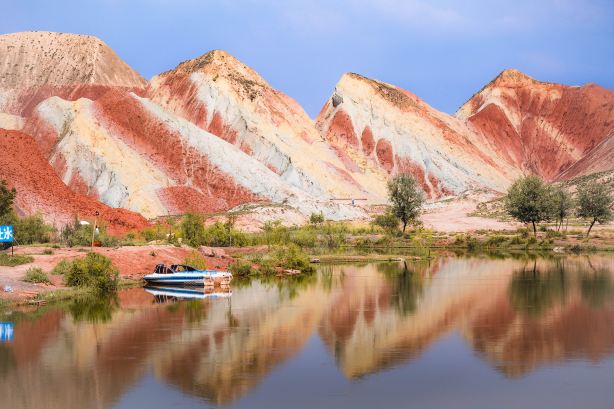
Lanzhou Danxia Geological Park
Lanzhou Danxia Geological Park is a key cultural tourism project in Gansu Province and a comprehensive cultural tourism initiative prioritized by the Lanzhou Municipal Committee and Government. Located by the Yellow River, the park is just 13 km from downtown Lanzhou and 30 km from Lanzhou Zhongchuan International Airport, making it one of the closest Danxia landform clusters to a major urban center in China. With a total planned area of 400 sq km and a core visiting area of 25 sq km in its first phase, it ranks among the largest discovered landscapes of its kind in the country. The park primarily features red mountain bay formations, along with spectacular Danxia cliffs, isolated peaks, secluded valleys, narrow gorges, and balancing rocks. Its colorful mountains set against winding waterways create a masterpiece of Danxia landform scenery. The attraction features seven viewing platforms showcasing the Danxia landforms: Silk Road Glow, Silk Road Eagle, Flying Apsaras Exploration, Nine-Colored Danxia, Danxia Reflecting Sky, Emerald Peaks Rippling Sky, and Danxia Summit Scenic View. It also includes the Ancient Silk Road Gateway, Shajing Tribe Cultural Square, Desert Bells Scenic Boulevard, and a 2,550m Danxia boardwalk viewing area. As a key cultural tourism project in the province, Lanzhou Danxia Geological Park adheres to the principles of "ecological protection, green development, preserving original features, and moderate development." Leveraging Lanzhou's unique resource advantages and focusing on the domestic tourism market, it aims to cultivate new growth drivers for Lanzhou's cultural tourism industry and establish a new highland for cultural tourism in the city.China · Yongdeng

Tang Paradise
Tang Paradise, a national 5A attraction, is located in Qujiang New District in the south of Xi'an City, not far away from the Big Wild Goose Pagoda. It covers an area of 998 acres, including 300 acres of water area, 440 acres of green space, and a construction area of nearly 100,000 square meters. The overall planning and architectural design of the park's architecture is by Mr. Zhang Jinqiu, an academician of the Chinese Academy of Engineering, and the garden landscape design is by Mr. Hiroshi Akiyama, a Japanese garden master. It is a large-scale cultural theme heritage park that comprehensively displays the style of the prosperous Tang Dynasty. Since its official opening to the outside world on April 11, 2005 (the third day of the third lunar month), it has been committed to creating high-quality, high-standard brand tourist attractions. Tang Paradise aims to build "a garden of history, a garden of spirit, a garden of nature, a garden of humanity, and a garden of art". It specially invited more than ten Tang historians, Tang poems, Tang paintings, etc. from the China Tang Dynasty Literature Society. An expert group composed of Tang construction experts, doctoral supervisors, researchers and tourism experts re-excavated and sorted out the historical and cultural content of Tang Paradise, re-planned and positioned the entire garden landscape, and divided into fourteen ares including the imperial cultural area, female Cultural area, poetry culture area, imperial examination culture area, tea culture area, song and dance culture area, food culture area, folk culture area, diplomatic culture area, Buddhist culture area, Taoism culture area, children's play area, gate landscape culture area and water show performance area, fully reproduce the splendid civilization of the Tang Dynasty. There are more than 20 scenic spots such as Ziyun Tower, Ladies Pavilion, Lu Yu Tea House, Apricot Garden, Caixia Corridor, Qujiang Drinking, Beauty Walk, Tang Poetry Gorge, Dogwood Terrace, etc. It displays the Tang Dynasty's dazzling spiritual outlook and splendid and unparalleled culture and art. It is known as a tourist attraction that “shocks the Chinese people and amazes the world”. The theme performance of the attraction is the large-scale water dance light and shadow show "Chasing Dreams of the Tang Dynasty", and you can take a boat trip to the dreamy holy land; the large-scale super-dimensional situation dance drama "Dreams of the Tang Dynasty" is majestic and dreamlike; the palace Yan music of the Tang Dynasty "Drums" performs Dongcang drum music, an intangible cultural heritage of mankind, as well as high-quality cultural tourism activities such as the New Year Festival, Shangsi Festival, and Qujiang Flower Moon Banquet. Brands and projects. The multiple Complimentary attractions and exciting performances every day are a warm invitation from the Tang Dynasty royal family to tourists, allowing them to experience the sacred and grandeur of royal culture in a shocking way. As a theme heritage park with excellent quality, full of personality and rich cultural connotation, Tang Paradise is a cultural window for Xi'an to show the world the ancient historical heritage of Chang'an and the prosperous Tang Dynasty, and a cultural gateway to attract the world to understand China...China · Xi'an

Big Wild Goose Pagoda
The Big Wild Goose Pagoda is located in the Da Ci'en Temple in the southern part of the city. The Da Ci'en Temple was a magnificent royal temple in Chang'an during the Tang Dynasty. It was built during the reign of Emperor Taizong of the Tang Dynasty by Crown Prince Li Zhi in memory of his mother, Empress Wende, and was first abboted by Master Xuanzang, who had returned from his journey to the West to seek Buddhist scriptures. During this period, the master supervised the construction of the Dayan Pagoda. Master Xuanzang translated Buddhist scriptures and promoted Buddhism in Da Ci'en Temple for 11 years, and founded the "Appearance-Only School" of Buddhism, making Da Ci'en Temple the ancestral temple of the Appearance-Only School (also known as the "Faxiang School"). During this period, the master personally supervised the construction of the Dayan Pagoda to enshrine the scriptures, statues and relics brought back from India. The current Da Ci'en Temple was built in the Ming Dynasty on the basis of the original temple "West Pagoda Courtyard", and most of the existing halls are buildings from the Qing Dynasty. The main buildings on the central axis of the temple are the Great Hall, the Dharma Hall, the Dayan Pagoda, and the Xuanzang Tripitaka Courtyard. Among them, the Buddha's relics enshrined in the Big Wild Goose Pagoda and the parietal bones of Master Xuanzang are respectively enshrined in the Xuanzang Tripitaka Courtyard, which are the "treasures of the temple" of Da Ci'en Temple. To the east of the central axis of the temple is the Pagoda Garden. Within the garden are nine stupas housing the relics of nine eminent monks of the temple since the Qing Dynasty. There are squares to the south and north of Da Ci'en Temple. There are also Shaanxi History Museum and Tang Paradise Souvenir .China · Xi'an

Yejia Village
Located in the Ningxia Hui Autonomous Region, this area features authentic local customs, and the village is primarily home to farmhouse resorts. It is close to Liupanshan National Forest Park, making it a great destination for summer getaways and relaxation.Jingyuan · 11.9 km from downtown

The Longest Day in Chang'an Theme Block
The Longest Day in Chang'an Theme Block is based on the culture of Tang Shijing culture, with the IP of the series "The Longest Day in Chang'an" as the theme, and with immersive experience as the core, in architecture, soft decoration, coins, characters, clothing, language, music Tang-style packaging in fields such as stories etc. At the same time, around the in-depth immersive story experience, supporting catering, cultural and creative, performing arts and other business content are set up to create an overall Tang space play, Tang-style market experience, themed immersive interaction, and Tang music, song and dance performances, cultural social leisure, etc. are integrated into the cultural experience of the whole Tang market.China · Xi'an

Xi'an Beilin Museum
The Xi'an Beilin Museum is located near Wenchang Gate, consisting of sections such as the stele forest and stone carving art. The stele forest, composed of steles and epitaphs from various dynasties, is the highlight of the museum, including steles by famous calligraphers like Yan Zhenqing, Liu Gongquan, and Huaisu, as well as the "Stone Classics of Filial Pietyand the Kaicheng Stone Classics, two stone tablets from the Tang dynasty. The collection contains numerous exquisite stone inscriptions In the Xi'an Beilin Museum, you can appreciate steles and epitaphs from various dynasties, with a collection spanning over 2000 years. Among the treasures are: Yan Zhenqing's "Yan Qinli stele", "Yan family temple stele" and others are standard "Yan style"; Liu Gongquan's "Mysterious Pagoda Stele of Master Dada" is a typical representative work of "Liu style"; the "Stele inscription of the preface to the sacred teachings of the Tang Dynasty's Tripitaka"; the renowned cursive script master Huaisu's "Thousand-character classic" exhibits unrestrained brushwork. The Classic of Filial Piety on Stone Tablet and the Kaicheng Stone Classics are very popular Besides the stone carvings by calligraphy masters, the two most popular stone tablets among travelers are the Classic of Filial Piety on Stone Tablet and the Kaicheng Stone Classics. The Classic of Filial Piety on Stone Tablet is a Confucian classic. Its inscriptions were written by two emperors in four scripts: Emperor Xuanzong of Tang (Li Longji) wrote the main text in clerical script and added small annotations in regular script, later adding marginal notes in running script after the tablet was carved. The tablet's heading was written in seal script by Emperor Suzong of Tang (Li Heng). The Kaicheng Stone Classics were carved in the second year of the Kaicheng era (837 AD) during Emperor Wenzong of Tang's reign, comprising twelve classical texts including the Book of Songs, Book of Documents, Book of Rites, Book of Changes, and Spring and Autumn Annals. You can purchase rubbing copies When browsing in the Xi'an Beilin Museum, you can also admire exquisite stone carvings such as the tomb gate with four divine creatures, the six steeds of Zhao Mausoleum from the Tang Dynasty, the meeting of Confucius and Laozi, and the azure dragon and vermilion bird in the "Stone carving art gallery". After the visit, you can purchase "rubbings" made from the original steles.China · Xi'an

Giant Wild Goose Pagoda Cultural Leisure Scenic Area
The Giant Wild Goose Pagoda Cultural Leisure Scenic Area centers on the famous Tang Dynasty Big Wild Goose Pagoda and integrates Tang Dynasty cultural exhibits, landscaped gardens, and urban leisure. The scenic area consists of the North Square, South Square, and the Yanta East, West, and South Gardens, all connected by the theme of Tang culture. The North Square is the core area, featuring a large musical fountain in the center where water jets rise and fall with the rhythm of the music, making it a highlight for visitors. The Yanta West Garden focuses on Shaanxi folk customs, featuring sculptures that showcase traditional Guanzhong life and customs. The South Square features a bronze statue of Master Xuanzang and is a great spot for photographing the entire pagoda. After the lights come on in the evening, the musical fountain and the illuminated pagoda create a stunning display, making it a signature experience for night tours of the scenic area. When visiting, you can arrive at the square early to secure a good viewing spot. After the performance, you can stroll along the cultural corridor and admire the Tang Dynasty-themed sculptures on both sides.China · Xi'an

Kongtong Ancient Town
The overall design of the ancient town imitates the architectural style of Ming and Qing Dynasties. The four city gates creatively restore the ancient Pingliang city gates. The roads are crisscrossed, surrounded by flowing water, and the scenic spots are inlaid in it. It not only shows the profoundness of Kongtong culture, but also reflects the beauty of southern gardens, and runs through the traditional cultural landscape and the ecological and environmental protection concept of harmony between man and nature.Pingliang · 23.2 km from Jingyuan

Gansu Provincial Museum
Gansu Provincial Museum is a large comprehensive museum centered on the civilization of the Silk Road. Located at a strategic point along the Silk Road and a convergence zone of Han and Tibetan cultures, its collections embody the diverse characteristics of the Central Plains, Western Regions, and the Tibetan Plateau. The three treasured artifacts—the Galloping Bronze Horse, the mural brick of a courier, and the painted pottery vase with a human-head-shaped mouth—serve as iconic representations of the museum. The museum has three floors, featuring permanent exhibitions on themes such as the civilization of the Silk Road, Buddhist art of Gansu, painted pottery of Gansu, paleontological fossils, and revolutionary Gansu. The Silk Road civilization exhibition on the second floor is the museum's centerpiece: the bronze galloping horse unearthed in 1969 from the Leitai Han tomb in Wuwei is displayed here. The horse has three hooves in the air and one stepping on a flying bird, standing steadily on a single hoof. Its image is now the symbol of Chinese tourism. In the same hall, the mural brick depicting a courier from the Wei-Jin tombs in Jiayuguan shows a messenger galloping on horseback, notably without a mouth, symbolizing the need for couriers to "keep their mouths shut." This pattern was later adopted as the emblem of China Post. The exhibition also features a procession of chariots and horses excavated from the same tomb as the bronze horse, along with Han and Tang dynasty silk textiles, gold and silver artifacts, making the prosperity of Silk Road trade vividly tangible. The Buddhist art exhibition hall on the third floor features replicas of caves from the Mogao Grottoes and Maijishan Grottoes, alongside statues, ritual objects, white pagodas, and prayer wheels from both Han and Tibetan Buddhism. Stepping into the hall feels like entering a temple, and this harmonious blend of Han and Tibetan styles is rarely seen elsewhere. On the same floor, the painted pottery exhibition showcases ceramics from cultures such as Dadiwan, Yangshao, and Majiayao, with intricate and fluid patterns like spiral and sawtooth designs. Among them, the painted pottery bottle with a human-head-shaped spout unearthed at Dadiwan in Qin'an, which integrates facial sculpture with the pottery vessel, is a highly popular exhibit. If you're interested in natural history, the paleontological fossils exhibition hall features the impressive skeleton of the Yellow River ancient elephant unearthed in Heshui, and the dinosaur fossils and reconstructed models are also popular with children. The revolutionary Gansu exhibition hall showcases historical artifacts and materials from periods such as the Nanliang base area and the Shaan-Gan-Ning border region, narrating the modern history of this land. The museum houses a large quantity of exhibits, and even a quick tour would take half a day. It's recommended to start with the Silk Road exhibition on the second floor, then proceed to the third floor for Buddhist art and painted pottery, following a logical route. In the exhibition halls, you can scan to listen to the audio guide, and at certain times, volunteers also provide guided explanations.China · Lanzhou
More things to do
Group Tours in Jingyuan
View More Group Tours in Jingyuan


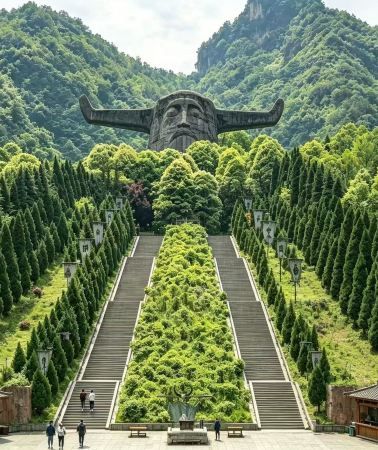

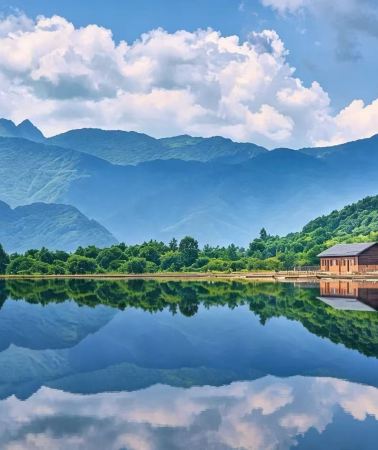
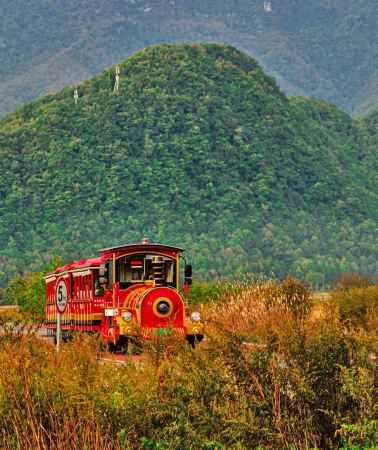

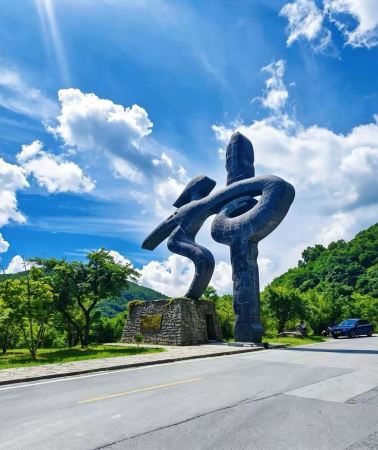
Free things to do in Jingyuan


What travelers say about Jingyuan

Patrick Woodbourne ClarkeOctober 22, 2026
5.0
Lanzhou Danxia Geological Park is fabulous. One of the top three things I have done on this tour. I used Trip.com to get out to the park and that was very easy. Shuttle buses are necessary to get between the various vantage points. I would come for longer next time and do the zip line. I got an 8am bus from Xiaoxihu Subway Station and it leaves the Park at 12pm to return back to the city.
Lanzhou Danxia Geological Park

CS@LOctober 21, 2026
4.0
Basically it is a big theme park that recreates the Tang Dynasty vibes and gorgeous era during the Tang Dynasty period. Best to go late evening and stay until all the lights up. If short on travel time actually can skip this place.
Tang Paradise

E10***54October 7, 2026
5.0
Da Ci'en Temple is a famous temple where the Tang Dynasty monk Xuanzang served as abbot. The Big Wild Goose Pagoda, located within the temple grounds, is a landmark of Xi'an, offering panoramic views of the city. Nearby attractions include the Tang Paradise and the Tang Dynasty City Never Sleeps, where visitors can enjoy nighttime views or performances after their visit.
Big Wild Goose Pagoda

娴雅小溪August 11, 2019
4.0
Jingyuan Yejia Folk Village is located in Jingheyuan Town, Jingyuan County, Ningxia Hui Autonomous Region, near Liupanshan Forest Park. More than one hundred households in the village mainly run farmhouses. The air here is fresh and the weather is cool. It is a great place to escape the summer heat and relax.
Yejia Village

IamkaybeeOctober 13, 2026
4.0
As a historical C-drama fan, visiting The Longest Day in Chang’an Theme Block was exciting! 🏮 The traditional architecture made us feel like we had stepped back into ancient China.However, our booking experience was confusing. We weren’t told that banquet seats needed to be reserved in advance, and without a Chinese mobile number, we struggled. Thankfully, a helpful staff member managed to get us seats, although my sister and I had to sit separately.The included dress-up experience was also disappointing. The makeup was rushed, and we looked far too pale, so we removed it straight after the banquet. We had hoped to walk around in hanfu and fully immerse ourselves in the experience.Overall, we’d love to do it again, but next time, we’d skip the banquet and dress-up package. ❤️
The Longest Day in Chang'an Theme Block

賢賢君October 23, 2026
5.0
Teacher Zhao's introduction to the Stele Forest Museum was incredibly professional (her explanations of the Yan Zhenqing/Liu Gongquan steles, which we were particularly interested in, were vivid, detailed, and expert, often using supplementary photos to enhance our understanding). Even though she was sick that day, she remained dedicated and continued explaining without a break. When her allotted time was up, seeing our interest, she spontaneously offered to provide more explanations. We were so lucky to have such a teacher! 👍
Xi'an Beilin Museum

No.5旋风小子June 26, 2022
4.0
This ancient town is a commercial ancient town at the foot of Kongtong Mountain. There is a small town here, but now it is much larger due to commercial reasons. You can still buy some water here before going up.
Kongtong Ancient Town
M14***99October 6, 2026
5.0
Lina, the lecturer at the Gambo Museum, is exceptionally skilled. During the two-hour learning experience, she demonstrated a thorough understanding of the chronological order and comparative analysis of the artifacts, meticulously integrating historical evolution with everyday life. I look forward to the completion of the new Gambo Museum and visiting it again next time.
Gansu Provincial Museum


