
Things to do in Jinjiang
Explore top experiences
Top 10 attractions in Jinjiang


Jinjiang Wulin Traditional Village
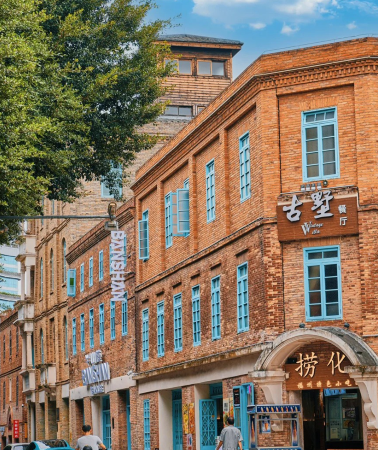
Jinjiang Wulin Traditional Village Attraction a long history and beautiful scenery. It is a well-preserved traditional ancient village in southern Fujian. The ancient buildings in the Attraction are very distinctive, and the architectural forms include southern Fujian mansions, Gothic and ancient Romanesque styles. There are folk performances and cultural and creative exhibitions here from time to time.Jinjiang · 5.4 km from downtown

Quanzhou Kaiyuan Temple
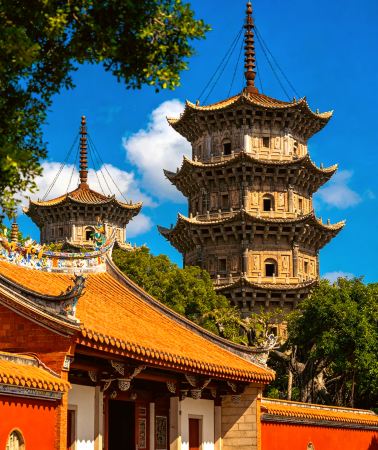
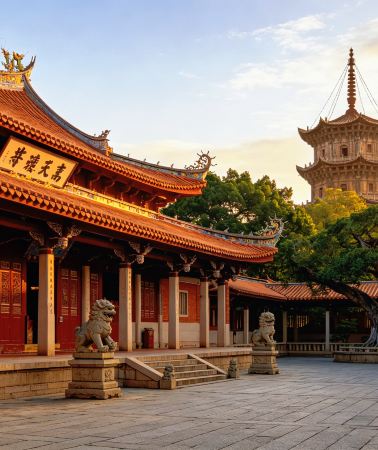
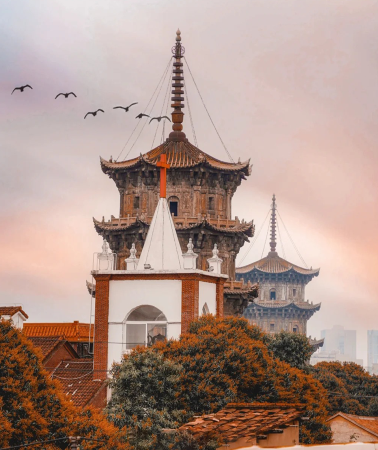
Kaiyuan Temple is located in QuanzhouWest Street, Licheng DistrictBuilt in the second year of the Chuigong era during the reign of Empress Wu Zetian of the Tang Dynasty, it has a history of over 1,300 years. It is an important cultural relic along the southeastern coast of China and one of the larger-scale Buddhist temples in Fujian Province. The attractions of the monastery are arranged along the central axisWorship pavilion, the Baiting, the main hall of Kaiyuan Temple, the Sangpeng historic site, the Kaiyuan Temple's Sweet Dew Ordination Platform, the scripture depository, etc.Also,, as well as the stone pagodas on the east and west sides and the east and west corridors. Quanzhou Kaiyuan Temple - The heavenly king hall, also the mountain gate of the temple, was built in 1925. The stone pillars are slightly thinner at the top and bottom, thicker in the middle, shaped like a shuttle, reflecting the Tang dynasty stone pillar style. A wooden couplet hangs on the stone pillars, reading "This place is called the land of Buddha, where every street is filled with saints." It was composed by Zhu Xi, a great Neo-Confucian scholar of the Southern Song dynasty, and written by the modern eminent monk Hongyi. Crossing the mountain gate brings you toWorship pavilionStanding here, you can see the east and west pagodas rising from the ground and the spacious, bright east and west corridors symmetrically arranged on both sides. The east and west pagodas are among the more famous attractions in the area. The east pagoda is called "Zhenguo Pagoda (East Pagoda)," while the west pagoda is named "Renshou Pagoda." Standing over 40 m tall, they are one of the tallest pairs of stone pagodas in China and serve as landmarks and symbols of the ancient city of Quanzhou. Worship pavilionIn front, there is a large stone courtyard where officials and commoners from ancient and modern times gather for activities, becoming particularly lively during events. On both sides of the stone courtyard stand eight large banyan trees, beneath which are arranged 11 ancient sutra pillars and small stupas from the Tang, Song, and Ming dynasties in various styles, as well as two stone tortoises. Then there is the main structure, the Mahavira Hall of Kaiyuan Temple. The Mahavira Hall of Kaiyuan Temple also has an elegant name, "Hundred-Pillar Hall." Originally, the hall was planned to have one hundred pillars, but later, to accommodate the placement of Buddha statues and create space for Buddhist activities, the beams were extended, and the number of pillars was reduced, resulting in the "Hundred-Pillar Hall" with 86 pillars.Quanzhou · 15.1 km from Jinjiang

Jinjiang Wudianshi Traditional Blocks
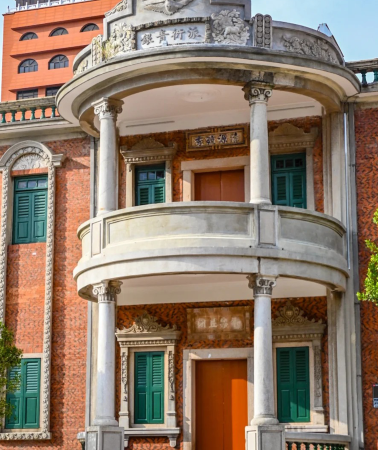
Jinjiang Wudianshi Traditional Blocks has a thousand-year history and is the origin of Jinjiang City. The red brick buildings with southern Fujian characteristics span the Ming, Qing and Republic of China periods. Wudian City has produced 11 champions in history. During the Wanli period, Zhuang Jichang was the champion in the same subject as Yuan Chonghuan. The champion Wang Zeng, a descendant of the King of Fujian who lived in Quanzhou, won three first prizes in a row (first place in the first, provincial and palace examinations). It has also produced more than 1,400 Jinshi scholars, making it an outstanding representative of the humanities, history, art, architecture and customs of southern Fujian. As the treasure of southern Fujian art, puppetry has not only become an indispensable part of the folk customs of Quanzhou and the entire southern Fujian region for thousands of years, but also has become a popular opera art that is appreciated by the general public and even scholars and literati with its unique skills and wonderful performances. The traditional cultural block of Wudianshi, located between many high-rise buildings, forms a sharp contrast with modern urban civilization, just like an old man who has experienced vicissitudes but is becoming more vigorous, insightful of the changes in history. Walking into Wudian Street, stepping on the ancient stone road, under the sunshine, passing through the alleys and wind, touching the bricks and stones baptized by the years, chewing marshmallows in the mouth, holding the food I loved when I was a child, I returned to the carefree childhood. Every house here has its own story, and each one tells the unique southern Fujian architecture. The large and small buildings in the block are like a thick book of Jinjiang historical architectural art, from the tall Lu Sili Art Museum and Su Xianzhong Art Museum to the Western-style buildings that combine Chinese and Western styles, the "Imperial Palace" red brick buildings with southern Fujian characteristics, and the contemporary literary and artistic freshness of Wumen Gate, you can see that there is no barrier between literature and art here, they complement each other, and the inclusiveness of this kind of architecture makes Wudianshi more diversified and attracts more and more people to come.Jinjiang · 4.8 km from downtown

South Shaolin Temple
First built during the Longshuo era and abandoned in the Tianyou era. According to Cai Yongjian's "Xishan magazine" from the Qing Dynasty, which cited the Tang Dynasty's "Minzhong records," before the first year of Longshuo in the Tang Dynasty (661 AD), "Zhikong entered Minzhong and built the Shaolin Temple at the foot of Qingyuan Mountain, consisting of thirteen courtyards." "The Shaolin Temple had thirteen sections, surrounded by walls three zhang high, with vast fields and lush forests." "Beside the celestial altar stood the Shaolin Temple, where Zen master Zhikong met with Governor Wang at the celestial altar." Zhikong (styled Daoguang) was one of the thirteen staff-wielding monks from the Songshan Shaolin Temple renowned for saving the Tang emperor. His arrival in Min marked the beginning of martial monks in Fujian, and he trained twelve disciples—some capable of capturing tigers or lifting massive cauldrons, others skilled in wielding heavy crossbows, mastering chain hammers, or moving with extraordinary speed... The "Minzhong records" also states: In the first year of the Tang Tianyou era (907), "the Shaolin Temple rebelled against Wang Shenzhi's allegiance to the Liang Dynasty and was destroyed." Shi Mengshuo of the Southern Song Dynasty wrote in his "Donglu poetry collection": "The Shaolin Temple was built in Qingyuan, with ten grand gates and towering walls; a hundred acres of fields across three ridges, where a thousand monks practiced martial arts to rebel against the Wang regime." The "Wang regime" refers to the Min King Wang Shenzhi. Wang Shenzhi's destruction of the South Shaolin Temple in Quanzhou marks its first destruction. Prospered during the Taiping Xingguo era and declined during the Zhiyuan era The "Xishan magazine" records that in the sixth year of the Taiping Xingguo era of the Northern Song Dynasty (981 AD), an imperial decree was issued to rebuild the South Shaolin Temple in Quanzhou. This marked the second revival of the South Shaolin Temple in Quanzhou. Liu Changyan of the Northern Song Dynasty wrote in his poem: "The legacy of Qingyuan was built during the Xingguo era, the Shaolin spirit pervades throughout southern Quanzhou." "Xingguo" refers to the reign era of Emperor Taizong of Song, Taiping Xingguo (976–983). A copy of the Zhang family genealogy preserved in Donghu village, Dongqiao town, Hui'an county, states: "Shizhi, styled Fayi, renowned for stone carving, his craftsmanship was unparalleled, such as the stone lions in front of the Shaolin Temple in Quanzhou..." Zhang Shizhi was the younger brother of Zhang Shixun, a figure from the Song Dynasty, indicating his involvement in carving the stone lions at the entrance of the Shaolin Temple in Quanzhou during the Song Dynasty. Northern Song Dynasty records document that the South Shaolin Temple originally comprised a mountain gate, Mahavira Hall, dharma hall, Bodhidharma ancestral hall, thirteen halls, arhat hall, xuannü hall, scripture repository, heavenly king hall, Guanyin hall, Ksitigarbha hall and other supporting facilities, covering 400 mu of land. During the 2002 reconstruction of the heavenly king hall, over 40 stone temple components were excavated underground, including 1 pagoda base, 1 pagoda cover, 7 finials resembling those of Yinggeng Pagoda at Chengtian Temple, 4 stone caps, 4 column bases, 6 stone pillars, and notably 20 intact mortise stones measuring 1 m in diameter - all testifying to the temple's grand architectural scale. Numerous roof tiles and covers were also unearthed. Experts speculate these components likely belonged to the Quanzhou South Shaolin Temple's structures during the Tang and Song dynasties. During the peak periods of the Tang and Song dynasties, the temple housed thousands of martial monks. The "Xishan magazine · general records" also records: "In the first year of the Song Jingyan era (Yuan Dynasty's Zhiyuan 13th year, 1276), a thousand monks from the Qingyuan Shaolin Temple rebelled against Pu Shougeng's surrender to the Yuan Dynasty. The abbot of the Shaolin Temple, Yuan Miao... commonly known as Zhao Mengliang... (Yuan troops) pursued them to the Shaolin Temple... The vanguard, Qi Wotunsi, known for his cruelty, ordered an assault on the Shaolin Temple, provoking the fury of the thousand monks. Amidst the clash of swords, each monk fought like ten, leaving Yuan soldiers' corpses strewn across the east of Qingyuan city, with bones littering the fields. When Suodu arrived, he ordered arrows to be shot, killing most of the thousand monks, with only a hundred surviving... The survivors fled to Dehua (Daiyun Temple)." This marks the second destruction of the South Shaolin Temple in Quanzhou. In the mid-Ming dynasty, Li Sen (born in 1398), a wealthy philanthropist from Anxi, funded the purchase of large tracts of wasteland on Dongyue Mountain to establish charitable burial grounds for the free interment of remains by Quanzhou residents. These burial sites appear to have been the same wastelands where the Shaolin Temple was destroyed after its thousand monks resisted the Yuan dynasty in the late Southern Song period. Prospered during the Hongwu era and declined during the Qianlong era The "Xishan magazine" records: In the tenth year of the Hongwu era of the Ming Dynasty (1377 AD), Faben of the Xuanmiao Temple (a Shaolin monk who fled to Dehua after the resistance of a thousand monks against the Yuan Dynasty in the late Song period, aged 135) persuaded the local official Huang Zhongli to "petition the court for imperial approval to rebuild the Shaolin Temple." The monks then spread martial arts throughout southern Quanzhou. This marked the third revival of the South Shaolin Temple in Quanzhou. The Annals of Jinjiang County, Volume 69, from the Daoguang era of the Qing Dynasty records: "The South Shaolin Temple is located by the East Lake outside Renfeng... It was rebuilt in the 10th year of the Xuande era (1435) during the Ming Dynasty, but later fell into disrepair. Monks restored one-tenth of its original site and also enshrined County Magistrate Peng Guoguang, as Peng had helped monks reclaim temple lands." In the book "Records of Shaolin warrior monks" by master Deqian of the Shaolin Temple on Mount Song (published by Beijing Sports University Press, 1988), it is stated: "According to the 'Internal Chronicles of Shaolin Temple,' monk Yuanran possessed extraordinary martial arts skills and was commended by Emperor Jiajing of the Ming Dynasty (reigned 1522-1566). His eminent disciple, master Yuekong, was ordered to lead over 30 warrior monks who had proven their skills to Quanzhou, Fujian, to suppress Japanese pirates and establish merits. There, they built the South Shaolin Temple, where he became the abbot." This confirms that the "Internal Chronicles of Shaolin Temple" from the northern Shaolin Temple clearly records the existence of a South Shaolin Temple in Quanzhou during the Ming Dynasty, while the claim of it being newly built is a misconception. To this day, southern Fujian still circulates stories of northern Shaolin warrior monks suppressing Japanese pirates. During the Qianlong era of the Qing Dynasty, Emperor Qianlong toured southern China and feared that the warrior monks of the South Shaolin Temple might collude with the remnants of Zheng Chenggong (see "Quanzhou biographical records: Zheng Chenggong"). "In the fall of the 28th year of Qianlong's reign (1763), an imperial decree ordered the burning of the Shaolin Temple... From then on, no one dared to rebuild it." Some temple monks took refuge at Yipian Temple in Nan'an. This marks the third destruction of the South Shaolin Temple in Quanzhou. After the burning of Shaolin Temple, the monk Zhishan sought refuge among the people, continuing to recruit Shaolin disciples to oppose the Qing dynasty and restore the Ming. Zhishan, Hong Xiguan, and their disciples spread to Guangdong, further developing Southern Shaolin boxing, which produced the Southern Shaolin boxing champion Wong Fei-hung. Later, Wong Fei-hung's disciples brought the art to Hong Kong and spread it as far as the United States.Quanzhou · 16.5 km from Jinjiang
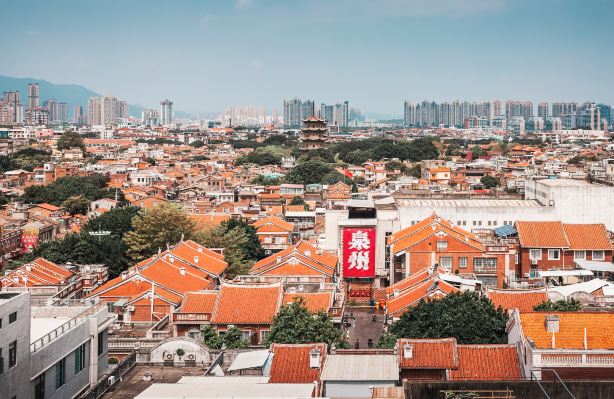
Quanzhou Ancient City
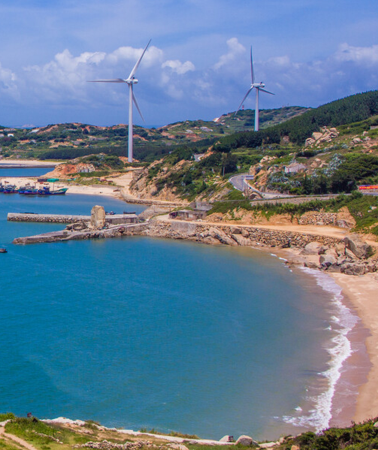
Quanzhou Ancient City Scenic Area is a special tourist scenic area integrating coastal scenery, historical relics, folk customs and sculpture art. It has always been called "natural studio" and "Southern Beidaihe". Chongwu Ancient City is a relatively complete stone city left in my country. It is also a relatively complete historical site in the history of my country's coastal defense and a "National Key Cultural Relics Protection Unit".Quanzhou · 14.7 km from Jinjiang

Xunpu Village
Xunpu village is a thousand-year-old fishing village located in Quanzhou, Fujian, at the mouth of the Jinjiang River. Backed by the Partridge Mountain and surrounded by the sea on three sides, it is famous for its "flower hairpin adornments" and "oyster shell houses." Not only was it an important starting point of the maritime Silk Road, but it has now also become a popular cultural tourism destination. The flower-adorned bun: The "flower-adorned bun" headdress is particularly famous in the Xunpu women's custom. Women coil their hair into a round bun and decorate it with fresh flowers all around, earning it the nickname "a garden on the head." The Xunpu flower-adorned bun tradition originated during the Song and Yuan dynasties, became popular in the Ming and Qing dynasties, and continues to this day. Oyster shell houses: Xunpu Village has developed a unique local architectural landscape, with its most distinctive buildings being the oyster shell houses. These structures, dating back to the late Song and early Yuan dynasties, are constructed primarily from oysters. The oyster shell walls not only feature natural ventilation pores but also possess excellent heat absorption properties, keeping interiors warm in winter and cool in summer. Local villagers observed that oyster shell walls are sturdy, resistant to corrosion, and don't retain rainwater, making them more suitable than red bricks as building materials in the coastal climate. This construction method helps withstand the humid seaside environment and extends the houses' lifespan. The main materials used in Xunpu Village's oyster shell houses are oyster shells, red bricks, stone slabs, wood, and tiles. Over time, these structures have evolved - typically featuring red bricks and stone slabs around the base, with white oyster shells embedded in the remaining walls. Some houses incorporate square red brick windows, while others use double-hooked stone slabs or irregular stones from the foundation up to window level, combined with red brick frames and oyster shell decorations, creating a striking red-and-white decorative effect.Quanzhou · 13.4 km from Jinjiang

West Street
West Street is a relatively early developed street and area in Quanzhou. As early as the Song Dynasty, it has symbolized the prosperity of Quanzhou. It is also a well-preserved ancient block in the urban area of Quanzhou, retaining a large number of buildings with original historical appearance. For more than a thousand years, this ancient block has been like a string of dazzling pearl chains, connecting many colorful cultural relics and ancient residential buildings in Quanzhou since the Tang and Song Dynasties, as well as the famous anecdotes and folklore attached to them. In addition to Kaiyuan Temple, East-West Pagoda, Chengxin Pagoda, celebrity residences, and modern western-style buildings, there are also a large number of unique ancient houses and antique wooden buildings. It is a living architectural museum, which contains both the ancient city The rich historical and cultural accumulation also tells the century-old vicissitudes of the ancient city. Liao's house, No. 35, Wuta Lane, has two rooms and five rooms and is well preserved. There are corridors on both sides of the beech heads, and the wooden windows are in a circular structure, which is quite characteristic; Yan Zhai No. 58 Huitong Lane has three rooms and three bays, with brick carvings on the eaves walls, patios and three rooms with double beech trees. , The front hall is built with bricks and stones, and there are flower-leather windows on both sides of the brick walls, which are well preserved.Quanzhou · 15 km from Jinjiang

Qingyuan Mountain
Qingyuan Mountain is the only 5A scenic spot in Quanzhou, which is a local landmark. The mountain is only 500 meters above sea level and is a perfect spot for a casual hike. With thousands of years of history, a major highlight is Laojun Rock. Located at the foothill, it is a detailed carved sculpture of Laozi. Literally taste the culture of Southern Fujian by stopping and taking tea breaks during your hike. Brewing tea on the mountain while observing the view is highly recommended.Quanzhou · 19.1 km from Jinjiang

Quanzhou Maritime Museum
Quanzhou Overseas Traffic History Museum is a museum in China with the theme of overseas traffic history. It is a national first-class museum. The museum was founded in 1959, and its original site is located on the east side of the Kaiyuan Temple in Quanzhou, a Buddhist temple. In February 1991, the main building of the new museum was completed on Donghu Street. In 2003, the "Quanzhou Islamic Culture Exhibition Hall" was built on the east side of the main building. These are all part of the Quanzhou Overseas Transportation History Museum. The theme of the Quanzhou Overseas Transportation History Museum is to reflect the ancient overseas transportation, the Maritime Silk Road, and various economic and cultural exchanges arising therefrom. The basic exhibitions in the museum include "Quanzhou Ancient Ship Museum", "Quanzhou and Ancient Overseas Transportation History Exhibition Hall", "China Boat World", "Islamic Culture Exhibition Hall" and "Quanzhou Haijiao Folk Culture Exhibition Hall". The ancient ship exhibition hall is the old museum located in Kaiyuan Temple. It is divided into 2 floors. It mainly displays the Song Dynasty sunken ship excavated from Houzhu Port in Quanzhou Bay in 1974 and its accompanying unearthed objects. The most worth seeing is the Song Dynasty ship model in the museum. . The Song Dynasty ship was unearthed at Houzhu Port in Quanzhou Bay in 1974. It was an early and large-scale overseas trade ship of the Song Dynasty discovered in China at that time. There are also a large number of cultural relics unearthed with the ship, which are very precious. The new museum is very knowledgeable and fun. Here you can see ten different crosses; you can know why Tamil is seen in many temples in Quanzhou; you can see the silk exported from the Silk Road at that time. and pottery; you can also know what weapons were used to resist Japanese pirates; you can also see many different religious tombstones. For those who like museums, study history, or like ship models, the Overseas Transportation History Museum is a must-see attraction. It fully shows the ancient Quanzhou commerce, religion and navigation. And there are very few people in the hall, very clean. If you are traveling with children, you can also bring your children here to gain more knowledge.Quanzhou · 15.4 km from Jinjiang

Guanyue Temple
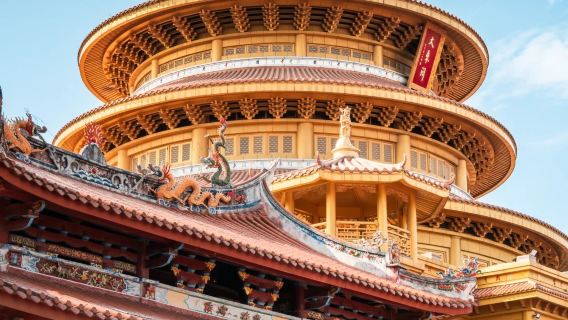
Tonghuai Guanyue Temple is located on the prosperous Tumen Street in the ancient city of Quanzhou. You can see the green smoke and smell the strong incense from far away from Tumen Street. This should be the Guandi Temple with a lot of incense in southern Fujian. It is said to be very effective. It has a history of nearly a thousand years. It was originally called Guandi Temple, because the temple is dedicated to Guan Yu. It is one of the historic sites of the famous historical and cultural city in Quanzhou, and it is also a rare temple in China where Guan Yu and Yue Fei are worshipped together. The architectural style of Guanyue Temple reflects the artistic style of ancient buildings in southern Fujian, with exquisitely decorated wood carvings, stone carvings and clay sculptures, pagodas with dragon kisses on the roof ridge, and flowers, birds and animals in between. The beautiful architecture makes it worth photographing and viewing in itself. The sacrificial hall is not big, and you can hear a steady stream of tossing sounds when you enter the door. Entering the temple, Guan Yu is worshipped on the left and Yue Fei is worshipped on the right. The rest of the place is full of couplets and inscriptions, which are actually cultural relics: from "Rebuilding the Monument to Guandi Temple in Tonghuai Street, Quan County" written by Guan Xianyao in the 43rd year of Qianlong's reign in the Qing Dynasty, to the stone inscriptions written by Lin Guangfu in the 24th year of Jiaqing He is the "True Classic of Emperor Guan Jue Shi" written by Su Tingyu in the 20th year of Daoguang. There are poems by Mi Fu and Dong Qichang on the left and right walls outside the temple gate. In the temple, there are also ancient plaques such as "Righteousness" handwritten by Zhu Xi, a great scholar in the Song Dynasty, and "Filling the World" handwritten by Zhang Ruitu, a calligrapher in the Ming Dynasty. These cultural relics make Tonghuai Guanyue Temple more historical and cultural.Quanzhou · 13.9 km from Jinjiang
Experiences you can't miss in Jinjiang
Featured Day tours in Jinjiang
View all Day tours

Free cancellation
Instant confirmation
Book now for tomorrow
FromQAR 128.52
5.0/5
· 2 reviewsFree cancellation
Instant confirmation
Book now for tomorrow
9% off
Limited-time sale
FromQAR 741.28QAR 823.64

Free cancellation
Instant confirmation
Book now for tomorrow
10% off
Limited-time sale
FromQAR 441.42QAR 490.47


4.6/5
· 45 reviews· 359 bookedFree cancellation
Instant confirmation
Book now for tomorrow
297 travelers saved
10% off
Limited-time sale
FromQAR 392.76QAR 436.4

4.9/5
· 174 reviews· 738 bookedFree cancellation
Instant confirmation
Book now for tomorrow
45 consecutive positive reviews
10% off
Limited-time sale
FromQAR 392.76QAR 436.4
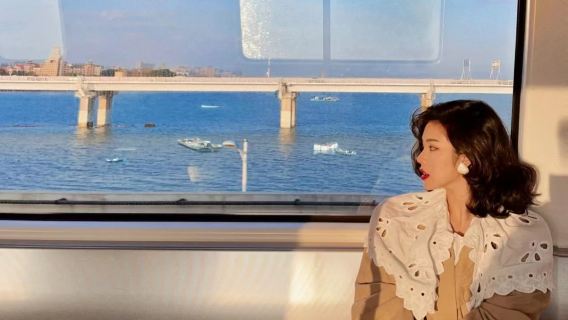
Xiamen Island Ring Road + Jimei University Village + Sea Train + Shapowei + Nanputuo Temple Day Trip
4.7/5
· 32 reviews· 218 bookedFree cancellation
Instant confirmation
Book now for tomorrow
90.6% of travelers recommend
9% off
Limited-time sale
FromQAR 534.83QAR 594.25
Featured Cultural experiences in Jinjiang
View all Cultural experiences
Free cancellation
Book now for tomorrow
FromQAR 52.44

Free cancellation
Instant confirmation
Book now for tomorrow
FromQAR 209.48
4.5/5
· 4 reviews· 60 bookedFree cancellation
Instant confirmation
Book now for tomorrow
FromQAR 130.34

FromQAR 218.48
Free cancellation
Instant confirmation
Book now for tomorrow
FromQAR 81.93
Free cancellation
Instant confirmation
10% off
Limited-time sale
FromQAR 579.06QAR 643.4

Free cancellation
Instant confirmation
Book now for tomorrow
FromQAR 68.28
Free cancellation
Instant confirmation
9% off
Limited-time sale
FromQAR 639.04QAR 710.04
Featured Food & drink in Jinjiang
View all Food & drink
5.0/5
· 3 reviews· 77 bookedFree cancellation
Instant confirmation
Book now for tomorrow
FromQAR 92.25

5.0/5
· 11 reviews· 33 bookedFree cancellation
Instant confirmation
Book now for tomorrow
10% off
Limited-time sale
FromQAR 779.13QAR 865.7

Free cancellation
Instant confirmation
Book now for tomorrow
10% off
Limited-time sale
FromQAR 983.12QAR 1,092.36
Free cancellation
Instant confirmation
Book now for tomorrow
FromQAR 303.13

Free cancellation
Instant confirmation
Book now for tomorrow
10% off
Limited-time sale
FromQAR 1,671.31QAR 1,857.02
Instant confirmation
Book now for tomorrow
FromQAR 272.55
Free cancellation
Instant confirmation
Book now for tomorrow
FromQAR 415.74
Featured Outdoor experiences in Jinjiang
View all Outdoor experiences
Free cancellation
Instant confirmation
Book now for tomorrow
FromQAR 424.81

5.0/5
· 20 reviews· 167 bookedFree cancellation
Instant confirmation
Book now for tomorrow
82 travelers saved
10% off
Limited-time sale
FromQAR 245.29QAR 272.55
Free cancellation
Instant confirmation
Book now for tomorrow
FromQAR 247.39
Free cancellation
Book now for tomorrow
FromQAR 341.21

5.0/5
· 4 reviews· 60 bookedFree cancellation
Instant confirmation
Book now for tomorrow
9% off
Limited-time sale
FromQAR 348.53QAR 387.25
More things to do
Private Tours in Jinjiang
View More Private Tours in Jinjiang




Group Tours in Jinjiang
View More Group Tours in Jinjiang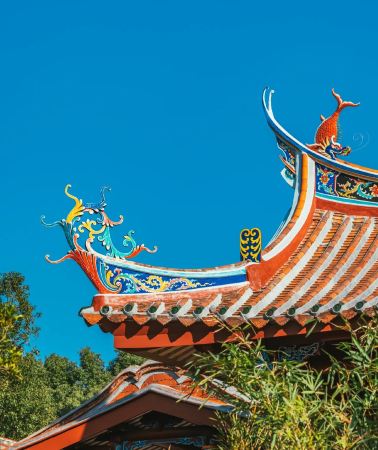

Free things to do in Jinjiang
Jinjiang Wulin Traditional Village
Jinjiang · 5.4 km from downtownQuanzhou Kaiyuan Temple
Quanzhou · 15.1 km from JinjiangJinjiang Wudianshi Traditional Blocks
Jinjiang · 4.8 km from downtownSouth Shaolin Temple
Quanzhou · 16.5 km from JinjiangQuanzhou Ancient City
Quanzhou · 14.7 km from JinjiangXunpu Village
Quanzhou · 13.4 km from JinjiangWest Street
Quanzhou · 15 km from JinjiangQuanzhou Maritime Museum
Quanzhou · 15.4 km from JinjiangGuanyue Temple
Quanzhou · 13.9 km from Jinjiang
Quanzhou Tianhou Temple
Quanzhou · 13.1 km from Jinjiang
What travelers say about Jinjiang

amy323June 4, 2026
4.0
Wulin Ancient Village was originally a settlement of the Cai clan, with a history of 700 years. In the past, clan members went to Southeast Asia to make a living, and after returning home, they built a large number of residences. The village has well-preserved various overseas Chinese buildings, with complete styles and forms, thus it is known as a living museum of overseas Chinese architecture.
Jinjiang Wulin Traditional Village

菁菁 者莪July 23, 2026
5.0
Kaiyuan Temple, a thousand-year-old temple, boasts imposing twin pagodas and towering banyan trees, offering a tranquil escape from the bustling city. Just a wall away lies West Street, a vibrant hub of activity, with its exquisitely carved ancient buildings that blend the diverse cultures of the Maritime Silk Road, making it a worthwhile destination to savor and appreciate the rich heritage of Quanzhou.
Quanzhou Kaiyuan Temple

西格玛 123July 27, 2025
5.0
When you arrive in Jinjiang, Quanzhou, you can go to Wudianshi. Wudianshi is the birthplace of Jinjiang City. There are more than 100 historical and cultural buildings in southern Fujian. The buildings have distinctive characteristics and are an important carrier for understanding the history and culture of Jinjiang. Walking in the alleys of Wudianshi is like walking into a large maze, but there is no rush to find the exit. Walking in it is like talking with time and space, which is very pleasant. There are also many unique coffee shops and restaurants in the block. You can sit down and rest when you are tired of shopping.
Jinjiang Wudianshi Traditional Blocks

M31***92October 18, 2026
5.0
It was quite a show. Even though the performance conflicted with my schedule, I still made time to see it. Chinese martial arts, starting from a young age, has a long history and is very meaningful. Quanzhou is truly a wonderful place, blessed with beautiful scenery and talented people. Due to time constraints, I didn't have a chance to properly see the other sights of Shaolin Temple. I'll definitely visit again next time.
South Shaolin Temple

一直在路上的猫March 31, 2026
4.0
Quanzhou Ancient City.
Quanzhou is a place with a profound cultural heritage, reaching its peak during the Song and Yuan dynasties. It was the "largest port in the East" and the starting point of the "Maritime Silk Road." Designated one of the first batch of National Historical and Cultural Cities in 1982, and in 2021, "Quanzhou: A World Maritime Trade Center of Song and Yuan China" was inscribed on the World Heritage List, with eight World Heritage sites within the ancient city. The core urban area covers approximately 6.41 square kilometers, and the city's outline resembles a carp.
The most central areas of the ancient city include: West Street (a thousand-year-old street), Kaiyuan Temple + East and West Pagodas, the Bell Tower, the arcade buildings along Zhongshan Road, Qingjing Mosque, the Confucian Temple, and the Tonghuai Guanyue Temple. Religious diversity coexists here, earning it the title of "World Religious Museum."
Here, you can find traditional Minnan red-brick houses, Western-style buildings, and arcade buildings coexisting; intangible cultural heritage such as Nanyin music, Liyuan opera, and puppet shows are vibrant; Minnan delicacies such as tusu jelly, rice noodle soup, and runbing are abundant; the night view is dazzling, making it an excellent place for a walking tour.
Don't bother eating at the food stalls on the pedestrian street; most of them are popular tourist spots, the taste is average, and they don't really represent the quality of Quanzhou snacks.
Quanzhou Ancient City

张家老飞侠September 8, 2026
5.0
If you're visiting Quanzhou, be sure to check out this village. Children can wear traditional floral-adorned clothing, which is very unique. There are many shops offering photo opportunities; I recommend trying them out. The village isn't large, making it perfect for taking pictures.
Xunpu Village

Anonymous userJuly 8, 2026
5.0
As invited teachers, several of my colleagues and I accompanied parents and children to the puppet theater on the third floor of Kaiyuan Shengshi, witnessing firsthand the vibrant power of traditional craftsmanship during this one-hour performance. Four plays were presented in quick succession: "Little Bald Head Goes Down the Mountain" conveyed the message of diligence and growth through a story from an old Quanzhou street; "Daming Mansion" showcased loyalty and responsibility through acrobatic combat; "Fighting the Tiger" gripped the audience with its portrayal of Wu Song's bravery; and the grand finale, "Monkey Play Training the Monkey," with its ingenious "turning fruit into gold" and play-within-a-play concept, drew gasps of amazement from the teachers and students. The puppets, guided by silken strings, moved with lifelike agility, displaying remarkable skill as they twirled in the hands of the children. The children watched intently, their eyes glued to the screen, applause and laughter filling the theater.
The essence of this study tour lay in bringing intangible cultural heritage from the books into reality. The children not only witnessed exquisite performances but also had the opportunity to personally manipulate the strings and hold the puppets in their hands during the post-performance experience, truly feeling the focus and perseverance behind "one minute on stage." Quanzhou string puppets and hand puppets are both listed as UNESCO Intangible Cultural Heritage. These are not forgotten relics, but rather a testament to the life passed down through generations of artisans. When children see the puppet monkey mimicking an artist controlling a clown, the intricate layers of craftsmanship allow them to intuitively understand the difficulty and joy of this heritage. This one-hour experience is not just a captivating performance, but a genuine dialogue with a thousand-year-old craft—approaching tradition with laughter and planting seeds of identification through hands-on experience. This is the most basic yet profound value of study tours.
West Street

闲暇即财富October 11, 2026
5.0
Definitely worth a visit! The air is fresh, and there are many sights to see. Unfortunately, my schedule was limited that day, so I only took the bus to the mountaintop and visited part of the core scenic area. I didn't get to see the Hongyi Master Relic Pagoda, as half a day wasn't enough. I also missed the recommended evening dinner and panoramic view from Qingyuan Mountain. We'll see what happens next. There are walking trails and scheduled buses within the scenic area; you can choose your route based on your physical condition and schedule. During the National Day holiday, round-trip tickets for the buses are not available; a one-way ticket costs 15 yuan, and buses depart approximately every 20 minutes. Apparently, there's a bus back to the city from the visitor center at the foot of the mountain for only 1 yuan. The staff and holiday volunteers within the scenic area were very helpful, patiently providing guidance and answering questions.
Qingyuan Mountain
Anonymous userAugust 21, 2026
5.0
The guide was excellent and very dedicated. I was captivated for over two hours. Although the venue wasn't very large, the entire tour provided a comprehensive understanding of Quanzhou's maritime history and its various religious cultures. After the tour, the guide also led us to the adjacent religious stele museum, where we witnessed the harmonious coexistence of multiple religions. I learned a lot; Quanzhou truly deserves its title as a "religious museum."
Quanzhou Maritime Museum

卡皮巴拉游世界August 1, 2025
5.0
泉州关岳庙,坐落于鲤城区涂门街,是福建省最大的武庙,三殿并列(武成殿、崇先殿、三义庙),雕梁画栋间融合闽南古建精髓。飞檐剪瓷龙雕栩栩如生,木石雕刻尽显匠心神韵。夜幕降临,庙宇流光溢彩,古建在灯影中熠熠生辉,香火与宁静交织,比白日更添神秘魅力。乘公交3/4/5路至“关帝庙”站即达,免费开放,建议夜游,沉浸式感受历史与信仰的璀璨之夜。
Guanyue Temple


