Things to do in Nanjing
Explore top experiences
Top 10 attractions in Nanjing


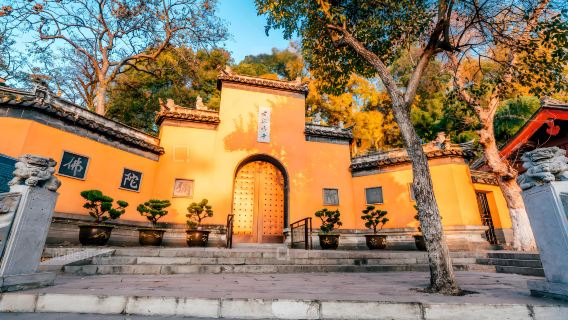
Niushou Mountain Cultural Tourism Zone
Niu Shou Shan, also known as Tianque Mountain, is named after the twin peaks on the top of the mountain that resemble the double horns of an ox's head. The Niu Shou Shan has beautiful scenery and is known as the "Spring Niu Shou". In ancient times, there were beautiful Jinling scenery such as Niu Shou Yanlan and Zutang Zhenxi. There are also many historical sites, such as Yue Fei's Anti-Jin Fortress and Zheng He Cultural Park. Buddha's Peak Palace The Buddha's Crown Palace is themed on the worship of the Buddha's skull relic. It is divided into two parts, the large dome and the small dome, which represent external and internal worship. The Buddha's Crown Palace uses the original mine pit to build an underground palace with six floors underground and three floors above ground, which is very solemn and majestic. In recent years, the Buddha's skull relic of Sakyamuni will be worshipped in Niu Shou Shan for a long time. Tourists can visit the Buddha's Crown Palace on special Buddhist festivals. For the specific time of worshipping the relic, please call the Attraction for consultation. Thousands of years of history Niu Shou Shan is a Buddhist holy place. The Buddhist Cave Temple built by Sikong Xu Du in the second year of Tianjian in Liang Dynasty (503) was the first temple in Niu Shou Shan. Li Yu, the last emperor of Southern Tang Dynasty, renamed it Hongjue Temple. Emperor Daizong of Tang Dynasty "once dreamed of the Pratyekabuddha from Niu Shou Shan coming to see him", so there is a Pratyekabuddha Pagoda. In the Tang Dynasty, Master Fa Rong, who was known as "Dharma of Dongxia", founded the Niutou Zen Sect in Niu Shou Shan, which was called "Niutou of Jiangbiao" in ancient times. The establishment of the Niutou Zen Sect played an important role in bridging the transformation of Indian Zen into Chinese Zen! Peach Blossom Creek Taohua Creek is located at the eastern entrance of Niu Shou Shan, covering a total area of 14.87 hectares, or about 220 mu. The peach blossom varieties selected are 26 kinds of peach blossoms suitable for growing in Nanjing. It is a new landscape created by Niu Shou Shan Attraction. A stream meanders down from Yinlong Lake, with gurgling water and peach blossoms planted on both sides. In spring, the flower buds gradually bloom, and the sea of flowers is intoxicating.Nanjing · 15.6 km from downtown

Nanjing Hongshan Forest Zoo
Hongshan Forest Zoo is located in the north of Nanjing Xuanwu Mountain and is built on the mountain. There are three mountains in the park. It is very close to the Nanjing Railway Station and was built by the original Nanjing Xuanwu Lake Zoo. The park is large and there are many kinds of animals. In the bird zone, you can see flamingos, ostriches and pheasants. Visitors also look forward to the green and white peacocks in the Peacock Garden. There is a talking grey parrot in the parrot pavilion and a veteran zoo animal. In addition, there is a children's playground, especially suitable for playing with children.Nanjing · 5.8 km from downtown

Nanjing Museum
Nanjing Museum is located at the southern foot of Purple Mountain and north of Zhongshan Gate. The museum is one of the earliest to be established in China. Here, you can see ancient artifacts like gold-threaded robes such as those depicted in “Grave Robbers' Chronicles” and you can enjoy exquisite painting and calligraphy and Ming treasures such as a gold-plated stupa. You can take a trip through time and even walk along the streets of the Warlord Era.Nanjing · 3.9 km from downtown

Nanjing Confucius Temple
The Confucius Temple was originally built in the Song Dynasty to commemorate Confucius. It is located beside Gongyuan Street on the north bank of Qinhuai River. However the temple was destroyed and rebuilt several times. The current temple was rebuilt in 1987 after it was destroyed by Japanese Aggressors during WWII. Currently, the temple is the main scenic spot of the Qinhuai River Scenery. It also includes the China Imperial Examination Museum and Xue Gong (The Imperial Academy). At the Confucius Temple, you can admire a 6 meter high huge portrait of Confucius and 38 mural paintings reflecting the life story of Confucius.Nanjing · 2.4 km from downtown

Confucius Temple-Qinhuai Scenic Area
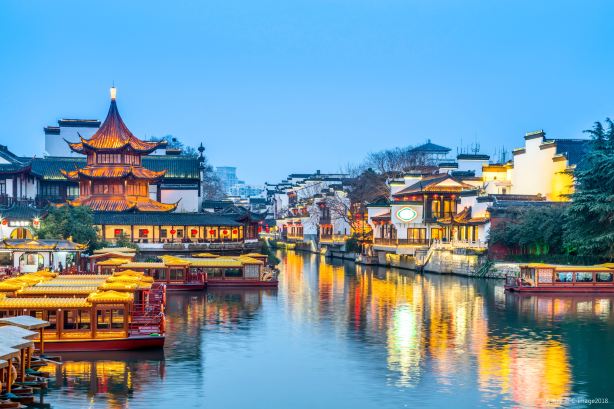
The Confucius Temple-Qinhuai Scenic Area refers to the Qinhuai River area centered around the Confucius Temple, where the streets, alleys, residences, and historical sites along both banks form a continuous stretch. It has been a bustling and lively part of Nanjing since ancient times. The line "The swallows that skimmed by painted eaves in bygone days are dipping now among the humble homes' doorways" by Liu Yuxi describes this very place. The Wuyi Lane mentioned in the poem still lies hidden among the alleys near the Confucius Temple. Exploring history along the river is the highlight of this area: The Dacheng hall of Confucius temple stands by the water, with a towering screen wall across the Pan pond in front; the nearby Jiangnan examination hall was the imperial testing site for provincial exams during the Ming and Qing dynasties, now replaced by the China imperial examination museum; Zhan garden and Egret isle park both originated from the mansion gardens of Xu Da's family, a founding general of the Ming dynasty—the former also houses the Taiping heavenly kingdom history museum; scattered along both banks within walking distance are historical sites like Meixiang tower (former residence of "Peach blossom fan" heroine Li Xiangjun), the well-preserved Zhonghua gate with its urn-shaped defense system, Wu Jingzi's residence (author of "The scholars"), and ancient ferry relics like Taoye crossing, easily connected into a historical walking trail. Cuisine is also a signature feature of this area: "The eight Qinhuai delicacies" refer to sixteen famous dishes from eight time-honored snack restaurants, including Yongheyuan's crab-shell yellow sesame cakes and dried shrimp shreds, Qifangge's duck oil crispy cakes and sesame oil dried shreds, Jiangyouji's beef pot stickers, and Lianhu pastry shop's osmanthus-filled glutinous rice balls. The Confucius Temple area and Laomendong are lined with teahouses, snack shops, and various stores, offering plenty of opportunities to rest and grab a bite when tired, along with the chance to pick up some souvenirs. The highlight comes after nightfall: board a painted boat from the pier in front of the Confucius Temple, listen to the guide while admiring the white walls and black tiles illuminated by riverside lanterns—this is the classic "night mooring on the Qinhuai" experience. From Chinese New Year to the Lantern Festival each year, the Qinhuai River Lantern Festival (also known as the Jinling Lantern Festival), listed as a national intangible cultural heritage, takes place here. The Confucius Temple, Laomendong, and along the Qinhuai River are adorned with lanterns and decorations. "Visiting the Confucius Temple to see lanterns during New Year" remains a cherished tradition for Nanjing locals. Even on ordinary days, the area buzzes with cultural temple fairs, food festivals, and other celebrations, offering unique surprises in different seasons.Nanjing · 2.4 km from downtown

Zhongshan Mountain National Park
Zhongshan Mountain National Park is located in the east of Nanjing, centered around Purple Mountain, historically known as Zhongshan. Its main peak stands nearly 450 m above sea level, with winding ridges resembling a dragon. Ancient people described Jinling's terrain as "Zhongshan coils like a dragon, while Stone City crouches like a tiger." The entire park blends mountains, water, the city, and forests. Along its southern foothills from west to east lie three core attractions: Ming Xiaoling Mausoleum, Sun Yat-sen Mausoleum, and Linggu Temple, interspersed with Plum Blossom Hill, Nanjing Botanical Garden Mem. Sun Yat-Sen, and the former site of Purple Mountain Observatory. The three major sections each have their highlights: The Ming Xiaoling Mausoleum is the joint burial site of Emperor Taizu Zhu Yuanzhang and Empress Ma, with stone animals lining both sides of the sacred path winding around Plum Blossom Hill. In late fall, the ginkgo, Chinese tallow, and maple trees gradually change color, representing the quintessential autumn scenery of Nanjing. The Sun Yat-sen mausoleum features long stone steps ascending layer by layer along the central axis, with its blue-glazed tile sacrificial hall standing out vividly against the lush forest. The Linggu attraction offers relatively tranquil surroundings, where the Beamless Hall—the only remaining structure from the Ming Dynasty's Linggu Temple—is entirely built of brick and stone without a single beam or pillar, making it worth a special visit. Every early spring, Plum Blossom Hill becomes blanketed with blooming plum flowers, and the tradition of spring outings to admire them has been passed down through generations. Meanwhile, the tree-shaded Lingyuan Road remains lush and green year-round—simply strolling leisurely along this path is delightfully soothing. Zhongshan offers more than just mausoleums. The attraction covers a vast area with considerable walking distances between sections, so it's advisable to plan your route in advance, allocate most of a day, and wear comfortable walking shoes. For hiking enthusiasts, the mountain trail to the main peak, Toutuo ridge, offers a panoramic view of Xuanwu lake and Nanjing city. This route is also a popular fitness spot for locals.Nanjing · 6.2 km from downtown

Ming Xiaoling Mausoleum
The Ming Xiaoling Mausoleum is located in the scenic area of Zhongshan Mountain. It is the tomb of Emperor Taizu Zhu Yuanzhang and Empress Ma, featuring magnificent architecture that represents the architectural and stone carving achievements of the early Ming Dynasty. It also directly influenced the design of imperial mausoleums in both the Ming and Qing dynasties. Cemetery area distribution The overall layout of the mausoleum area is divided into two parts: the winding sacred path of the tomb and the main structures of the mausoleum, which is the burial site of Zhu Yuanzhang. The main structures of the Ming Xiaoling Mausoleum include the Civil and Military Gate (the main entrance), the Xiang Hall, the Square City, the Ming Tower, and the burial mound (also known as the Chong Mound), all arranged along the traditional central axis and enclosed by walls. The layout design of the Ming Xiaoling Mausoleum, featuring "court in the front and living quarters at the back, square in the front and round at the back," along with architectural forms such as the Square City, Ming Tower, and the burial mound, pioneered the construction regulations of imperial mausoleums in the Ming and Qing dynasties. It is hailed as a milestone in the development history of Chinese imperial tombs. Shinto The sacred way stretches from the dismounting arch to the main gate of Ming Xiaoling Mausoleum, spanning 2400 m. With its winding and secluded path, it breaks away from the traditional straight layout of Chinese imperial mausoleums. The sacred way is divided into two sections: the stone elephant road and the Wengzhong road. The stone sculptures on both sides are a major highlight, featuring 12 pairs of towering stone animals and two pairs each of civil officials and military officers. These sculptures are carved from single blocks of stone, showcasing simple designs, clear patterns, and exquisite craftsmanship. Every fall, the ginkgo trees and red maples here create a picturesque scene, attracting numerous photography-loving travelers. Enjoyment Hall The sacrificial hall, also called the Ming Xiaoling Mausoleum hall, was originally the place to enshrine the memorial tablets of Zhu Yuanzhang and Empress Ma. The original hall has been destroyed, but the three-layer Sumeru pedestal base and six large carved stone steps with cloud, dragon, and landscape reliefs remain. This site now serves as a historical exhibition room. Fangcheng The square city is a massive structure in front of the Ming Xiaoling Mausoleum's treasure dome, built with large stone slabs and featuring a sumeru base at the bottom. The Ming Tower stands atop the square city, with its original yellow-glazed roof destroyed and later restored. You can ascend to the Ming Tower via the walkways on either side of the square city. Ming Xiaoling Mausoleum - Treasure dome North of the square city lies the Ming Xiaoling Mausoleum's burial mound, also known as the treasure dome, with a diameter of approx. 400 m. This is the burial site of Zhu Yuanzhang and Empress Ma. Entering through the central arched gate in front of the square city leads to a vaulted tunnel. After climbing 54 steps and exiting the tunnel, you'll reach the southern wall of the burial mound, inscribed by later generations with "This mountain is the tomb of Emperor Taizu of Ming." Beyond this point, visitors cannot proceed further. Beneath the burial mound lies the underground palace of Zhu Yuanzhang's tomb, which has not been excavated. Plum garden and cherry garden Plum blossom hill is located directly south of the Ming Xiaoling Mausoleum, covered with plum blossoms. At the foot of the hill lies the plum blossom valley, home to over 13,000 plum trees. The wintersweet garden of the Ming Xiaoling Mausoleum is distributed on both sides of the central axis from the Golden Water Bridge to the Soul Tower, covering more than 80 acres with over 3,000 wintersweet plants. It encompasses 3 major variety groups and more than 60 varieties. The wintersweet viewing period lasts from December each year to late February of the following year. On Plum blossom hill, you can also see the tomb of Sun Quan. Near the stone elephant path of the sacred way lies a cherry blossom garden, where travelers flock to admire the blossoms from late March to early April. Honglou art garden is a landscape that embodies the culture of Dream of the Red Chamber and the rich Jiangnan style. To the north, Zixia lake serves as an ideal summer retreat.Nanjing · 5.2 km from downtown

Dr. Sun Yat-sen's Mausoleum
Dr. Sun Yat-sen's Mausoleum is located in the Zhongshan scenic area in the eastern suburbs of Nanjing, nestled at the southern foot of Purple Mountain, adjacent to Linggu Temple to the east and Ming Xiaoling Mausoleum to the west. It serves as the tomb of Dr. Sun Yat-sen. The entire architectural complex, designed by architect Lü Yanzhi, follows the mountain's terrain along a central axis from south to north. When viewed from above, the tomb area forms a "warning bell" pattern, symbolizing "awakening the people." Construction began in 1926, and the main structures were completed in 1929, marked by the grand burial ceremony. The blue-glazed tiles paired with granite walls create a solemn and serene tone, making it one of the representative works blending Chinese and Western architectural styles. Along the central axis: the entrance features a towering granite Bo'ai archway, with the gilded inscription "Bo'ai" (universal love) handwritten by Sun Yat-sen on its lintel. Behind the archway lies a long tomb path flanked by trees. At the end of the path stands the mausoleum gate with cyan-glazed tiles, inscribed with "Tianxia wei gong" (the world belongs to the public). Further north is the stele pavilion housing a massive granite tombstone. Beyond this are 392 stone steps with a height difference of over 70 m, each section offering a resting platform. A thought-provoking visual design hides here: looking up from below, only steps are visible; looking down from above, only platforms appear—a detail worth experiencing firsthand. On one platform along the way, a pair of bronze tripods inscribed with "grand burial ceremony" are displayed, one bearing a bullet hole from Japanese artillery fire in 1937—a detail often missed by hurried visitors but worth pausing to observe. At the top of the steps lies the main sacrificial hall, designed in palace style. Its three arched doorways are engraved with "minzu" (nationalism), "minquan" (democracy), and "minsheng" (livelihood), while the central door bears Sun Yat-sen's calligraphy "Tiandi zhengqi" (righteousness of heaven and earth). Inside, a white marble statue of Sun Yat-sen sits at the center, with six relief carvings around its base. The burial chamber behind the hall is usually closed to the public, with visits focused on the sacrificial hall. The surrounding area also features memorial structures like the music stage, Liuhui Pavilion, Yangzhi Pavilion, Xingjian Pavilion, and the Sun Yat-sen Memorial Hall.Nanjing · 6.9 km from downtown

Grand Baoen Temple Heritage and Scenic Area
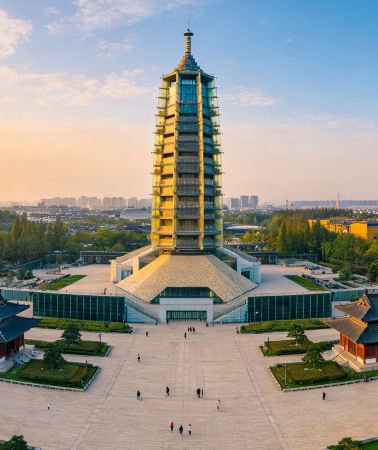
The Grand Baoen Temple Heritage and Scenic Area officially opened to the public in 2015. Now designated as a National First-Class Museum and a Major Historical and Cultural Site Protected at the National Level, it focuses on research, preservation, interpretation and display of the heritage site while offering diverse experiences for education, appreciation, reflection and knowledge sharing. This attraction is located in Nanjing's Changganli district - the city's birthplace - and showcases China's Ming DynastyGreat Bao'en TempleBuilt upon an archaeological site, this temple traces its origins back to the Eastern Wu period, marking the inception of pagoda temples in southern China. Over a millennium, it has undergone repeated destruction and reconstruction, with its name changing multiple times throughout history. In 1412, the 10th year of the Yongle reign, Emperor Chengzu of the Ming Dynasty (Zhu Di) ordered the Ministry of Works to expand the original site.built this templeand the nine-story glazed pagoda known as the "First Tower Under Heaven." This glazed pagoda, hailed as "China's greatest antique and Yongle's finest kiln masterpiece," stands as a magnificent wonder in both Chinese and global architectural history. In the latter half of the 17th century, the pagoda was introduced to Europe, where Westerners called it the "Nanjing Porcelain Tower," recognizing it as an iconic symbol of Chinese culture.Nanjing · 3.6 km from downtown

Fuzimiao (Confucius Temple) Qinhuai River Boat Tour
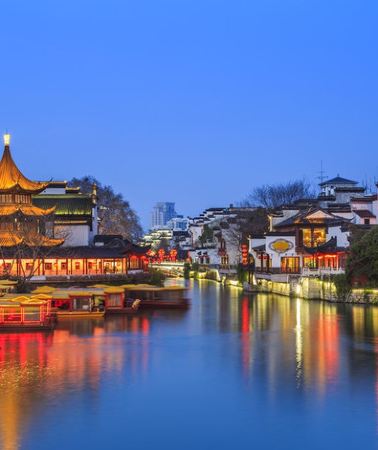
A boat ride along the Qinhuai River allows you to enjoy the scenery along the river while listening to the historical stories and anecdotes told by your guides. During the tour, you will see many antique buildings with white walls and black tiles. Lights from the buildings as well as the strings of red lanterns under their eaves are reflected in the Qinhuai River, as though the boat is taking you through the famous literary work of Zhu Ziqing.Nanjing · 2.5 km from downtown
Experiences you can't miss in Nanjing
Featured Day tours in Nanjing
View all Day tours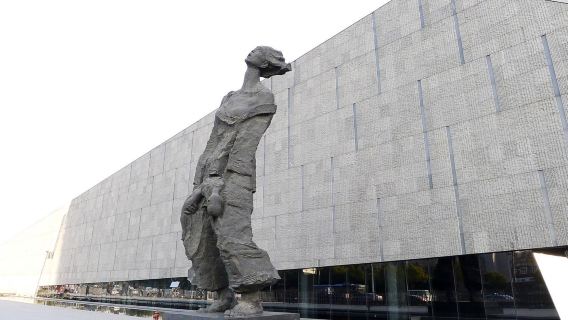
5.0/5
· 5 reviews· 105 bookedFree cancellation
FromNZD 51.80

5.0/5
· 3 reviews· 21 bookedFree cancellation
Instant confirmation
Book now for tomorrow
FromNZD 97.32
4.9/5
· 12 reviews· 57 bookedFree cancellation
Instant confirmation
Book now for tomorrow
FromNZD 434.83
5.0/5
· 9 reviews· 28 bookedFree cancellation
Instant confirmation
Book now for tomorrow
FromNZD 434.83

Free cancellation
Instant confirmation
Book now for tomorrow
FromNZD 434.83
Free cancellation
Instant confirmation
Book now for tomorrow
FromNZD 156.34
Featured Cultural experiences in Nanjing
View all Cultural experiences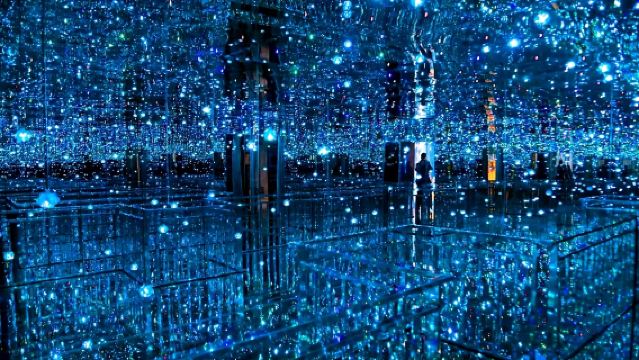
4.4/5
· 5 reviews· 81 bookedFree cancellation
Instant confirmation
Book now for tomorrow
FromNZD 11.87

1.0/5
· 1 reviewFree cancellation
Instant confirmation
Book now for tomorrow
FromNZD 41.67
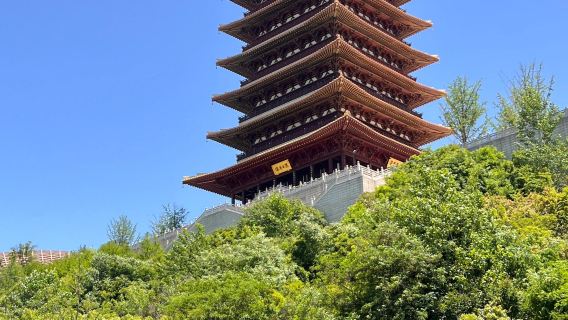
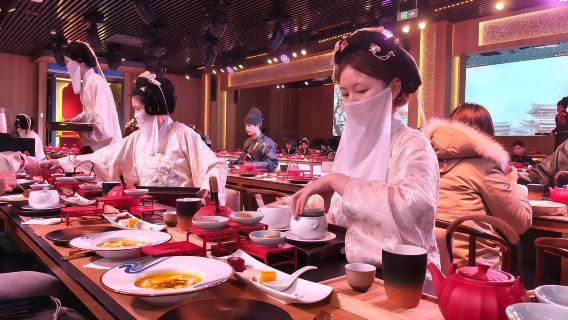
Free cancellation
Instant confirmation
Book now for tomorrow
FromNZD 79.11
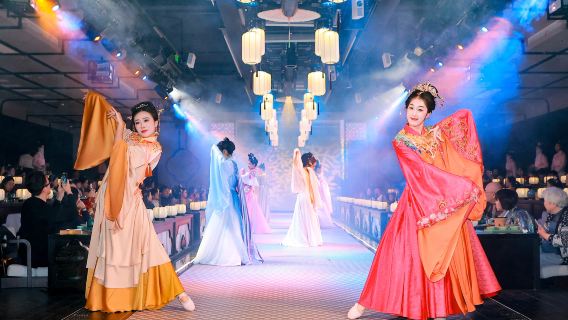
Free cancellation
Instant confirmation
Book now for tomorrow
FromNZD 142.14
Featured Food & drink in Nanjing
View all Food & drink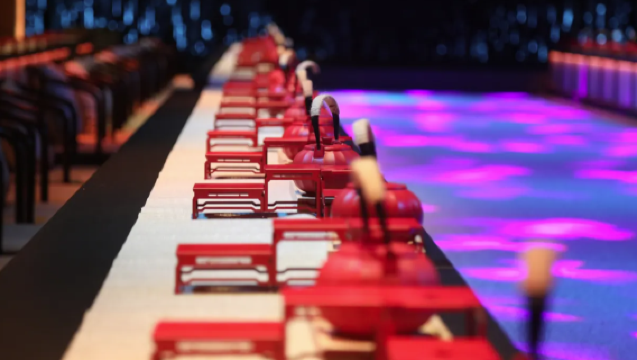
5.0/5
· 1 review· 52 bookedFree cancellation
Book now for tomorrow
FromNZD 78.59
35 booked
Free cancellation
Book now for tomorrow
FromNZD 29.54
5.0/5
· 3 reviews· 38 bookedFree cancellation
Instant confirmation
Book now for tomorrow
68 travelers saved
FromNZD 31.65
Free cancellation
Instant confirmation
Book now for tomorrow
FromNZD 78.59
5.0/5
· 4 reviews· 26 bookedFree cancellation
Instant confirmation
Book now for tomorrow
FromNZD 25.85

FromNZD 120.78

4.8/5
· 4 reviews· 170 bookedFree cancellation
Instant confirmation
Book now for tomorrow
86 travelers saved
FromNZD 159.28

FromNZD 52.74
More things to do
Private Tours in Nanjing
View More Private Tours in Nanjing




Group Tours in Nanjing
View More Group Tours in Nanjing
Free things to do in Nanjing
Nanjing Museum
Nanjing · 3.9 km from downtownConfucius Temple-Qinhuai Scenic Area
Nanjing · 2.4 km from downtownDr. Sun Yat-sen's Mausoleum
Nanjing · 6.9 km from downtown
Xuanwu Lake Scenic Area
Nanjing · 3.5 km from downtown
The Memorial Hall of the Victims in Nanjing Massacre by Japanese Invaders
Nanjing · 4 km from downtown
Xinjiekou
Nanjing · 253m from downtown
Qinhuai River
Nanjing · 2.4 km from downtown
Laomendong Historic District
Nanjing · 3.4 km from downtown
What travelers say about Nanjing

yuner2009October 21, 2026
5.0
Niushou Mountain in Nanjing, a top-tier architectural art museum built with an investment of 400 billion yuan, is like a celestial palace. Stepping into the underground palace, I was speechless with its breathtaking beauty. The three floors above ground and six floors below are resplendent with golden pagodas and Buddha statues. The Buddha Palace is a highlight throughout; every statue is wallpaper-worthy, making for stunning photos. The entire scenic area is enormous, and it's a must-see landmark in Nanjing for me. It's truly awe-inspiring.
Niushou Mountain Cultural Tourism Zone

Anonymous userOctober 22, 2026
5.0
What a wonderful weekend trip to the zoo! 🐼 The animals were all adorable, the park was very clean, and the staff were incredibly friendly. Watching the pandas eat bamboo was especially heartwarming and therapeutic! I highly recommend it to anyone looking to relax; I'll definitely come again! ⭐⭐⭐⭐⭐
Nanjing Hongshan Forest Zoo
Anonymous userOctober 16, 2026
5.0
We were very fortunate that our top guide today was Ms. Dong Ling. Her professional expertise was solid; she didn't just recite from memory. She eloquently explained the stories and archaeological backgrounds behind each of the museum's treasures, making dry history vivid and easy to understand. My son and I deeply experienced the thousand-year history of Nanjing. Highly recommended!
Nanjing Museum

青水月September 19, 2026
4.0
The Confucius Temple and Jiangnan Examination Hall along the Qinhuai River in Nanjing offer stunning nighttime views. A stroll through them in the gentle autumn breeze is incredibly pleasant. There are free performances and some attractions that charge admission, so you can choose what to do. In short, anyone visiting Nanjing should definitely check them out.
Nanjing Confucius Temple
Anonymous userOctober 7, 2026
4.0
If you haven't been there, it's worth a visit. It's a famous spot in Nanjing, always packed with people. As for the boat tour, if you haven't been before, you can take a ride, but it's probably a one-time thing, so the price isn't great. It's a 40-minute round trip on the boat, listening to the announcements, watching the night view of the Qinhuai River, with its many bridges along the banks. You can learn about history, see the waterscape and night view, and soak in the atmosphere.
Confucius Temple-Qinhuai Scenic Area

Natalia Valenzuela ubinaOctober 21, 2026
5.0
Zhongshan Mountain is the green lung of Nanjing. It’s an enormous park where you can go for a walk, exercise, grab a coffee or simply relax. But there’s so much more to explore!I entered through Gate 1 to visit the Ming Xiaoling Mausoleum. The scenery felt straight out of Spirited Away!From there, I walked along the impressive Sacred Path, lined with animal statues, all the way to Meiling Palace, which is particularly interesting if you enjoy modern Chinese history.Next, I continued to Sun Yat-sen Mausoleum. You need to book through WeChat, but admission is free. There are LOTS of steps, but every single one was worth it!Right next to it, you’ll find the open-air music pavilion. Be warned if you don’t like pigeons, as it’s absolutely full of them!Finally, I walked to the pagoda in the Linggu Scenic Area.And that’s a full day sorted! A fantastic itinerary.You can use the tourist buses to get around, but I did everything on foot. Be prepared for lots of walking!
Zhongshan Mountain National Park

UlianamOctober 20, 2026
5.0
Ming Xiaoling Mausoleum is so worth to visit as well as surrounding attractions. The area is very beautiful and very looked after. We spent the whole day exploring and had an amazing time. It was quite busy on the Saturday but we were able to go everywhere and didn’t need to wait in queues. The area gives you a great combination of nature and history. It’s easy to walk everywhere, but distances between some of the attractions on the mountain can be long, and walking everywhere is not possible in one day so will need to take a tourist shuttle which costs 10 yuan per person per trip or 30 for the whole day, can be bought as you board the vehicle. No one speaks English really as expected but it’s mostly intuitive. We finished at Linggu temple and struggled to get a taxi from there (but it’s possible, note that not from all parts it’s possible) so we took a public bus that takes you to a metro station.
Ming Xiaoling Mausoleum

高速上开火车June 18, 2026
5.0
The Sun Yat-sen Mausoleum Scenic Area, located on Zijin Mountain in Nanjing, is the tomb of Dr. Sun Yat-sen and a national 5A-level scenic area. Admission to the mausoleum is free. As the core of the Zhongshan Scenic Area, it is not only a memorial site but also a masterpiece of modern architectural art. Its unique architectural style: the overall plan is shaped like a "Liberty Bell," symbolizing the awakening of the people. There are 392 stone steps from the archway to the tomb chamber, symbolizing the 392 million people in China at that time. The core attractions are concentrated here: the Bo'ai Archway, the mausoleum gate, the stele pavilion, the sacrificial hall, and the tomb chamber. Surrounding these are auxiliary buildings such as the Music Stage, the Liuhui Pavilion, and the Meiling Palace.
Dr. Sun Yat-sen's Mausoleum

WittygypsyOctober 18, 2026
5.0
You can have 2 options to visit the baorn temple- during the day and in the evening. We went during the daytime. I am impressed of the design and the decorations. There is even the lying buddha. People are allowed to go up the temple and don't worry there is an elevator.
Grand Baoen Temple Heritage and Scenic Area

M48***53October 5, 2026
4.0
A night cruise on the eastern section of the Qinhuai River was passable, but not breathtaking. In terms of lighting and color, it paled in comparison to the old streets of Tangshan's Hetou area; in terms of picturesque streetscapes, it fell short of the commercialized ancient towns of Jiangnan. It's a pity that the historical and cultural heritage of the Qinhuai River was wasted, as the only decent presentation was the crude and superficial electronic commentary. The price of 120 yuan isn't outrageous, but it certainly doesn't offer value for money. The management of the cruise ships was also rather lax; the day and night cruises were held consecutively, yet the prices differed significantly. Catching one of the last few day cruises, the 40-minute ride was roughly the same as the first few dozen night cruises, and you didn't have to wait in long lines at the dock like night cruise passengers.
Fuzimiao (Confucius Temple) Qinhuai River Boat Tour
Popular cities near Nanjing


Frequently asked questions
What are the must-do things in Nanjing?
Don't miss these attractions in Nanjing: Niushou Mountain Cultural Tourism Zone, Nanjing Hongshan Forest Zoo, and Nanjing Museum. If you like Day tours, try Nanjing The Memorial Hall of the Victims in Nanjing Massacre by Japanese Invaders Chinese Guided Group Day Tour. If you enjoy Cultural experiences, try Nanjing Van Gogh Star Sky Art Museum (immersive 4D light show + sunflower field tour).
What are the must-try foods and restaurants in Nanjing?
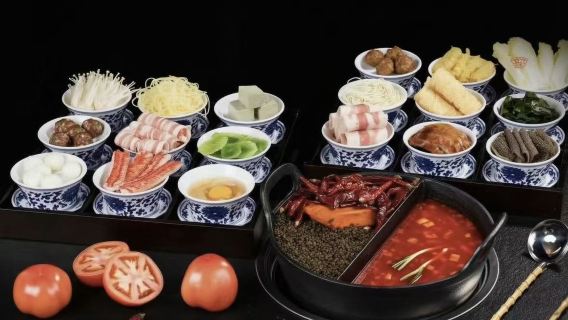
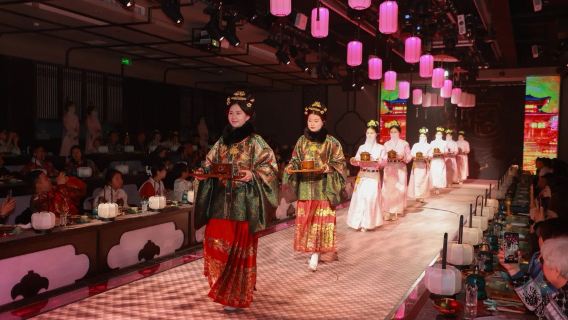
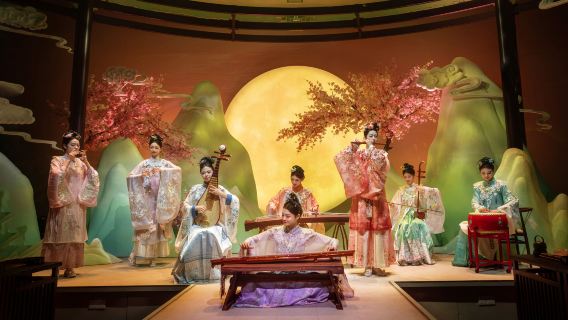
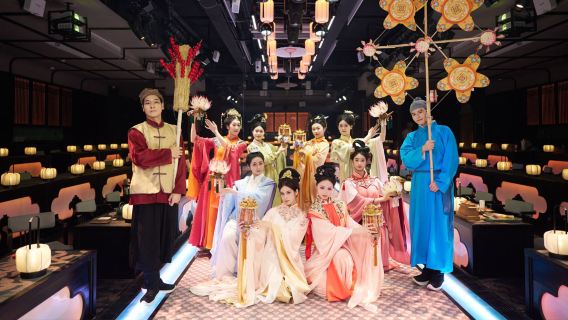
You can give Nanjing Jinling dream of splendor palace banquet (ancient imperial-style royal feast + spectacular song and dance performance) and Nanjing feast of the world • imperial (immersive ancient imperial-style performance + royal audio-visual feast) a try. Before you go, please check their opening hours and menus online. Reservations are recommended, especially during peak hours.
What are the recommended tours and excursions in Nanjing?
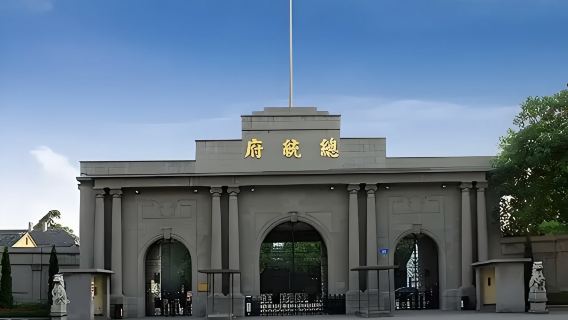
When choosing a tour, start with how much time you have and the kind of experience you're looking for. Trending options right now include Nanjing The Memorial Hall of the Victims in Nanjing Massacre by Japanese Invaders Chinese Guided Group Day Tour, Flexible Private Day Tour of Nanjing City Highlights, and Nanjing Presidential Palace + Niushou Mountain + Dr. Sun Yat-sen's Mausoleum + Meiling Palace + Nanjing Confucius Temple 1-Day Tour. Check the real-time availability and itinerary before you book.
What's the typical cost of day tours and activities in Nanjing?
As of October 23, 2026, the reference price for day tours and activities in Nanjing is around NZD 51.8 – NZD 434.83. Rates vary by duration, group size, transportation, tickets, meals, and any special admission requirements. Before you book, please confirm the billing currency and whether the price is quoted per person or per group.
How can I contact Trip.com customer support?
Get help anytime, anywhere within 30 secondsContact customer support
Can I change or cancel my booking?
Change and cancellation policies vary by attractions and tours. Please check the product details page for more information.
How can I get discounted prices?
Ticket prices may vary between weekdays and weekends, as well as during peak and off-peak seasons. When booking with Trip.com, you can also use Trip Coins to get extra savings. For more tips on booking discounted tickets, please visit Trip.com for the latest information.
Trip.com picks
Popular cities in China
Popular Nanjing Tours
Best Nanjing Experiences
Recommended Car Rentals in China
Popular Airport Transfers
Things to do in ChongqingThings to do in ZhuhaiThings to do in ZhangjiajieThings to do in HangzhouThings to do in SuzhouThings to do in HarbinThings to do in GuangzhouThings to do in ChinaThings to do in JiuzhaigouThings to do in ChengduThings to do in BeijingThings to do in QingdaoThings to do in SanyaThings to do in YulongThings to do in Taipei
Nanjing 1-day tour with bilingual service: The Oriental Metropolitan Museum + Niushou Mountain Cultural Tourism Zone + Laomendong Historic District + Yuyuan Garden Nanjing massacre victims memorial hall Chinese group tour half-day tourNanjing Museum + Nanjing Massacre Memorial Hall + Presidential Palace 1-day tour - Chinese and English service availableNanjing half-day tour: Grand Bao'en Temple + Zhonghua Gate city wall + Laomendong Historic District Premium Small Group Tour | Optional English Guide | Dr. Sun Yat-sen's Mausoleum + Meiling Palace + Niushou Mountain Cultural Tourism Zone + Nanjing Confucius Temple + Zhan GardenInbound tour Nanjing Dr. Sun Yat-sen's Mausoleum + Ming Xiaoling Mausoleum + Zhonghua Gate + Confucius Temple 1-day tourNanjing Private Guided Day Tour: Dr. Sun Yat-sen's Mausoleum, The Ming Tomb, and Meiling PalaceNanjing Yuhuatai Scenic Area + Wuma Ferry Square + Dabao'en Temple Ruins 1-Day Tour with Bilingual ServiceNanjing Poetry Feast: Six Dynasties Poem Immersive Dinner Show in JinlingHidden gems in deep alleys | avoid the crowds of travelers, stroll through Nanjing's alleys for food, and savor the authentic taste of JinlingNanjing Yanyue Feast Under Heaven | Immersive Six Dynasties Royal Dinner ShowNanjing Dr. Sun Yat-sen's Mausoleum + The Ming Tomb + Meiling Palace + Open-Air Music Hall 1-day tour Nanjing 1-day tour: Presidential palace + Xinjiekou + Confucius temple & Qinhuai river cruise Tour van | Optional English guide | The Oriental Metropolitan Museum + Jiangning Manufacturing Museum + Zijin MountainStroll in Jinling | 3-hour unlock Nanjing's charm! Immersive local food tasting tourNanjing Day ToursNanjing Sports & AdventureNanjing Connectivity SolutionsShaanxi Cultural ExperienceNanjing ActivitiesShaanxi ActivitiesShaanxi Connectivity SolutionsNanjing Restaurant DiscountsNanjing Bus TicketsNanjing TransportationWellness & Spa in NanjingShaanxi TransportationNanjing SIM CardNanjing City PassShaanxi Day ToursCar rentals in TaipeiCar rentals in ShanghaiCar rentals in BeijingCar rentals in Hong KongNanjing airport transfersNanjing Lukou International Airport transfersShanghai Pudong International Airport transfersGuangzhou Baiyun International Airport transfersTaiwan Taoyuan International Airport transfersBeijing Capital International Airport transfersBeijing Daxing International Airport transfersHong Kong International Airport transfersShanghai Hongqiao International Airport transfersChongqing Jiangbei International Airport transfersSanya Phoenix International Airport transfersChengdu Tianfu International Airport transfers