Things to do in Qingtongxia
Explore top experiences
Top 10 attractions in Qingtongxia


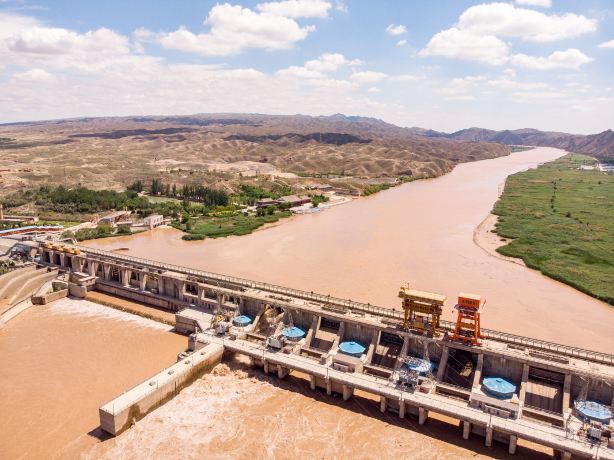
Qingtongxia Yellow River Grand Canyon Tourist Area
Qingtongxia Yellow River Grand Canyon is located in the core area of Ningxia's ancient Yellow River irrigation system, a UNESCO World Heritage Site. As a national 5A-level attraction, key cultural relic protection unit, and national science education base, it serves as a pivotal node in the Yellow River-themed national itinerary released by the Ministry of Culture and Tourism. Rich in cultural heritage, the attraction connects numerous historical and natural landmarks along the Yellow River, including the Qingtongxia Iron Bridge, Ningxia Water Conservancy Museum, Qingtongxia Dam, 108 Pagodas, Dayu Cultural Park, and scenic spots like "Bronze Long Gorge" and "Millennium Canals" from Ningxia's 21 iconic views. Visitors can enjoy diverse experiences such as: - Ten-mile gorge sightseeing tours - Rafting adventures - Hiking and wellness trails - Yellow River irrigation study tours - Dayu spirit exploration routes - Ancient pagoda discovery journeys - Dam engineering tours These popular programs comprehensively showcase the profound Yellow River culture, establishing the area as a unique cultural tourism destination along the Golden Coast of the Yellow River.Qingtongxia · 20.1 km from downtown

Qingtongxia 108 Pagodas
The 108 towers of Qingtongxia sit in the west and face to the east. They are built along with the ups and downs of the mountain.Except for the larger tower above, the rest are all small towers. With balmy breeze and warm sun, the tower is mirrored in the glittering water waves, presenting unique scenery. It is said that people who come here to visit the tower can eliminate their worries and gain good luck as long as they worship the tower.Qingtongxia · 18.3 km from downtown

Dong Mansion Scenic Area, Wuzhong City
Dong Mansion is located in Lutianwazi Village, Jinji Town, Wuzhong City, Ningxia Hui Autonomous Region. It was the residence of Dong Fuxiang, a famous general and governor of Gansu Province in the late Qing Dynasty. Because Dong Fuxiang was once awarded the title of "Prince's Guardian", it is also called "Gongbao Mansion". Dong Mansion was built in 1902 and completed in 1905. When it was first built, it covered an area of more than 100 acres and consisted of four parts: Hufu River, Fukuoka, Outer Mansion and Inner Mansion. After a hundred years, only the Inner Mansion Wall and the Siheyuan Building Complex in the Mansion are left, covering an area of 14,391 square meters and a construction area of 8,721.9 square meters. Dong Fuxiang (1840-1908), courtesy name Xingwu, was a native of Guyuan, Gansu (now in Ningxia) during the Qing Dynasty. He served as Shangshu Admiral. In 1876 (the second year of the reign of Emperor Guangxu), Dong Fuxiang followed Zuo Zongtang into Xinjiang and participated in the battle to pacify Yakub Beg. After recovering Xinjiang, he served as the general of Aksu Town and the governor of Kashgar, and was stationed in Xinjiang for 16 years. In 1894, he was transferred to the capital due to the outbreak of the Sino-Japanese War of 1894-1895. In 1898, his Gansu Army was incorporated into the Wuwei Army under Ronglu and became one of the three armies of the Beiyang Army. In 1900, the Eight-Nation Alliance invaded Beijing, and he led his troops to resist with all his strength, but was subsequently dismissed due to pressure from the powers. In 1902, Dong Fuxiang chose Jinjibao as the site to build the Dong Mansion. In February 1908, he died of illness in Jinjibao, Ningxia, and was buried in Wangchaoshan, Guyuan. The site of Dong Mansion was originally a lake, and it was built with rammed earth. The craftsmen and materials used were selected from all over the country. The wood came from Gannan; the stone came from Shaanxi; most of the carpenters came from Sichuan, most of the blacksmiths came from Baotou, and the stonemasons came from Shaanxi; the bricks, tiles and lime were all fired on site. It took more than three years, more than three million workers, five million catties of grain, and three hundred thousand taels of silver.Wuzhong · 10.9 km from Qingtongxia

Nanjing Niushou Mountain Cultural Tourism Zone
Niushou Mountain Tourist Area is located on the east bank of the Yellow River, south of Qingtongxia City, and is a renowned local Buddhist mountain. A major highlight is the ancient temple complex within the scenic area, which was originally built before the Tang Dynasty.Qingtongxia · 23.8 km from downtown

Yellow River Temple
The Yellow River Millennium Altar is a landmark building on the Golden Bank of the Yellow River. It is located in Qingtongxia City, Wuzhong, Ningxia Hui Autonomous Region. It is built to pay respect to, worship and thank the Yellow River. The Yellow River Altar is 999 meters long and 200 meters wide, with a construction area of 65,000 square meters. It is backed by the Helan Mountains, with Niu Shou Mountain standing across the river, the Yellow River arm on the left and the Qingtongxia Gorge on the right. Standing at the position of the Yellow River Altar and looking down, the Yellow River and the beach in front of you just form a Tai Chi Bagua diagram. On May 8, 2011, it was unveiled at the 3rd China (Ningxia) International Culture, Art and Tourism Expo·Thanksgiving Mother River event. It is cast in bronze to express the Chinese nation's gratitude for the source of water, respect and chanting of the Yellow River Mother. Six lines are adopted in the planning and layout: the first is the line of Chinese sacrificial culture, the second is the line of 5,000-year culture of the Yellow River, the third is the line of bronze art display, the fourth is the line of royal sacrificial gardens, the fifth is the line of Chinese traditional cultural numbers, and the sixth is the line of Chinese traditional cultural symbols; in the architectural layout, it is based on 'three districts, five archways, three avenues, three main halls, one square, one altar, and one courtyard': the three districts are 'Si'en District, Li'en District, and Gratitude District', the five archways are 'Important Building of the Yellow River Altar, Si'en Archway, Li'en Archway, Gratitude Archway, and Wenyuan Archway', the three avenues are 'Forest of Beilin Avenue, Agricultural Avenue, and Wenhua Avenue', the three main halls are 'Hall of the Ancestor of Chinese Humanity, Hall of Ci, Xiao, and Yifan, and Ancestral Hall of the Hundred Family Names', the one square is the Yellow River Square, the one altar is the Yellow River Altar, and the one courtyard is the Yellow River Culture Research Institute.Qingtongxia · 23.1 km from downtown

Xige Estate
Xige Estate is a large-scale, high-level boutique winery in the eastern foothills of the Helan Mountains in Ningxia. Qingtongxia is a region in the eastern foothills of the Helan Mountains where large-scale grape cultivation began early; it is also an ancient land with a profound historical heritage, where the Paleolithic civilization of 10,000 years ago left its mark at the Gezi Mountain Site next to the winery. The winery has 20,000 mu of vineyards in the Gezi Mountain region, of which 15,000 mu are old vine vineyards aged 22 years or older. It grows red wine varieties such as Cabernet Gernischt, Cabernet Sauvignon, and Pinot Noir, as well as white wine varieties such as Chardonnay and Sauvignon Blanc. These varieties perform exceptionally well in the local cool, dry, and sunny climate. The winery has also selected over 20 varieties, including Marselan and Gewürztraminer, for experimentation, and hopes to find grape varieties better suited to the local terroir in the future. The winery's architecture features contemporary characteristics; it is a massive circular building constructed from nearly 200,000 stones from the Helan Mountains, combining the features of an ancient Chinese city with a modern aesthetic. Its "round exterior and square interior" structure embodies the modest wisdom of traditional Chinese culture.Qingtongxia · 18.3 km from downtown

Wuzhong City Museum
Wuzhong City Museum is a comprehensive municipal-level museum located at the Two Halls and One Center in Binhe New District, Wuzhong City, Ningxia Hui Autonomous Region. The entire building includes a main exhibition area, a multi-functional academic lecture hall, a conference hall, artifact storage, and office areas. The main exhibition area is designed with 11 exhibition halls covering over 8,000 m², and is divided into four sections: "Tracing the Origins of Wuzhong," "Red Wuzhong," "Wuzhong: The Hometown of the Hui People," and "Splendid Wuzhong."Wuzhong · 7.9 km from Qingtongxia

Yellow River National Wetland Park
Yellow River National Wetland Park covers a vast area with rich vegetation and is divided intowetland conservation area, wetland experience area, rational utilization area, wetland function exhibition area, and other zones.Wuzhong · 7.8 km from Qingtongxia

Xixia Imperial Tombs
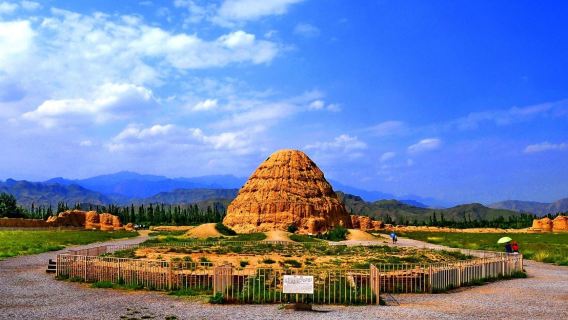
Xixia Imperial Tombs, located in the western suburbs of YinchuanHelan MountainThe Western Xia Mausoleum served as the royal burial site of the Western Xia Dynasty, where several emperors were interred. Today, the entire mausoleum complex contains 9 imperial tombs and over 140 accompanying burial sites, making it one of the largest royal burial grounds in Chinese history by area. The tombs feature a unique inverted steamed-bun shape unlike any other Chinese mausoleums. Additionally, the attraction includes facilities such as the Western Xia Mausoleum Museum, Western Xia Mausoleum - Western Xia Historical Art Gallery, and Western Xia Stele Forest to help visitors understand the historical and cultural significance behind these tombs. The attraction currently has mausoleums No. 1, 2, and 3 open for visitors. Mausoleum No. 3 (the "Tai Mausoleum" of Li Yuanhao, founding emperor of the Western Xia Dynasty) is located relatively close to The Western Xia Mausoleum's Western Xia History Art Museum and Western Xia Stele Forest. The Western Xia Dynasty was established by the Tangut people, with distinct writing systems and customs different from the Han Chinese of the Central Plains. After the dynasty's fall, its cities and history mysteriously vanished into the Gobi Desert, becoming an enduring enigma until modern discoveries and interpretations. The Western Xia Mausoleum Museum houses a rich collection of artifacts from the dynasty, including many precious stone carvings with Tangut script and murals showcasing Western Xia artistic styles. The museum offers free guides that provide fascinating insights into the customs, culture, rise, and fall of this mysterious dynasty, enhancing visitors' experience when exploring the mausoleum. On July 11, 2025, the Western Xia Mausoleum was officially inscribed on the World Heritage List. You can visit the Haowang Mausoleum up close within the attraction. The massive inverted semicircular tomb stands on the wasteland, bringing centuries of history vividly before your eyes, while in the distance...Helan MountainThe rugged ravines of the mountain ridges evoke a profound sense of desolate grandeur and timeless vicissitude. The Western Xia Mausoleum Museum inside the attraction has been newly unveiled. The exhibits are divided into six sections: history of Western Xia, Western Xia culture, Western Xia religious art, Western Xia socio-economy, Western Xia Mausoleum, and preservation & inheritance. Nearly 5,000 artifacts are displayed, including thangka paintings, documents, clay sculptures, bronze and ironware, textiles, and porcelain. Many of these are exquisite cultural relics unearthed during recent archaeological research at the Western Xia Mausoleum.Yinchuan · 46.3 km from Qingtongxia

See Minning Drama Village
See Minning Drama Village is a distinctive cultural tourism space integrating rural scenery, theatrical arts and cultural experiences. Based on the Minning collaboration story, the project showcases the unique charm of rural revitalization and cultural integration through immersive performances, themed environments and interactive experiences. Visitors can appreciate theatrical beauty and experience regional culture in the village, making it ideal for leisure visits, study tours and group activities.Yongning · 26.8 km from Qingtongxia
Experiences you can't miss in Qingtongxia
Featured Day tours in Qingtongxia
View all Day tours
5.0/5
· 1 reviewFree cancellation
Book now for tomorrow
FromNZD 412.34

Free cancellation
Instant confirmation
Book now for tomorrow
FromNZD 125.69

5.0/5
· 2 reviewsFree cancellation
Book now for tomorrow
FromNZD 313.74


Free cancellation
Book now for tomorrow
FromNZD 334.65
Free cancellation
Instant confirmation
Book now for tomorrow
FromNZD 159.87

Free things to do in Qingtongxia
Wuzhong City Museum
Wuzhong · 7.9 km from Qingtongxia
Shuidonggou Tourist Attraction
Lingwu · 48.8 km from Qingtongxia
Gansu Provincial Museum
China · Lanzhou
Yinchuan Lanshan Park
Yinchuan · 57.8 km from Qingtongxia
Gucheng Bay Tourist Area
Wuzhong · 8.7 km from Qingtongxia
Wuhai Lake Leisure Resort Tourist Area
China · Wuhai
Tengger Desert
China · Alxa Left Banner
What travelers say about Qingtongxia

龙临October 11, 2026
5.0
The last canyon on the upper reaches of the Yellow River, commonly known as the Lesser Three Gorges of the Yellow River, is a complex scenic area combining natural scenery, Western Xia culture, and modern water conservancy projects. The main attractions are the ten-mile canyon cruise, the 108 Pagodas, and the Qingtongxia Dam.
Qingtongxia Yellow River Grand Canyon Tourist Area

戏子6623October 24, 2025
5.0
The experience of visiting the Qingtongxia Yellow River Grand Canyon is very good. During the National Day holiday, you need to queue up for the sightseeing bus to the dam, but it takes time. The arrangement of taking a boat to the 108 Towers opposite is very reasonable, and you can also climb the 108 Towers.
Qingtongxia 108 Pagodas

M81***74July 14, 2026
5.0
This trip to Hunan was an excellent experience from start to finish. Our tour guide, Mi, was highly responsible and attentive to everyone. When some tourists experienced motion sickness, she promptly provided drinking water and motion sickness medication to comfort them. Even when we encountered a traffic accident and the scene was chaotic, she calmly and effectively calmed everyone down. Throughout the trip, she took excellent care of each tourist, demonstrating dedication and reliability. It was a very worthwhile trip.
Dong Mansion Scenic Area, Wuzhong City

资深喵May 11, 2021
5.0
Taohua Creek is a scenic spot in Niu Shou Mountain.
This is a corner that will be forgotten if you take the scenic area bus.
But it is very beautiful, especially in the spring when the peach blossoms are in full bloom.
It is on a small road on the left side of the entrance to the scenic area, and you can see it by hiking.
Like Yinlong Lake, it is quiet and ignored but still shining.
Nanjing Niushou Mountain Cultural Tourism Zone

233***15October 22, 2024
4.0
The Yellow River Altar is located in Qingtongxia City, Wuzhong, Ningxia. It was built for the purpose of worshiping the Yellow River and is backed by the Helan Mountains. The whole park looks large and imposing, but the materials used in the park’s buildings are average. I hope it will be well maintained and passed down from generation to generation.
Yellow River Temple

还不曾去过倒悬山!October 20, 2022
4.0
Wuzhong is located in the upper reaches of the Yellow River, in the middle of Ningxia, with Yinchuan to the north and Zhongwei to the south.
In the Western Han Dynasty, a city was built on the island of the Yellow River, and Lingzhou County was established. It was changed to Lingzhou County in the Eastern Han Dynasty and Lingwu in the Sui and Tang Dynasties.
During the Anshi Rebellion in the Tang Dynasty, Emperor Xuanzong of Tang fled to Sichuan, and Crown Prince Li Heng ascended the throne in Lingwu (i.e. Lingzhou, now Wuzhong).
Wuzhong City Museum

洛雷托梅尧臣February 14, 2025
5.0
It's a very beautiful place! The ecological environment is well protected, with many geese, egrets and ducks.
Yellow River National Wetland Park

淘淘0728October 22, 2026
5.0
It's definitely worth a visit. First of all, the corridor outside the museum is incredibly photogenic. Personally, I think visiting Tomb No. 3 is enough; the others are pretty much the same. The museum itself is worth a visit, and a guided tour is even better, providing a more direct understanding of Western Xia culture and interesting anecdotes.
Xixia Imperial Tombs

M18***37August 1, 2026
5.0
Excellent, definitely worth seeing.
Watching the performance taught me about the strong support the people of Fujian have given to Minning Town. It's a very immersive performance with a strong patriotic theme.
See Minning Drama Village


