Things to do in Dongxiang Autonomous County
Explore top experiences
Top 10 attractions in Dongxiang Autonomous County

Liujiaxia Bridge
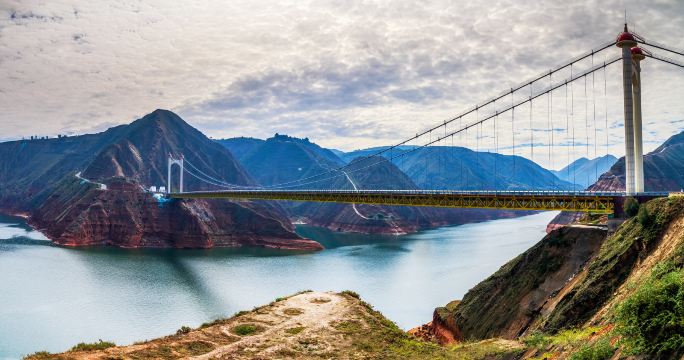
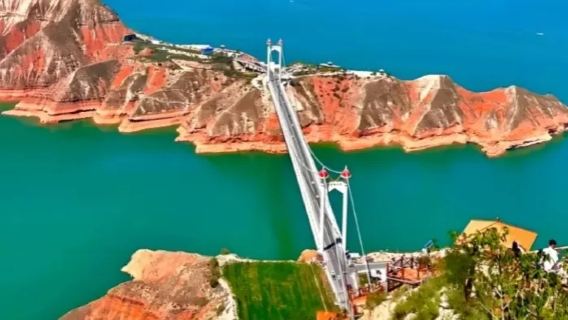
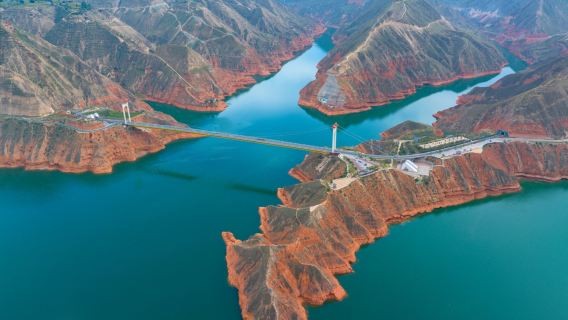
The Liujiaxia Bridge is located in Dongxiang Autonomous County and is an important bridge across the Yellow River. The Liujiaxia Bridge not only has an important transportation function, but also becomes the focus of tourists' attention because of its magnificent scenery. The bridge adopts modern bridge design technology, with a stable structure and beautiful shape. The bridge spans the Liujiaxia Reservoir of the Yellow River. The scenery on both sides of the reservoir is beautiful and surrounded by mountains, forming a unique natural landscape. Visitors can enjoy the magnificent waters and beautiful mountains on both sides of the bridge, especially at sunrise and sunset, the scenery is more charming. The Liujiaxia Bridge is not only the crystallization of engineering technology, but also the embodiment of the harmonious coexistence of man and nature. The nearby Liujiaxia Reservoir is an important water conservancy project that provides functions such as irrigation, power generation and flood control. It has also become a popular place for water activities and leisure tourism.Dongxiang Autonomous County · 22.9 km from downtown


Bafang Shisanxiang
Bafang Shisanxiang is a historic Hui ethnic district preserved in the old town of Linxia. In ancient times, people established religious quarters around eight mosques, gradually forming a settlement pattern of "living around the mosque and trading around the quarter." "Bafang" (Eight Quarters) thus became the synonym for the Hui residential area in Hezhou. With its blue-brick alleys, brick-carved gate towers, and bustling daily life intertwined, walking inside feels like unfolding a long scroll of life in an old Northwest city. On the wall of Dagaxa Lane, there is a large brick carving titled "Panoramic View of Bafang Shisanxiang" that captures the entire district. The Dagongguan old residence restores the old scenes of Bafang families drinking Gaiwan tea, receiving guests, and the historical scenes of the Tea Horse Road trade and merchant caravans. In the Handicraft Museum, you can see intangible cultural heritage crafts such as carved gourds, copper fire pots, Hezhou clay sculptures, and egg carvings. The "Dragon and Phoenix" brick-carved screen wall in front of the Beixiang Mosque, dating back to the Qianlong reign of the Qing Dynasty, is also worth stopping to admire. Themed alleys like Hezhou Suyuan Lane, Silk Road Hui Merchant Lane, and Tongqu Lane, as well as the Gaiwan Tea Square and the Hongshui River area, are all perfect for strolling and exploring at a leisurely pace. If you get tired of walking, why not sit down for some "Gua Wanzis" (tea scraping)? Learn from the locals how to use the lid to scrape the tea leaves, then blow and sip a cup of Gaiwan tea, paired with Youguoguo (fried dough) and Sanzi (fried dough twists). In Bafang Weidao Lane, you can also find local snacks such as beef offal soup, sugar oil cakes, Liangpi (cold skin noodles), and sweet wheat.Linxia · 18.1 km from Dongxiang Autonomous County

Liujiaxia Reservoir - Viewing Platform
The beautiful scenery of the Liujiaxia Reservoir - Viewing Platform attracts many photography enthusiasts to take photos. Whether it is the sunrise in the morning, the sunset in the evening, or the changing light and shadows throughout the day, photographers can capture stunning images. The scenery in different seasons also has its own unique charm: spring features blooming mountain flowers, summer offers lush shade, fall brings colorful foliage, and winter is blanketed in silver, with each season providing a different photography experience. Standing on the viewing platform and gazing into the distance, the vast blue waters of Yongjing Liujiaxia Tourist Resort come into full view. Under the sunlight, the lake water sparkles, clear and emerald green, complementing the surrounding rolling mountains to form a beautiful landscape painting where water and mountains embrace. The distant mountains are layered and overlapping; some tower into the clouds, while others wind and twist, creating a combination of motion and stillness with the calm lake surface, making one feel as if they are in a fairyland.Dongxiang Autonomous County · 23.2 km from downtown

Benchigou Viewing Platform
Dongxiang Autonomous County · 22.5 km from downtown

Yongjing Liujiaxia Tourist Resort
Located in Yongjing County, Linxia City, Gansu Province, Liujiaxia is home to the Liujiaxia Hydropower Station, Bingling Temple Grottoes and Tai Chi Island, as well as Liujiaxia Reservoir. Beginning from Liujiaxia Dam, Liujiaxia Reservoir reaches the narrows of Bingling Temple in the west, connects to Jiedong County and Linxia County in the south, and borders Yongjing County in the north. Liujiaxia Reservoir occupies a vast area. The reservoir sits on plateaus and in canyons, allowing visitors to return to the beauty of nature.Yongjing · 30.1 km from Dongxiang Autonomous County

Bingling Cave-Temple Complex
Located in the upper reaches of Liujiaxia Reservoir, on the north bank of the Yellow River in Sigouxia, southwest of Yongjing County. On the steep and dangerous red sandstone cliffs 2 kilometers long from north to south, the cave shrines are lined up one after another, and the plank roads are suspended in the air. It is magnificent and spectacular. It is one of the three largest caves in Gansu and one of the five largest caves in my country. Bingling Temple was formerly known as "Tangshu Cave", which means "ghost cave" in Qiang language. It was called "Longxing Temple" in Tang Dynasty, "Lingyan Temple" in Northern Song Dynasty, and "Bingling Temple" after the Yongle Period of Ming Dynasty. Bingling is called "Benlang" in Tibetan language, which means "one hundred thousand Buddhas". Bingling Temple Grottoes were first built in the first year of Jianhong in the Western Qin Dynasty (420 AD). Since the Sixteen Kingdoms period, it has gone through the Northern Wei, Northern Zhou, Sui, Tang, Song, Yuan and Ming dynasties, with a history of more than 1,600 years. During the period when the Western Qin Dynasty built its capital in Linxia, the king personally visited the grottoes and wrote inscriptions, the originals of which are still preserved on the rock walls. From the time the grottoes were carved in 420 AD to the Song Dynasty, the grottoes had a great influence on Han Buddhism, Pure Land Buddhism, Huayan Buddhism and Zen Buddhism. At the end of the Yuan Dynasty and the beginning of the Ming Dynasty, the Yellow School (Gelug School) of Tibetan Buddhism was introduced to Bingling Temple. Bingling Temple Grottoes, based on the inheritance of folk art from previous generations, absorbed foreign Buddhist art and created vivid sculpture and painting art with a brand-new attitude and concise approach. Its relief pagodas and Tantric murals are as famous as those of Mogao Grottoes and Maijishan Grottoes. The grottoes are divided into three parts: the upper temple, the cave ditch and the lower temple. The lower temple is more spectacular. They are distributed on a cliff 200 meters long and 60 meters high. There are 196 caves and niches in Bingling Temple Grottoes, 694 stone statues, 82 clay sculptures, and more than 900 square meters of murals. The larger Maitreya Buddha statue from the Tang Dynasty is 27 meters high, and the smaller statue is 10 centimeters high. Among them, there are 2 caves and 1 niche excavated in the Western Qin Dynasty, 8 caves and 25 niches excavated in the Northern Wei Dynasty, 2 caves in the Northern Zhou Dynasty, 2 caves in the Sui Dynasty, and 20 caves and 113 niches in the Tang Dynasty. The artistic achievements of Tang Dynasty works were quite high, and there were more than 3,000 monks at that time. The ink inscription of the famous monk Faxian in the first year of Jianhong in the Western Qin Dynasty (420 AD) in this cave is the earliest chronological inscription preserved in the caves in China. It provides a mark for the dating of other ancient caves in the country and has very important historical value. The main body of the cave statues and murals is composed of the large seated Buddha in the natural cave No. 169 and all the small and medium-sized caves in the cliff face. Cave No. 169 was formerly known as Tangshu Cave, and is now called "Tianqiao Cave". It is 15 meters high, 8 meters deep and 20 meters wide. It is one of the earliest and best preserved caves in my country. There are three types of shapes in the cave: Buddha niches, stone carvings, and stone-based clay sculptures. Niche No. 171, located on the cliff of the cave, has a large seated Maitreya Buddha statue made of stone-based clay from the Tang Dynasty. It is carved against the mountain and is 27 meters high, majestic and solemn. The Western Qin "Manjusri Bodhisattva Asking about Illness" in the cave is one of the earliest Vimalakirti Sutra Transformations seen in my country. The original Cave No. 16 is now located in the Sleeping Buddha Hall opposite the cave group. The 8.6-meter-long clay sculpture of Bingling Temple Reclining Buddha is a reclining Buddha from the Northern Wei Dynasty, which has very important research value. The 25-cm-tall maid statue from the Tang Dynasty is one of the more precious existing cave statues in my country, and fully embodies the style of the prosperous Tang Dynasty. Next to the cliff at the entrance of Bingling Temple stands the steep Sister Peak, surrounded by scenic spots such as the Mandarin Duck Cave and the Medicine Spring, with green mountains and clear waters, dangerous peaks and strange rocks.Yongjing · 34.9 km from Dongxiang Autonomous County

Jiuzhaigou National Park
Jiuzhaigou National Park is located in Jiuzhaigou County of Ngawa Prefecture. With its towering snow-capped peaks, dense forests, and vibrantly colored pools and shoals, crystal-clear streams meander through the forests and shallows. Combined with Tibetan wooden houses, prayer flags, and the unique traditional customs of the Tibetan and Qiang ethnic groups, Jiuzhaigou National Park is often referred to as a "beautiful fairyland". Jiuzhaigou National Park features a Y-shaped layout, consisting of three main valleys: Shuzheng Valley, Rize Valley, and Jiuzhaigou-Zechawa Valley, with a total length of over 50 km.The attraction is equipped with eco-friendly sightseeing vehicles that stop at designated stations. Visitors can wait at each station and conveniently tour various attractions within the site by taking the sightseeing vehicles.China · Jiuzhaigou

Yellow River-Taohe River Intersection Viewing Platform
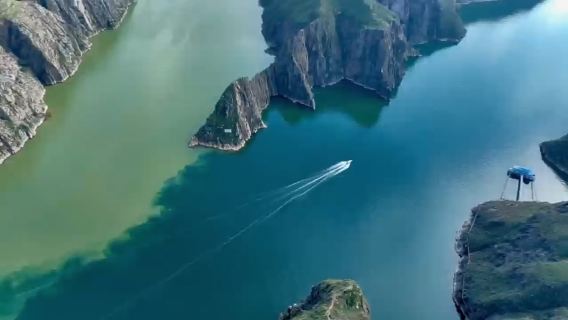
The Huangtao Intersection is a spectacular scene formed by the intersection of the Yellow River and the Tao River. It has been broadcast on CCTV channels many times. This is the place where the mother river, the Yellow River, and its second largest tributary, the Tao River, meet. The blue Yellow River meets the orange Tao River. , intersect in front of Longhui Mountain in a "Y" shape, with clearly defined Jingwei and Jingwei, forming a world wonder of the "Meeting of Huangtao". "Huang-Tao Intersection" is also known as "Two Dragons Playing with Pearls". There are two giant dragons, one orange and one blue. The intersection of the orange Tao River and the blue Yellow River forms the magnificent landscape of the Huang-Tao Intersection with clear distinctions. When you take a boat from the dam pier to Bingling Temple, you will have close contact with the "Huang-Tao Intersection" and feel the unique charm of the Yellow River. People often say that "the Yellow River in the world is noble and pure", what you will see in Yongjing is "the Yellow River in the world is always blue".Yongjing · 29.8 km from Dongxiang Autonomous County

Gansu Provincial Museum
Gansu Provincial Museum is a large comprehensive museum centered on the civilization of the Silk Road. Located at a strategic point along the Silk Road and a convergence zone of Han and Tibetan cultures, its collections embody the diverse characteristics of the Central Plains, Western Regions, and the Tibetan Plateau. The three treasured artifacts—the Galloping Bronze Horse, the mural brick of a courier, and the painted pottery vase with a human-head-shaped mouth—serve as iconic representations of the museum. The museum has three floors, featuring permanent exhibitions on themes such as the civilization of the Silk Road, Buddhist art of Gansu, painted pottery of Gansu, paleontological fossils, and revolutionary Gansu. The Silk Road civilization exhibition on the second floor is the museum's centerpiece: the bronze galloping horse unearthed in 1969 from the Leitai Han tomb in Wuwei is displayed here. The horse has three hooves in the air and one stepping on a flying bird, standing steadily on a single hoof. Its image is now the symbol of Chinese tourism. In the same hall, the mural brick depicting a courier from the Wei-Jin tombs in Jiayuguan shows a messenger galloping on horseback, notably without a mouth, symbolizing the need for couriers to "keep their mouths shut." This pattern was later adopted as the emblem of China Post. The exhibition also features a procession of chariots and horses excavated from the same tomb as the bronze horse, along with Han and Tang dynasty silk textiles, gold and silver artifacts, making the prosperity of Silk Road trade vividly tangible. The Buddhist art exhibition hall on the third floor features replicas of caves from the Mogao Grottoes and Maijishan Grottoes, alongside statues, ritual objects, white pagodas, and prayer wheels from both Han and Tibetan Buddhism. Stepping into the hall feels like entering a temple, and this harmonious blend of Han and Tibetan styles is rarely seen elsewhere. On the same floor, the painted pottery exhibition showcases ceramics from cultures such as Dadiwan, Yangshao, and Majiayao, with intricate and fluid patterns like spiral and sawtooth designs. Among them, the painted pottery bottle with a human-head-shaped spout unearthed at Dadiwan in Qin'an, which integrates facial sculpture with the pottery vessel, is a highly popular exhibit. If you're interested in natural history, the paleontological fossils exhibition hall features the impressive skeleton of the Yellow River ancient elephant unearthed in Heshui, and the dinosaur fossils and reconstructed models are also popular with children. The revolutionary Gansu exhibition hall showcases historical artifacts and materials from periods such as the Nanliang base area and the Shaan-Gan-Ning border region, narrating the modern history of this land. The museum houses a large quantity of exhibits, and even a quick tour would take half a day. It's recommended to start with the Silk Road exhibition on the second floor, then proceed to the third floor for Buddhist art and painted pottery, following a logical route. In the exhibition halls, you can scan to listen to the audio guide, and at certain times, volunteers also provide guided explanations.Lanzhou · 56.7 km from Dongxiang Autonomous County

Bingling Temple World Cultural Heritage Tourist Area
Bingling Temple World Cultural Heritage Tourist Area is located in Yongjing County, Linxia Hui Autonomous Prefecture, Gansu Province. This cultural attraction combines Buddhist cave art with natural scenery, covering a total area of 180 square kilometers. It consists of three main sections: Bingling Lake, Gansu Bingling Danxia National Geopark (Bingling Stone Forest), and Bingling Temple Caves. In December 2020, it was designated as a National 5A-level Tourist Attraction by China's Ministry of Culture and Tourism. Bingling Lake is the reservoir of Liujiaxia Hydropower Station, named after the Bingling Temple at its far end. With crystal-clear, unpolluted water meeting national Grade II drinking standards, this vast misty lake stretches like an endless green silk ribbon through mountain ranges, blending southern China's elegance with the plateau's grandeur—a dream destination for travelers. Liujiaxia Hydropower Station, China's first independently designed million-kilowatt hydro project in Asia, is recognized as a National Industrial Heritage Education Base. The Binglingshi Stone Forest is a Danxia landform composed of Cretaceous purplish-red fine sandstone from the early Cenozoic era. In 2011, it was officially designated as the Gansu Bingling Danxia National Geopark by the Ministry of Land and Resources. Within the geopark, thousands of towering peaks and countless crisscrossing ravines form a labyrinth of winding tributary valleys, creating a surreal stone forest landscape alongside uniquely shaped rock formations. This natural sculpture gallery holds immense value for geological research, tourism development, natural aesthetics, and ecological conservation. The Bingling Temple Grottoes, dating back over 1,600 years to the Western Qin period of the Sixteen Kingdoms era, is a nationally protected cultural heritage site and was inscribed on the UNESCO World Heritage List in 2014. The grotto complex consists of three main sections: the Lower Temple area, Upper Temple area, and Donggou area. It preserves 216 cave shrines, over 800 Buddhist statues, more than 1,000 square meters of murals blending Tibetan and Han Chinese artistic styles, 56 stupas, and 438 cultural relics. The site contains ink inscriptions from the first year of Jianhong era (420 AD) of Western Qin - the earliest dated Buddhist cave inscription found in China, which serves as a crucial benchmark for dating early grotto art. The Bingling Temple World Cultural Heritage Tourist Area boasts abundant resources, where natural views and cultural landscapes complement each other to create a magnificent and mysterious panorama. Every visitor can embark on a perfect journey here to explore cultural heritage and experience the beauty of nature.Yongjing · 26.6 km from Dongxiang Autonomous County
Experiences you can't miss in Dongxiang Autonomous County
Featured Day tours in Dongxiang Autonomous County
View all Day tours
4.3/5
· 7 reviews· 76 bookedFree cancellation
Instant confirmation
Book now for tomorrow
FromVND 1,848,777

5.0/5
· 10 reviews· 56 bookedFree cancellation
Book now for tomorrow
FromVND 1,300,000
5.0/5
· 16 reviews· 95 bookedFree cancellation
Instant confirmation
Book now for tomorrow
77 travelers saved
FromVND 1,607,693
5.0/5
· 9 reviews· 29 bookedFree cancellation
Instant confirmation
Book now for tomorrow
FromVND 1,330,770
Free cancellation
Instant confirmation
Book now for tomorrow
FromVND 1,180,070

Free cancellation
Instant confirmation
Book now for tomorrow
FromVND 1,564,686
Free cancellation
Instant confirmation
Book now for tomorrow
FromVND 2,534,966

FromVND 13,308,567
Featured Cultural experiences in Dongxiang Autonomous County
View all Cultural experiences
Free cancellation
Instant confirmation
9% off
Limited-time sale
FromVND 955,386VND 1,061,539


5.0/5
· 3 reviewsFree cancellation
Instant confirmation
FromVND 3,846,154
FromVND 6,461,539
Free cancellation
Book now for tomorrow
FromVND 6,173,077
FromVND 6,337,413
FromVND 6,337,424
FromVND 6,337,413
Featured Outdoor experiences in Dongxiang Autonomous County
View all Outdoor experiences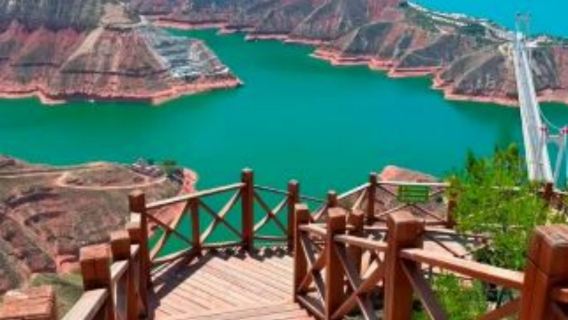
5.0/5
· 2 reviewsFree cancellation
Book now for tomorrow
FromVND 1,530,770

4.9/5
· 62 reviews· 350 bookedFree cancellation
Book now for today
96.8% of travelers recommend
FromVND 442,308

5.0/5
· 5 reviews· 22 bookedFree cancellation
Instant confirmation
Book now for tomorrow
FromVND 1,944,931

4.9/5
· 80 reviews· 494 bookedFree cancellation
Instant confirmation
Book now for today
97.5% of travelers recommend
FromVND 1,415,385
Free things to do in Dongxiang Autonomous County
Liujiaxia Bridge
Dongxiang Autonomous County · 22.9 km from downtownBafang Shisanxiang
Linxia · 18.1 km from Dongxiang Autonomous CountyBenchigou Viewing Platform
Dongxiang Autonomous County · 22.5 km from downtownYongjing Liujiaxia Tourist Resort
Yongjing · 30.1 km from Dongxiang Autonomous CountyGansu Provincial Museum
Lanzhou · 56.7 km from Dongxiang Autonomous County
Yellow River Three Gorges
Yongjing · 26.9 km from Dongxiang Autonomous County
hua kai lin xia bu ye cheng
Linxia · 14.2 km from Dongxiang Autonomous County
Lanzhou Old Street
Lanzhou · 55 km from Dongxiang Autonomous County
Hong Garden
Linxia · 18.6 km from Dongxiang Autonomous County
Zhongshan Bridge
Lanzhou · 58.9 km from Dongxiang Autonomous County
What travelers say about Dongxiang Autonomous County

虎虎升胃July 15, 2023
5.0
The scenery is magnificent and pleasant, and the key is that it is free. On the way to Yongjing, I passed by Liujiaxia Bridge. The mountains and rivers are beautiful. There was a thin mist floating on the lake that day I went there. It was really beautiful. There is an observation deck next to the bridge, but the sun was too strong and I didn't go up
Liujiaxia Bridge

M37***45September 5, 2026
4.0
Hidden within the Eight Squares and Thirteen Lanes is China's first museum dedicated to covered bowl tea—the Hezhou Mingyuan Covered Bowl Tea Culture Museum! The entire museum is housed in an ancient Qing Dynasty residence in Northwest China, preserving the "style of the Tang and Song Dynasties and the layout of the Ming and Qing Dynasties." Even the walls are decorated with blue and white porcelain covered bowls—it's incredibly unique! A leisurely stroll through it is so relaxing!
Bafang Shisanxiang

静怡之美June 16, 2025
4.0
The viewing platform has a very wide field of vision, and you can have a bird's eye view of the entire reservoir area and the beautiful scenery of the bridge. The spectacular Liujiaxia Bridge spans over the Mercedes-Benz Valley like a rainbow, overlooking the vast blue waves of the Liujiaxia Reservoir, which are as quiet as a virgin. The speedboats and ships passing by draw long waves, making the reservoir area lively. The wooden plank road built beside the mountain is like a giant dragon nestling on the mountain, which is very spectacular.
Liujiaxia Reservoir - Viewing Platform

猫步丈量山河June 19, 2025
5.0
这里太美了,濒临刘家峡水库,距东乡县城35公里,处在折达公路东乡县河滩镇至考勒乡段,是连接临夏、东乡、永靖、兰州的重要地段。它属于丹霞地貌,约1.45亿至1.00亿年前河湖环境中形成的紫红色砂质泥岩、粉砂岩经流水切割后,形成了绵延的红色陡崖以及条条丹霞石墙。
Benchigou Viewing Platform

M10***51July 2, 2026
5.0
The Liujiaxia Reservoir is a large-scale hydroelectric power station built independently during the First Five-Year Plan. The green Yellow River and the earthy yellow mountain valleys complement each other beautifully, and the scenery along the bridge is also stunning. It's definitely worth a visit!
Yongjing Liujiaxia Tourist Resort

游来游去的鱼鱼🐡September 30, 2026
5.0
The Bingling Temple Grottoes are hailed by scholars as an "encyclopedia of Chinese grottoes," holding an irreplaceable and important position in my country's grotto art. It is not only one of the three major grottoes in Gansu, but also the first Yellow River grotto on the Silk Road.
Bingling Cave-Temple Complex

gpc_mybabyOctober 24, 2026
4.0
Jiuzhaigou's scenery is impeccable, with stunning lakes and mountains. During peak season, it's incredibly crowded, and waiting for transportation can be very time-consuming. A one-day pass is a bit short; having two days would allow you to relax, appreciate the scenery at your own pace, and have a much better experience.
Jiuzhaigou National Park

KS炎炎May 6, 2025
5.0
The confluence of the Yellow River and the Tao River is quite spectacular. It takes at least 20 minutes to walk from the entrance of the scenic area to the viewing platform, and you have to climb a slope. The shuttle bus needs to be purchased separately. You can hear a lot of geographical explanations on the viewing platform.
Yellow River-Taohe River Intersection Viewing Platform

M14***99October 6, 2026
5.0
Lina, the lecturer at the Gambo Museum, is exceptionally skilled. During the two-hour learning experience, she demonstrated a thorough understanding of the chronological order and comparative analysis of the artifacts, meticulously integrating historical evolution with everyday life. I look forward to the completion of the new Gambo Museum and visiting it again next time.
Gansu Provincial Museum

M28***94August 5, 2025
5.0
I drove there on a self-driving tour from Liujiaxia Town. It was a long way to go. Some of the statues on the grotto walls were blocked by gauze and could not be seen clearly. Some were still empty. Only the Buddha statues were magnificent. I took a long detour back to the entrance. It is suitable for scholars and scholars. I think it is okay. If you want to see the special grottoes, you need to make a separate reservation and buy a ticket, which seems to be 300 yuan.
Bingling Temple World Cultural Heritage Tourist Area


