Qimen

Things to do in Qimen

Search attractions or local attractions & tours
Search

Explore top experiences

Top 10 attractions in Qimen

View all Attractions
Hongcun Village
No. 1 of Night Attractions in Anhui

Hongcun Village

8.6
4.5/5
50k reviews
Hongcun Village is a classic Huizhou-style ancient village, renowned as a "village in a Chinese painting." A visit here offers two unmissable experiences: first, the water landscapes shaped by its irrigation system, with Nanhu Lake and Yuezhao Pond as the crown jewels; second, the exquisite "three carvings" of Huizhou architecture—brick, stone, and wood carvings—intricate enough to rival paper-cut art. Here, cultural heritage and natural beauty blend seamlessly into a harmonious whole. The ancient village was first built during the Shaoxing era of the Southern Song dynasty and gradually developed from the Yongle era of the Ming dynasty into a unique "ox-shaped village" layout. The two ancient trees at the village entrance form the "ox horns," the densely packed Ming and Qing Huizhou-style buildings in the village form the "ox body," the four bridges over the stream west of the village form the "ox feet," Yuezhao Pond is the "ox stomach," Nanhu Lake is the "ox belly," and the water channels flowing past every household are the "ox intestines." Sightseeing can begin at Nanhu Lake in the south of the village. Nanhu Lake is a bow-shaped artificial lake dug during the Wanli era of the Ming dynasty, with a broad expanse of water; the Huabridge crossing the lake is where Li Mubai led his horse in the film Crouching Tiger, Hidden Dragon. On the north bank of the lake, Nanhu Academy was formed by merging six original private schools by the lakeside, and its layout is exceptionally spacious. Heading north along the lake's north bank, visitors can also stop by ancient residences such as Jingde Hall and Wang Daxie's Former Residence (Zhenqi Hall). Continuing north leads to Yuezhao Pond at the village center, a half-moon-shaped pond dug during the Yongle era of the Ming dynasty, surrounded by Huizhou-style buildings reflected in its waters—one of the best spots for photography in the ancient village. However, visitors crowd around Yuezhao Pond year-round, so patience is needed to capture an empty shot. At the center of Yuezhao Pond's north bank stands Lexu Hall, also known as the Wang Clan Ancestral Hall, a surviving Ming dynasty building in the village with a simpler style than Qing dynasty architecture. On the western end of Yuezhao Pond's north side is Jingxiu Hall, built during the Qing dynasty. Further north, visitors can tour Chengzhi Hall, the residence of late Qing salt merchant Wang Dinggui. The residence is fully equipped with a study, kitchen, stable, bodyguard room, and servants' quarters, and even includes a "Paishan Pavilion" for playing mahjong; the house has its own pond and well, so water is available without leaving the premises. The exquisite Huizhou three carvings are worth examining closely—some wood carvings are even coated with gold powder, lavish and magnificent. Other ancient buildings in the village worth seeing include Deyi Hall, Shuren Hall, and Taoyuan Residence.Yi County · 31 km from Qimen
Xidi
No. 3 of Night Attractions in Anhui

Xidi

7.7
4.6/5
12.2k reviews
Xidi is a typical Huizhou-style ancient village in Yi County, and together with Hongcun it is known as one of the two great ancient villages of southern Anhui. If Hongcun is known for its waterscape, Xidi focuses more on the architecture itself—the village preserves a well-laid-out complex of Ming and Qing dynasty buildings, with exquisite craftsmanship in the "three Huizhou-style carvings" of brick, stone, and wood. The patterns and branches are so finely detailed that they are a highlight worth savoring throughout the ancient village. Most residents of the village share the last name Hu. Legend has it that they are descendants of Li Ye, Emperor Zhaozong of Tang, who changed their surname to Hu to escape the chaos of war and have lived here for generations ever since. The ancient village was first built during the Huangyou era of the Northern Song dynasty. During the Ming and Qing dynasties, as Huizhou merchants rose to prominence, extensive construction took place, and a large number of Hu merchants returned home to build residences, once giving Xidi hundreds of courtyard houses. The ancient village was laid out in the shape of a boat, spanning three streams. In the south, the Qianbian Stream and Houbian Stream converge at Huiyuan Bridge inside the village to form the Xi Stream, which then joins the Shewu Stream to the north at the village entrance. All the streams flow from east to west, and this is how Xidi, meaning "westward flow," got its name. The main entrance is in the southwest corner, and the first thing that meets the eye is the Hu Wenguang Memorial Archway, built in the sixth year of the Wanli reign of the Ming Dynasty. It is entirely carved and built from local "Yi County bluestone" marble, with five tiers of stone carvings stacked layer upon layer, grand and imposing. Beside the archway, the broad surface of Mingjing Lake is a good spot for photographing the reflections of Hui-style buildings. Entering the village, Ruiyu Ting at the Henglu Street intersection is a typical Huizhou merchant residence. The couplets in the hall are quite meaningful, such as "Happiness is earned through hard work; good bargains often come from being willing to take a loss," which discusses business principles and also contains a philosophy of life. Heading east along the Front Stream, Jing'ai Hall is one of the larger surviving ancestral halls in the village. The "filial piety" character hanging in the center is ingeniously designed—the right half resembles a person bowing with hands clasped, while the left half resembles a monkey, meaning that only those who observe filial piety are truly human, and those who are unfilial are like macaques. Shangde Hall upstream is one of the oldest surviving Ming Dynasty buildings in the village. In addition, Taoli Yuan, which pairs a residence with a study hall; the Hui-style courtyards West Garden and East Garden; Dunren Hall, the late-life residence of the Qing Dynasty Huizhou merchant Hu Guansan; as well as Zouma Lou, Xiulou, and Zhuimu Hall, each have their own features and are worth visiting one by one. Art academy students often come here to sketch, and the young people setting up easels among the white walls and black tiles have also become a scene of the ancient village.Yi County · 27.4 km from Qimen
Qiyun Mountain
No. 7 of Best Things to Do in Southern Anhui

Qiyun Mountain

7.6
4.7/5
7.4k reviews
Qiyun Mountain has been active since the Tang Dynasty, and some spectacular cliff carvings can be seen on the mountain. The Danxia landform has brought a rounded red mountain to Qiyun Mountain, which is in sharp contrast with the verdant vegetation on the mountain. Qiyun Mountain is 33 kilometers west of Huangshan City, with an altitude of 585 meters. The mountain is not high, but it is relatively large. It is divided into four areas: Yuehua Street Attraction, Loushanglou Attraction, Yunyan Lake Attraction, and Hengjiang Attraction. If you think it is "just a small mountain", you have only visited the Yuehua Street Attraction, which is the essence of the front mountain, and this is the content of a one-day tour; for a two-day tour, you can first visit the Yuehua Street Attraction, and on the second day you can go to the Loushanglou Attraction on the back mountain; as for the Yunyan Lake Attraction, it is too far away and generally no tourists go there. The hiking trail of Qiyun Mountain is at Dengfeng Bridge, 600 meters away from the lower station of the cable car. When taking a bus to Qiyun Mountain, you must tell the driver where you want to get off. It takes about an hour to walk up the mountain to reach the upper station of the cable car. It is recommended to take the cable car when going up the mountain, so that you can enjoy the rural scenery below the mountain. When you get out of the upper station of the cable car to Feiyun Pavilion, remember to look back at the mountain below. The best time to visit Qiyun Mountain is when the rape-flowers bloom in April. The golden flower fields and the Hui-style villages with white walls and black tiles are like a Chinese painting. The main attraction in the front mountain is the cliff carvings, with the Zhenxian Cave House being the most spectacular. There are caves all over the cliffs, with the four characters "天开神秀" written on the top. In the caves, there are various gods and immortals. From the top of the cliff, there is a pearl spring dripping into the clear pool below the cliff. Then walk to Yuehua Street. At the end of the street, through the doorway is a gourd-shaped stone archway "Xiao Hutian", and you will reach a cave. If you look carefully at the top of the cave, you will see footprints left by dinosaurs in ancient times. It takes about half an hour to climb from Yuehua Street to the peak of Qiyun Mountain. Most tourists return to Yuehua Street. If you want to go to the back mountain, you can stay in Yuehua Street for one night, otherwise you will not have enough time. Yuehua Street is a village on the mountainside with limited reception capacity. Although there are not many tourists staying in the mountain, it is better to make reservations in advance. There are also old houses in hotels with better conditions, such as the century-old Changsheng Building. The accommodation conditions are average, but you can see the sea of clouds in front of the building. Walking from the front mountain to Yuehua Street, there is Xianglu Peak on the right hand side. It is the representative of all the peaks of Qiyun Mountain because of its exquisite shape. There is a pavilion on the top of the peak. There is a road leading to the top of the peak from Zhenxian Cave Mansion, but the road is not easy to walk. It is recommended to put the luggage at the accommodation on Yuehua Street and then go back to the mountain climbing place. If you don't know where to climb, you can ask the hotel owner or villagers in detail. Don't climb on rainy days because the road is slippery. The next day, we went upstairs in the back mountain. There were no supply stations along the way, so we had to prepare enough water and dry food. After watching the sunrise on the peak in the morning, we returned to Yuehua Street and headed towards Yuxu Palace. There was a fork in the road leading to Fangla Village. If you have good stamina and can run fast, you can go and take a look. Otherwise, it is recommended to go straight upstairs. We walked in the mountains and could no longer see the scenery below the mountain. There were very few people along the way, and it felt like "the whole mountain is yours." On the way, you will pass the downhill road leading to the bamboo raft dock. If there is a mountain guard on duty at the pavilion at the intersection, you can leave your luggage there and pick it up when you come back from here. Going forward, you will encounter another fork in the road. The right side leads to the reservoir, and the left side with the covered bridge is the correct road. When you reach the upper floor, you can see the naturally formed upper and lower layers of caves. Backpackers will set up tents here. The terrain is flat and can shelter from wind and rain. Go down the mountain from the road leading to the bamboo raft pier, and take a bamboo raft to drift all the way to Dengfeng Bridge. Dengfeng Bridge is a stone bridge built during the Wanli period of the Ming Dynasty. On the other side is a Hui-style village. When the rape-flowers bloom, the scenery in this area is no less beautiful than those popular rape-flower viewing spots in Anhui and Wuyuan. When the golden sun sets and the night falls, the town of Qiyun is brightly lit and bustling. Qiyun iron flowers bloom in the sky, bringing romance; fish lanterns parade in the streets with the blessings of Huizhou for 600 years; standing on the Dengfeng Bridge, you can also see the 100-meter golden dragon winding forward with fireworks all over the sky. As a new landmark for Huangshan night tours, Qiyun Mountain Resort has created the [Baiyue Night Carefree] special night tour IP, introducing a number of intangible cultural heritage interpretations, and highly presenting the thousand-year folk romance through the inheritance and innovation of intangible cultural heritage skills, helping the development of Huangshan's night tour economy, promoting the continuous renewal of Huangshan's night tour forms, and bringing tourists a beautiful holiday life with fireworks and nights.Xiuning · 31.3 km from Qimen
Mount Huangshan Scenic Area
2026 Asia 100 - Best Things to Do

Mount Huangshan Scenic Area

9
4.8/5
73.4k reviews
Mount Huangshan Scenic Area is located in Tangkou Town, Huangshan District, Huangshan City. Since ancient times, Mount Huangshan has been one of China's most renowned mountains. Its peculiar pines, strange rocks, sea of clouds, and hot springs are known as the "Four Wonders" of Mount Huangshan. In addition to these, rime, snowscapes, and sunrises are also views that visitors will not miss. There is an ancient saying: "Having visited the Five Great Mountains, one need not look at any other mountains; having visited Mount Huangshan, one need not look at the Five Great Mountains." The attraction is divided into the south gate, west gate, and north gate. The vast majority of visitors enter and exit through the south gate, which has two entrances and exits—front mountain and back mountain—both close to Tangkou Town at the foot of the mountain. The town has also become a transfer hub for visiting Huangshan, and many visitors arrive here in advance to stay overnight. From Tangkou Town to the attraction entrance, you need to take the Huangshan New National Line shuttle bus, which stops at the front mountain gate (Ciguang Pavilion), the back mountain gate (Yungu Temple), and the Huangshan-Hot Spring attraction. Visiting the attraction mainly involves two routes up the mountain, the front mountain and the back mountain, both leading to one of the main peaks, Bright Summit. On the other side of Bright Summit, there is also a loop route — the West Sea Grand Canyon. Front mountain The front mountain refers to the hiking route starting from Ciguang Pavilion to Yuping Tower at the summit (accessible directly by the Yuping Cable Car), as well as the Mount Huangshan Scenic Area - Lotus Peak and Tiandu Peak areas at the summit. The scenery of the front mountain is grand and majestic, making it very suitable for enjoying panoramic views from the cable car. Both the highest peak, Mount Huangshan Scenic Area - Lotus Peak, and the other main peak, Tiandu Peak, are located here (the two peaks open alternately). There are also classic attractions such as the Guest-Greeting Pine, Jiulong Peak - Carp Back, Hundred-Step Ladder, One-Line Sky, and Tianhai. Back mountain The back mountain refers to the hiking route from Yungu Temple to Bai'e Ridge (accessible directly by the Mount Huangshan Yungu Cableway), as well as the mountaintop areas behind Bai'e Ridge such as Shixin Peak, Mount Huangshan Scenic Area - Shizi Peak, and West Sea Grand Canyon - Paiyun Pavilion. The scenery of the back mountain consists mostly of exquisite mountain views, suitable for enjoying on foot along the way. Flying Stone and Monkey Watching the Sea are both located here. West sea grand canyon West sea grand canyon officially opened in 2000. The canyon is deep and the scenery is very magnificent, and it is known as the true gathering place of Huangshan's essential scenery. West sea grand canyon can be entered from West Sea Grand Canyon - Paiyun Pavilion in the summit area of the back mountain, and after looping around inside the canyon, you return to the main peak area of Tianhai. It takes about 2 hours to walk down from West Sea Grand Canyon - Paiyun Pavilion to the bottom of the canyon, and then you can take a cable car to Tianhai. Route recommendations The standard way to visit Huangshan is a two-day tour, with routes divided into ascending via the front mountain and descending via the back mountain (front mountain - West Sea Grand Canyon - back mountain) or ascending via the back mountain and descending via the front mountain (back mountain - West Sea Grand Canyon - front mountain). Ascending via the front mountain and descending via the back mountain is suitable for taking the cable car up and walking down, which is both relaxing and allows you to enjoy the exquisite scenery of the latter half. However, since the essential route of the West Sea Grand Canyon runs from West Sea Grand Canyon - Paiyun Pavilion to Tianhai, you will have to backtrack along a section of the trail. It is possible to visit Huangshan in just one day, but the itinerary will be tight. It is recommended to ascend via the rear mountain and descend via the front mountain, taking the cable car both ways, and to either skip climbing the main peaks of the front mountain (Mount Huangshan Scenic Area - Lotus Peak / Tiandu Peak) or skip the West Sea Grand Canyon. Stay selection There are several accommodation options at the summit, mainly concentrated in areas such as Guangming Peak Tianhai, West Sea Grand Canyon-Paiyun Pavilion, Bai'e Ridge, and North Sea. Guangming Peak Tianhai is a great spot for watching the sunrise, and it is also suitable for storing luggage while exploring the West Sea Grand Canyon. Bai'e Ridge is the upper station of the Huangshan Yungu Cableway on the rear mountain; if you typically enter the attraction from the rear mountain in the afternoon, staying here is quite convenient.Huangshan City · 53.1 km from Qimen

Experiences you can't miss in Qimen

Featured Day tours in Qimen

View all Day tours
Huangshan Scenic Area+Yungu Cableway1-day Tour
Trip.Select
󱌍
4.2/5
· 5 reviews· 47 booked
Duration: 10 hrs
English
Free cancellation
Instant confirmation
Book now for tomorrow
FromMYR 759.49
1 Day Guided Adventure Tour of Yellow Mountain
Trip.Select
󱌍
5.0/5
· 1 review· 27 booked
Duration: 7 hrs
English
Free cancellation
Instant confirmation
Book now for tomorrow
FromMYR 411.69
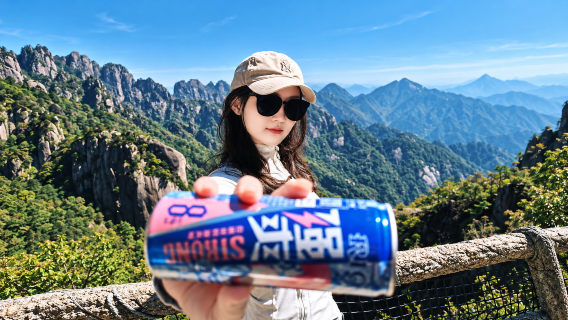
Huangshan Day Trip | Includes Admission Ticket for a Relaxed Tour of the Famous Mountain/Optional Hotel Pick-up/Drop-off or English-speaking Guide
󱌍
4.7/5
· 3 reviews· 38 booked
Duration: 11.2 hrs
English
Free cancellation
Instant confirmation
Book now for tomorrow
FromMYR 181.91
Jingdezhen Highlights One-Day Tour: From Ancient Kilns to Modern Art[Ticket + Private Car]
󱌍
Duration: 9.3 hrs
English
Free cancellation
Instant confirmation
Book now for tomorrow
FromMYR 133.32
Yi CountyXidi+Hongcun Village1-day Tour
󱌍
Duration: 8 hrs
English
Free cancellation
Instant confirmation
Book now for tomorrow
FromMYR 603.33
Hongcun ancient village and Huizhou cultural experience (departing from Huangshan)
󱌍
Duration: 10.5 hrs
English
Free cancellation
Instant confirmation
Book now for tomorrow
9% off
Limited-time sale
FromMYR 230.20MYR 255.77
Unique to Jingdezhen! Group Day Tour to Yaoli Ancient Town+Hanxi Village+Porcelain Palace
󱌍
Duration: 9.2 hrs
English
Free cancellation
Instant confirmation
FromMYR 126.30

Featured Culture & history in Qimen

View all Culture & history
Jingdezhen, Jiangxi Taotaoguai DIY pottery experience [Pottery making | Plain bisque painting]
󱌍
Duration: 6 hrs
English
Free cancellation
Instant confirmation
Book now for today
FromMYR 29.31
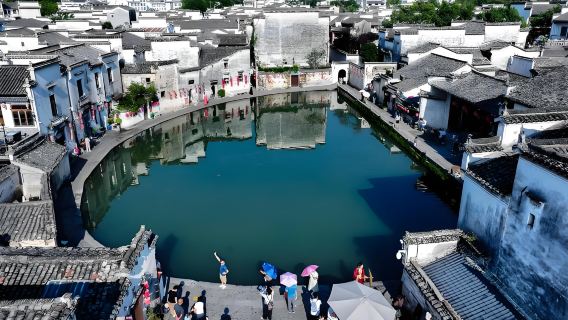
[Premium private tour] One-day private chartered car tour to Mount Huangshan Xidi Ancient Village + Hongcun
󱌍
Duration: 4 hrs
English
Free cancellation
Instant confirmation
Book now for tomorrow
FromMYR 440.87
Xidi & Ox-Shaped Hongcun Village, UNESCO World Heritage Huangshan Day Private Tour
󱌍
Duration: 7.6 hrs
English
Free cancellation
Instant confirmation
FromMYR 321.78
Huangshan Huizhou Ancient Villages One-Day Tour (Hongcun + Xidi)
󱌍
5.0/5
· 1 review
Duration: 6.5 hrs
English
Free cancellation
Book now for tomorrow
FromMYR 327.93
[Depart from Wuyuan] Huangling (including cable car) + Likeng day trip |  optional Chinese/English service
󱌍
5.0/5
· 1 review
Duration: 8.6 hrs
English
Free cancellation
Instant confirmation
FromMYR 854.60
Qimen Today's weatherHeavy rain 13-17℃
Qimen weather for the next 2 days11/5: 14-25℃, 11/6: 15-22℃

Free things to do in Qimen

What travelers say about Qimen

user-avatar
Anonymous userNovember 3, 2026
5.0
Hongcun is indeed a beautiful village, rich in cultural heritage. We saw many beautiful sights and Hui-style architecture, and the local snacks were delicious. We even visited a century-old shop.

Hongcun Village

user-avatar
我是张布丁October 31, 2026
4.0
Xidi is nice; it's not overly commercialized, and you can see the villagers' lives. It's rustic and steeped in history. The village is well-preserved, perfect for a leisurely experience. However, wandering around on the off-main roads after dark can be a little scary. There are folk performances in the square at night, which are very lively, and at 11 pm, they even play gongs and drums to signal the night watch. Hongcun is heavily commercialized, with assembly-line-like shops selling cultural and creative products, Hanfu (traditional Han clothing), silver jewelry, and even grilled sausages—it's pretty much the same everywhere in China. But the morning and night views of Moon Pond and South Lake are worth seeing.

Xidi

user-avatar
Anonymous userOctober 6, 2026
4.0
Xidi has more official residences, while Nanping has more private residences. You can feel the tranquility and peace; many residents still live there. The small Western-style houses are quite different in style. The items in the Cheng Family Ancestral Hall were donated by people, one chair at a time. Shensi Hall is the best-preserved two-courtyard house I've seen recently.

Nanping Village

user-avatar
Anonymous userOctober 30, 2026
5.0
Qiyun Mountain has quite a few scenic spots and photo opportunities. Although there's a cable car, there are also quite a few stairs going up and down. Fortunately, the smaller attractions are all close together, so you won't be climbing endlessly. You can rest whenever you want, and it's not too tiring.

Qiyun Mountain

user-avatar
Sherry1106July 18, 2026
5.0
It's a privately developed tourist attraction, so there weren't many tourists. I didn't have high expectations; I just wanted my elderly relatives to come and walk around without getting too tired. But it turned out to be a beautiful place, with picturesque views at every turn—a pleasant surprise.

Shouzhuo Park

user-avatar
M31***69November 1, 2026
5.0
When visiting Chizhou, the first stop is the Guniujiang Scenic Area. It's lush and green everywhere you look. We happened to be there on a rainy day, so the air was fresh, the birds were singing, the flowers were blooming, and the negative oxygen ion content was extremely high. It was so comfortable!

Guniujiang Nature Reserve

user-avatar
_We***56October 16, 2026
5.0
The value for money is absolutely amazing!! It rained during the Dragon Boat Festival, and Xiuli was the only place in Huizhou that kept up with the fish lantern displays – the variety was incredible!! I had so much fun! I wrote a thousand-word post on Xiaohongshu to rave about it. Although I was initially a little unhappy that Xiuli wasn't included in the annual pass, the ten yuan was totally worth it. You absolutely must come to Xiuli to see the fish lanterns, fireworks, and iron flower displays!

Yujianxiuli Water Town

user-avatar
滇国剑客April 20, 2020
5.0
The main point of Guniujiang Lixi is that it means to overcome hardness with softness. The sound of flowing water gushing out from different heights and cracks in the rocks plays a lot of natural sounds, making the trip more interesting.

Guniu Jianglixi

user-avatar
Anonymous userNovember 3, 2026
5.0
Foggy early morning but luckily it cleared up in time to reveal the famed mystical cloud sea. Really surreal and beautiful. Bring rain gear and snacks though.

Mount Huangshan Scenic Area

user-avatar
揽月踏山河July 17, 2025
5.0
Anhui's niche treasure travel destination - Guniujiang Must-see attractions: - Yanjia Ancient Village: Typical Huizhou architectural style, white walls and black tiles, antique. Walking on the stone road, it seems to travel back to ancient times. There are also ancient mills and ancient ancestral halls here, full of rich historical and cultural atmosphere. - Four-fold Waterfall: The waterfall falls from the mountains layer by layer, the sound of water roars, which is very spectacular. Under the sunshine, the water splashes, like a fairyland. - Longmen Lake: The water in the lake is as green as jade and clear to the bottom. The sun penetrates the water surface, forming a beautiful light and shadow effect. You can take a bamboo raft here and feel the fun of drifting on the water. - Lover's Valley: The valley is shaded by green trees and gurgling streams. It is a romantic paradise for couples. Strolling in the Lover's Valley, hand in hand, feel the tranquility and beauty of nature. Travel suggestions: 1. Best season: Summer is the best season for traveling to Guniujiang. At this time, the mountain streams are abundant, the waterfalls are the most spectacular, and the climate is cool, making it a good place to escape the heat. 2. Equipment: It is recommended to wear comfortable hiking shoes, because some sections of the scenic area are rugged. At the same time, bring a sun hat, sunscreen and mosquito repellent, as there are many mosquitoes in the mountains and the sun is also hot. 3. Itinerary: It takes about 3 hours to visit the entire scenic area. If you have limited physical strength, you can choose to only visit the highlights, such as Longmentan and Sidi Waterfall. 4. Special experience: The scenic area allows pets to be brought on a leash, and some homestays can also accommodate pets. If you travel with your pet, this is a good choice. Precautions: 1. There are many mountain roads in the scenic area, so pay attention to safety, especially on rainy days, the roads may be slippery. 2. Protect the environment, do not litter, and keep the scenic area clean. In general, Guniujiang is a tourist destination full of natural beauty and historical and cultural heritage. Here, you can get away from the hustle and bustle of the city, immerse yourself in the embrace of nature, and enjoy the tranquility and beauty. If you are looking for a niche travel destination in Anhui, you might as well come to Guniujiang. I believe you will not be disappointed!

Anhui Guniujiang National Nature Reserve

Trip Moments in Qimen

Popular cities near Qimen

Frequently asked questions

What are the must-do things in Qimen?

Don't miss these attractions in Qimen: Hongcun Village, Xidi, and Nanping Village. If you like Day tours, try Huangshan Scenic Area+Yungu Cableway1-day Tour. If you enjoy Culture & history, try Jingdezhen, Jiangxi Taotaoguai DIY pottery experience [Pottery making | Plain bisque painting].

When choosing a tour, start with how much time you have and the kind of experience you're looking for. Trending options right now include Huangshan Scenic Area+Yungu Cableway1-day Tour, 1 Day Guided Adventure Tour of Yellow Mountain, and Huangshan Day Trip | Includes Admission Ticket for a Relaxed Tour of the Famous Mountain/Optional Hotel Pick-up/Drop-off or English-speaking Guide. Check the real-time availability and itinerary before you book.

As of November 4, 2026, the reference price for day tours and activities in Qimen is around MYR 126.3 – MYR 759.49. Rates vary by duration, group size, transportation, tickets, meals, and any special admission requirements. Before you book, please confirm the billing currency and whether the price is quoted per person or per group.

Get help anytime, anywhere within 30 secondsContact customer support

Change and cancellation policies vary by attractions and tours. Please check the product details page for more information.

Ticket prices may vary between weekdays and weekends, as well as during peak and off-peak seasons. When booking with Trip.com, you can also use Trip Coins to get extra savings. For more tips on booking discounted tickets, please visit Trip.com for the latest information.